
Results
-
 £89.95
TRUMPETS OF THE ANGELS - 2016 Edition (Gregson) (Brass Band - Score and Parts) - Gregson, Edward
The Trumpets of the Angels is a large-scale work, scored for seven solo trumpets (or cornets), brass band and percussion (deploying 'dark' instruments such as three tam-tams, bass drum and two sets of timpani). The genesis of the work is a quotation from the Book of Revelation ... and I saw the seven angels which stood before God; and to them were given seven trumpets.Thus the idea behind the work is highly dramatic and I have tried to achieve this by the spatial deployment of seven solo trumpets around the band. Trumpet 7 remains separate from the band throughout and, indeed, has the most dramatic and extended cadenza, representing the words of the seventh angel ... and time shall be no more.The work opens with a four-note motif announced by off-stage horns and baritones and answered by fanfare figures on four solo trumpets. In turn, each then play cadenzas before joining together, independently playing their own music. This leads to a sung Kyrie Eleison with accompanying solos for Flugel Horn and Baritone, after which we hear the entry of solo trumpets 5 and 6 with music that is more urgent and rhythmic, describing the Horsemen of the Apocalypse.The music reaches another climax, more intense this time, with the horns and baritones (now on-stage) again sounding the transformed motif, before subsiding into what might be described as a lament of humanity - slow, yearning music, which builds from low to high, from soft to loud, with a melody that is both simple and poignant. At its climax, Trumpet 7 makes a dramatic entry, playing the opening four-note motif, but expanded to almost three octaves. This cadenza (to the partial accompaniment of 3 tam-tams, representing the Holy Trinity) introduces new material and foreshadows the ensuing Scherzo, introduced by antiphonal timpani before the band enters with music that is fast and foreboding. Despite the somewhat desolate and 'unstable' mood of this music, it slowly moves towards an optimistic conclusion, transforming the 'humanity' music into an affirmative and triumphant statement.The original version of The Trumpets of the Angels was commissioned by the Fodens Band for their centenary concert at The Bridgewater Hall, Manchester, in 2000, and contained an important part for organ. In 2015 I was asked by Nicholas Childs to create a New Performing Edition for the Black Dyke Band; without organ, and including newly composed material. This New Performing Edition was given its first performance at the European Brass Band Festival in Lille in April 2016. The work is dedicated In tribute to Olivier Messiaen.- Edward Gregson
Estimated dispatch 7-14 working days
-
£44.95
TRUMPETS OF THE ANGELS - 2016 Edition (Gregson) (Brass Band - Score only) - Gregson, Edward
The Trumpets of the Angels is a large-scale work, scored for seven solo trumpets (or cornets), brass band and percussion (deploying 'dark' instruments such as three tam-tams, bass drum and two sets of timpani). The genesis of the work is a quotation from the Book of Revelation ... and I saw the seven angels which stood before God; and to them were given seven trumpets.Thus the idea behind the work is highly dramatic and I have tried to achieve this by the spatial deployment of seven solo trumpets around the band. Trumpet 7 remains separate from the band throughout and, indeed, has the most dramatic and extended cadenza, representing the words of the seventh angel ... and time shall be no more.The work opens with a four-note motif announced by off-stage horns and baritones and answered by fanfare figures on four solo trumpets. In turn, each then play cadenzas before joining together, independently playing their own music. This leads to a sung Kyrie Eleison with accompanying solos for Flugel Horn and Baritone, after which we hear the entry of solo trumpets 5 and 6 with music that is more urgent and rhythmic, describing the Horsemen of the Apocalypse.The music reaches another climax, more intense this time, with the horns and baritones (now on-stage) again sounding the transformed motif, before subsiding into what might be described as a lament of humanity - slow, yearning music, which builds from low to high, from soft to loud, with a melody that is both simple and poignant. At its climax, Trumpet 7 makes a dramatic entry, playing the opening four-note motif, but expanded to almost three octaves. This cadenza (to the partial accompaniment of 3 tam-tams, representing the Holy Trinity) introduces new material and foreshadows the ensuing Scherzo, introduced by antiphonal timpani before the band enters with music that is fast and foreboding. Despite the somewhat desolate and 'unstable' mood of this music, it slowly moves towards an optimistic conclusion, transforming the 'humanity' music into an affirmative and triumphant statement.The original version of The Trumpets of the Angels was commissioned by the Fodens Band for their centenary concert at The Bridgewater Hall, Manchester, in 2000, and contained an important part for organ. In 2015 I was asked by Nicholas Childs to create a New Performing Edition for the Black Dyke Band; without organ, and including newly composed material. This New Performing Edition was given its first performance at the European Brass Band Festival in Lille in April 2016. The work is dedicated In tribute to Olivier Messiaen.- Edward Gregson
Estimated dispatch 7-14 working days
-
 £60.99
Arsenal (Brass Band - Score and Parts) - Van der Roost, Jan
Arsenal was composed for the 50th anniversary of the 'Harmonie van het Spoorwegarsenaal'[railroad arsenal], based in Mechelen (Belgium). Rather a stately concert march, it has beautiful themes and a broad melody in the trio. It was premiered in the Mechelen Cultural Center on the 11th of May 1996 during the solemn ceremony, opening the anniversary year and conducted by the composer. In the mean time, Arsenal has been recorded several times by such renowed performers like the Tokyo Kosei Wind Orchestra, the Black Dyke Brass Band etc.Duration: 3:30
Estimated dispatch 7-14 working days
-
 £64.99
Skin and Bones (Trombone Trio and Drum Kit Feature with Brass Band - Score and Parts) - Sparke, Philip
Skin and Bones was commissioned by Brett Baker in memory of trombonist Julian Smith and to mark Garry Reed's 20 years as a member of Black Dyke Band, who gave the premiere in June 2023. After an introduction from the band, the trombones enter with the piece's main theme. A short bridge passage follows and the band then takes up this theme, with the soloists adding a countermelody. A change of key heralds a legato trio tune by the band, which is repeated by the trombones. After this, the drum kit takes centre stage to accompany the soloists in a virtuoso cadenza-like passage with interpolations from the band. This leads to a floridly decorated repeat of the opening theme which brings the work to a close.Duration: 4.15
Estimated dispatch 7-14 working days
-
 £44.95
Meditation (from The Triumph of Time) (Flugel Horn and Baritone Duet with Brass Band - Score and Parts) - Graham, Peter
Meditation is the central theme from The Triumph of Time, a work commissioned for The Black Dyke Band by Music Director Nicholas Childs. The original brief was for a piece which would showcase the talents of the band's many fine soloists, among them Zoe Hancock on Flugel horn and Baritone soloist Katrina Marzella. This extract brings both instruments together in an extended stand-alone arrangement.Although scored for Flugel and Baritone, a number of options can be explored at the discretion of the conductor (eg. Flugel/Cornet and Euphonium/Trombone; two Bb Cornets etc. in which case cued lines in the Solo Horn and Soprano cornet parts may be played).Duration: 05:00
Estimated dispatch 7-14 working days
-
 £37.95
The Four Elements (Euphonium Solo with Brass Band - Score only) - Ellerby, Martin
Partita for Solo Euphonium and Brass BandThe Four Elements was written for Gary Curtin and the Black Dyke Band as part of a recording project of Martin Ellerby's brass band music. The composer, having previously written a large scale concerto for the euphonium, decided to write something much more concise though still enabling the soloist to display flair and lyricism in equal measure. Each movement is approximately 2 minutes long, a set of miniatures, based on the four elements of earth, water, air and fire, and are given their Latin manes of terra, aqua, aer and ignis in the score. The term partita is used to indicate that the work is a collection, or suite, of pieces and in keeping with former examples, uses both song and dance forms to provide suitable musical structures.Duration: 8.00
Estimated dispatch 7-14 working days
-
 £89.95
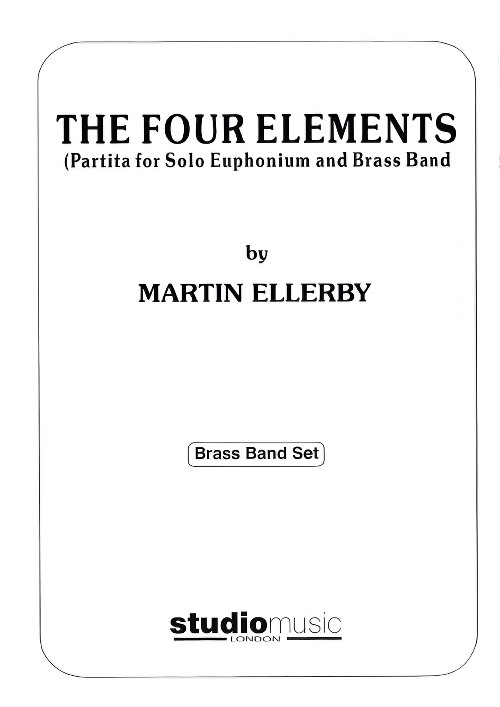
The Four Elements (Euphonium Solo with Brass Band - Score and Parts) - Ellerby, Martin
Partita for Solo Euphonium and Brass BandThe Four Elements was written for Gary Curtin and the Black Dyke Band as part of a recording project of Martin Ellerby's brass band music. The composer, having previously written a large scale concerto for the euphonium, decided to write something much more concise though still enabling the soloist to display flair and lyricism in equal measure. Each movement is approximately 2 minutes long, a set of miniatures, based on the four elements of earth, water, air and fire, and are given their Latin manes of terra, aqua, aer and ignis in the score. The term partita is used to indicate that the work is a collection, or suite, of pieces and in keeping with former examples, uses both song and dance forms to provide suitable musical structures.Duration: 8.00
Estimated dispatch 7-14 working days
-
 £84.95
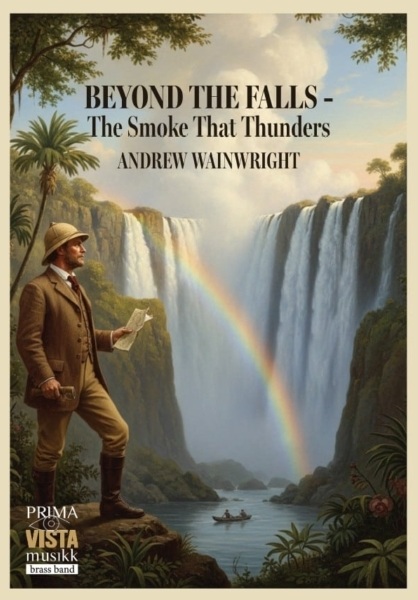
Beyond the Falls - The Smoke That Thunders (Brass Band - Score and Parts) - Wainwright, Andrew
David Livingstone was a renowned Scottish missionary and explorer whose legendary expeditions from 1841 until his death in 1873 took him deep into the interior of central and southern Africa. While his initial aim was to spread Christianity and commerce, his legacy became defined by his relentless spirit of discovery.This work captures the harrowing and ultimately triumphant journey that led to his discovery of Victoria Falls. Originally composed for the GUS Band's performance at the 2012 Brass in Concert Championships, the work was expanded in 2026 for the Black Dyke Band's recording, Gothique Fantasy - The Music of Andrew Wainwright.The music opens with an air of trepidation, reflecting the weight of the mission ahead. This tension soon gives way to a more optimistic section featuring the Scottish folk song A Man's a Man for a' That. Livingstone reportedly hummed this Rabbie Burns tune to bolster his spirits while travelling. The score then depicts the immense hardships of the expedition (letters F to L), illustrating skirmishes with suspicious local tribes, wild animal attacks, and bouts of African fever.Following these trials, a more reflective, emotive movement (Letters L to R) explores Livingstone's internal struggle and his doubts about continuing. This emotional core is built upon the hymn Lord, Send Me Anywhere, a melody composed by Livingstone himself. Emerging from this prayer with renewed purpose, the final section (Letter R to the end) follows his path along the Zambezi River. The music builds to a triumphant climax, capturing his elation at seeing the magnificent Victoria Falls - known locally as 'Mosi-oa-Tunya' (The Smoke that Thunders).Duration: 13.30
Estimated dispatch 7-14 working days
-
 £31.95
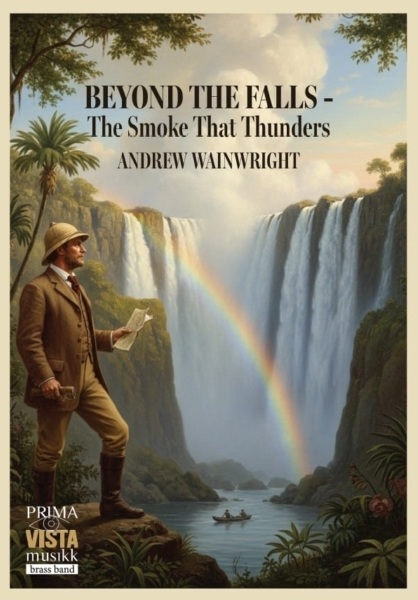
Beyond the Falls - The Smoke That Thunders (Brass Band - Score only) - Wainwright, Andrew
David Livingstone was a renowned Scottish missionary and explorer whose legendary expeditions from 1841 until his death in 1873 took him deep into the interior of central and southern Africa. While his initial aim was to spread Christianity and commerce, his legacy became defined by his relentless spirit of discovery.This work captures the harrowing and ultimately triumphant journey that led to his discovery of Victoria Falls. Originally composed for the GUS Band's performance at the 2012 Brass in Concert Championships, the work was expanded in 2026 for the Black Dyke Band's recording, Gothique Fantasy - The Music of Andrew Wainwright.The music opens with an air of trepidation, reflecting the weight of the mission ahead. This tension soon gives way to a more optimistic section featuring the Scottish folk song A Man's a Man for a' That. Livingstone reportedly hummed this Rabbie Burns tune to bolster his spirits while travelling. The score then depicts the immense hardships of the expedition (letters F to L), illustrating skirmishes with suspicious local tribes, wild animal attacks, and bouts of African fever.Following these trials, a more reflective, emotive movement (Letters L to R) explores Livingstone's internal struggle and his doubts about continuing. This emotional core is built upon the hymn Lord, Send Me Anywhere, a melody composed by Livingstone himself. Emerging from this prayer with renewed purpose, the final section (Letter R to the end) follows his path along the Zambezi River. The music builds to a triumphant climax, capturing his elation at seeing the magnificent Victoria Falls - known locally as 'Mosi-oa-Tunya' (The Smoke that Thunders).Duration: 13.30
Estimated dispatch 7-14 working days
-
 £21.95
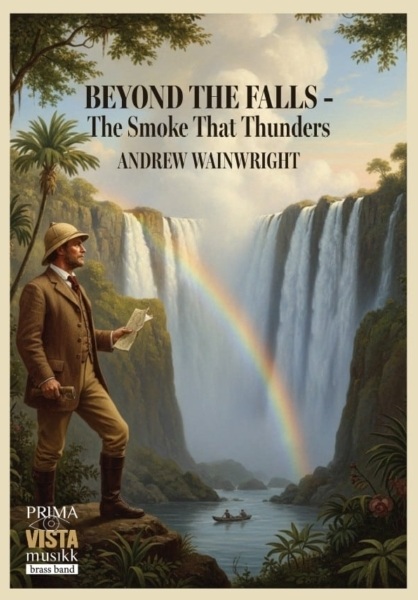
Beyond the Falls - The Smoke That Thunders (Brass Band - Study Score) - Wainwright, Andrew
David Livingstone was a renowned Scottish missionary and explorer whose legendary expeditions from 1841 until his death in 1873 took him deep into the interior of central and southern Africa. While his initial aim was to spread Christianity and commerce, his legacy became defined by his relentless spirit of discovery.This work captures the harrowing and ultimately triumphant journey that led to his discovery of Victoria Falls. Originally composed for the GUS Band's performance at the 2012 Brass in Concert Championships, the work was expanded in 2026 for the Black Dyke Band's recording, Gothique Fantasy - The Music of Andrew Wainwright.The music opens with an air of trepidation, reflecting the weight of the mission ahead. This tension soon gives way to a more optimistic section featuring the Scottish folk song A Man's a Man for a' That. Livingstone reportedly hummed this Rabbie Burns tune to bolster his spirits while travelling. The score then depicts the immense hardships of the expedition (letters F to L), illustrating skirmishes with suspicious local tribes, wild animal attacks, and bouts of African fever.Following these trials, a more reflective, emotive movement (Letters L to R) explores Livingstone's internal struggle and his doubts about continuing. This emotional core is built upon the hymn Lord, Send Me Anywhere, a melody composed by Livingstone himself. Emerging from this prayer with renewed purpose, the final section (Letter R to the end) follows his path along the Zambezi River. The music builds to a triumphant climax, capturing his elation at seeing the magnificent Victoria Falls - known locally as 'Mosi-oa-Tunya' (The Smoke that Thunders).Duration: 13.30
Estimated dispatch 7-14 working days
 View Music