
Results
-
 £5.95
£5.95Burlesque for Basses (Tuba Quartet - Score and Parts)
Written for 2 Eb Basses and 2 Bb Basses
Estimated dispatch 7-14 working days
-
 £36.30
Slavonic Basses - Tim Paton
A feature for the Bass Section with Brass Band. This is a chance for the bass section to display their talent!A short introduction for the four basses on their own. Then, after this humourous introduction, the piece immediately moves into the Cossack style music, where the bass section play a major part. Great fun for both band and audience!
In Stock: Estimated dispatch 3-5 working days
-
£60.80
Them Basses - Getty H. Huffine - Roy Woodfield
Estimated dispatch 5-14 working days
-
 £49.00
 -
£25.00
THEM BASSES (Partitur/Score) - Huffine Getty H. - Wyss Thomas
Estimated dispatch 7-14 working days
-
 £42.70
 -
£24.50
Brandenburg Concerto No. 2 (allegro) - J.S Bach - John Abbott
The "Brandenburg Concertos" were composed and dedicated to Christian Ludwig, Margrave of Brandenburg in 1721, however it seems now they were never actually played for him. This 1st movement has been kilfully arranged as a trio for Soprano Cornet and 2 Bb Cornets (solo cornet, and repiano). This is sure to test the strongest of players, utilising the soprano's high register and making work of the low register on the Bb cornets. As well as keeping the band entertained with running semi-quavers (and some wonderful intervals for the basses!!!) This certainly is a hard piece to perform for the three soloists, but its well worth the challenge.
In Stock: Estimated dispatch 1-3 working days
-
£24.50
Brandenburg Concerto No. 2 (allegro assai) - J.S Bach - John Abbott
The "Brandenburg Concertos" were composed and dedicated to Christian Ludwig, Margrave of Brandenburg in 1721, however it seems now they were never actually played for him. This 3rd movement has been kilfully arranged as a trio for Soprano Cornet and 2 Bb Cornets (solo cornet, and repiano). This is sure to test the strongest of players, starting with the famous trumpet opening. The Baritones, Euphoniums and Basses also play a very important role in this arrangement. This certainly is a hard piece to perform for the three soloists, but its well worth the challenge.
In Stock: Estimated dispatch 1-3 working days
-
 £24.50
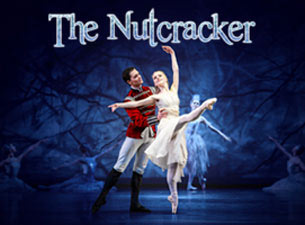
Nutcracker March - Tchaikovsky - Geoff Colmer
First performed in 1882, the Nutcracker Suite (which included this march) was a huge success and became highly popular. The march features in the ballet when the children march around the tree on Christmas eve, filled with excitement and anticipation of the next morning. Some great lip slurs for the Solo Cornets whilst Basses have moving staccato quavers to keep them occupied.
In Stock: Estimated dispatch 1-3 working days
-
£24.50
Whiskey In A Jar - Traditional - Wilfried Weiland
The Irish folksong appears as a arrangement for 7 piece brass ensemble. The parts are 1st and 2nd Cornet, Horn Eb (F), 1st and 2nd Trombone or Baritone, Euphonium, Basses Eb, Bb and Tuba, Percussion and Drumset. Flugel and Bass-Trombone are optional.The arrangement begins with a rock-style introduction as used by Thin Lizzy or Metallica. Verses and chorus offer variety through changing melodic voices and versatile dynamics.
In Stock: Estimated dispatch 1-3 working days
 View Music
 Listen to MP3