
Results
-
 £33.62
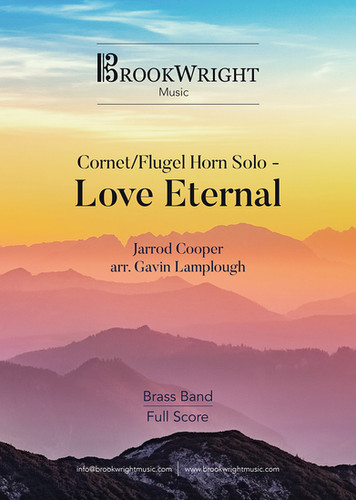
Love Eternal (Cornet/Flugel Solo with Brass Band) Jarrod Cooper arr. Lamplough
Love Eternal was written by Gavin Lamplough for Neil Blessett, who at the time of writing was the Principal Horn player of both Birmingham (UK) Citadel Band and the International Staff Band of The Salvation Army. After popular demand, it was set as a cornet or flugel horn solo, both with piano accompaniment and this version with brass band. The arranger uses Jarod Cooper's popular contemporary worship song King of Kings, Majesty as the basis for the work and the piece seeks to provide a vehicle for the rich timbres of the tenor horn to be enjoyed by the listener. The music reflects the Christian musician's desire to offer their talents to God to be used by Him, and the lyrics of the song are ones of contrast as the musical journey of this piece seeks to emulate the juxtaposition through contrasting moods. To view a video of Helen Williams performing the solo (version with piano accompaniment) please visit www.youtube.com/watch?v=ww3B06TBKMM PDF download includes score and parts. Sheet music available from: UK - www.brassband.co.uk USA - https://satradecentral.org Difficulty Level: 4th Section + Length: 5.00 minutes Instrumentation: Cornet/Flugel Horn Soloist Bb Soprano Cornet Eb 1st Cornet Bb 2nd Cornet Bb Flugel Horn Bb 1st Horn Eb 2nd Horn Eb 1st Baritone Bb 2nd Baritone Bb 1st Trombone Bb 2nd Trombone Bb Bass Trombone Euphonium Bb Bass Eb Bass Bb Percussion 1-3
In Stock: Estimated dispatch 1-3 working days
-
 £37.35
Nocturne for Brass Band & Percussion: The Lady with the Lamp - Andy Wareham
VIEW SCORE PDF Nocturne for Brass Band & Percussion: The Lady with the Lamp was composed for the BrookWright International Brass Band Composer Competition 2020, the work later going on to be a finalist in the competition. The music celebrates the life and achievements of Florence Nightingale on the 200th anniversary of her birth. The work is structured in ternary form and is designed to be an engaging concert piece, accessible to both lower and upper section bands. Minimal percussion has been used and ossia passages have been added to accommodate all levels. The music imagines Miss Nightingale walking the wards at night with the contrasting sections representing her devotion to the care of others, the struggles and sacrifice of her service, and the lasting effect of her renowned achievements that are still felt to this day. Sheet music available from: UK - www.brassband.co.uk USA - www.solidbrassmusic.com Difficulty Level: 2nd Section + Instrumentation: Soprano Cornet Eb Solo Cornet 1&2 Bb Solo Cornet 3&4 Bb Repiano Cornet Bb 2nd Cornet Bb 3rd Cornet Bb Flugel Horn Bb Solo Horn Eb 1st Horn Eb 2nd Horn Eb 1st Baritone Bb 2nd Baritone Bb 1st Trombone Bb 2nd Trombone Bb Bass Trombone Euphonium 1&2 Bb Bass Eb Bass Bb Timpani Percussion 1-2
In Stock: Estimated dispatch 1-3 working days
-
 £33.62
Novus Vitae (Euphonium Solo with Brass Band) Darren Bartlett
Written for the dedication (Christening) of the composer's two young nephews (Jake and Oliver) to celebrate their birth, this beautiful euphonium solo gives thanks for their safe arrival. Darren Bartlett writes: 'A beautiful melody transpired out of the love we all feel for our families and those who have a faith in God... At the key change the listener needs to feel the excitement and anticipation of new life and long to be a part of the celebration.' To view a video of Anthony Smith performing the version with piano accompaniment version please visit www.youtube.com/watch?v=kM9bUys27OM Sheet music available from: UK - www.brassband.co.uk USA - www.solidbrassmusic.com Difficulty Level: Third Section + Instrumentation: Euphonium Soloist Bb Soprano Cornet Eb Solo Cornet Bb Repiano Cornet Bb 2nd Cornet Bb 3rd Cornet Bb Flugel Horn Bb Solo Horn Eb 1st Horn Eb 2nd Horn Eb 1st Baritone Bb 2nd Baritone Bb 1st Trombone Bb 2nd Trombone Bb Bass Trombone 2nd Euphonium Bb Bass Eb Bass Bb Timpani Drum Kit Tuned Percussion
In Stock: Estimated dispatch 1-3 working days
-
 £33.62
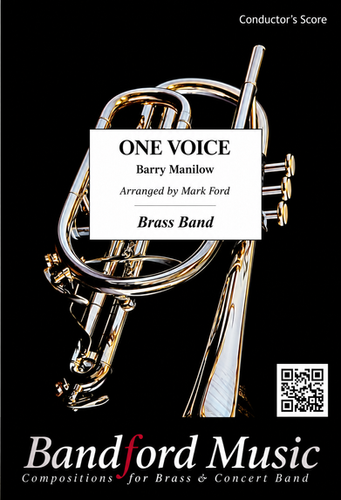
One Voice (Brass Band) Barry Manilow arr. Mark Ford
Originally released in 1979 as the title track of Barry Manilow's sixth studio album, One Voice has become an enduring anthem for unity and social courage. It is a stirring ballad that reminds us how a single, brave voice can ignite a chorus of solidarity and lead the way toward positive change. Expertly crafted for brass band by Mark Ford, this setting captures the intimate, soaring spirit of the original while leveraging the unique textures of the brass band. The piece begins with a delicate, lyrical flugel horn solo, representing the 'single voice' of the title. As the arrangement progresses, the rest of the ensemble joins in, building from a gentle accompaniment into a magnificent, wall-of-sound finale that is sure to leave your audience inspired. To view a rolling score video of the work please visit https://youtu.be/RcQ5xbnyNjs Duration: Approx. 3.15 minutes Difficulty Level: 4th Section + This PDF download includes the full score and parts. Sheet music available at www.brassband.co.uk (UK) or https://satradecentral.org (USA) Instrumentation: Soprano Cornet Eb Solo Cornet Bb Repiano Cornet Bb 2nd Cornet Bb 3rd Cornet Bb Flugel Horn Bb Solo Horn Eb 1st Horn Eb 2nd Horn Eb 1st Baritone Bb 2nd Baritone Bb 1st Trombone Bb 2nd Trombone Bb Bass Trombone Euphonium Bb Bass Eb Bass Bb Timpani Glockenspiel Percussion
In Stock: Estimated dispatch 1-3 working days
-
 £41.09
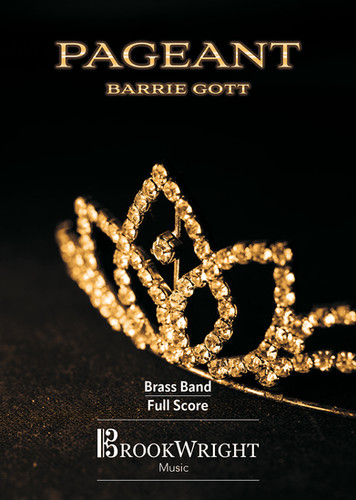
Pageant (Brass Band) Barrie Gott
Born during the isolation of the COVID-19 pandemic, Pageant by Australian composer Barrie Gott transforms the simple interval of a fourth into an engaging, multi-faceted set of variations. Written specifically with 4th Section bands in mind, this work delivers rich textural contrast, clear educational rewards, and a crowd-pleasing arc that moves from regal tradition to high-energy rock. The piece opens with a majestic herald, setting a ceremonial tone as a warm, mellow melody dialogues with bright, fanfare-like brass. From there, the music moves through three distinct stylistic worlds: a delicate, nimble variation inspired by the craft of Eric Ball's A Little Suite for Band; a smooth, lyrical ballad featuring the solo cornet and flugel horn; and a high-energy finale grounded in a driving 6/8 rock groove, bringing the work to a dramatic, cinematic finish. To listen to a recording of Toowoomba Municipal Band performing the work please visit: https://on.soundcloud.com/i9X5JsWQedaAbiWzXf Duration: approx. 6.45 mins Difficulty Level: 4th Section + This PDF download includes the full score and parts. Sheet music available at www.brassband.co.uk (UK) or https://satradecentral.org (USA) Instrumentation: Soprano Cornet Eb Solo Cornet Bb Repiano Cornet Bb 2nd Cornet Bb 3rd Cornet Bb Flugel Horn Bb Solo Horn Eb 1st Horn Eb 2nd Horn Eb 1st Baritone Bb 2nd Baritone Bb 1st Trombone Bb 2nd Trombone Bb Bass Trombone Euphonium Bb Bass Eb Bass Bb Timpani Percussion 1-4
In Stock: Estimated dispatch 1-3 working days
-
 £33.62
Prelude in C-sharp Minor (Brass Band) Rachmaninoff arr. Rob Bushnell
One of Sergei Rachmaninoff's most famous compositions, Prelude in C-sharp minor (Op. 3, No. 2) is part of a set of five pieces entitled Morceaux de fantaisie. It was written when Rachmaninoff was only 19 years old and was first performance by the composer on 26 September 1892 at a festival called the Moscow Electrical Exhibition. This arrangement is for the UK-style brass band, with alternative parts for horns in F and bass-clef lower brass. The piece has been transposed from the original (for piano) of C-sharp minor to A minor, which better suits a brass band. There is another arrangement of this piece by Sandy Smith (published by Obrasso) which is designed for more advanced ensembles. A recording of the original composition can be found here: www.youtube.com/watch?v=mXGSfJn3nKQ Duration: Approx. 3.40 minutes Difficulty Level: 3rd Section + PDF download includes parts and score. Also includes alternative parts for horns in F and lower brass in bass clef. Sheet music available from www.brassband.co.uk Instrumentation: Soprano Cornet Eb Solo Cornet Bb Repiano Cornet Bb 2nd Cornet Bb 3rd Cornet Bb Flugel Horn Bb Solo Horn Eb 1st Horn Eb 2nd Horn Eb 1st Baritone Bb 2nd Baritone Bb 1st Trombone Bb 2nd Trombone Bb Bass Trombone Euphonium Bb Bass Eb Bass Bb Percussion 1-3
In Stock: Estimated dispatch 1-3 working days
-
 £26.15
The Three Kings (Euphonium Solo with Brass Band) Cornelius arr. Wainwright
This beautiful arrangement of the much loved tenor solo The Three Kings was made for the GUS Band and euphonium soloist Mark Giles, for the CD recording Christmas Fantasia - The Music of Andrew Wainwright (2013). The Three Kings, or Three Kings From Persian Lands Afar, is a Christmas carol by the German composer Peter Cornelius. He set Die Konige for a vocal soloist, accompanied by Philip Nicolai's hymn Wie schon leuchtet der Morgenstern ('How Brightly Shines the Morning Star'), which he erroneously thought was an Epiphany hymn. In fact, it is an Advent hymn in which the morning star is an allegory for the arrival of Jesus, not the Star of Bethlehem. In Cornelius' original second setting, the accompaniment was played on a piano but the English organist Ivor Atkins later arranged the accompaniment for choir, with the choir singing the words of the original hymn. The carol describes the visit of the Biblical Magi to the Infant Jesus during the Nativity and is also used as an Epiphany anthem. To view a rolling score video of Mark Giles performing the solo with GUS Band, please visit www.youtube.com/watch?v=YsLVNknim7w PDF download includes score and parts. Sheet music available from: UK - www.brassband.co.uk/sheet-music/the-three-kings-euphonium-solo-with-brass-band-cornelius-arr-wainwright-brookwright USA - www.solidbrassmusic.com Difficulty Level: 4th Section + Instrumentation: Euphonium Soloist Bb Soprano Cornet Eb 1st Cornet Bb 2nd Cornet & Flugel Bb 1st Horn Eb 2nd Horn Eb 1st Baritone Bb 2nd Baritone Bb 1st Trombone Bb 2nd Trombone Bb Bass Trombone 2nd Euphonium Bb Bass Eb Bass Bb
In Stock: Estimated dispatch 1-3 working days
-
 £33.62
You're Always There (Brass Band) Lee Fisher arr. Andrew Wainwright
One of BrookWright's most popular titles, this piece is based on an original song by Lee Fisher which was written for Britain's Got Talent star Charlie Green. Originally arranged as a tenor horn solo with brass band, it is now available here as a standalone work for band. To view a follow-the-score video please visit www.youtube.com/watch?v=suzzgdxU_xU PDF download includes score and parts. Sheet music available from: UK - www.brassband.co.uk USA - https://satradecentral.org Difficulty Level: 4th Section + Length: 3.45 minutes Instrumentation: Soprano Cornet Eb Solo Cornet Bb Repiano Cornet Bb 2nd Cornet Bb 3rd Cornet Bb Flugel Horn Bb Solo Horn Eb 1st Horn Eb 2nd Horn Eb 1st Baritone Bb 2nd Baritone Bb 1st Trombone Bb 2nd Trombone Bb Bass Trombone Euphonium Bb Bass Eb Bass Bb Timpani Percussion 1-2
In Stock: Estimated dispatch 1-3 working days
-
 £33.62
'Mid all the traffic (Brass Band) Traditional arr. Andy Wareham
This stunning arrangement by British composer Andy Wareham is of the popular hymn 'Mid all the Traffic, which marries the North-American folksong Shenandoah set to lyrics by English journalist, novelist and poet William Arthur Dunkerley (written under the pseudonym of 'John Oxenham'). The hymn is very well-regarded in both the Salvation Army and wider brass band movement thanks to a popular arrangement by renowned Salvationist composer Leonard Ballantine. The arranger writes: 'This setting of 'Mid All The Traffic was originally composed during the Covid-19 pandemic as an octet arrangement for single instrument. My hope was to create an arrangement that offers an alternative view on harmony and could be multi-track recorded; allowing performers to give, and share, a performance whilst in isolation. The music was written in dedication to all of the 'key-workers' in the UK, especially in the NHS, who worked tirelessly throughout difficult conditions during the Covid-19 pandemic.' To view a follow-the-score video of the work please visit https://www.youtube.com/watch?v=naajvdsg9Wo PDF download includes score and parts. Sheet music available from: UK - www.brassband.co.uk USA - www.solidbrassmusic.com Difficulty Level: 3rd Section + Instrumentation: Soprano Cornet Eb Solo Cornet Bb Repiano Cornet Bb 2nd Cornet Bb 3rd Cornet Bb Flugel Horn Bb Solo Horn Eb 1st Horn Eb 2nd Horn Eb 1st Baritone Bb 2nd Baritone Bb 1st Trombone Bb 2nd Trombone Bb Bass Trombone 1st Euphonium Bb 2nd Euphonium Bb Bass Eb Bass Bb Bass Drum Suspended Cymbal
In Stock: Estimated dispatch 1-3 working days
-
 £22.41
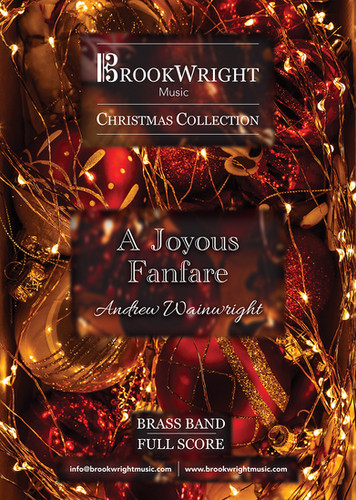
A Joyous Fanfare (Brass Band) Andrew Wainwright
A Joyous Fanfare is a short majestic concert prelude that captures the essence of celebration and festive spirit. Derived from the original Fanfare of Joy, commissioned by the Burbage Band (Buxton) and conductor Steven Critchlow in 2017, this piece takes inspiration from the beloved carol Joy to the World. Duration: 1.20 minutes Difficulty Level: 3rd Section + This PDF download includes the full score and parts. Sheet music available at www.brassband.co.uk (UK) or https://satradecentral.org (USA) Instrumentation: Soprano Cornet Eb Solo Cornet 1&2 Bb Solo Cornet 3&4 Bb Repiano Cornet Bb 2nd Cornet Bb 3rd Cornet Bb Flugel Horn Bb Solo Horn Eb 1st Horn Eb 2nd Horn Eb 1st Baritone Bb 2nd Baritone Bb 1st Trombone Bb 2nd Trombone Bb Bass Trombone Euphonium Bb Bass Eb Bass Bb Timpani Snare Cymbals
In Stock: Estimated dispatch 1-3 working days
 Watch video