
Results
-
 £84.95
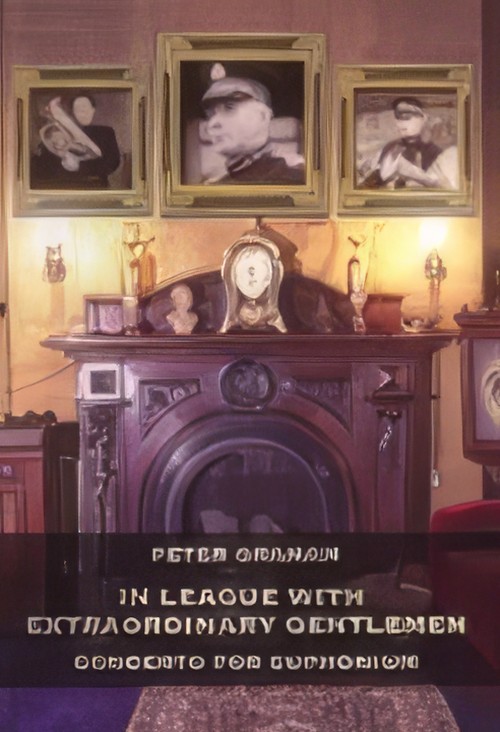
In League with Extraordinary Gentlemen (Euphonium Solo with Brass Band - Score and Parts) - Graham, Peter
Concerto for EuphoniumIn League with Extraordinary Gentlemen combines two of composer Peter Graham's life interests - composition and 19th century popular fiction. Each of the concerto's three movements takes its musical inspiration from extraordinary characters who have transcended the original genre and have subsequently found mass audiences through film, television and comic book adaptations.The first movement follows a traditional sonata form outline with one slight modification. The order of themes in the recapitulation is reversed, mirroring a plot climax in the H.G. Wells novella The Time Machine (where the protagonist, known only as The Time Traveller, puts his machine into reverse bringing the story back full circle).The Adventure of the Final Problem is the title of a short story published in The Memoirs of Sherlock Holmes by Arthur Conan Doyle. This is an account of the great detective's final struggle with his long-time adversary Professor Moriarty at the Reichenbach Falls in Switzerland. The music takes the form of a slowed down lndler (a Swiss/Austrian folk dance) and various acoustic and electronic echo effects call to mind the alpine landscape. The final bars pose a question paralleling that of Conan Doyle in the story - have we really seen the last of Sherlock Holmes?The final movement, The Great Race, (available separately) follows Phileas Fogg on the last stage of his epic journey "Around the World in Eighty Days" (from the novel by Jules Verne). The moto perpetuo nature of the music gives full rein to the soloist's technical virtuosity. As the work draws to a conclusion, the frantic scramble by Fogg to meet his deadline at the Reform Club in Pall Mall, London, is echoed by the soloist's increasingly demanding ascending figuration, set against the background of Big Ben clock chimes.In League with Extraordinary Gentlemen was first performed in the brass band version by David Thornton and the Black Dyke Band, conductor Nicholas Childs, at the RNCM Concert Hall Manchester on January 30, 2009.
Estimated dispatch 7-14 working days
-
 £50.00
LORD OF THE RINGS: The Fellowship of the Ring (Brass Band) - Shore, Howard - Duncan, Andrew
A music selection of key themes from Howard Shore's film score to the 1997 blockbuster, The Lord of the Rings: The Fellowship of the Ring, arranged for brass band by Andrew Duncan.Suitable for Advanced Youth/3rd Section Bands and aboveDuration: 7 minutes
Estimated dispatch 7-14 working days
-
 £39.99
Overture for Brass (Brass Band - Score and Parts) - Franzetti, Carlos - Freeh, Mark
From symphonies to big band jazz, and from chamber works to Latin American music and film scores, the music of Argentian-born composer and arranger Carlos Franzetti (b.1948) has won many prestigious awards. This exciting six minute overture, Overture for Brass, was arranged by Mark Freeh and has been recorded by the GUS Band, conducted by Bramwell Tovey.Suitable for Advanced Youth/3rd Section Bands and aboveDuration: 6.00
Estimated dispatch 7-14 working days
-
 £30.00
SILVERADO (Brass Band) - Broughton, Bruce - Green, Gareth
A fantastic arrangement of this lively film track, with the music of Bruce Broughton lending itself perfectly to the brass band genre. Recorded on Polyphonic QPRL237D Master Brass Vol.24. Duration: 4:36
Estimated dispatch 7-14 working days
-
£49.95
SPITFIRE: PRELUDE AND FUGUE (Brass Band) - Walton, William - Howarth, Elgar
Originally part of the score Walton wrote for the film The First of the Few, this fabulous music found greater fame in the concert version he made in 1942. Now, at last, here is an authorised version for brass band by an acknowledged master of the art, Elgar Howarth. The Prelude - essentially a march in his best Crown Imperial style leads to a dazzling Fugue which incorporates a quiet interlude before the dramatic finale. Whether used as a concert opener or roof-raising finale it is sure to delight audiences and players alike. Recorded on Polyphonic QPRL220D Master Brass (Volume Sixteen).
Estimated dispatch 7-14 working days
-
 £74.99
Star Wars: The Last Jedi (Brass Band - Score and Parts) - Williams, John - Brown, Michael
From the blockbuster movie Star Wars: The Last Jedi, John Williams continues to display his mastery of music for film. This dynamic medley includes poignant new themes along with familiar older melodies as some of our favorite characters return for this episode. Duration: 4.45
Estimated dispatch 7-14 working days
-
 £50.00
Greetings to a City (Brass Band - Score and Parts) - Bliss, Arthur - Hindmarsh, Paul
Sir Arthur Bliss (1891 - 1975) was a significant composer and pillar of the British musical establishment. Although Born in London, his father was from the United States and both countries were important in his life and career. A pupil of Stanford at the Royal College of Music, Bliss travelled to the United States with his father in 1923, taking a prominent part in Elizabeth Sprague Coolidge's Pittsfield Music Festival, as well as undertaking some teaching and conducting. In 1925 he married Trudy Hoffman and they returned to the UK early in 1926. Bliss's most influential scores were his ballets and film scores. In 1953 Sir Arthur was appointed Master of the Queen's Music, after which he added a steady stream of fanfares and ceremonial works to his list of works. In 1960 he was commissioned by the American Wind Symphony of Pittsburgh, which requested for festive work to feature on an extensive European tour, including a performance in London.Bliss scored Greetings to a City for antiphonal brass, a choir each of 2 trumpets, 2 horns and three trombones, with tuba and percussion. This adaptation for brass band instruments retains an element of antiphony, emphasing the contrast between the fanfare instruments (cornets and trombones) and the horns and tubas. Greetings to a City is cast in three connected sections, with extended fanfare episodes separated by a short lyrical interlude.- Paul HindmarshDuration: 6.00
Estimated dispatch 7-14 working days
-
 £60.99
Moon River Cha Cha (Brass Band - Score and Parts) - Mancini, Henry - Harper, Philip
Moon River Cha Cha was arranged to be part of Cory Band's winning set from Brass in Concert 2016 which was entitled; 'The Remarkable Life of Roald Dahl'. The centenary of Dahl's birth in Wales was celebrated in 2016, and this piece comes from the 1961 film Breakfast at Tiffany's which starred Dahl's first wife, Patricia Neal. The easy-listening style of the music portrays the glamour and glitz of Roald Dahl's immediate post-war life in the USA.Duration: 2.30
Estimated dispatch 7-14 working days
-
 £33.00
O.B.1 Fanfare (Brass Band - Score and Parts) - Watson, Tom
A salute to Hollywood and the big screen, this fine pastiche of film scoring is an exciting fanfare and concert opener, composed by Tom Watson, one of the directors of Prozone Music. The RPO Brass have performed this at the Barbican Hall. Duration: 2.30. Suitable for 2nd Section Bands and above.
Estimated dispatch 7-14 working days
-
 £79.99
Freaks! (Trombone Solo with Brass Band - Score and Parts) - Higgins, Gavin
Freaks! was written for Lisa Sarasini in 2006 and first performed by her with Zone One Brass at the Royal College of Music, London. This tuneful and flamboyant showpiece was inspired by the Tod Browning film of the same name. The 1932 black and white cult classic was banned for many years due to its controversial morality issues and lead characters - real life side show 'freaks'. It is one of the most bizarre things to have ever come out of Hollywood. Gavin Higgins' virtuoso trombone solo is programmatic in style, full of humour with a sinister undercurrent, and is broken into seven short scenes: Introduction; Roll up... See the Freaks; The Amazing Cleopatra - Queen of the Air; Gooble Gobble one of us - The Wedding Party; The Fall of Cleopatra; The Freaks Take Revenge; Cleopatra - The Duck Lady. Suitable for 1st Section Bands and above. Duration: 12.00
Estimated dispatch 7-14 working days
 View Music