
Results
-
 £39.95
Harlem Nocturne
While an arranger with the Ray Noble Orchestra in 1939, Earle Hagen composed the unforgettably sultry "Harlem Nocturne" which has lived on and on through various guises and performers. Here is published a version by that well know British trombonist and arranger, Bill Geldard, for solo tenor trombone and brass band.
Estimated dispatch 5-14 working days
-
 £127.95
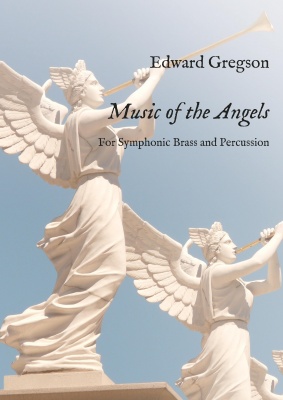
Music of the Angels (Symphonic Brass Ensemble - Score and Parts)
In 1998 Gregson was commissioned by conductor Martyn Brabbins to write a short concert opener with choir to mark his debut as Music Director of the Huddersfield Choral Society. Entitled ...and the seven trumpets... this ten minute flourish is founded on a verse from Chapter 8 of the Revelation To John (The Apocalypse), the last book in the Bible: 'and I saw the seven Angels which stood before God: and to them were given seven trumpets'. The performance employed the full power of the Huddersfield Town Hall organ and the brass section of the BBC Philharmonic, including seven trumpets and four horns placed strategically around hall.The following year, when Gregson received a commission from the Cheshire-based Foden's Brass Band (conducted at that time by Nicholas Childs) for a work to mark its centenary in 2000, he turned to the first portion of ...and the seven trumpets... as the basis for an ambitious celebratory work entitled The Trumpets of the Angels. "The opportunity to create an extended work which would break out of the brass band mould was an important milestone for me," the composer says. In 2015 he was asked by Nicholas Childs to create a new performing edition without organ for the Black Dyke Band. This received its first performance in April 2016 at the European Brass Band Festival in Lille. In 2018, Gregson revisited the music for a third time, returning the opening fanfares to orchestral brass and transforming substantial portions of the 'Black Dyke' version to create Music of the Angels, a dramatic canvas for symphonic brass and percussion.An array of bells and gongs offer an unmistakable key to the source of Gregson's inspiration. Inscribed In tribute to Olivier Messiaen, the work's principal material and its sound world, but crucially not the underlying musical processes, are influenced by Messiaen's masterpiece for wind and percussion, Et exspecto ressurectionem mortuorum (1964). Music of the Angels begins with braying of horns suggestive of the start of an ancient ritual. Six 'angel' trumpeters, set behind the ensemble, answer in sequence, with the evocative sound of tam-tams creating the Messiaen-like aura. Once the horns have reached the performing space, four of the trumpeters deliver highly contrasting fanfare cadenzas. At the climax of this episode, the individual fanfares are presented together, as if, perhaps, to reflect the Biblical writer's apocalyptic visions of hail, fire, seas of blood and the cataclysmic destruction of man and beast.This powerful vision of death and destruction gives way to a prayerful lament, re-imagining a sung Kyrie Eleison from the 'Black Dyke' edition, with flugel horn and euphonium obligati. The hushed atmosphere is broken by tenor and side drums, and trumpets five and six, which gallop away like the Horsemen of the Apocalypse. In the biblical account their steeds had 'heads like lions with fire and smoke and sulphur issuing from their mouths'.As the reverberation of a dramatic climax dies we hear the entry of the seventh trumpet, from 'on high', blazing forth with a version of the main that extends across the entire compass of the instrument - almost three octaves. Supported by a 'holy trinity' of gongs, an 'epic' final cadenza introduces new material which is further developed in a frenetic final section. This is announced by two sets of timpani, to the left and right. Braying brass (euphoniums and horns) once more adds an air of foreboding. As the music builds towards a magisterial conclusion, the Messiaen-inspired tritones of the principal motif are smoothed out into perfect 5ths and combined with the earlier material in a full-voiced chorale, over which the seventh trumpet blazes in triumph.- Programme note by Paul HindmarshScored for1 Trumpet in E flat (Trumpet 5)6 Trumpets in B flat (Trumpet 4 doubling Flugel Horn)4 Horns in F3 Tenor Trombones1 Bass TromboneEuphonium2 Tubas2 Timpani (Percussion 3 doubles Timpani 2)Percussion (3 players): 3 Tam-tams, 3 Suspended Cymbals, Bass Drum, Tenor Drum, Snare Drum, Tubular Bells.Duration: 16.00
Estimated dispatch 7-14 working days
-
 £22.50
Edward Gregson: Concertante for Piano and Brass Band
DescriptionProgramme NoteThe Concertante for Piano and Brass Band was written in 1966, when the composer was an undergraduate student at the Royal Academy of Music in London. It received its first public concert performance in 1967 at the Royal Festival Hall, London, when the composer was the soloist with the International Band of the Salvation Army, conducted by Bernard Adams. It was one of the first major works to be written for this particular combination.The Concertante is unashamedly romantic in idiom and is in three movements: Prelude, Nocturne and Rondo. The Prelude is cast in sonata form and opens with a short cadenza-like flourish from the soloist, followed by two main ideas - the first sweepingly dramatic, the second highly lyrical. The interplay between these two themes forms the main focus of the movement, and after a return to the opening theme, an exuberant codetta brings the music to a close, albeit a quiet one. https://morthanveld.com/wp-content/uploads/2017/09/Gregson-Concertante-1st-movt-clip.mp3The tender Nocturne opens with an introduction from the band that contains precursors of the two main ideas to follow. The solo piano announces the main theme, which has a slightly 'bluesy' character with its flattened third and seventh notes of the scale, and is a love song dedicated to the composer's wife-to-be. The band enters with phrases of a chorale already hinted at in the introduction - Ray Steadman-Allen's hymn tune 'Esher' - but never quite presented in its complete state. Both ideas are developed alongside each other, with eventually the first theme returning, this time with piano and band together, and building to a majestic climax, before subsiding to a peaceful coda - a return to the very opening of the movement. https://morthanveld.com/wp-content/uploads/2017/09/Gregson-Concertante-movt-2-clip.mp3The final Rondo is full of energetic rhythms and changing time patterns. The main theme is playful in character, with much interplay between soloist and band, whilst the middle section presents a new theme, and one that has more than a hint of the hymn tune 'Onward Christian Soldiers', in what amounts to a good humoured parody. The opening Rondo theme returns, this time leading to a powerful and dissonant climax from the band. This is followed by an extended piano cadenza, underlying the virtuoso aspect of the work, and leading to an energetic and life-affirming coda, which brings the work to a triumphant conclusion. https://morthanveld.com/wp-content/uploads/2017/09/Gregson-Concertante-movt-3-clip.mp3Duration: 18 minutesInstrumentation:Please note that there is no 1st/Repiano Cornet part in this work. The 1st/Repiano Cornet player should join the Solo Cornet bench. As such an extra Solo Cornet part is provided in the set of parts.Version for two pianosA version of the Concertante for two pianos is available for rehearsal purposes. Piano 1 is the solo part and Piano 2 the band reduction. However, for those pianists not needing to rehearse the work in this way, a solo piano part is also provided with the main set of band parts.To view a preview of the solo part for the first movement click here.The youthful Gregson (his work was written as a third year undergraduate) was seemingly a bit of a musical magpie - but one heck of a skilful one at that.These were shiny baubles of poise, panache and pastiche, with affectionate, remarkably mature nods of appreciation towards Gershwin, Rachmaninov, Ireland and even Elmer as well as Leonard Bernstein.The rich colour palette and flowing lines (with the tenderest of central Nocturnes) were a joy - as were the little buds of motifs that dotted the score like seeds ready to be planted on a future fertile brass band compositional field. - Iwan Fox, 4Barsrest.com, June 2019For more information on Edward Gregson's music please visit the composer's website: www.edwardgregson.com
Estimated dispatch 7-14 working days
-
 £55.00
Purcell Variations (Brass Band - Score and Parts)
Purcell Variations, composed in 1995, the year of the tercentenary of the death of the great English composer, was a watershed work in that it was Downie's first extended composition to be published independently of The Salvation Army and intended for wider use.For his theme, Downie has chosen what has come down to us as the hymn tune Westminster Abbey, which is in fact an adaptation made in 1842 by Ernest Hawkins, who was a Canon of Westminster Abbey where Purcell himself had been organist. Purcell's original is actually the closing section of an anthem, O God, Thou art my God, where it provides the final paean of praise, sung to repeated 'Hallelujahs'. Purcell's tune, particularly the opening triadic gesture, is used as a source of thematic and harmonic material - a quarry for ideas if you like: "I was obsessed with the intervals of thirds in Purcell's tune, rather like Brahms in his Third Symphony", the composer says.There are five variations, preceded by an extended introduction and theme. In the first variation, Purcell's lilting dance pulse has been transformed into a bright, playful sequence, in which each phrase of the melody is given its own transformation. In the second, Purcell's opening gambit is extended into a graceful, flowing waltz, featuring solo and first horn at the top of the register. The composer offers a range of metronome speeds in this movement, in which he is emulating the wistful elegance of Erik Satie's famous Gymnopedie. We enter the world of big band jazz in variation three, where Purcell's tune strides along with added syncopation and bluesy major/minor thirds to the fore. After the breathless energy and blazing brass of the big band, Downie moves into his 'home territory' for a beautifully worked lyrical variation. There is an enhanced urgency about the final variation, which opens with an extended reprise of the work's introduction. Purcell's second and third phrases provide the preparation for the exuberant return, in customary triumph of Purcell's 'Hallelujah'.
Estimated dispatch 7-14 working days
-
 £74.95
Eden (Score and Parts)
This work was commissioned by the Brass Band Heritage Trust as the test piece for the final of the 2005 Besson National Brass Band Championship, held at the Royal Albert Hall, London.The score is prefaced by the final lines from Milton's epic poem Paradise Lost (completed in 1663), in which Adam and Eve, expelled from Paradise, make their uncertain way into the outside world:"...The world was all before them, where to chooseTheir place of rest, and providence their guide:They hand in hand with wandering steps and slow,Through Eden took their solitary way."My work is in three linked sections. In the first, the characters of Adam, Eve and the serpent guarding the Tree of Knowledge are respectively represented by solo euphonium, cornet and trombone. The music opens in an idyllic and tranquil mood and leads into a duet between euphonium and cornet. Throughout this passage the prevailing mood darkens, though the soloists seem to remain oblivious to the increasingly fraught atmosphere. A whip-crack announces the malevolent appearance of the solo trombone who proceeds to engage the solo cornet in a sinister dialogue.The second section interprets the Eden story as a modern metaphor for the havoc mankind has inflicted upon the world, exploiting and abusing its resources in the pursuit of wealth. Though certainly intended here as a comment on the present-day, it is by no means a new idea: Milton himself had an almost prescient awareness of it in Book I of his poem, where men, led on by Mammon:"...Ransacked the centre and with impious handsRifled the bowels of their mother earthFor treasures better hid. Soon had his crewOpened into the hill a spacious woundAnd digged out ribs of gold."So this section is fast and violent, at times almost manic in its destructive energy. At length a furious climax subsides and a tolling bell ushers in the third and final section.This final part is slow, beginning with an intense lament featuring solos for tenor-horn, flgel-horn and repiano cornet and joined later by solo baritone, soprano cornet, Eb-bass and Bb-bass.At one stage in the planning of the work it seemed likely that the music would end here - in despair. Then, mid-way through writing it, I visited the extraordinary Eden Project in Cornwall. Here, in a disused quarry - a huge man-made wound in the earth - immense biomes, containing an abundance of plant species from every region of the globe, together with an inspirational education programme, perhaps offer a small ray of hope for the future. This is the image behind the work's conclusion and the optimism it aims to express is real enough, though it is hard-won and challenged to the last.John Pickard 2005
Estimated dispatch 7-14 working days
-
 £29.50
Eden (Score Only)
This work was commissioned by the Brass Band Heritage Trust as the test piece for the final of the 2005 Besson National Brass Band Championship, held at the Royal Albert Hall, London.The score is prefaced by the final lines from Milton's epic poem Paradise Lost (completed in 1663), in which Adam and Eve, expelled from Paradise, make their uncertain way into the outside world:"...The world was all before them, where to chooseTheir place of rest, and providence their guide:They hand in hand with wandering steps and slow,Through Eden took their solitary way."My work is in three linked sections. In the first, the characters of Adam, Eve and the serpent guarding the Tree of Knowledge are respectively represented by solo euphonium, cornet and trombone. The music opens in an idyllic and tranquil mood and leads into a duet between euphonium and cornet. Throughout this passage the prevailing mood darkens, though the soloists seem to remain oblivious to the increasingly fraught atmosphere. A whip-crack announces the malevolent appearance of the solo trombone who proceeds to engage the solo cornet in a sinister dialogue.The second section interprets the Eden story as a modern metaphor for the havoc mankind has inflicted upon the world, exploiting and abusing its resources in the pursuit of wealth. Though certainly intended here as a comment on the present-day, it is by no means a new idea: Milton himself had an almost prescient awareness of it in Book I of his poem, where men, led on by Mammon:"...Ransacked the centre and with impious handsRifled the bowels of their mother earthFor treasures better hid. Soon had his crewOpened into the hill a spacious woundAnd digged out ribs of gold."So this section is fast and violent, at times almost manic in its destructive energy. At length a furious climax subsides and a tolling bell ushers in the third and final section.This final part is slow, beginning with an intense lament featuring solos for tenor-horn, flgel-horn and repiano cornet and joined later by solo baritone, soprano cornet, Eb-bass and Bb-bass.At one stage in the planning of the work it seemed likely that the music would end here - in despair. Then, mid-way through writing it, I visited the extraordinary Eden Project in Cornwall. Here, in a disused quarry - a huge man-made wound in the earth - immense biomes, containing an abundance of plant species from every region of the globe, together with an inspirational education programme, perhaps offer a small ray of hope for the future. This is the image behind the work's conclusion and the optimism it aims to express is real enough, though it is hard-won and challenged to the last.John Pickard 2005
Estimated dispatch 7-14 working days
-
 £37.35
I was glad (Brass Band with optional Organ) Hubert Parry trs. Andrew Wainwright
I was glad was originally a choral introit which is a popular piece in the musical repertoire of the Anglican church. It is traditionally sung in the Church of England as an anthem at the coronation of the British monarch, most recently that of King Charles III in May 2023. This transcription for brass band combines the choral and accompaniment parts meaning it is playable as a standalone arrangement. An optional organ part is included to augment the brass. The cornet section is divided into two choirs to create an antiphonal effect. The 'Vivats' are included in this transcription but an optional cut is provided for that section. To view a follow-the-score video please visit https://www.youtube.com/watch?v=Vx95uSp1yU8 PDF download includes score and parts. Sheet music available from: UK - www.brassband.co.uk USA - www.solidbrassmusic.com Difficulty Level: 2nd Section + *Instrumentation: Soprano Cornet Eb Cornets 1-5 Bb (9 players required as a minimum) Flugel Horn Bb Solo Horn Eb 1st Horn Eb 2nd Horn Eb 1st Baritone Bb 2nd Baritone Bb 1st Trombone Bb 2nd Trombone Bb Bass Trombone Euphonium Bb Bass Eb Bass Bb Timpani Percussion *Additional transposed parts are available here for Horns in F, and Baritones, Trombones, Euphoniums and Tubas in Bass Clef.
In Stock: Estimated dispatch 1-3 working days
-
£11.20
I was glad (Brass Band with Organ - Additional Parts) Parry trs. Wainwright
I was glad was originally a choral introit which is a popular piece in the musical repertoire of the Anglican church. It is traditionally sung in the Church of England as an anthem at the coronation of the British monarch, most recently that of King Charles III in May 2023. This transcription for brass band combines the choral and accompaniment parts meaning it is playable as a standalone arrangement. An optional organ part is included to augment the brass. The cornet section is divided into two choirs to create an antiphonal effect. The 'Vivats' are included in this transcription but an optional cut is provided for that section. To view a follow-the-score video please visit www.youtube.com/watch?v=Vx95uSp1yU8 PDF download includes additional parts. Purchase the full score and brass band parts here. Sheet music available from: UK - www.brassband.co.uk USA - www.solidbrassmusic.com Difficulty Level: 2nd Section + Parts included in this download: Solo Horn F 1st Horn F 2nd Horn F 1st Baritone Bass Clef 2nd Baritone Bass Clef 1st Trombone Bass Clef 2nd Trombone Bass Clef Euphonium Bass Clef Tuba 1 Bass Clef (Bass Eb equivalent) Tuba 2 Bass Clef (Bass Bb equivalent)
In Stock: Estimated dispatch 1-3 working days
-
 £26.15
The Three Kings (Euphonium Solo with Brass Band) Cornelius arr. Wainwright
This beautiful arrangement of the much loved tenor solo The Three Kings was made for the GUS Band and euphonium soloist Mark Giles, for the CD recording Christmas Fantasia - The Music of Andrew Wainwright (2013). The Three Kings, or Three Kings From Persian Lands Afar, is a Christmas carol by the German composer Peter Cornelius. He set Die Konige for a vocal soloist, accompanied by Philip Nicolai's hymn Wie schon leuchtet der Morgenstern ('How Brightly Shines the Morning Star'), which he erroneously thought was an Epiphany hymn. In fact, it is an Advent hymn in which the morning star is an allegory for the arrival of Jesus, not the Star of Bethlehem. In Cornelius' original second setting, the accompaniment was played on a piano but the English organist Ivor Atkins later arranged the accompaniment for choir, with the choir singing the words of the original hymn. The carol describes the visit of the Biblical Magi to the Infant Jesus during the Nativity and is also used as an Epiphany anthem. To view a rolling score video of Mark Giles performing the solo with GUS Band, please visit www.youtube.com/watch?v=YsLVNknim7w PDF download includes score and parts. Sheet music available from: UK - www.brassband.co.uk/sheet-music/the-three-kings-euphonium-solo-with-brass-band-cornelius-arr-wainwright-brookwright USA - www.solidbrassmusic.com Difficulty Level: 4th Section + Instrumentation: Euphonium Soloist Bb Soprano Cornet Eb 1st Cornet Bb 2nd Cornet & Flugel Bb 1st Horn Eb 2nd Horn Eb 1st Baritone Bb 2nd Baritone Bb 1st Trombone Bb 2nd Trombone Bb Bass Trombone 2nd Euphonium Bb Bass Eb Bass Bb
In Stock: Estimated dispatch 1-3 working days
-
 £34.95
Descent, The - Christopher Bond
The Descent takes its inspiration from Victorian author Jules Verne; specifically, his work Twenty Thousand Leagues Under the Sea. In Twenty Thousand Leagues Under the Sea, Professor Arronax finds himself a prisoner of the mysterious Captain Nemo, on a remarkable submarine called the Nautilus. Nemo is one of Verne's most memorable characters. He's a man who has turned his back on the world, and his name - Nemo - means 'No Man.' He has vowed never to set foot on dry land ever again. Verne gives his hero's brilliance and benevolence a dark underside - the man's obsessive hate for Empires and Imperialism. Captain Nemo is a genius, an engineer, an artist, an athlete, sometimes a pacifist, sometimes a righter of wrongs, sometimes an out and out villain, and he invented the Nautilus. The Descent is based on the idea of a descent to the depths of the ocean in the Nautilus with Captain Nemo, with the cornet soloist expressing both the anguish and reflective sides of the character. On one hand, a troubled and agitated figure, juxtaposed with the reflective memories of his homeland, children, mother and father. The work was written for and commissioned by Flowers Band as part of their programme of music at Brass in Concert 2019.
Estimated dispatch 10-14 working days
 View Music