
Results
-
 £79.99
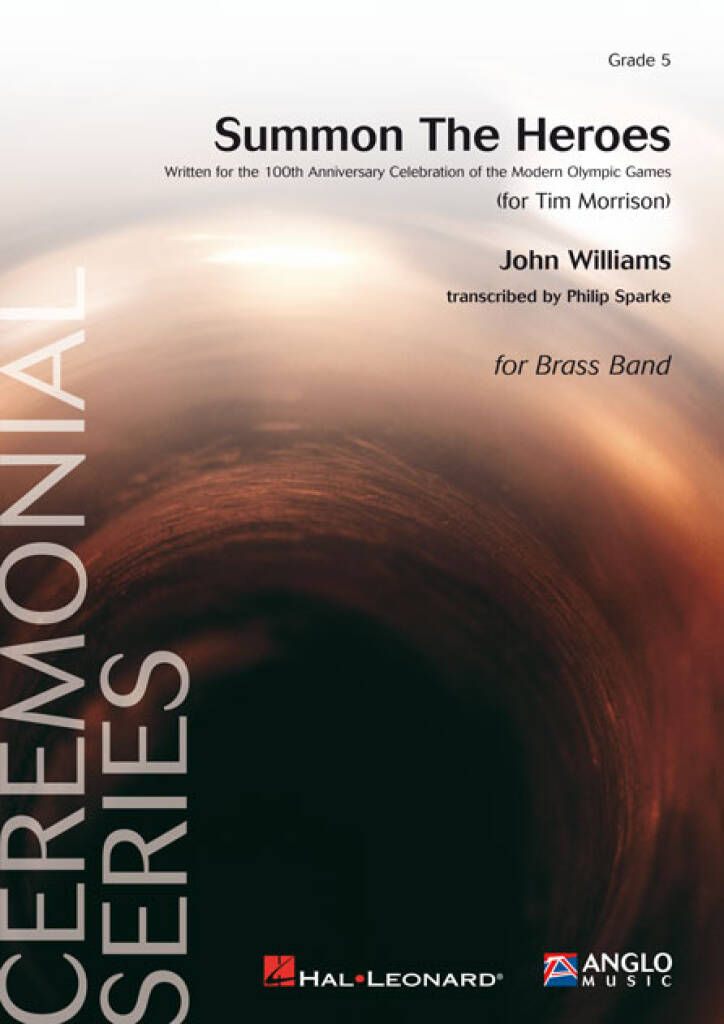
Summon the Heroes - John Williams
John Williams has written ceremonial music for many major events and ceremonies but of all these occasional pieces Summon the Heroes is the most elaborate and musically complex. It was composed for the Atlanta Olympic Games in 1996 and performed at the opening ceremony. As with all of John Williams' ceremonial compositions this work makes an ideal Brass Band work that will bring the house down as a concert opener.
Estimated dispatch 5-14 working days
-
£54.99
Hymnus Antverpiae - Jan Van der Roost
This hymn was commissioned by "Antwerpen 93". And this city, on the banks of the river Schelde has been nominated "Cultural Capital of Europe" for 1993. The work-group "animatie" took the initiative and commissioned a hymn, which -as the finale to a grand open-air event on 27th March- was premiered by hundreds of musicians from all over Europe. Philippe Langlet (France) was the conductor at this majestic occasion.Musically speaking the piece can no doubt be labeled easy. Indeed it is meant to represent a hymn, playable by all in different instrumental combinations. Consequently a variable instrumentation was chosen and a type of music, which by native is easily accessible anduncomplicated.The conductor is free -in the instrumentation- to score this piece according to his own taste. It is perhaps advisable to use the sharp brass in the forte parts, in order to make the range in the sound of the orchestra as colouful as possible. The percussion parts are not absolutely essential, so that the hymn can also be performed without percussion.
Estimated dispatch 5-14 working days
-
£60.99
Conzensus - Jan Van der Roost
This stately concert opener was originally written by Jan Van der Roost for a special event in which six respected wind orchestras (two Belgian and four Dutch) of different composition (two symphonic bands, two fanfare bands and two brass bands) were featured during six concerts. Each evening brought forth a performance by a symphonic band, a fanfare, and brass band, so that the audience could experience all three types of ensembles. This was indeed an original concept.The name, ConZEnSus, comes from a combination of the words, 'Concert Cyclus' (concert series) and 'zes' (Dutch for 'six'). This leads to a new word, which refers to 'consensus'. The general tenor of the cycle isthus immediately indicated. The richness of color of the various ensembles is revealed through an open and friendly atmosphere. During all six concerts (over a span of three years), ConZEnSus functioned as a permanent opening number for each orchestra. Thus the same musical story was portrayed in three different packages.
Estimated dispatch 5-14 working days
-
 £69.99
The Spirit of Christmas - Jacob de Haan
The Spirit of Christmas is a medley of charming Christmas carols, all with an international character. The medley consists of the following five carols: Away in a Manger - The First Noel - It Came Upon the Midnight Clear - O Come, All Ye Faithful and Hark! The Herald Angels Sing. A four-part choir part in English has been added which can be used ad lib. or you can also opt for singing the melody line only, for example with a soloist and/or the congregation. The arrangement is not too high pitched so that the work can also be used in combination with a children's or High School choir.
Estimated dispatch 5-14 working days
-
 £104.99
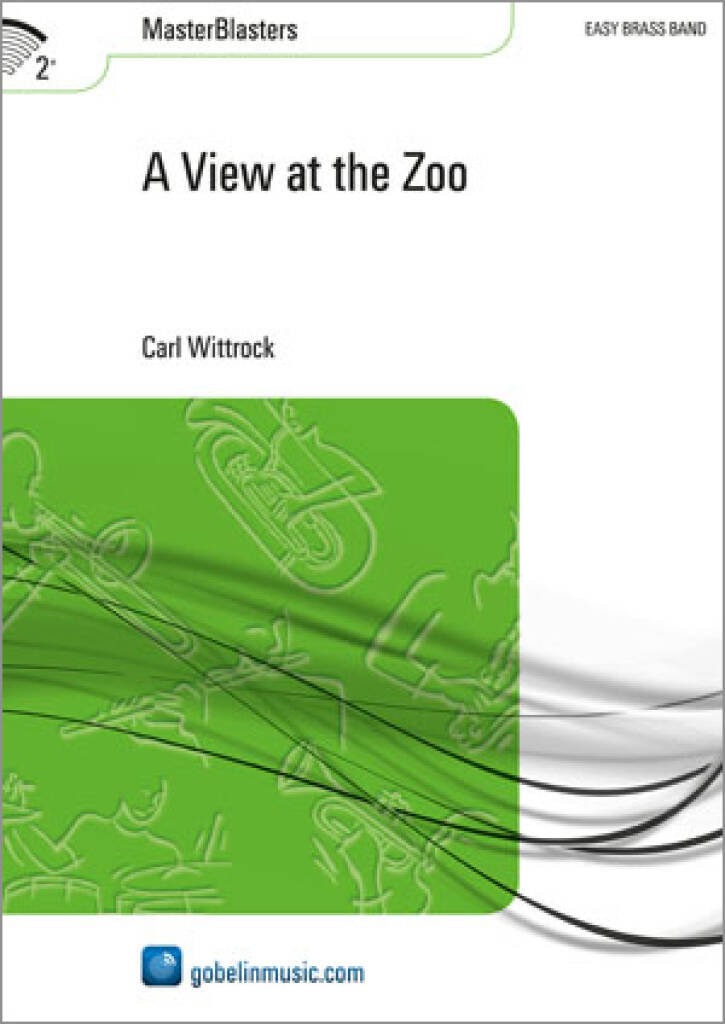
A View at the Zoo - Carl Wittrock
Everybody is familiar with the zoo. Remember all those animals? Big ones, small ones. Water dwellers, air-bound birds, long legged hoppers, creeping bugs. All animals seem to have their own peculiarities. Now, Carl Wittrock (who also composed the world-famous master piece 'Lord Tullamore') invites you to join him in a musical exploration of the animal kingdom. An invitation you must not reject! In his 'A view at the Zoo', Wittrock presents ten distinctly different animals as compositions of music. You may be familiar with some of those animals, such as the white swan or the butterfly, but there are also more exotic breeds, like the lion, the monkey, or theelephant. The composition as a whole is built around a structure of shorter fragments reminiscent of 'The Paintings Exhibition' by Moussorgsky. The parts are decorated with recognizable illustrations of the different animals. At each composition, Wittrock looks for something that can fascinate both musicians and listeners. In this he succeeded extremely well.
Estimated dispatch 5-14 working days
-
 £149.40
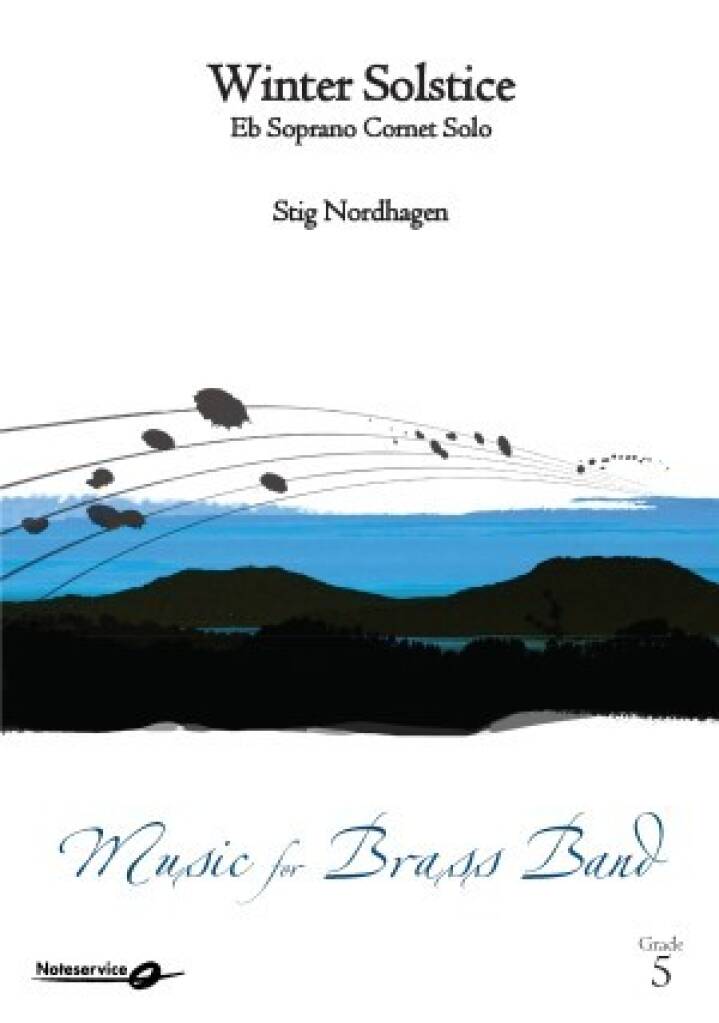
Winter Solstice - Stig Nordhagen
This work describes the shortest day og the year, but also the longest night. The solo cornet summarizes the struggle of the winter and darkness. The solo rises out of the coral in the beginning of the piece, and escapades into rhapsodic parts, until the coral again catches all players in the ensemble.Throughout the piece we hear the soloist take us on a journey from despair and darkness, through gratitude for the solstice that turns the night into day. And gives us all light and hope for a better tomorrow.
Estimated dispatch 5-14 working days
-
 £23.50
A Brussels Requiem - SCORE ONLY - Bert Appermont
The attacks in Brussels on 22 March 2016 created a shockwave throughout Belgium and the rest of the world. Equally, the attacks in Paris and Nice led to great public indignation, fear and disbelief. What has happened to the western world? Have our cultures grown apart to such an extent that we do not understand each other anymore? Bert Appermont's intention was to voice certain emotions that these acts of terror have caused: particularly fear, grief, anger, and helplessness. He uses the French children's song Au Claire de la Lune as a connecting thread throughout the work. This piece is also about hope and faith in another world, and is meant to pay homage to all victims, resulting in a dignified remembrance. The musical development is presented in four through-composed parts, titled Innocence, In Cold Blood, In Memoriam - We Shall Rise Again and A New Day. This work was commissioned by the Brassband Oberosterreich (Brass Band Upper Austria) to be played at the European Brass Band Championships 2017.
Estimated dispatch 5-14 working days
-
 £379.99
Tranquil Abiding - Paul Mealor
An 18-minute work for brass band, written for the world renowned Foden's Band. This is a melodic work divided into three movements. All sections of the band are featured with solo parts. Each movement is headed by a line from a poem by James Agee, the American novelist and poet. 'Tranquil Abiding', often referred to as 'Shamatha' in Buddhist traditions, signifies a state of peaceful and calm mental stillness, achieved through focused meditation, where the mind rests peacefully and without agitation."The term has always resonated with me particularly during my long, regular walks into, around and along the amazingly beautiful woodlands, mountains and streams of North Wales at night lit only by the stars. It's during these walks that my meditative focus is at its most emotive and I am at one with the 'it' that surrounds us", says Paul Mealor. "Often on these walks and meditations I am reminded of the American poet, James Agee's pantheistic vision of the natural world and the stars above, 'Sure on this Shining Night' which conjures a serene and harmonious image of a summer night, illuminated by celestial bodies and bathed in kindness. The poem evokes a sense of peace and tranquillity as nature heals and the earth is rejuvenated".
Estimated dispatch 5-14 working days
-
 £154.99
A Brussels Requiem - Bert Appermont
The attacks in Brussels on 22 March 2016 created a shockwave throughout Belgium and the rest of the world. Equally, the attacks in Paris and Nice led to great public indignation, fear and disbelief.What has happened to the western world? Have our cultures grown apart to such an extent that we do not understand each other anymore? Bert Appermont's intention was to voice certain emotions that these acts of terror have caused: particularly fear, grief, anger, and helplessness. He uses the French children's song Au Claire de la Lune as a connecting thread throughout the work.This piece is also about hope and faith in another world, andis meant to pay homage to all victims, resulting in a dignified remembrance. The musical development is presented in four through-composed parts, titled Innocence, In Cold Blood, In Memoriam - We Shall Rise Again and A New Day.This work was commissioned by the Brassband Obersterreich (Brass Band Upper Austria) to be played at the European Brass Band Championships 2017.
Estimated dispatch 5-14 working days
-
 £115.60
Dream of the Return - Pat Metheny - Ray Farr
Dream of the Return is one of the tracks on Pat Metheny's album of 1989 "Letter from Home".The CD recording is remarkable for its variety, imagination and musical artistry, and the combining of Latin American rhythms with jazz harmonyproduces magical results especially with Pat Metheny's guitar playing.While most tracks on the CD are instrumental, this song stands out because of its beautiful lyrics (by Pedro Aznar) which, roughly translated, are:I tossed a poemto the sea that took my questions and my voice.Like a sinking ship it was lost in the waves.I begged it not to return without having seen the open seaAnd in my dreams, show me what it had seen.Even if it did notcomeback I would know that it had journeyed.Floating all the time on calm or stormy seasEven though some safe haven waits.I waited long for its answer and almost gave up hope,And with a yearning voice I cried desperatelyto the heavens.Much later, somehow, it was washed ashore like an answered prayer.Now the rolling sea beats in my veins and sets my heart free
Estimated dispatch 5-14 working days
 View Music