Results
-
 £48.00
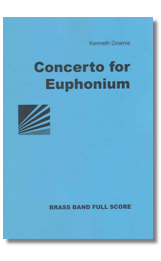
Concerto for Euphonium - Kenneth Downie
An accessible and enjoyable showpiece for soloists of all ages. The concerto's three movements are in a tuneful, melodic style and bravura passages are mixed with others designed to exploit the singing qualities of the instrument. The first movement is a vigorous allegro in which the short, pithy motifs of the opening theme contrast with the broad sweep of the second subject. A short cadenza-like passage yields to a high-spirited episode before a reprise of the opening ends the movement quietly. The second movement opens with a warm, romantic melody which is soon taken up by the soloist. A short animated section gives way to the earlier tutti theme, this time with passionate decoration from the soloist before the music gently unwinds in a tranquil coda. The finale has a bouncy, festive feel. After the first subject runs its course there is a brief journey through a more contrapuntal style, before a spirited presto moves into a compound episode before returning to the opening idea. A jubilant coda brings the work to a conclusion.
Estimated dispatch 7-9 working days
-
 £60.00
Concerto for Euphonium (Parts only) - Kenneth Downie
An accessible and enjoyable showpiece for soloists of all ages. The concerto's three movements are in a tuneful, melodic style and bravura passages are mixed with others designed to exploit the singing qualities of the instrument. The first movement is a vigorous allegro in which the short, pithy motifs of the opening theme contrast with the broad sweep of the second subject. A short cadenza-like passage yields to a high-spirited episode before a reprise of the opening ends the movement quietly. The second movement opens with a warm, romantic melody which is soon taken up by the soloist. A short animated section gives way to the earlier tutti theme, this time with passionate decoration from the soloist before the music gently unwinds in a tranquil coda. The finale has a bouncy, festive feel. After the first subject runs its course there is a brief journey through a more contrapuntal style, before a spirited presto moves into a compound episode before returning to the opening idea. A jubilant coda brings the work to a conclusion.
Estimated dispatch 7-9 working days
-
 £38.95
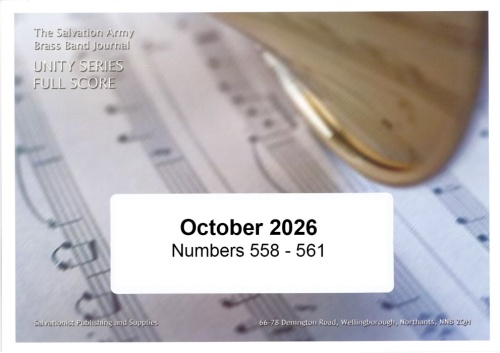
Unity Series Band Journal - Numbers 558 - 561, October 2026
558: Jesus is the winner! (Samuel Ekong)Jesus is the Winner is the publishing debut of Samuel Ekong, Band Secretary at Abuja Central Corps in the Nigeria Territory. Based on a popular song associated with renowned worship leader Ron Kenoly, this arrangement centres on the infectious chorus, "Jesus is the winner man". While the original song was performed in a reggae style, Ekong has reimagined it with a lively swing feel, creating a joyful and accessible work for brass band. Full of rhythmic energy and uplifting spirit, the arrangement encourages a light, buoyant approach throughout and offers an engaging concert item that is sure to be enjoyed by performers and audiences alike.559: Festival Arrangement - Hearts Ablaze (Marcus Venables)Written at the request of Jonathan Evans for Sale Salvation Army Band, Hearts Ablaze is based on the popular contemporary worship song Build Your Kingdom Here that has become especially significant within the corps. The music captures the passion, prayer and enthusiasm of its message, combining bold opening statements with lyrical moments and energetic rhythmic drive. After introducing the familiar melody, the work develops into a vibrant celebration built around the song's call: "Set your Church on fire... Build your kingdom here, we pray." Uplifting and engaging throughout, the piece offers both performers and audiences a joyful and inspiring musical experience.560: Cornet Solo - Soul Saver (Ian Robinson)Based on the well-known chorus Thank You, Lord, for Saving My Soul by Seth and Bessie Sykes, this solo is a heartfelt expression of gratitude for God's gift of salvation. The familiar melody is presented in an expressive setting that allows the soloist to communicate the simple yet powerful message of the song. Contrasting lyrical passages, rich harmonic colours and moments of gentle brilliance combine to create an engaging musical journey. Throughout, the focus remains on the chorus's timeless theme of thanksgiving, making this a moving and devotional addition to the brass band solo repertoire.561: Chorus Selection - God's Presence (Howard Davies)God's Presence by Major Howard Davies combines three well-known songs that explore the believer's walk with God. The selection includes Philip P. Bliss's Let the lower lights be burning, Charles H. Fillmore's O I love him, and the familiar Salvation Army chorus God is with us all the time (S.A.S.B. 1028). Each melody expresses a different aspect of Christian faith, from witness and devotion to the assurance of God's presence. Suitable as both a concert item and a congregational feature, this accessible arrangement offers warmth, variety and a clear spiritual message for performers and audiences alike.
Estimated dispatch 7-14 working days
-
 £77.00
General Series Brass Band Journal, Numbers 2226 - 2229, December 2022
2226: March - Joyful Warrior (Steve Kellner)This march was written to celebrate the rededication and renaming of the USA National Capital & Virginia Division's music conservatory building in honour of Bandmaster James B. Anderson. It is based on two songs, Joy! joy! joy! there is joy in The Salvation Army (S.A.S.B. 963) and Joyful, joyful, we adore thee (S.A.S.B. 39).2227: Song and Dance (Ian Clarke)This music is built around two main subjects, the song Jesus put this song into our hearts (S.A.S.B. 875) and an original theme reminiscent of Slavic dance music.2228: Horn Solo - Time and talents (Stephen Bulla)A reverent tenor horn solo inspired by All there is of me, Lord (S.A.S.B. 569)2229: Promises (Sam Creamer)The well-known hymn Standing on the promises (S.A.S.B. 522) is presented in this arrangement in a driving shuffle style.
Estimated dispatch 7-14 working days
-
 £120.00
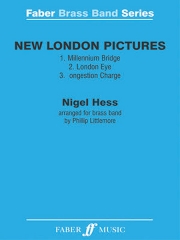
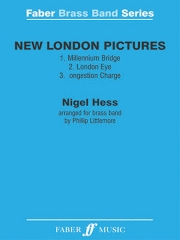
New London Pictures (Brass Band - Score and Parts)
New London Pictures represents elements of London in the 21st Century. The Millennium Bridge describes the pedestrians journey across this wonderful new landmark bridge over the Thames, starting at the imposing Tate Modern, crossing the busy river, and onwards to St. Pauls Cathedral with its bells ringing out over the great city. London Eye is an incredibly large ferris wheel situated on the South Bank of the River Thames. This movement depicts a flight on this riverside wheel, at the top of which the panoramic view of London is breath-taking and the expanse of the music is a suitable depiction of the view. As with all modern cities, London is over-crowded with motor vehicles. London is the first major city in Europe to adopt a Congestion Charge, and this piece (with its stop and go traffic lights) is both racy and comical. Here are Londoners attempting to go about their business in the face of overwhelming odds..... Suitable for Premier Youth/2nd Section Bands and above. Duration: 15.00
Estimated dispatch 7-14 working days
-
 £27.00
Auld Lang Syne (Brass Band - Score and Parts)
It is a tradition in most English-speaking countries to sing this song at the stroke of midnight on New Year's Eve to usher in the New Year. The words are at least partially written by Robert Burns and the words "Auld Lang Syne" literally mean "old long ago" or "the good old days", providing a moment of reflection before moving forwards into the New Year.The tubular bells, although pitched, sound midnight when they enter at bar 10.This arrangement was prepared for Brass Band of the Western Reserve, musical director Keith M Wilkinson, to perform at First Night, Akron, Ohio, December 31st, 2007. The following choreography is suggested:Commence the performance with all the cornets scattered around the auditorium.At the end of bar 18 invite the audience to sing along with the band.At bar 27 the cornets move to stand in front of the other members of the band to lead to the stirring conclusion. Should auld acquaintance be forgot and never brought to mind?Should auld acquaintance be forgot and days of auld lang syne?For auld lang syne, my dear, for auld lang syne,We'll take a cup of kindness yet, for auld lang syne.
Estimated dispatch 7-14 working days
-
 £34.95
Sprites and Flares (Brass Band - Score and Parts)
Sprites and Flares (2015), refers to the uncertain activities of sprites (upper atmospheric lightening) and solar flares (solar activity from the sun which cannot penetrate the earth's atmosphere) and uses these two ideas as a basis for the kind of musical material heard within the work - dramatic, swirling motifs, often of a virtuosic nature.The work's dramatic opening ensures the first thirty seconds are high in energy and full of impact. Following this, the music dies down and presents an ethereal atmospheric section, perhaps reflecting the calm before the storm. Before long, the music takes a turn for dramatic, fast, virtuosic playing, all reflecting the theme of the work, and indeed remains in this style through to the close, gaining momentum and becoming ever- more triumphant as the work reaches its close. A huge ending is heard, full of excitement and drama, but more importantly grandeur and rich harmonic-chords.The work was commissioned by and written for Leyland Band and its conductor, Thomas Wyss, as the finale to its 2015 Brass in Concert programme, premiered at The Sage, Gateshead, on 15th November 2015.
Estimated dispatch 7-14 working days
-
 £34.95
Sprites & Flares - Christopher Bond
Sprites & Flares (2015), refers to the uncertain activities of sprites (upper atmospheric lightening) and solar flares (solar activity from the sun which cannot penetrate the earth's atmosphere) and uses these two ideas as a basis for the kind of musical material heard within the work - dramatic, swirling motifs, often of a virtuosic nature. The work's dramatic opening ensures the first thirty seconds are high in energy and full of impact. Following this, the music dies down and presents an ethereal atmospheric section, perhaps reflecting the calm before the storm. Before long, the music takes a turn for dramatic, fast, virtuosic playing, all reflecting the theme of the work, and indeed remains in this style through to the close, gaining momentum and becoming ever- more triumphant as the work reaches its close. A huge ending is heard, full of excitement and drama, but more importantly grandeur and rich harmonic-chords. The work was commissioned by and written for Leyland Band and its conductor, Thomas Wyss, as the finale to its 2015 Brass in Concert programme, premiered at The Sage, Gateshead, on 15th November 2015.
Estimated dispatch 10-14 working days
-
£125.00
New London Pictures - Nigel Hess
New London Pictures represents elements of London in the 21st Century. The Millennium Bridge describes the pedestrian's journey across this wonderful new landmark bridge over the Thames, starting at the imposing Tate Modern, crossing the busy river, and onwards to St. Paul's Cathedral with its bells ringing out over the great city. London Eye is an incredibly large ferris wheel situated on the South Bank of the River Thames. This movement depicts a 'flight' on this riverside wheel, at the top of which the panoramic view of London is breath-taking and the expanse of the music is a suitable depiction of the view. As with all modern cities, London is over-crowded with motor vehicles. London is the first major city in Europe to adopt a Congestion Charge, and this piece (with its stop and go traffic lights) is both racy and comical. Here are Londoners attempting to go about their business in the face of overwhelming odds.....Brass Band Grades 4/5: Premier Youth and 2nd SectionDuration: 15 minutes
In Stock: Estimated dispatch 1-3 working days
-
£47.00
Dial M for Midnight - Matthew Hall
Dial M for Midnight is a jazz-based solo for aspiring and accomplished cornet players alike. Technically not particularly demanding yet quite complicated rhythmically, Dial M allows players young and old to stand up and show off their skills in a work which has it's roots in Latin America but travels through the late night smoke-filled jazz clubs along the way. Commissioned by Jim Hayes for his debut CD recording, Dial M is the title track. Nicknamed Jimmy Midnight, Jim Hayes has established himself as one of the leading cornet players in the world playing within the Scottish Co-Op Band. Dial M is a take on Jim's persona and his love of jazz, the culmination of which ends up as a witty pastiche signature track of all things James Bond to Perry Mason.
Estimated dispatch 5-7 working days