Results
-
£30.00Eriskay Love Lilt (with brass band) - Trad
Eriskay Love Lilt is a traditional Gaelic melody from the Western Isles of Scotland, sensitively arranged here by Andrew Duncan as a cornet solo with brass band accompaniment.This arrangement was written in 2001 for Phillip McCann and was first played by him with the Hepworth Band at the 2002 Leek Music Festival in Derbyshire, England. It has also since been recorded by Eleanor Ferguson with the Whitburn Band on Reflections of Freedom.Andrew Duncan comments: The Isle of Eriskay (Eirisgeigh) lies forty miles off the North West coast of Scotland in the North Atlantic. It is a small island, only two kilometres square and lies between the larger islands of South Uist and Barra. Eriskay is one of the islands which form the archipelago known as the Western Isles or Na h-Eileanan an Air. The Eriskay Love Lilt is a hauntingly beautiful tune which is typical of the greater number of traditional Gaelic melodies in that it is largely based on the Aeolian mode, the black notes on the piano.Also available with piano accompanimentor as a solo with brass ensemble (10-piece).
In Stock: Estimated dispatch 3-5 working days
-
£35.00A Manchester Tale - Andrew Duncan
This stunning piece depicts life in the City of Manchester in the years surrounding the Second World War and the effect these years had on the citizens of Manchester. It's a striking work, with creativity and colour, overflowing with emotion and atmosphere. For maximum effect, it even includes an optional part for a wartime siren which announces the start of an air raid attack.Winner of 'Best New Work' at Spennymore Brass Band Contest in 2000 (played by the Grimethorpe Colliery Band conducted by Garry Cutt), and featured on the Sellers Band CD, Celtic Connections.Look and Listen (performance courtesy of RNCM Brass Band at Unibrass 2018):
In Stock: Estimated dispatch 3-5 working days
-
£40.00Little Christmas - Elaine Agnew
An atmospheric, contemporary piece for brass band by prolific composer Elaine Agnew. The work was originally commissioned by the North of Ireland Bands' Association as the 'B Section' test piece for the 2006 European Brass Band Championships, with funds from the Arts Council of Northern Ireland Lottery Unit and Belfast City Council.Programme notes:The night of Sunday the sixth of January 1839 was a night of madness. On this night, Ireland was hit by a devastating storm. Little Christmas focuses on the events of that day, leading to the arrival of the storm itself.The piece opens with a blast, which is quickly hushed by a motionless phrase whose silence suggests something not quite right. A solo euphonium mimics the local seer who prophesizes the coming of the storm but who is ignored by the locals, who are well used to his rantings and ravings.A brief percussion improvisation hints at an uncertainty in the air but this is quickly ignored by the following fast section with the bustle and excitement of the day's preparations.Quiet solo chromatic lines swoosh over harmonic pillars of sound before the final "dizzy" section where the band lets rip at the arrival of the storm!
In Stock: Estimated dispatch 3-5 working days
-
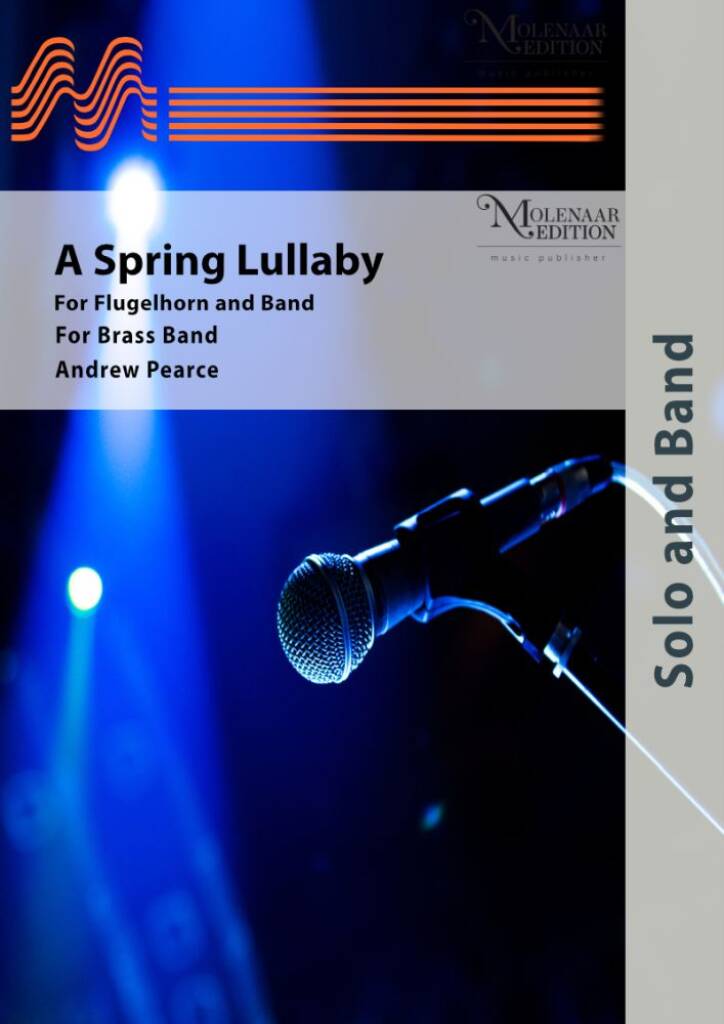
£73.60A Spring Lullaby - Andrew Pearce
During the past few years, Andrew Pearce enjoyed a fruitful collaboration with Phillip Cobb, principal trumpet of the London Symphony Orchestra, composing such works as The Maestro and Interlude for his album in 2012. Later Cobb invited Pearce to compose a slow melody, accompanied by the Central Band of the Royal Air Force for Cobb's upcoming album, displaying his softer, expressive side on flugelhorn. This song-like, warm lilting lullaby reflects on the joy of life.
Estimated dispatch 5-14 working days
-
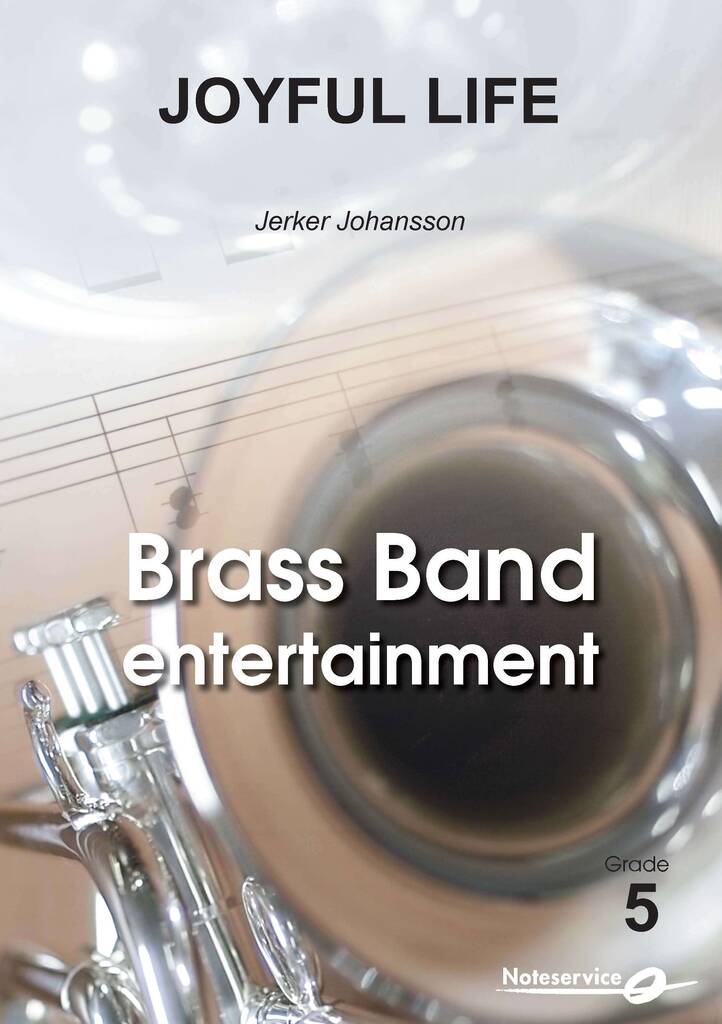
£115.60Joyful Life - Jerker Johansson
When Jerker Johansson in the 80's started to compose he was for a while obsessed with writing music in odd time signatures, more specifically 7/8. He was asked during the fall of 2020 by Leif Karlsson (former member of the legendary percussion ensemble Kroumata and nowadays conductor) to write something challenging for Uppsala Blasarsymfoniker and this resulted in Joyful Life. The piece is, to say the least, difficult to tap the pulse along to and is something of a baptism of fire for the musicians, regarding rhythmic precision. Joyful Life is dedicated to the always likeable Leif Karlsson (Joyful Leif!) and was premiered on the 15th November 2020 by The Swedish Air Force Band under the baton of the composer.
Estimated dispatch 5-14 working days
-
£30.00Dresden - Brass Band - Full Score & Parts - LM955
COMPOSER: Alex McGeeThebombing of Dresdenwas aBritish-Americanaerial bombing attackon the city ofDresden, the capital of the Germanstate ofSaxony, duringWorld War II.In four raids between 13th and 15th February 1945, 722 heavy bombers of theBritishRoyal Air Force(RAF) and 527 of theUnited States Army Air Forces(USAAF)dropped more than 3,900 tons ofhigh-explosivebombsandincendiary deviceson the city.The bombing and the resultingfirestormdestroyed more than1,600 acres (6.5km2) of the city centre.An estimated 22,700to 25,000people were killed.Three more USAAF air raids followed, two occurring on 2nd Marchaimed at the city'srailway marshalling yardand one smaller raid on 17th April aimed at industrial areas.
In Stock: Estimated dispatch 3-5 working days
-
£25.00Scramble (Alex McGee) - Cornet & Brass Band Full Score and Parts - LM424
COMPOSER: Alex McGeeScramble was composed for Kidlington Concert Brassto be performed as part of their 2022 series of events.A solo cornet feature, the principal cornet needs his orher wits about them as they take to the skies,musically speaking in their Spitfire.The work was inspired by the history of what is now Oxford Airport,but was in a previous life RAF Kidlington.During WWII numerous squadrons were based there as forwardoperating Spitfires were a staple of the bases arsenal.Scramble is told from the perspective of a young pilot,a begins with him in a troubled sleep,which is shattered by the wail of an air raid siren.From that point we rushed to his aircraft and races into theskies to defend the United Kingdom as one of 'the few'who prevented the risk of invasion during the legendary Battle of Britain.This work is dedicated to all those, in the air and on the ground,and of all nationalities who served in the Battle of Britain.
In Stock: Estimated dispatch 3-5 working days
-
£59.95Bonnie Northumbria - Brass Band - LM786
COMPOSER: Laurie JohnstonProgramme NotesNorthumberland, or Northumbria as it is also known, is the most northern county in England and has magnificent and stunning landscapes just waiting to be explored. Filled with mystical castles, atmospheric ruins and historical sites and edged by spectacular coastal scenery, there is something wonderful to see at every turn. The Devils Causeway passes through Northumbria and reaches Berwick upon Tweed at the coast. Walkers and cyclists can also take the Coast and Castles Cycle Route or the North Sea Trail which journey through some of the most beautiful scenery along the way.The Blaydon Races is aGeordiefolk songwritten in the 19th century byGeordie Ridley, in a style deriving frommusic hall. It is regarded by many as the unofficialanthemofTynesideand is frequentlysungby supporters ofNewcastle United Football ClubandNewcastle Falconsrugby club.Blaydonis a small town inGateshead, situated about 4 miles (6.4km) fromNewcastle upon Tyne, inNorth East England. The race used to take place on the Stella Haugh 1 mile (1.6km) west of Blaydon.Stella South Power Station(demolished in 1995) was built on the site of the track in the early 1950s, after the races had stopped taking place in 1916.Water of Tyne (sometimes rendered as The Waters of Tyne) is a folk song (Roud number1364) from the north-east of England. The song is sung by a girl or woman lamenting the fact that her paramour is on the opposite bank of theRiver Tyne. Sleeve notes to Michael Hunt's recording of Tyneside songs states that "the ferry is believed to be that atHaughton Castleon theNorth Tyne". Alternatively the "rough river" in the last line may indicate a point further downstream, possiblyTynemouth.The song was collected byJohn Bellin 1810 and published two years later inRhymes of Northern Bards.The Keel Row is a traditional Tyneside folk song evoking the life and work of thekeelmenofNewcastle upon Tyne. A closely related song was first published in aScottishcollection of the 1770s, but may be considerably older, and it is unclear whether the tune is Scottish or English in origin.The opening lines of the song set it inSandgate, that part of the quayside overlooking the River Tyne to the east of the city centre where the keelmen lived and which is still overlooked by theKeelmen's Hospital.Versions of the song appear in both England and Scotland, with Scottish versions referring tothe Canongaterather than Sandgate. The earliest printing was in the 1770s inEdinburghin A Collection of Favourite Scots Tunes, edited by Charles Maclean, though the tune was also found in several late eighteenth-century English manuscript collections. As the term "keel" was used both sides of the border, it has not been determined which version was the original, althoughFrank Kidsonsurmised that like many other songs collected by Maclean it may originally have been aJacobiteair from the time of the1745 rebellion. Some versions of the song make reference to a "blue bonnet[...] with a snowy rose upon it", a clear attempt to evoke Jacobite symbolism, whether dating from 1745 or not.Kidson, however, also noted that he had found the tune of The Keel Row associated with an early dance called "The Yorkshire Lad" as early as 1748.By the 19th century the tune was well associated with the River Tyne; a few years before the 1850s the keelmen had met yearly to celebrate the founding of the Keelmen's Hospital, perambulating the town to the accompaniment of bands playing The Keel Row.Dance To Thy Daddyis a traditional Englishfolksong, originating inNorth East England. An early source for the lyrics, Joseph Robson's "Songs of the bards of the Tyne", published 1849, can be found on the Farne archive. In Farne's notes to the song, it is stated that these lyrics were written by William Watson around 1826.
In Stock: Estimated dispatch 3-5 working days
-
£83.00
A Bournemouth Suite - Benjamin Tubb
Bournemouth Suite was written by Benjamin Tubb in 2005, when the composer was just 17 years of age. After spending many school holiday weeks with his grandparents in the coastal town of Bournmouth, it was obvious that these experiences would make a great basis for a composition.This testpiece is split into three separate movements: Balloon Ride, The Pier at Night and The BIC. Each movement has its own unique character, although there are ideas shared by all three throughout, one of which is the opening syncopation.Balloon RideThe First movement, Balloon Ride, describes a journey on "The Bournemouth Eye", a tethered hot air balloon that takes you up 500 feet. It's located in the middle of the town centre, which enables you to see surrounding countryside for up to 20 miles! The movement begins rather ominously as the balloon raises from the ground which leads into a more lively section caharacteresed by the repeating quavers in the lower brass and woodblock. The movement ends in much the same way as it started - signalling the return to terra firma.The Pier At NightDuring the summer there are several large firework displays in the town centre. The second movement, The Pier At Night descirbes an evening spent on the beach in deckchairs watching the montage of colours in the night-time sky. With demanding solos for horn and cornet, as well as exposed playing spread throughout the band, this slow movement will really test a band's expressive and lyrical playing.The 'BIC'The Bournemouth INternational Centre, also known as "The BIC" is one of Bournemouth's most visited attractions, and regularly hosts shows such as 'Riverdance' and pantomimes. Inside is a world of entertainment and the centre itself is just a stone's throw from both "The Bournemouth Eye" and the Pier. The 3rd movement has been written to describe the buzz of activity surrounding the BIC, and the entire works ends with the same syncopated motif from the beginning.A Bournemouth Suite was set as the 'set-test' at the Pontins Brass Band Championships 2009.
Estimated dispatch 7-14 working days
-
£35.00Ariel
DescriptionAll hail, great master! Grave sir, hail! I come To answer thy best pleasure, be 't to fly, To swim, to dive into the fire, to ride On the curled cloud. To thy strong bidding, task Ariel and all his quality. - William Shakespeare: The Tempest, Act 1, Scene 2Ariel was written for the Hammonds Band to open their programme at the 2019 Brass in Concert Championships at The Sage Concert Hall in Gateshead, where it received its premiere. The title is taken from the character in Shakespeare's play 'The Tempest'. Ariel is an immensely powerful "air spirit" or demon bound to serve Prospero, the exiled Duke of Milan, after being released by Prospero from imprisonment in a tree. In the play Ariel's magical abilities are used to help Prospero revenge himself on his enemies and reclaim his dukedom, whereupon Ariel finally regains his freedom.You can hear an audio preview and follow the score below: Performance notes:The cornets and horns are split into two "choirs" to be placed left and right of the band. It may be possible for the choirs to play their opening flourish offstage, and the optional repeated sections in the opening are to accommodate stage movement if required. Trombones form a third "choir" which should ideally stand centrally between basses and percussion, and the euphoniums and baritones should sit in front of the basses. The work requires four percussionists, although if four are not available the 2nd part may be omitted.Percussion 1: Kit - bass drum, snare, 3 x toms, hi-hat, suspended cymbal - and 3 x temple blocksPercussion 2: Tam tam and orchestral bass drum.Percussion 3: Glockenspiel and timpaniPercussion 4: Tubular bellsSoprano, solo cornets and 3rd cornets require cup mutes. Solo trombone requires a cup mute, second trombone requires a metal straight mute.
Estimated dispatch 7-14 working days