
Results
-
 £3.95
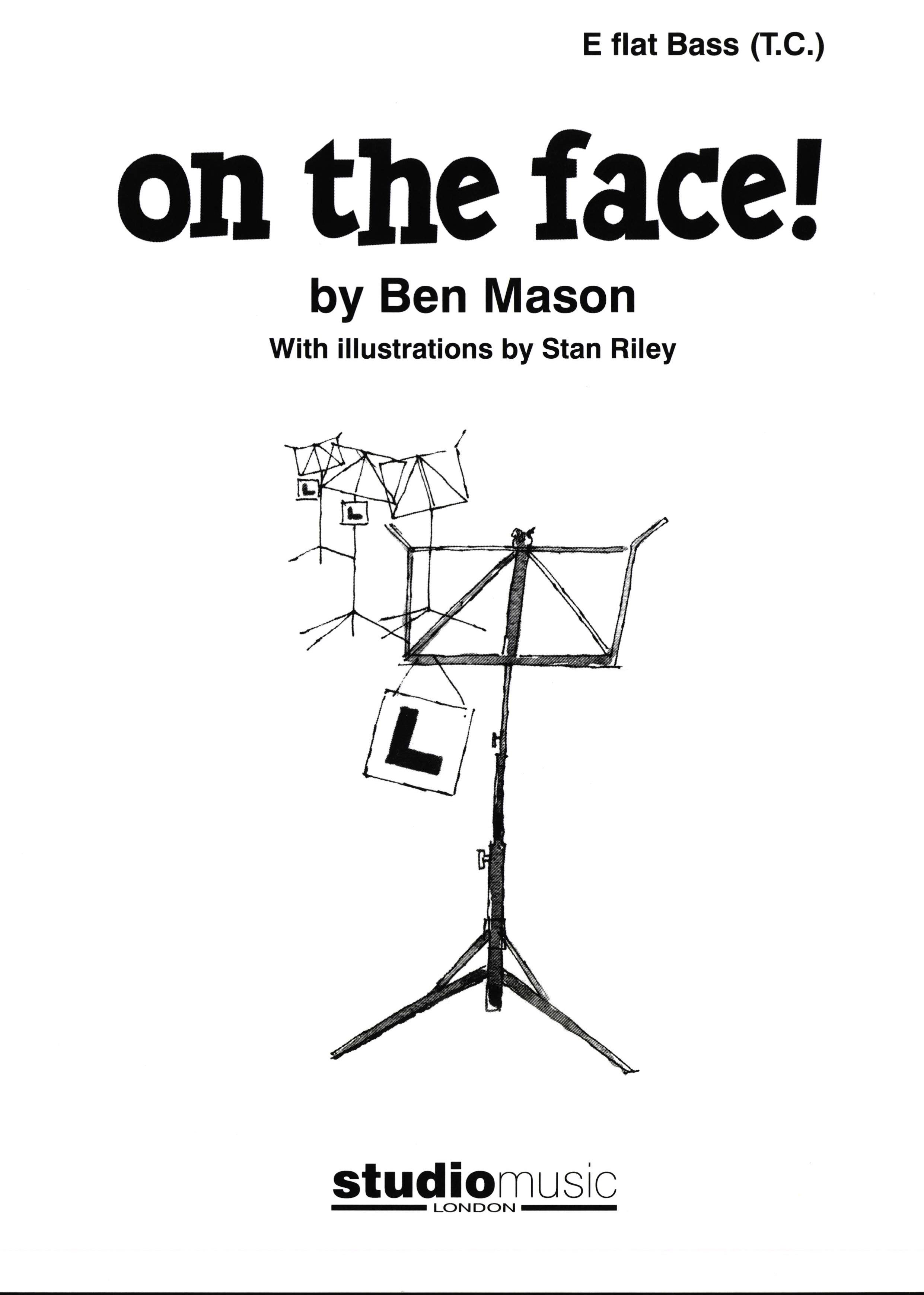
£3.95On the Face! (Eb Bass TC)
On the Face is a complete repertoire (warm-ups and 23 pieces) for beginner brass ensemble. Perfect material for school assemblies and music centres, it includes folk songs, famous classical themes, and exciting new jazz and pop numbers. Each piece is score for a basic trio of two trumpets/cornets and one trombone/euphonium (TC or BC). However, optional independent parts can also be added for horn in E flat or F; high trombone or euphonium (tenor part); tuba; and drum kit. The pieces work equally well either with one player to a part, or in larger group settings. With its appealing variety of musical styles and textures, On the Face is sure to make the young brass player's first experience of group playing both rewarding and fun.
Estimated dispatch 7-14 working days
-
 £3.95
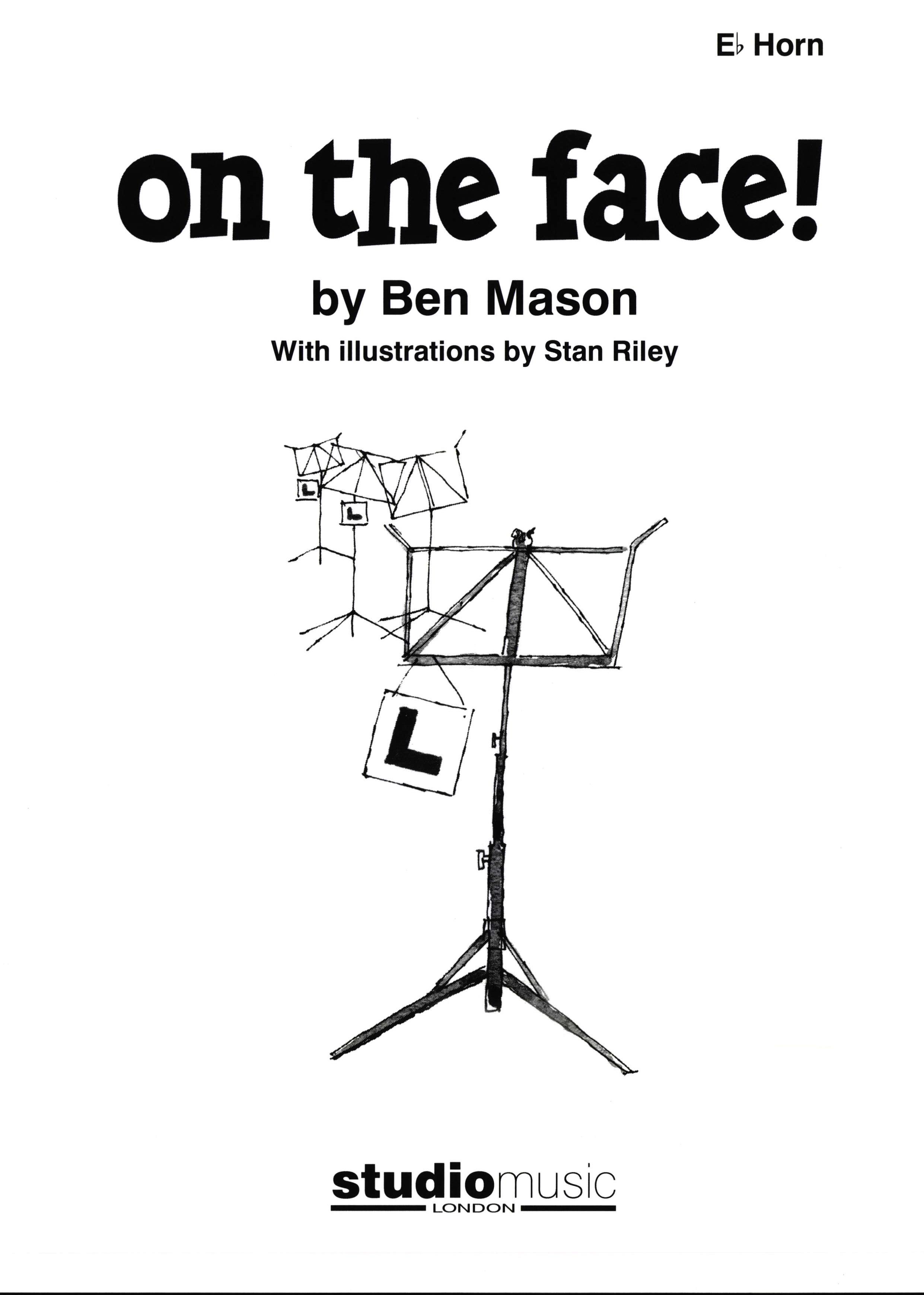
£3.95On the Face! (Eb Horn)
On the Face is a complete repertoire (warm-ups and 23 pieces) for beginner brass ensemble. Perfect material for school assemblies and music centres, it includes folk songs, famous classical themes, and exciting new jazz and pop numbers. Each piece is score for a basic trio of two trumpets/cornets and one trombone/euphonium (TC or BC). However, optional independent parts can also be added for horn in E flat or F; high trombone or euphonium (tenor part); tuba; and drum kit. The pieces work equally well either with one player to a part, or in larger group settings. With its appealing variety of musical styles and textures, On the Face is sure to make the young brass player's first experience of group playing both rewarding and fun.
Estimated dispatch 7-14 working days
-
 £3.95
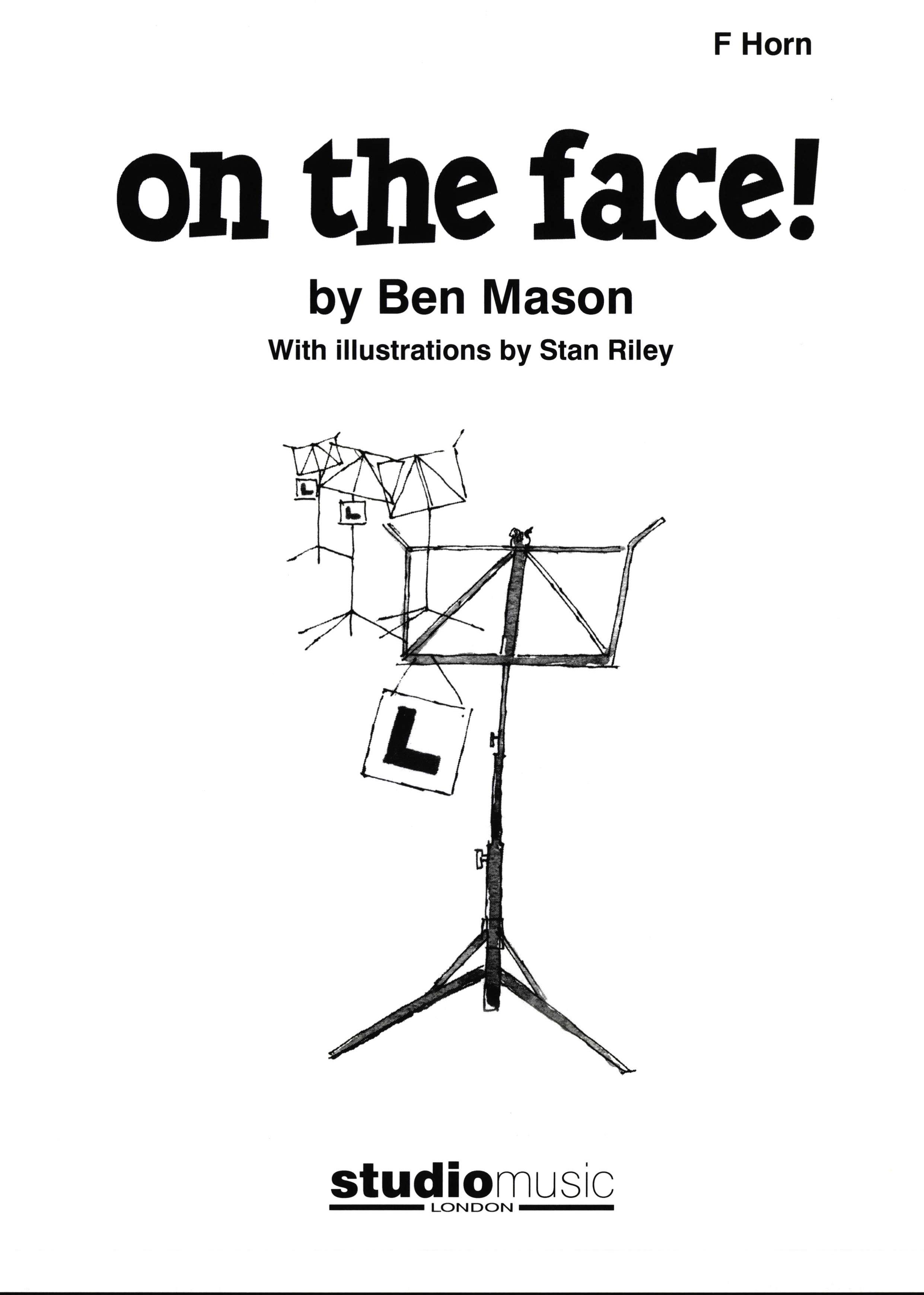
£3.95On the Face! (F Horn)
On the Face is a complete repertoire (warm-ups and 23 pieces) for beginner brass ensemble. Perfect material for school assemblies and music centres, it includes folk songs, famous classical themes, and exciting new jazz and pop numbers. Each piece is score for a basic trio of two trumpets/cornets and one trombone/euphonium (TC or BC). However, optional independent parts can also be added for horn in E flat or F; high trombone or euphonium (tenor part); tuba; and drum kit. The pieces work equally well either with one player to a part, or in larger group settings. With its appealing variety of musical styles and textures, On the Face is sure to make the young brass player's first experience of group playing both rewarding and fun.
Estimated dispatch 7-14 working days
-
 £3.95
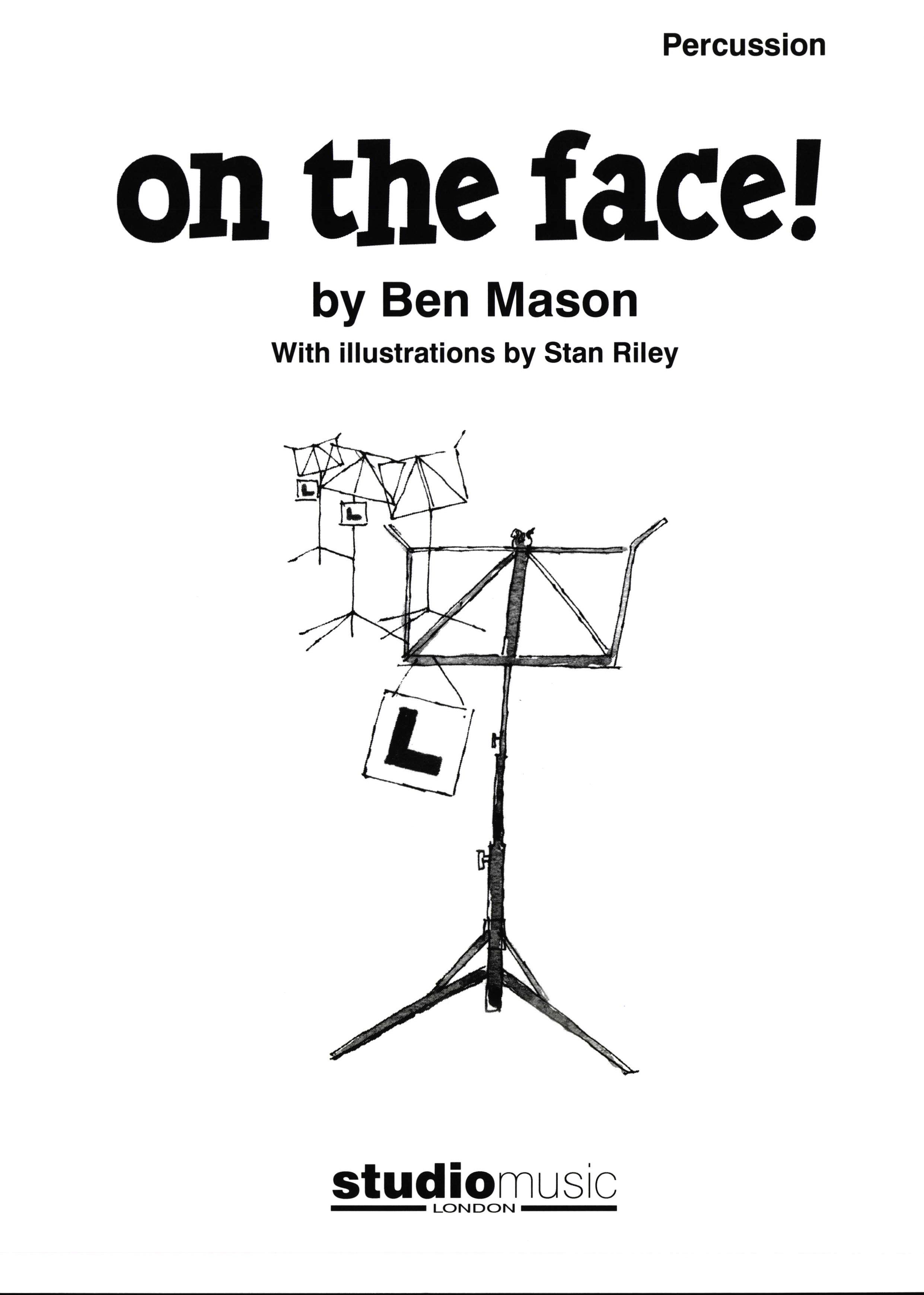
£3.95On the Face! (Percussion)
On the Face is a complete repertoire (warm-ups and 23 pieces) for beginner brass ensemble. Perfect material for school assemblies and music centres, it includes folk songs, famous classical themes, and exciting new jazz and pop numbers. Each piece is score for a basic trio of two trumpets/cornets and one trombone/euphonium (TC or BC). However, optional independent parts can also be added for horn in E flat or F; high trombone or euphonium (tenor part); tuba; and drum kit. The pieces work equally well either with one player to a part, or in larger group settings. With its appealing variety of musical styles and textures, On the Face is sure to make the young brass player's first experience of group playing both rewarding and fun.
Estimated dispatch 7-14 working days
-
 £3.95
£3.95On the Face! (Tuba BC)
On the Face is a complete repertoire (warm-ups and 23 pieces) for beginner brass ensemble. Perfect material for school assemblies and music centres, it includes folk songs, famous classical themes, and exciting new jazz and pop numbers. Each piece is score for a basic trio of two trumpets/cornets and one trombone/euphonium (TC or BC). However, optional independent parts can also be added for horn in E flat or F; high trombone or euphonium (tenor part); tuba; and drum kit. The pieces work equally well either with one player to a part, or in larger group settings. With its appealing variety of musical styles and textures, On the Face is sure to make the young brass player's first experience of group playing both rewarding and fun.
Estimated dispatch 7-14 working days
-
 £37.41
Simply Carols - 45 Favourite Christmas Carols - Brass Band Set
VIEW SCORE PDF This resource features 45 Favourite Christmas Carols aimed at Intermediate Ensemble and above. All arranged by Kevin Larsson, who has over 20 years' experience working with youth ensembles, they are designed to be flexible and playable by a wide range of different groups, including brass, winds and strings. The arrangements use limited ranges, keys and rhythms and fingerings and slide positions are included for accidentals on the brass parts. PDF parts come in both march card an A4 size. Scored for quartet, the arrangements will work just as well with larger groups. Promotional videos for this product can be viewed at: www.youtube.com/watch?v=dTwB-Zy-c08 (short version) www.youtube.com/watch?v=g4IsIM8x7NU (extended version) Sheet music available at www.brassband.co.uk (UK) or www.solidbrassmusic.com (USA). At Solid Brass Music parts, score and piano reduction can be purchased individually. Included in Brass Band Set: Full Score 1st Part Eb1st Part Bb2nd Part Bb2nd Part Eb 3rd Part Eb 3rd Part Baritone Bb3rd Part Trombone Bb4th Part Eb4th Part Bb 4th Part Bass ClefPercussion (optional) Full Set available at www.brookwrightmusic.com/product-page/simply-carols-45-favourite-christmas-carols-for-intermediate-ensemble and includes Piano Reduction Wind Band Set available at www.brookwrightmusic.com/product-page/simply-carols-45-favourite-christmas-carols-wind-band-set Full Score available at www.brookwrightmusic.com/product-page/simply-carols-45-favourite-christmas-carols-full-score
In Stock: Estimated dispatch 1-3 working days
-
 £19.99
Dear Friends
ABOUT THIS PIECE: Introduce a heartfelt and reflective moment to your next programme with this beautiful arrangement of Dear Friends, originally performed by Freddie Mercury and Queen. Written by Mercury and featured on their 1974 album Sheer Heart Attack, this gentle ballad stands out for its simplicity and emotional sincerity, offering a tender message of gratitude and friendship. This arrangement, crafted for a sextet with band accompaniment, preserves the intimacy of the original. It provides a brief, but soulful showcase for smaller ensemble playing within the band, supported by a sensitive muted accompaniment (this piece can also be played as a simple sextet without the band accompaniment). ENSEMBLE: Sextet (recommended cornet, horn, baritone, trombone, euphonium and Eb bass) with Band accompaniment WHEN YOU BUY THIS PRODUCT, YOU GET: High-quality printed score and parts LEVEL: 1 LISTEN: Click here DURATION: 1-minute 10 secondsEXAMPLE SCORE: Click here LEVEL GUIDE: Level 1- Accessible to all Level 2 - c. UK third section and higher Level 3 - c. UK second section and higher Level 4 - c. UK first section and higher Level 5 - c. UK championship section level
Estimated dispatch 5-7 working days
-
 £15.00
Dragon Dances
DescriptionDragon Dances was commissioned by Owen Farr, who is also the work's dedicatee, gave the first performance with the Cornwall Youth Band conducted by Richard Evans on 5 April 2010 and has recorded it on his solo CD "A New Dawn" accompanied by the Cory Band conducted by Philip Harper.Being a Welsh composer, writing music for a Welsh soloist, I was naturally keen to reflect this in the music, and I drew inspiration from two particularly Welsh concepts - "hiraeth" and "hwyl". "Hiraeth" is a word that has no direct translation into English, but an approximation would be 'yearning for home'. Like the other celtic nations, Wales has a widespread diaspora of people who left to seek new lives out in the empire and "hiraeth" is a way of summing up the homesickness felt by these exiles, some of whom return each year for a special ceremony at the Royal National Eisteddfod. "Hwyl" is an even more complicated word, variously meaning ecstatic joy, fervour, equable temperament and even the characteristic sing-song oration style of the great Welsh Methodist preachers.I have attempted to make the music reflect both of these, with the melancholy first part of the work inspired by the hymns and solo songs for which Wales is famous, and the second part having a much more dance-like, joyful quality.Performance Notes:2 solo cornets, 2nd and 3rd cornets require cup mutes. 2 solo cornets require harmon mutes with tubes removed (marked 'TR' in the score).1st horn and 1st baritone require straight mutes, preferably fibre. 1st trombone requires a straight mute, 2nd and bass require cup mutes.Percussion instruments required are vibraphone, glockenspiel, timpani, snare drum, suspended cymbal and tam tamWatch/Listen to the score below:
Estimated dispatch 7-14 working days
-
 £80.00
St. Magnus - Kenneth Downie
Dedicated to Alastair Massey, an inspirational music teacher. Commissioned by the Scottish Brass Band Association for the 2004 European Brass Band Championships in Glasgow. This music is a set of variations on the tune known as St Magnus, which is attributed to Jeremiah Clarke. Most people will associate it with Thomas Kelly's hymn which begins: "The Head that once was crowned with thorns is crowned with glory now". The tune is very simple, consisting of just two, four-bar phrases. Neither is there much in the way of rhythmic variety, every note being a crotchet with the exception of two quavers, and the last note in each phrase. Within such a simple structure, however, lies considerable strength. THEME The listener is given the opportunity of hearing it twice, in full, at the beginning, starting with one player but soon taken up by the full ensemble. It returns in the middle of the music and is stated again near the end. This has been done quite deliberately in the hope that there will be an appreciation of what material is being developed, by the listener as well as by those with access to the score, who are able to see the visual connections. VARIATION 1 This takes the rhythm of the last part of the theme and also uses the shape of the opening as a recurring figure. The mood is whimsical and skittish, with short, teasing rhythmic figures tossed around the band, and quick interplay with percussion, at a fast tempo. An energetic flourish finishes this variation before the Andante espress. VARIATION 2 This commences with chords related to the opening of Variation 1. The cantabile on solo comets establishes a new, lyrical mood and there is scope for expressive playing in a series of short solo passages. The theme works its way unobtrusively into the texture before a reprise of the solo cornet melody and some more lyrical interchanges between Eb bass, euphonium, flugel horn and comets. The variation ends serenely with clear references to the last phrase of the theme. VARIATION 3 The first idea to dominate is clearly linked to the shape of the theme's first phrase. There is a frenetic feel to much of this variation, with considerable energy and instability created by extensive use of cross-rhythms. A thinning-out of the score marks a clear change to development of the start of the second phrase of the theme. This proves to be short-lived however, and the opening material returns leading to a restatement of the theme, "Maestoso," after which a euphonium cadenza links to Variation 4. VARIATION 4 Here we have some solos for euphonium, cornet, trombone and Eb bass set against a background of horns and baritones presenting a pensive statement of the theme's opening. VARIATION 5 This commences Allegro, with lively work for cornet and euphonium spreading to the whole band before attention focuses on the beginning of the second phrase of the theme which is initially presented in diminution, then in regular rhythm, then in inversion. An increase in tempo coupled with a decrease in volume, requires dexterity and control, with several metrical challenges thrown in for good measure. The same fragment of phrase becomes an ostinato which generates a frenzied climax, punctuated by short, dramatic silence, before the opening figure returns and the music gradually winds down. The tubular bells herald the final return of the theme, in augmentation, marking the start of the Finale. FINALE This features the running semiquavers of the previous variation sounding in counterpoint. A fast, furious coda speeds the work to a conclusion while references to the opening of the theme are still trying to break into the texture of the music. Kenneth Downie
Estimated dispatch 5-14 working days
-
 £33.66
Miserere mei, Deus (Brass Band) Gregorio Allegri arr. Espen Haukas
Miserere mei, Deus was composed by the Italian composer Gregorio Allegri (1582-1652) during the 1630s for use in the Sistine Chapel during matins, as part of the exclusive Tenebrae service on Wednesday and Friday of the Holy Week. The Miserere is written for two choirs, one of five and one of four voices, and is generally accepted to be one of the finest examples of Renaissance polyphony to survive to the present day. Tutti choirs sing a simple version of the original Miserere chant; one voice then, spatially separated, sings an ornamented "commentary" on this. The comment-part is left out in this arrangement due to its meaning with text, though monotonous in tune. The introduction is added by the arranger to set the right atmosphere before the original chant is played. The brass choirs are meant to be placed opposite each other in a church or large hall. To view a video of Norges Nasjonale Brassband performing the piece please visit www.youtube.com/watch?v=YrJU3lwYD9U PDF download includes score and parts. Sheet music available from: UK - www.brassband.co.uk USA - www.solidbrassmusic.com Difficulty Level: 4th Section + Instrumentation: Brass Choir 1: Solo Cornets (incl. Repiano) Horn in Eb Tenor Trombones in Bb Euphoniums Basses in Bb Timpani Brass Choir 2: Soprano Cornet in Eb 2nd Cornets in Bb 3rd Cornets in Bb Flugelhorn Horns in Eb Baritones Bass Trombone Basses in Eb
In Stock: Estimated dispatch 1-3 working days