
Results
-
 £39.95
Good Old Songs No.2
Includes: The Man Who Broke the Bank at Monte Carol; Let Him Go, Let Him Tarry; If Those Lips Could Only Speak; While Strolling in the Park; Ta-Ra-Ra-Boom-De-Ay.
Estimated dispatch 7-14 working days
-
 £29.95
Hinemoa (Score Only)
Hinemoa, the beautiful daughter of Amukaria, a great Maori chief, had seen Tutanekai, a chief and brave warrior from the island of Mokoia, only once, during a tribal gathering; yet she knew she loved him dearly. Amukaria counselled his daughter to forget this man, whose flute-playing Hinemoa heard as it came, soft but clear, across the lake which separated them.At night she went to the shore and listened. The sound of the flute spoke to Hinemoa, giving her courage. When Tutanekai managed to get a message to Hinemoa, her mind was made up.On the next moonless night she entered the dark, cold waters of the lake, using empty gourds as floats. She was determined to swim the long distance to her lover. Tutanekai's flute-playing kept her going, until at last she reached the shores of Mokoia.Great was the joy when the lovers at last met, the rocks echoing Tutanekai's cry - 'HINEMOA'.
Estimated dispatch 7-14 working days
-
 £79.99
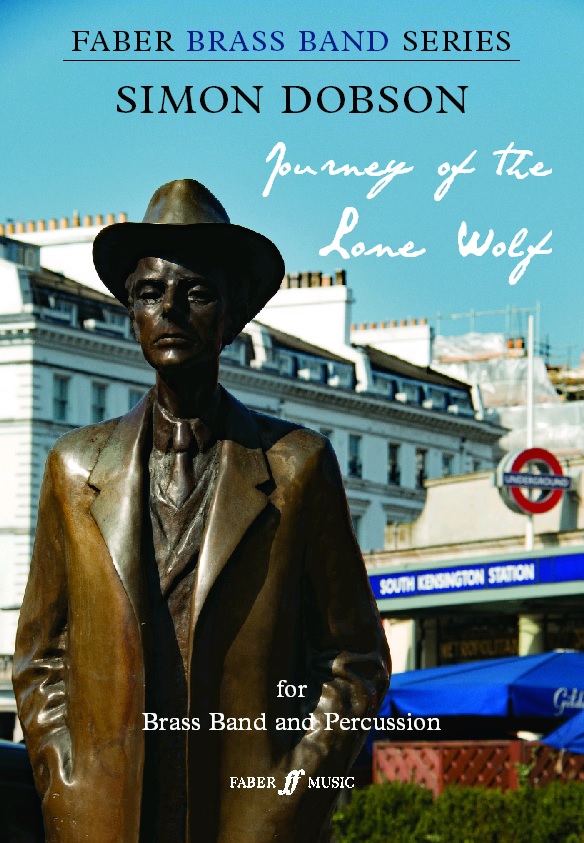
Journey of the Lone Wolf (Score and Parts)
Championship Section Finals Test Piece for National Brass Band Championships of Great Britain 2016Journey of the Lone Wolf tells the story of the hungarian composer Bla Bartk. It was commissioned by Dr. Nicholas Childs for Black Dyke Band, who gave the first performance on Sunday 26 January 2014 at the Bridgewater Hall, Manchester as part of the Royal Northern College of Music Festival of Brass.The composer's programme notes for each movement:1. Capturing the Peasants' SongAfter the upheaval of moving to Budapest the young Bla Bartk meets Zoltn Kodly and the pair embark on summertime adventures throughout the Hungarian countryside to collect and catalogue the astonishing variety (both harmonically and rhythmically) of gypsy and folk music heard in the Balkans. The arrival of WW1 plunges Bartk's beloved Hungary into chaos.2. Night MusicBartk was at times a cold man, aloof and lonely. The odd moments of tenderness he showed are portrayed here in a series of evocative solos. His brief but intense affairs speak of a love he could only long for. Jazz is my night music and here there are hints of what Bartk may have heard in the USA later in his life.3. Flight and FightHaving been forced by the world's evils to leave his homeland of Hungary for America, Bartk, the anti-fascist, felt isolated and angry. In this movement we hear his longing for a simpler time of gypsy folk dances as well as his maturity and depth as a composer finally exploring deeper colours and darker themes.
Estimated dispatch 7-14 working days
-
 £87.95
Masquerade (Score and Parts)
The first performance took place on the 4th. September 1993 at the Free Trade Hall in Manchester during the British Open Brass Band Championships.Note by Philip Wilby:Masquerade is a centenary tribute to Verdi's last opera Falstaff and takes its final scene as the basis for my own piece. Thus I have used some of Verdi's music, and some of Shalespeare's plot, and woven them into a fabric with highly demanding music of my own to produce a work in the great tradition of operatically-based brass band pieces. Such scores date from the very beginnings of band repertory and are often not direct arrangements in the established sense but new compositions produced in homage to a past master. They may still offer performers and audience alike something familiar interwoven with something new. My own piece reuses some elements from the original story: . .Falstaff has been caught in a web of his own lies by the ladies of the town, who propose to teach him a lesson. The story opens at night in Windsor Great Park. The plotters, variously disguised in Hallowe'en fashion (as fairies,elves hobgoblins etc!) assemble in the park to await Falstaff's arrival (musicologists will, perhaps, note a rare use of 'large bottle in F' being used during this scene of suppressed alcoholic revelry!). Falstaff's companions, Bardolph,Piston and Robin, enter (represented here by the three trombones!), and are variously abused by the masqueraders. At the height of the Tout an alarm sounds and Falstaff (euphonium cadenza) enters as Midnight strikes. From a safe hiding place he watches as the disguised Nanetta (principal comet) sings a serene solo as the moon appcars above the trees. With sudden force the others seize him and drag him from his hiding place. As in the traditional game 'Blind Man's Buff', he is roughly turned seven times (a sequence of solo accelerandi) until, at last, he recognizes his assailants as his sometime friends. Far from complaining, Verdi's character concludes the opera with a good-humoured fugue on the words.... 'All the World's a Joke... Every mortal laughs at the others, But he laughs best who has the final laugh. Philip Wilby.
Estimated dispatch 7-14 working days
-
 £44.95
Masquerade (Score Only)
The first performance took place on the 4th. September 1993 at the Free Trade Hall in Manchester during the British Open Brass Band Championships.Note by Philip Wilby:Masquerade is a centenary tribute to Verdi's last opera Falstaff and takes its final scene as the basis for my own piece. Thus I have used some of Verdi's music, and some of Shalespeare's plot, and woven them into a fabric with highly demanding music of my own to produce a work in the great tradition of operatically-based brass band pieces. Such scores date from the very beginnings of band repertory and are often not direct arrangements in the established sense but new compositions produced in homage to a past master. They may still offer performers and audience alike something familiar interwoven with something new. My own piece reuses some elements from the original story: . .Falstaff has been caught in a web of his own lies by the ladies of the town, who propose to teach him a lesson. The story opens at night in Windsor Great Park. The plotters, variously disguised in Hallowe'en fashion (as fairies,elves hobgoblins etc!) assemble in the park to await Falstaff's arrival (musicologists will, perhaps, note a rare use of 'large bottle in F' being used during this scene of suppressed alcoholic revelry!). Falstaff's companions, Bardolph,Piston and Robin, enter (represented here by the three trombones!), and are variously abused by the masqueraders. At the height of the Tout an alarm sounds and Falstaff (euphonium cadenza) enters as Midnight strikes. From a safe hiding place he watches as the disguised Nanetta (principal comet) sings a serene solo as the moon appcars above the trees. With sudden force the others seize him and drag him from his hiding place. As in the traditional game 'Blind Man's Buff', he is roughly turned seven times (a sequence of solo accelerandi) until, at last, he recognizes his assailants as his sometime friends. Far from complaining, Verdi's character concludes the opera with a good-humoured fugue on the words.... 'All the World's a Joke... Every mortal laughs at the others, But he laughs best who has the final laugh. Philip Wilby.
Estimated dispatch 7-14 working days
-
 £44.95
The Music of George Gershwin
Includes: Strike Up the Band; Embraceable You; The Man I Love; Someone to Watch Over Me; They Can't Take That Away From Me; S'Wonderful; Rhapsody in Blue.
Estimated dispatch 7-14 working days
-
£45.00
The Hispaniola - Harper, P
A lilting fantasy on several famous sea-songs including Blow the Man Down and My Bonnie Lies Over the Ocean.As played by Glyn Williams1st SectionDuration 3 mins
In Stock: Estimated dispatch 1-3 working days
-
£45.00
The Mariner - Harper, M
Composed by upcoming talent Morris Harper at the age of 17, this is a traditional brass band march with a seafaring twist, partially using the shanty 'Blow the Man Down' as its TRIO theme.3rd Section +Duration 3 mins 'The Mariner' courtesy of Cory Band.
In Stock: Estimated dispatch 1-3 working days
-
 £43.00
La Perla Negra (Brass Band - Score and Parts) - Skinner, Colin
For this brooding piece the composer has used the following storyline. "A sad elderly man sits alone in a bar whilst an accordionist plays a slow tango. A beautiful woman walks in wearing a single black pearl necklace and proceeds to dance with the old man. Gradually the music becomes more and more spirited and the dance faster as the old man becomes youthful again. With a passionate kiss he passes out in the girls arms and when he awakens he is back in the bar alone save for the accordionist. As he contemplates his dream he notices a single black pearl left behind on the bar. The sombre mood is lightened in the middle section by a deliberately trite and vibrato fuelled section, but we soon return to the opening material for a slow fade-out" Composer Colin Skinner wrote this piece especially for Superbrass' debut CD, Under the Spell of Spain. Duration: 6.30. Suitable for 2nd Section Bands and above.
Estimated dispatch 7-14 working days
-
 £84.95
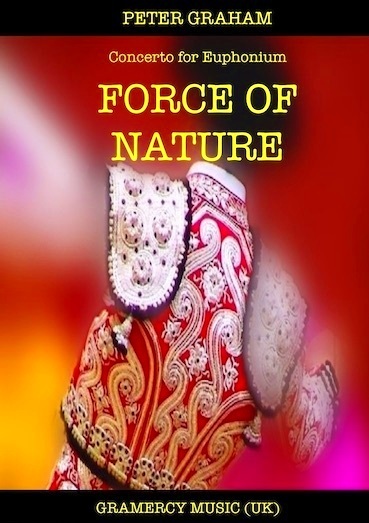
Force of Nature (Euphonium Solo with Brass Band - Score and Parts) - Graham, Peter
Concerto for EuphoniumIn his writings, Ernest Hemingway defined the American hero for a generation.He created a new type of fictional character - a "man's man" - a hard drinking pugilist who enjoyed bullfights, big game hunting, deep-sea fishing and other "macho" pursuits. In many respects Hemingway was the living embodiment of his creation, though his somewhat idealised life ended in suicide on July 2nd 1961 and the chapter on this Force of Nature came to a close. The concerto reflects upon moments in this extraordinary life.Matador - the traditions of the Spanish bullfight fascinated Hemingway. He wrote frequently on the subject, going beyond the superficial and exploring at a deeper level the nature of fear and courage. This flamenco-inspired music equally contrasts moments of uncertainty and resolve.Wayfarer (Reflections on Poor Wayfaring Stranger) - the tensions of Hemingway's early life in the midwest suburb of Oak Park (a town he reputedly described as "narrow-minded") fuelled his wanderlust. At the age of 18 he arrived at the Italian Front, serving as an ambulance driver. Within days he was seriously wounded and the horrors of war put paid to adolescent illusions of immortality.Pilar - Hemingway's beloved boat Pilar could cut through the waves off the coast of Cuba at sixteen knots full-out. The music conjures up the thrill of the chase as the great fish hoves into view.Duration: 14.00
Estimated dispatch 7-14 working days
 View Music