
Results
-
 £37.35
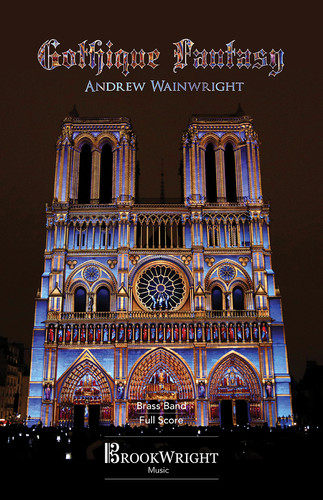
Gothique Fantasy - On a theme by Boellmann (Brass Band Score) Andrew Wainwright
This magnificent work was commissioned by The Illinois Brass Band for the 2024 North American Brass Band Championships. It is also the title track of the 2026 CD by Black Dyke Band, featuring the music of Andrew Wainwright. Please note this PDF download is for the full score. The full set can be purchased here. Based on Leon Boellmann's epic organ work Suite Gothique, the 3rd movement of which is entitled Priere a Notre-Dame (A Prayer for Notre Dame), it pays tribute to the nearly 700-year-old Notre-Dame de Paris after the fire which did so much damage to this iconic building. Notre-Dame stands out for its three pipe organs (one historic) and its immense church bells, which are referenced at various times in Gothique Fantasy. Two of the other movements from Boellmann's work also provide inspiration for the piece, firstly the Introduction - Choral, and the famous Toccata, snippets of which appear at various times in the piece. Gothique Fantasy opens with the Choral, a solo offstage cornet sounding the opening statement. A quintet, stood to the side of the stage, takes up the Choral, while the rest of the band enters on held muted notes, creating a sustained effect evoking the harmonies spreading across the vast cathedral. Colossal organ-like sounds announce themselves as the full band takes on the theme. A lively Animato follows. Here there are continued references to the Choral, while the famous Toccata motif starts to appear. A Misterioso section ensues, which leads into a poignant Prayer for Notre Dame featuring a euphonium duet, where the music reflects upon the devasting fire and centuries of history and artefacts that were lost. A lone euphonium the sounds, representing the remaining remnants of the cathedral. A chaotic and rhythmic Presto, based on the Toccata, then follows and tests the technique of the band from top to bottom, whilst moving through various time signatures, the pulse lacking any sense of stability. A return to the Choral theme leads into a further reflective section, this time featuring the secondary theme from the Toccata with a flugel and solo horn duet. Next the music arrives at an aleatory section (Senza Misura), which depicts the remnants of the fire, followed by the grand cathedral emerging out of the ashes. Various motifs from earlier in the piece are heard across the band. At this point, various parts enter at different times on the conductor's signal, before building towards a 6/8 Presto. Here the music gathers momentum as it leads to a Grandioso finale featuring the Choral in all its glory. However, to conclude the work, the final strains of the Toccata sound, bringing the work to a glorious conclusion as Notre-Dame rises again! To view a video of The Illinois Brass Band performing the work please visit www.youtube.com/watch?v=xG3JB6Ye5aU Duration: 15.00 minutes approx. Difficulty Level: Championship Section Sheet music available from www.brassband.co.uk Instrumentation: Soprano Cornet Eb Solo Cornet Bb Repiano Cornet Bb 2nd Cornet Bb 3rd Cornet Bb Flugel Horn Bb Solo Horn Eb 1st Horn Eb 2nd Horn Eb 1st Baritone Bb 2nd Baritone Bb 1st Trombone Bb 2nd Trombone Bb Bass Trombone Euphonium Bb Bass Eb Bass Bb Percussion 1-4
In Stock: Estimated dispatch 1-3 working days
-
 £33.62
March from The Nutcracker Suite - Brass Band (arr. Keith M. Wilkinson)
VIEW SCORE PDF Step into the enchanting world of Tchaikovsky's beloved The Nutcracker with this exciting brass band arrangement of March from The Nutcracker Suite. Expertly adapted for brass band by Keith M. Wilkinson, this suite captures the festive spirit and magical charm of the original score, while showcasing the full power and brilliance of brass and percussion. The first of three movements, The Nutcracker Suite includes March, Trepak and Waltz of the Flowers. To purchase the full suite, please visit www.brookwrightmusic.com/product-page/the-nutcracker-suite-brass-band-tchaikovsky-arr-keith-wilkinson PDF download includes score and full set of parts. Sheet music available from: UK - www.brassband.co.uk USA - www.solidbrassmusic.com Difficulty Level: 2nd Section + Instrumentation: Soprano Cornet Eb Solo Cornet Bb Repiano Cornet Bb 2nd Cornet Bb 3rd Cornet Bb Flugel Horn Bb Solo Horn Eb 1st Horn Eb 2nd Horn Eb 1st Baritone Bb 2nd Baritone Bb 1st Trombone Bb 2nd Trombone Bb Bass Trombone Euphonium 1-2 Bb Bass Eb Bass Bb Timpani Percussion 1-2
In Stock: Estimated dispatch 1-3 working days
-
 £26.15
Trepak from The Nutcracker Suite - Brass Band (arr. Keith M. Wilkinson)
VIEW SCORE PDF Step into the enchanting world of Tchaikovsky's beloved The Nutcracker with this exciting brass band arrangement of Trepak from The Nutcracker Suite.. Expertly adapted for brass band by Keith M. Wilkinson, this suite captures the festive spirit and magical charm of the original score, while showcasing the full power and brilliance of brass and percussion. The second of three movements, The Nutcracker Suite includes March, Trepak and Waltz of the Flowers. To purchase the full suite, please visit www.brookwrightmusic.com/product-page/the-nutcracker-suite-brass-band-tchaikovsky-arr-keith-wilkinson To view a rolling score video featuring the Amsterdam Staff Band performing Trepak please visit www.youtube.com/watch?v=ur8p2d8nZ3A PDF download includes score and full set of parts. Sheet music available from: UK - www.brassband.co.uk USA - www.solidbrassmusic.com Difficulty Level: 2nd Section + Instrumentation: Soprano Cornet Eb Solo Cornet Bb Repiano Cornet Bb 2nd Cornet Bb 3rd Cornet Bb Flugel Horn Bb Solo Horn Eb 1st Horn Eb 2nd Horn Eb 1st Baritone Bb 2nd Baritone Bb 1st Trombone Bb 2nd Trombone Bb Bass Trombone Euphonium 1-2 Bb Bass Eb Bass Bb Timpani Percussion 1-2
In Stock: Estimated dispatch 1-3 working days
-
 £33.62
Waltz of the Flowers from The Nutcracker Suite - Brass Band (arr. Wilkinson)
VIEW SCORE PDF Step into the enchanting world of Tchaikovsky's beloved The Nutcracker with this delightful arrangement of Waltz of the Flowers from The Nutcracker Suite. Expertly adapted for brass band by Keith M. Wilkinson, this suite captures the festive spirit and magical charm of the original score, while showcasing the full power and brilliance of brass and percussion. The third of three movements, The Nutcracker Suite includes March, Trepak and Waltz of the Flowers. To purchase the full suite, please visit www.brookwrightmusic.com/product-page/the-nutcracker-suite-brass-band-tchaikovsky-arr-keith-wilkinson PDF download includes score and full set of parts. Sheet music available from: UK - www.brassband.co.uk USA - www.solidbrassmusic.com Difficulty Level: 2nd Section + Instrumentation: Soprano Cornet Eb Solo Cornet Bb Repiano Cornet Bb 2nd Cornet Bb 3rd Cornet Bb Flugel Horn Bb Solo Horn Eb 1st Horn Eb 2nd Horn Eb 1st Baritone Bb 2nd Baritone Bb 1st Trombone Bb 2nd Trombone Bb Bass Trombone Euphonium 1-2 Bb Bass Eb Bass Bb Timpani Percussion 1-2
In Stock: Estimated dispatch 1-3 working days
-
 £37.35
A Friend I Have (Brass Band) Fendall Hill
The composer writes: 'This work is a personal interpretation of the well known hymn What a Friend We Have in Jesus. This piece is autobiographical in that it reflects the friendship I have with Jesus, and some of the moods, nature and outcomes of many of those conversations. For example, the Blues section is representative of times where I present my 'blues' to him, and he turns them around. It's very personal and hard to describe the full nature of my relationship, but this music provides a good window. He is certainly my Lord, my Saviour, and my most precious friend.' PDF download includes score and full set of parts. Sheet music available from: UK - www.brassband.co.uk USA - www.solidbrassmusic.com To view a performance video of the work please visit: https://www.youtube.com/watch?v=cN-zYhdwaxM Difficulty Level: 1st Section + Instrumentation: Soprano Cornet Eb Solo Cornet Bb 1st Cornet Bb 2nd Cornet Bb Flugel Horn Bb Solo Horn Eb 1st Horn Eb 2nd Horn Eb 1st Baritone Bb 2nd Baritone Bb 1st Trombone Bb 2nd Trombone Bb Bass Trombone Euphonium 1-2 Bb Bass Eb Bass Bb Drum Kit Temple Blocks Timbales
In Stock: Estimated dispatch 1-3 working days
-
 £33.62
Dance of the Elves - Brass Band (David Popper arr.Andrew Wainwright)
An arrangement of David Popper's sparkling work, which was originally scored for cello and piano. Featuring the cornet section, this brisk number will show off your band's technique to the full. For a follow-the-score video featuring Virtuosi GUS Band performing the work, please visit: https://www.youtube.com/watch?v=zYZ_B16QjfM Includes score and full set of parts. Sheet music available exclusively from World of Brass - www.worldofbrass.com Difficulty Level: Championship Section Instrumentation: Soprano Cornet Eb Solo Cornet Bb Repiano Cornet Bb 2nd Cornet Bb 3rd Cornet Bb Flugel Horn Bb Solo Horn Eb 1st Horn Eb 2nd Horn Eb 1st Baritone Bb 2nd Baritone Bb 1st Trombone Bb 2nd Trombone Bb Bass Trombone Euphonium Bb Bass Eb Bass Bb Timpani Percussion 1-2
In Stock: Estimated dispatch 1-3 working days
-
 £33.62
My Bonnie - Brass Band (Kenneth Downie)
VIEW SCORE PDF This three-minute fantasy waltz was commissioned by John Ward, conductor of Fulham Brass Band, to celebrate the first birthday of his daughter, Bonnie. The result is a work that is full of Kenneth Downie's customary imagination and musical signatures. Based on the Scottish folk song My Bonnie lies over the ocean, there is also a subtle reference to Away in a Manger to signify Bonnie's Christmas Day arrival. For a follow-the-score video based on a performance by Brass Band Willebroek, please visit: https://www.youtube.com/watch?v=SKNd_ocryZY PDF download includes score and full set of parts. Sheet music available from: UK - www.brassband.co.uk USA - www.solidbrassmusic.com Difficulty Level: 2nd Section + Instrumentation: Soprano Cornet Eb Solo Cornet Bb Repiano Cornet Bb 2nd Cornet Bb 3rd Cornet Bb Flugel Horn Bb Solo Horn Eb 1st Horn Eb 2nd Horn Eb 1st Baritone Bb 2nd Baritone Bb 1st Trombone Bb 2nd Trombone Bb Bass Trombone Euphonium Bb Bass Eb Bass Bb Timpani Glockenspiel Percussion
In Stock: Estimated dispatch 1-3 working days
-
 £48.56
The Nutcracker Suite - Brass Band (Tchaikovsky arr. Keith Wilkinson)
VIEW SCORE PDF Step into the enchanting world of Tchaikovsky's beloved The Nutcracker with this exciting brass band arrangement which features March, Trepak and Waltz of the Flowers. Expertly adapted for brass band by Keith M. Wilkinson, this suite captures the festive spirit and magical charm of the original score, while showcasing the full power and brilliance of brass and percussion. To view a rolling score video featuring the Amsterdam Staff Band performing Trepak please visit www.youtube.com/watch?v=ur8p2d8nZ3A To view the other movements please click on the videos attached to this product. PDF download includes score and full set of parts. Sheet music available from: UK - www.brassband.co.uk USA - www.solidbrassmusic.com To purchase individual movements, please visit: March - click here Trepak - click here Waltz of the Flowers - click here Difficulty Level: 2nd Section + Instrumentation: Soprano Cornet Eb Solo Cornet Bb Repiano Cornet Bb 2nd Cornet Bb 3rd Cornet Bb Flugel Horn Bb Solo Horn Eb 1st Horn Eb 2nd Horn Eb 1st Baritone Bb 2nd Baritone Bb 1st Trombone Bb 2nd Trombone Bb Bass Trombone Euphonium 1-2 Bb Bass Eb Bass Bb Timpani Percussion 1-2
In Stock: Estimated dispatch 1-3 working days
-
 £48.56
A Christmas Fantasia - Brass Band (Andrew Wainwright)
Premiered in 2010 by Virtuosi GUS Band, this descriptive work features the carols 'Noel Nouvelet', 'God Rest Ye Merry Gentlemen', 'A Great and Mighty Wonder', 'The Infant King', 'Tomorrow Shall be my Dancing Day' and 'Of the Father's Heart Begotten'. "A Christmas Fantasia is a Salvation Army style selection - the kind of fusing of familiar carols that Ray Steadman-Allen and Leslie Condon were so good at. Andrew has learned well!" Paul Hindmarsh, British Bandsman magazine To view the Canadian Staff Band performing the work, please visit: https://www.youtube.com/watch?v=jFpQpLQSqUs Includes score and full set of parts. Sheet music available exclusively from World of Brass - www.worldofbrass.com Difficulty Level: 2nd Section + Instrumentation: Soprano Cornet Eb Solo Cornet Bb Repiano Cornet Bb 2nd Cornet Bb 3rd Cornet Bb Flugel Horn Bb Solo Horn Eb 1st Horn Eb 2nd Horn Eb 1st Baritone Bb 2nd Baritone Bb 1st Trombone Bb 2nd Trombone Bb Bass Trombone Euphonium Bb Bass Eb Bass Bb Timpani Percussion 1-2
In Stock: Estimated dispatch 1-3 working days
-
 £37.35
And can it be? - Brass Band (Dan Forrest arr. Andrew Wainwright)
This hugely popular choral anthem by Dan Forrest has here been expertly arranged for brass band by Andrew Wainwright. A quiet contemplative opening builds gradually to a confident stating of the truth of the gospel, ending with a pensive reiteration of the question and the assurance of the amazing love. This arrangement was originally commissioned by Norridge Citadel Band in 2019. To view the New York Staff Band performing the piece, please visit: https://www.youtube.com/watch?v=UY7YA_akFb0 Includes score and full set of parts. Sheet music available exclusively from World of Brass - www.worldofbrass.com Difficulty Level: 4th Section + Instrumentation: Soprano Cornet Eb Solo Cornet Bb 1st Cornet Bb 2nd Cornet Bb Flugel Horn Bb Solo Horn Eb 1st Horn Eb 2nd Horn Eb 1st Baritone Bb 2nd Baritone Bb 1st Trombone Bb 2nd Trombone Bb Bass Trombone Euphonium Bb Bass Eb Bass Bb Timpani Percussion 1-2
In Stock: Estimated dispatch 1-3 working days
 Watch video