
Results
-
 £48.56
The Nutcracker Suite - Brass Band (Tchaikovsky arr. Keith Wilkinson)
VIEW SCORE PDF Step into the enchanting world of Tchaikovsky's beloved The Nutcracker with this exciting brass band arrangement which features March, Trepak and Waltz of the Flowers. Expertly adapted for brass band by Keith M. Wilkinson, this suite captures the festive spirit and magical charm of the original score, while showcasing the full power and brilliance of brass and percussion. To view a rolling score video featuring the Amsterdam Staff Band performing Trepak please visit www.youtube.com/watch?v=ur8p2d8nZ3A To view the other movements please click on the videos attached to this product. PDF download includes score and full set of parts. Sheet music available from: UK - www.brassband.co.uk USA - www.solidbrassmusic.com To purchase individual movements, please visit: March - click here Trepak - click here Waltz of the Flowers - click here Difficulty Level: 2nd Section + Instrumentation: Soprano Cornet Eb Solo Cornet Bb Repiano Cornet Bb 2nd Cornet Bb 3rd Cornet Bb Flugel Horn Bb Solo Horn Eb 1st Horn Eb 2nd Horn Eb 1st Baritone Bb 2nd Baritone Bb 1st Trombone Bb 2nd Trombone Bb Bass Trombone Euphonium 1-2 Bb Bass Eb Bass Bb Timpani Percussion 1-2
In Stock: Estimated dispatch 1-3 working days
-
 £29.88
The Sussex Mummers' Christmas Carol - Brass Band (Grainger arr. Wainwright)
An evocative arrangement for brass band by Andrew Wainwright of Percy Grainger's beautiful carol, commissioned in 2016 by The Illinois Brass Band. To view a video of The Illinois Brass Band performing the work please visit www.youtube.com/watch?v=2kd_yvTVVGo PDF download includes score and full set of parts. Sheet music available from: UK - www.brassband.co.uk USA - www.solidbrassmusic.com Difficulty Level: 4th Section + Instrumentation: Soprano Cornet Eb Solo Cornet Bb Repiano Cornet Bb 2nd Cornet Bb 3rd Cornet Bb Flugel Horn Bb Solo Horn Eb 1st Horn Eb 2nd Horn Eb 1st Baritone Bb 2nd Baritone Bb 1st Trombone Bb 2nd Trombone Bb Bass Trombone Euphonium Bb Bass Eb Bass Bb Timpani Percussion
In Stock: Estimated dispatch 1-3 working days
-
 £33.62
The Twelve Days of Christmas - Brass Band (Trad. arr. Andrew Wainwright)
This innovative arrangement by Andrew Wainwright of 'The Twelve Days of Christmas' features all 12 verses and will work well either as a standalone brass band piece, or with audience participation. To view a video of The Illinois Brass Band performing the work please visit www.youtube.com/watch?v=VPhk60_6E0U Includes score and full set of parts. Difficulty Level: 2nd Section + Length: 4.45 minutes Sheet music available from World of Brass - www.worldofbrass.com Instrumentation: Soprano Cornet Eb Solo Cornet Bb Repiano Cornet Bb 2nd Cornet Bb 3rd Cornet Bb Flugel Horn Bb Solo Horn Eb 1st Horn Eb 2nd Horn Eb 1st Baritone Bb 2nd Baritone Bb 1st Trombone Bb 2nd Trombone Bb Bass Trombone Euphonium Bb Bass Eb Bass Bb Timpani Percussion 1-2
In Stock: Estimated dispatch 1-3 working days
-
 £26.15
Trepak from The Nutcracker Suite - Brass Band (arr. Keith M. Wilkinson)
VIEW SCORE PDF Step into the enchanting world of Tchaikovsky's beloved The Nutcracker with this exciting brass band arrangement of Trepak from The Nutcracker Suite.. Expertly adapted for brass band by Keith M. Wilkinson, this suite captures the festive spirit and magical charm of the original score, while showcasing the full power and brilliance of brass and percussion. The second of three movements, The Nutcracker Suite includes March, Trepak and Waltz of the Flowers. To purchase the full suite, please visit www.brookwrightmusic.com/product-page/the-nutcracker-suite-brass-band-tchaikovsky-arr-keith-wilkinson To view a rolling score video featuring the Amsterdam Staff Band performing Trepak please visit www.youtube.com/watch?v=ur8p2d8nZ3A PDF download includes score and full set of parts. Sheet music available from: UK - www.brassband.co.uk USA - www.solidbrassmusic.com Difficulty Level: 2nd Section + Instrumentation: Soprano Cornet Eb Solo Cornet Bb Repiano Cornet Bb 2nd Cornet Bb 3rd Cornet Bb Flugel Horn Bb Solo Horn Eb 1st Horn Eb 2nd Horn Eb 1st Baritone Bb 2nd Baritone Bb 1st Trombone Bb 2nd Trombone Bb Bass Trombone Euphonium 1-2 Bb Bass Eb Bass Bb Timpani Percussion 1-2
In Stock: Estimated dispatch 1-3 working days
-
 £33.62
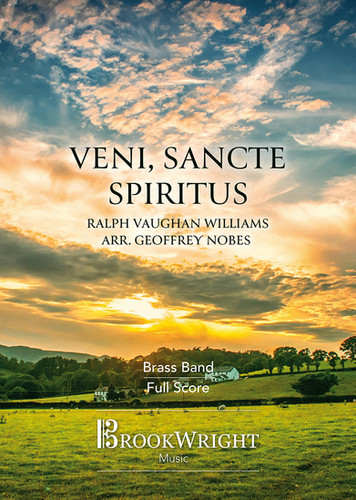
Veni, Sancte Spiritus (Brass Band) Vaughan Williams arr. Geoffrey Nobes
Originally conceived as a ceremonial work for the Band of the Royal Air Force Regiment, Veni, Sancte Spiritus was written for a Thanksgiving Service at St Clement Danes Church - the Central Church of the RAF in London. This evocative piece was inspired by the church's thousand-year-old architecture and resonant acoustic, creating a soundscape that is both reverent and atmospheric. In adapting the work for brass band, the composer introduces Vaughan Williams's hymn tune Down Ampney, seamlessly woven into the final sections of the piece. This lyrical addition enhances the spiritual tone of the music, aligning perfectly with the hymn text 'Come Down, O Love Divine', and lending the work its new title and emotional depth. Perfect for concert, ceremonial, or liturgical use, Veni, Sancte Spiritus offers a profound and reflective experience for performers and audiences alike. To view a video of the International Staff Band performing the work, please visit https://youtu.be/y5YGmKRAaic?si=7x8mBppMDEVh21Dt Duration: approx. 4.00 minutes Difficulty Level: 4th Section + PDF download includes parts and score. Sheet music available at www.brassband.co.uk (UK) or https://satradecentral.org (USA) Instrumentation: Soprano Cornet Eb Solo Cornet Bb 1st Cornet Bb 2nd Cornet Bb Flugel Horn Bb Solo Horn Eb 1st Horn Eb 2nd Horn Eb 1st Baritone Bb 2nd Baritone Bb 1st Trombone Bb 2nd Trombone Bb Bass Trombone Euphonium Bb Bass Eb Bass Bb Timpani
In Stock: Estimated dispatch 1-3 working days
-
 £33.62
Verleih Uns Frieden (Brass Band) Mendelssohn arr. Edward Mylechreest
Felix Mendelssohn's stunning Choral Cantata has here been adapted to the brass band by Edward Mylechreest. A setting of Martin Luther's sacred words, this short piece is a staple of the choral canon and is widely regarded as a choral masterpiece. The hymn tune melody repeats three times throughout the piece (first from the trombones, then the horns, followed by a full band chorale), each time an emploring prayer and statement of the text. This arrangement can also be used for accompaniment to the original Chorale, remaining in the original Eb major key signature. Knowledge of the original piece will be of great benefit to the performer and conductor alike. Sheet music available from: UK - www.brassband.co.uk USA - www.solidbrassmusic.com Difficulty Level: 4th Section + Instrumentation: Soprano Cornet Eb Solo Cornet Bb 1st Cornet Bb 2nd Cornet Bb Flugel Horn Bb Solo Horn Eb 1st Horn Eb 2nd Horn Eb 1st Baritone Bb 2nd Baritone Bb 1st Trombone Bb 2nd Trombone Bb Bass Trombone Euphonium Bb Bass Eb Bass Bb Percussion Tacet
In Stock: Estimated dispatch 1-3 working days
-
 £33.62
With the heart (Brass Band) Andrew Batterham
With the heart is a fanfare full of energy and celebration. The title references a quote from the book The Little Prince by Antoine de Saint-Exupery: "it is only with the heart that one can see rightly, what is essential is invisible to the eye". This aesthetic links the passion of music to the giving ethos of the Rotary organisation, whose District 9800 commissioned the work for their 2024 District Conference. With the Heart was premiered by the Victorian Youth State Brass Band directed by Phillipa Edwards in Bendigo in April 2024. To listen to a performance by Victorian State Youth Brass Band please click here. Duration: Approx. 3.15 minutes Difficulty Level: 4th Section + PDF download includes parts and score. Sheet music available from www.brassband.co.uk Instrumentation: Soprano Cornet Eb Solo Cornet Bb Repiano Cornet Bb 2nd Cornet Bb 3rd Cornet Bb Flugel Horn Bb Solo Horn Eb 1st Horn Eb 2nd Horn Eb 1st Baritone Bb 2nd Baritone Bb 1st Trombone Bb 2nd Trombone Bb Bass Trombone Euphonium Bb Bass Eb Bass Bb Percussion 1-3
In Stock: Estimated dispatch 1-3 working days
-
 £33.62
You're Always There (Brass Band) Lee Fisher arr. Andrew Wainwright
One of BrookWright's most popular titles, this piece is based on an original song by Lee Fisher which was written for Britain's Got Talent star Charlie Green. Originally arranged as a tenor horn solo with brass band, it is now available here as a standalone work for band. To view a follow-the-score video please visit www.youtube.com/watch?v=suzzgdxU_xU PDF download includes score and parts. Sheet music available from: UK - www.brassband.co.uk USA - https://satradecentral.org Difficulty Level: 4th Section + Length: 3.45 minutes Instrumentation: Soprano Cornet Eb Solo Cornet Bb Repiano Cornet Bb 2nd Cornet Bb 3rd Cornet Bb Flugel Horn Bb Solo Horn Eb 1st Horn Eb 2nd Horn Eb 1st Baritone Bb 2nd Baritone Bb 1st Trombone Bb 2nd Trombone Bb Bass Trombone Euphonium Bb Bass Eb Bass Bb Timpani Percussion 1-2
In Stock: Estimated dispatch 1-3 working days
-
£59.95
PLANTAGENETS, The (Brass Band Set) - Edward Gregson
The Plantagenets was composed for the Championship Section of the Regional contests of the National Brass Band Championships of Great Britain 1973. The work is not intended to be programme music but rather it tries to portray the mood and feelings of an age, that of the House of Plantagenet, which lasted from the middle of the 12th century to the end of the 14th century. To many, it conjures up an Age of Chivalry and this is represented by fanfare motifs which occur throughout the work in varied form. The opening thematic figure, rising through the band in thirds and followed by the fanfares, is important as nearly all the subsequent material is based upon it. There follows two themes, the second of which is lyrical and introduced by horns. In the long, slow middle section, a new theme is introduced by a solo horn (recurring on cornet and euphonium in canon) and is developed at some length. A lively fugato scherzino, however, leads to a recapitulation of the opening section music and the work ends with a maestoso statement of the slow movement theme. A final reference to the fanfares ends the work.
Estimated dispatch 7-14 working days
-
 £36.30
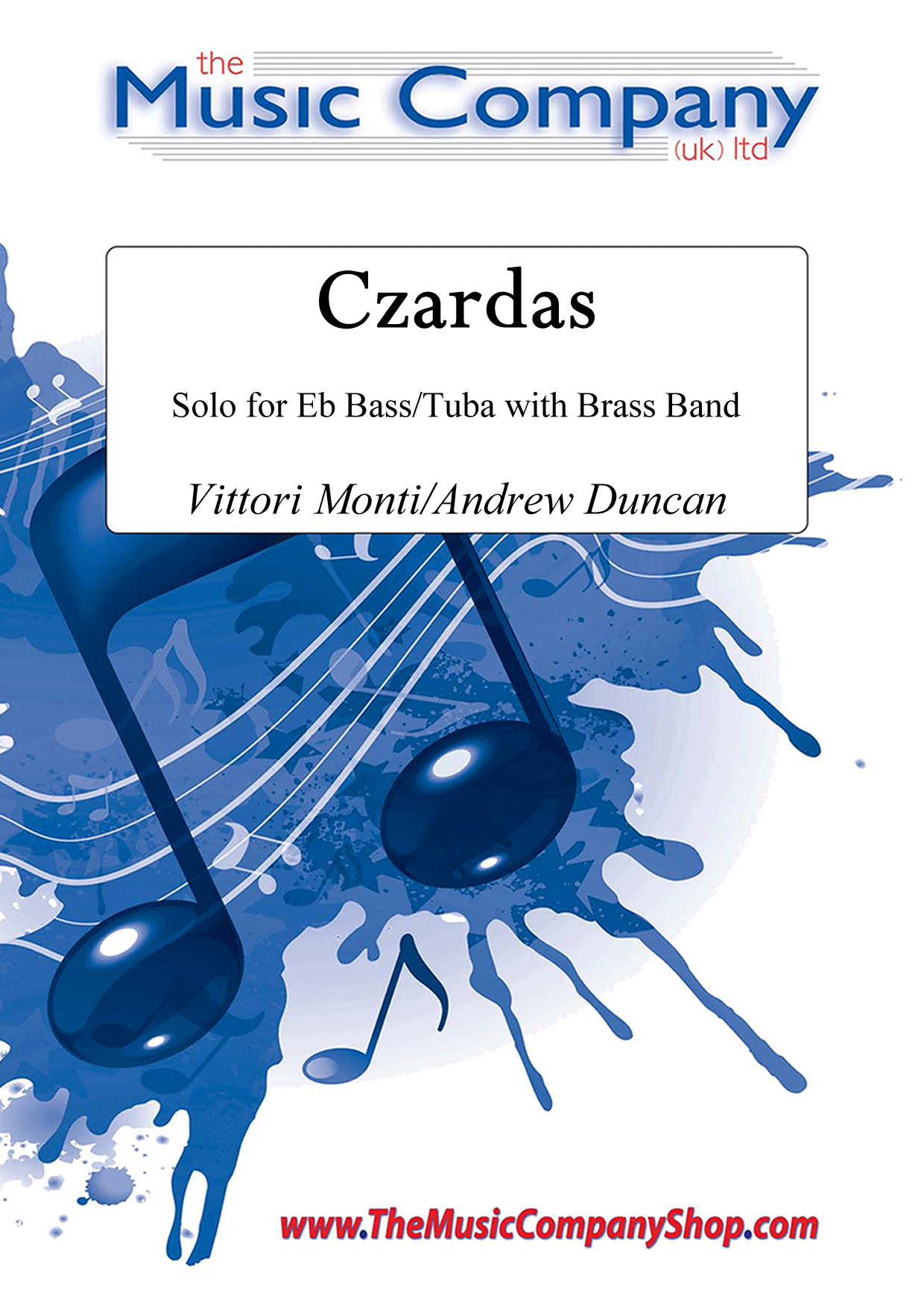
Czardas (Eb solo with brass band) - Vittori Monti
Andrew Duncan has arranged this witty version of Vittori Monti's famous gypsy violin feature as a solo for Eb Bass/Tuba with brass band accompaniment, including a challenging (but optional!) showcase cadenza.Suitable for aspiring or advanced players, this piece is provided in print as a full score and band parts (solo parts are provided in both treble and bass clef).Also available as Eb Bass/Tuba solo with piano accompaniment; Bb Bass/Euphonium solo with piano accompaniment; and Eb Bass/tuba solo with quintet.Discography:Quintet version recorded by Halle Brass (Furioso)
In Stock: Estimated dispatch 3-5 working days
 Watch video