
Results
-
 £59.99
In the Bleak Mid-Winter (Brass Band - Score and Parts) - Holst, Gustav - Sparke, Philip
Christina Rossetti wrote the words to this famous Christmas carol in 1872 in response to a request from the magazine Scribner's Monthly for a Christmas poem. They were set to music by Gustav Holst (1874-1934) for inclusion in the first edition (1906) of The English Hymnal, edited by his life-long friend, Ralph Vaughan Williams. Philip Sparke has carefully arranged the beautiful melody into this delightful version for brass band. A must for any Christmas concert.Duration: 3:30
Estimated dispatch 7-14 working days
-
 £43.99
O Holy Night (Soprano Cornet Solo with Brass Band - Score and Parts) - Adam, Adolphe - Bulla, Stephen
This terrific melody by the 19th century French composer Adolph Adam is one of the world's most famous Christmas solo melodies. It is unique due to the fact that it was the only Christmas song recorded by the legendary opera singer Enrico Caruso. This arrangement for soprano cornet and brass band will make a fantastic touching addition to any Christmas carol.Duration: 5.30
Estimated dispatch 7-14 working days
-
 £35.00
Good King Wenceslas (Brass Band - Score and Parts) - McKenzie, Jock
This popular Christmas carol tells the story of a Bohemian King who braved harsh winter weather to give alms to a poor peasant. This takes place on the Feast of Stephen, the first day of Christmas (December 26th). This legend is based on the life of the historical Saint Wenceslas 1, Duke of Bohemia (907 - 935). In 1853 the English hymn writer John Mason Neale wrote his own version of this tale, setting his words to the melody of a 13th century spring carol "Tempus adest floridum" which had first been published in Piae Cantiones (1582). It is this version that has endured to become the popular carol of today. Duration: 4.30
Estimated dispatch 7-14 working days
-
 £87.99
Sunday in the Park (Tenor Horn Solo with Brass Band - Score and Parts) - Sparke, Philip
Sunday in the Park was written for tenor horn virtuoso Sheona White, and commissioned by her partner, Matt Wade, as a Christmas present. Composer Philip Sparke had known and admired Sheona's playing for many years, having produced her first solo CD and written pieces for her previously. Both composer and performer are huge fans of the late Karen Carpenter, Sheona in part modelling her sound on the singer's sultry voice; so it was decided that this new solo would be a piece which, whilst not being a 'Carpenters' pastiche, paid tribute to their relaxed style and rich harmonic language. Sunday in the Park opens with an accompanied cadenza for the soloist, which leads to a gentle rhythmic melody with a laid-back feel. This is taken up by the band but the soloist sparks a change of mood by introducing a faster light rock interlude. This reaches a climax, at which point the music unwinds until the original mood returns. A variation on the original melody leads to a short cadenza from the soloist, which brings the work to a peaceful close.Duration: 7:00
Estimated dispatch 7-14 working days
-
 £45.00
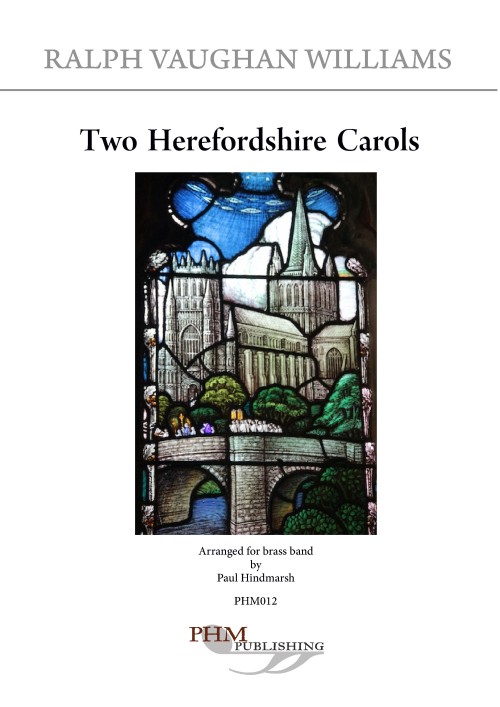
Two Herefordshire Carols (Brass Band - Score and Parts) - Vaughan Williams, Ralph - Hindmarsh, Paul
The two traditional tunes that comprise this straightforward setting were sung to Ralph Vaughan Williams (1872-1958) by Mrs. Esther Smith of Dilwyn, near Hereford, during one of the great composer's folk song collecting tours of England in the early years of the twentieth century. They were included in Twelve Traditional Carols from Herefordshire, edited by E.M. Leather and Vaughan Williams. The words to which Mrs. Smith sung the first tune were probably drawn from eighteenth century evangelical sources. The editors replaced these with six of the 16 verses of a traditional seventeenth century carol text, Joseph and Mary.The second melody, which appears as the centre piece of this arrangement, was sung to a carol that tells of a farmer who ploughed on Christmas Day. It is in fact a translation of a German traditional carol Gelobet seist du Jesu Christ that was published in Goodly Psalmes and Spiritualle Songes (1546) translated by Miles Coverdale. Vaughan Williams used the title Coverdale's Carol.The brass band settings follow the settings made by Vaughan Williams in 1920 for the Oxford Book of Carols. Since his simple harmonic approach is similar in both settings, three verses of his haunting version of Coverdale's Carol have been folded inside four verses of the slightly more animated treatment of Joseph and Mary. The harmonisations of Vaughan Williams have been given some brass band colour, with some verses taken by soloists from the ensemble. The accompaniment figuration that embellishes the second verse of Joseph and Mary has been used to open and close this arrangement and to bind the verses together.- Paul HindmarshDuration: 5.00
Estimated dispatch 7-14 working days
-
 £35.00
Gloria in Excelsis Deo (Brass Band - Score and Parts) - McKenzie, Jock
This carol was written by James Montgomery. It was first published in a local newspaper - the Sheffield Iris on Christmas Eve in 1816. Originally sung to a number of melodies, the music most associated with this carol is a French melody 'Iris'. The refrain 'Gloria in Excelsis Deo' was added in the version published in 'The Oxford Book of Carols' (1928), thus establishing the most widely recognised version of this carol. Duration: 4.00
Estimated dispatch 7-14 working days
-
 £35.00
Tis the Season (Brass Band - Score and Parts) - McKenzie, Jock
Based on Deck the Halls. This carol has its origins in 16th Wales. The melody, which dates from the 16th century, comes from the winter carol of that time "Nos Galan" (New Years' Eve). The lyrics were written by the Scottish composer Thomas Oliphant in 1862. This truly celtic carol is sung throughout the Christmas, Yuletide and New Year season. This arrangement steps away from any celtic 'feel' and instead presents the material in a full-on swing style. Duration: 2.30
Estimated dispatch 7-14 working days
-
 £35.00
Sussex Carol (Brass Band - Score and Parts) - McKenzie, Jock
This carol is also known by its first line "On Christmas Night all Christians Sing". It was discovered by Cecil Sharp in Gloucestershire and notably by Ralph Vaughan Williams in Sussex. Vaughan Williams heard it sung by Harriet Verrall of Monk's Gate, near Horsham, Sussex (hence "Sussex Carol"). It is the melody that Harriet Verrall sang that Vaughan Williams transcribed and published in 1919. It is this same version that is still very popular today. Duration: 3.30
Estimated dispatch 7-14 working days
-
 £35.00
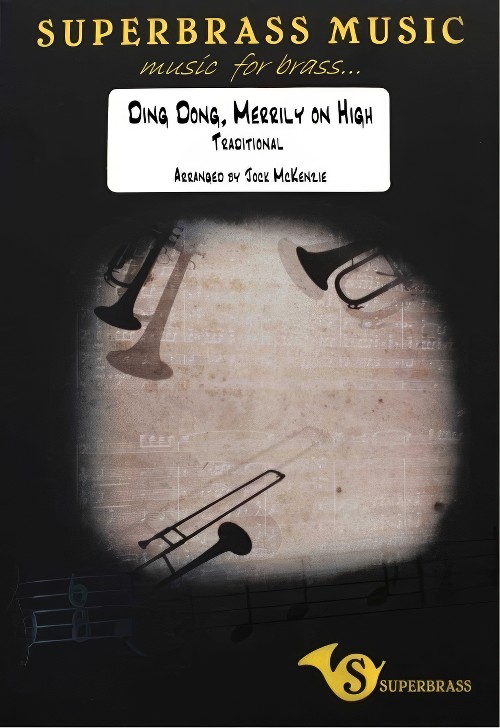
Gaudete (Brass Band - Score and Parts) - McKenzie, Jock
Gaudete (meaning 'rejoice') is a sacred Christmas Carol of Latin text. As a single line melody to carry the words, is it thought to have been written in the late medieval period, with subsequent harmonies being added in the fifteenth century. The song was published in 1582 in the collection 'Piae Cantiones' - a collection of Finnish / Swedish sacred songs. This carol follows the typical structure for sacred songs at the time of its publication - a uniform series of four-line stanzas each preceded by a two-line refrain. The Latin text is a medieval song of praise about the Virgin Mary. My arrangement, whilst being something of an 'indulgence' seeks to use some musical language typical of the time of the original publication. Duration: 3.00
Estimated dispatch 7-14 working days
-
 £60.99
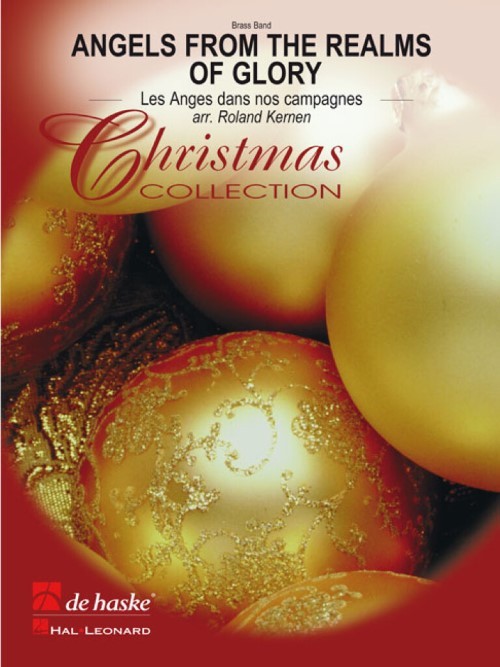
Angels from the Realms of Glory (Brass Band - Score and Parts) - Kernen, Roland
The title of this clever arrangement reveals the Christmas song it is based on. The melody can be traced back to a French folksong from the 18th century which is now known around the world. In France it is called Les anges dans nos campagnes, in Germany it is most widely known as Engel auf den Feldern singen and in England it was originally called Angels From the Realms of Glory but it often known as Angels We Have Heard on High. Everyone will rejoice upon hearing the Gloria in excelsis Deo refrain!Duration: 5:45
Estimated dispatch 7-14 working days
 View Music