
Results
-
 £59.99
Veni Immanuel - Philip Sparke
The Advent hymn we all know today as O Come, O Come, Immanuel was arranged in its modern form by Thomas Helmore and published in Hymnal Noted in 1856. Both the words and melody, however, predate this version by centuries. The words are based on a 9th century antiphon and the tune, Veni Immanuel, is taken from a 15th century processional of French Franciscan nuns, part of the setting for the funeral hymn Libera Me. This arrangement aims to expand on the power and mystery of the original tune and will be most effective if the solo Cornet at the start and end of the piece can be placed away from the band, maybe at the back of the auditorium.
Estimated dispatch 5-14 working days
-
 £59.99
Winter Wonderland - Dick Smith - Philip Sparke
This enduringly popular seasonal song has long been a Christmas favourite, even though the lyrics don't mention 'Christmas' at all. The words were by Dick Smith (1901-1935) and the music by Felix Bernard (1897-1944). The inspiration was reportedly a visit by Smith to Honesdale's (his hometown) Central Park when it was covered in snow.The first recording was made by Richard Himber's Ritz-Carlton Orchestra in 1934. The same year Guy Lombardo and his band, The Royal Canadians, took the song to number 2 in the US Billboard Chart, where it stayed for 9 weeks. It has since been recorded by over 150 artists, the most successful versionsbeing by Perry Como and the Andrews Sisters, both released in 1946.
Estimated dispatch 5-14 working days
-
 £59.99
Cavatina for Cornet - Philip Sparke
In this solo work - a commission for an 18th birthday present - the opening mood of a brooding modal blues gives way momentarily to a more optimistic central section.Following an emotional climax and reflective cadenza, the opening material returns, but now tying in with the central section, and the piece fi nally ends in a more positive mood.
Estimated dispatch 5-14 working days
-
 £59.99
A Christmas Herald - Philip Sparke
Designed to open a Christmas concert, A Christmas Herald starts with a fanfare that introduces a lyrical theme, which eventually turns out to be a descant to Hark, the Herald Angels Sing, which is subsequently introduced by trombones and euphoniums.The famous carol then gradually transforms back into the fanfare, which closes the work as it began.
Estimated dispatch 5-14 working days
-
 £59.99
David of the White Rock - Philip Sparke
This is an ancient Welsh air that was first published in Relics of the Welsh Bards in 1794. Dafydd (David) Owain was a famous Welsh bard who lived on a farm called Gareg Wen (The White Rock) in Eifionydd, Carnarnvonshire, North Wales. Tradition has it that on his deathbed he called for his harp and composed this lovely melody, requesting that it be played at his funeral. Accordingly, it was later played at the parish church of Ynys-Cynhaiarn. Lyrics were later added by Ceiriog Hughes, which describe the melody's inspiration. This version for brass band retains all the beauty and simplicity of the original.
Estimated dispatch 5-14 working days
-
 £59.99
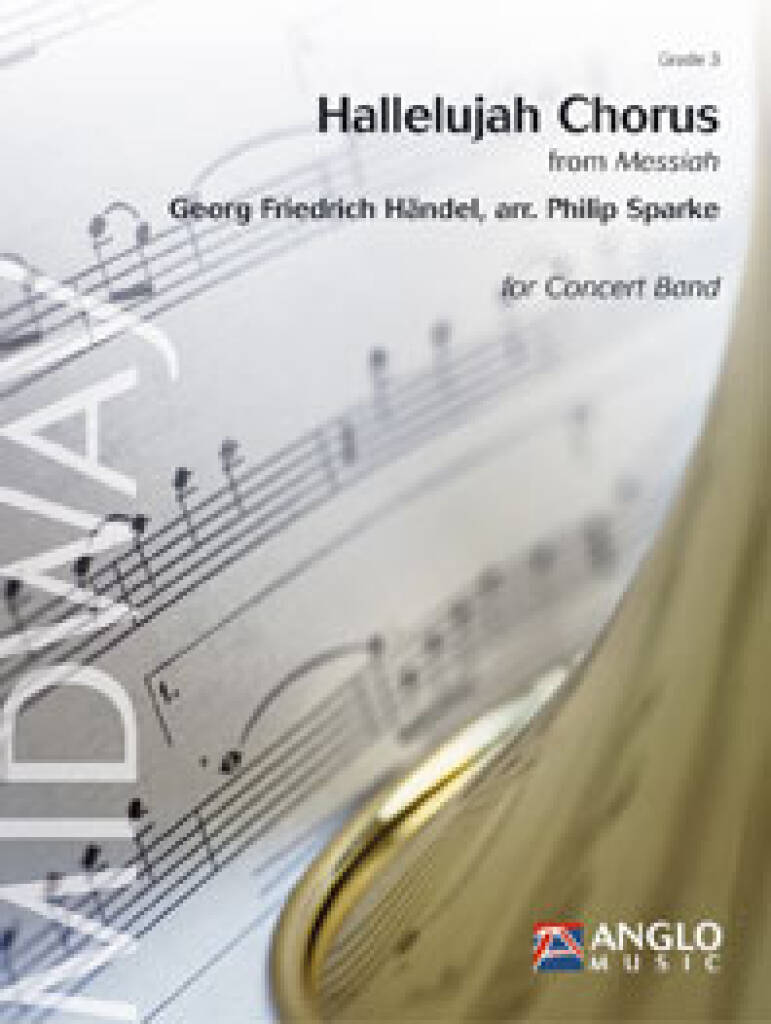
Hallelujah Chorus - Georg Friedrich Händel - Philip Sparke
This piece needs no introduction, as it remains one of the most popular classics of all time. Enthuse your performers and audiences alike with this fantastic arrangement of the Handel classic from his masterwork The Messiah.
Estimated dispatch 5-14 working days
-
 £106.99
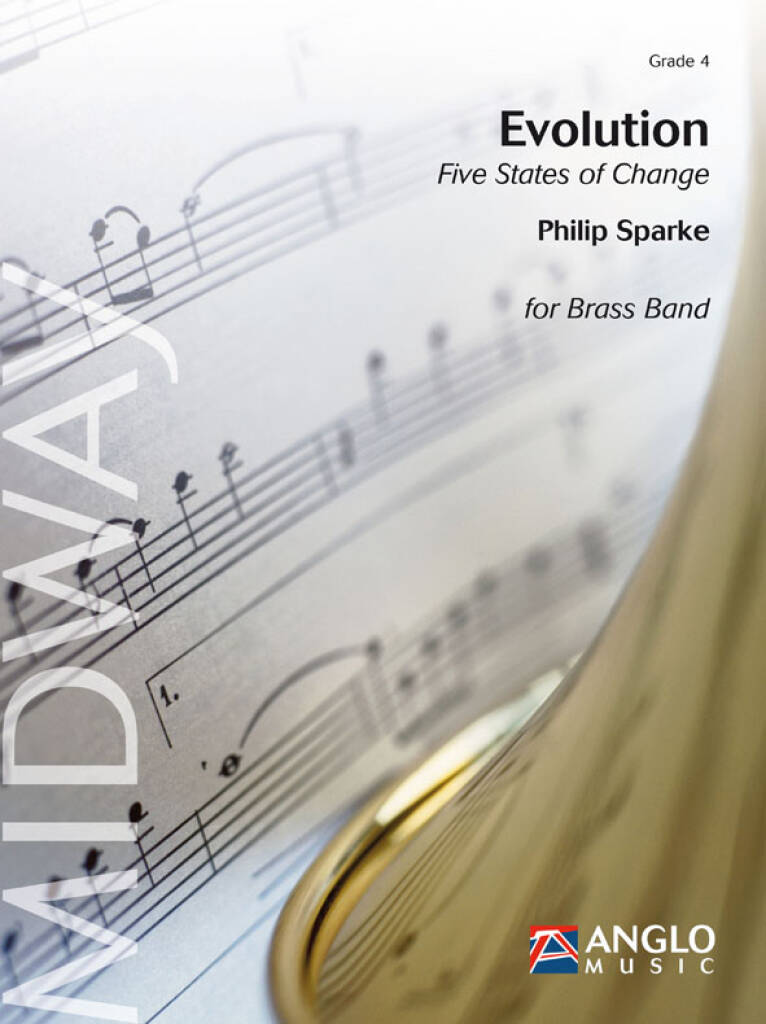
Evolution - Philip Sparke
Evolution was commissioned by Kunstfactor for the 4th section of the Dutch National Brass Band Championships (NBK) 2011. It is dedicated to Jappie Dijkstra and the Music Information Centre (MUI), Arnhem, Holland, in acknowledgement of their outstanding work in developing brass band repertoire. The composer writes:-The idea for the piece came when I was reading an article about a branch of Chinese philosophy which is abbreviated as Wu Xing, which has no exact translation but can mean, for example, five elements, five phases or five states of change. It is central to all elements of Chinese thought, including science, philosophy, medicine and astrology, and in simpleterms tries to create various cyclic relationships between five elements in all walks of life. An example is: Earth - Metal - Water - Wood - Fire - (Earth) etc. where (in one cycle) earth bears metal, metal changes to liquid (water) when heated, water helps trees grow, wood burns to create fire, fire produces ash (earth) and the cycle continues.I was particularly interested in the cycle of emotions: Meditation - Sorrow - Fear - Anger - Joy - (Meditation) etc. and thought this cyclic principle would provide an effective emotional journey for a piece of music. So Evolution has five equal sections which loosely characterise this emotional cycle. I have tried to make the music grow organically, with minimal repetition, and each movement evolves from the musical elements at the end of the previous one, with the opening material appearing, transformed, at the end of the piece to complete the cycle.
Estimated dispatch 5-14 working days
-
 £76.99
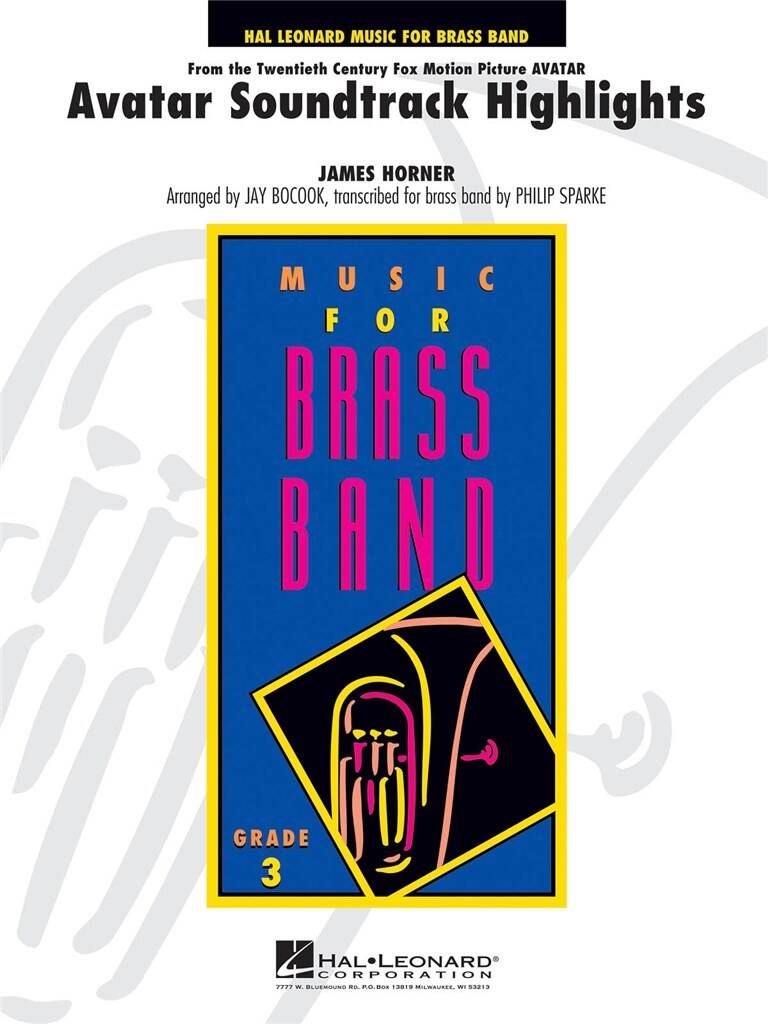
Avatar Soundtrack Highlights - James Horner - Jay Bocook
James Horner composed the soundtrack to the stunning science-fiction film Avatar, which millions of enthusiastic movie-goers have already seen. Jay Bocook combines all the action, adventure, drama, and romance Horner wrote into his music and has created a medley, adapted for brass band by Philip Sparke, that will take your audience on an exciting voyage.
Estimated dispatch 5-14 working days
-
 £168.50
Music of the Spheres - Philip Sparke
Music of the Spheres was commissioned by the Yorkshire Building Society Band and first performed by them at the European Brass Band Championships in Glasgow, May 2004.The piece reflects the composers fascination with the origins of the universe and deep space in general. The title comes from a theory, formulated by Pythagoras, that the cosmos was ruled by the same laws he had discovered that govern the ratios of note frequencies of the musical scale. ('Harmonia' in Ancient Greek, which means scale or tuning rather than harmony - Greek music was monophonic). He also believed that these ratios corresponded to the distances of the sixknown planets from the sun and thatthe planets each produced a musical note which combined to weave a continuous heavenly melody (which, unfortunately, we humans cannot hear). In this work, these six notes form the basis of the sections Music of the Spheres and Harmonia.The pieces opens with a horn solo called t = 0, a name given by some scientists to the moment of the Big Bangwhen time and space were created, and this is followed by a depiction of the Big Bangitself, as the entire universe bursts out from a single point. A slower section follows called The Lonely Planet which is a meditation on the incredible and unlikely set of circumstances which led to the creation of the Earth as a planet that can support life, and the constant search for other civilizations elsewhere in the universe. Asteroids and Shooting Stars depicts both the benign and dangerous objects that are flying through space and which constantly threaten our planet, and the piece ends with The Unknown, leaving in question whether our continually expanding exploration of the universe will eventually lead to enlightenment or destruction.
Estimated dispatch 5-14 working days
-
 £134.99
Dances and Alleluias - Philip Sparke
Dances and Alleluias was commissioned by the British Federation of Brass Bands for the inaugural English National Brass Band Championships, held in the Lyric Theatre at The Lowry, Salford Quays, on July 1st 2006. In this fantastic work the composer mixes wonderful slow music, vocal in nature and ecstatic in mood, along with faster dances to create a challenging piece, which will bring out the best in any band.
Estimated dispatch 5-14 working days
 View Music