
Results
-
 £5.99
£5.99Scripture-based Songs Compilation Folio Books
No. of TuneTitleRefernece1Above all powersSpring Harvest Song Book 2003, 12All for theeThe Musical Salvationist, January 19763All Heaven declaresMagnify, 24All the world is waitingThe Musical Salvationist, April 19875As we are gatheredThe Source, 296Be bold, be strongThe Source,387Be still for the presence of the LordMagnify, 78Beauty for brokennessThe Source,379Blessd be the name of the LordThe Source,5310Breathe 11By his handSing to the Lord, Vol.1, Part 112Come, now is the time to worshipThe Source, 66213Come on and celebrate!The Source, 7514Come, thou Fount of every blessing (Nettleton)Salvation Army Song Book, 31315ContentmentHappiness & Harmony, 1416Crown him with many crowns (Diademata)Salvation Army Song Book, 15617Cwm RhonddaSalvation Army Song Book, 57818Do something beautifulSing to the Lord Children's Voices Series, Vol.1219Faithful GodThe Source, 8820Father, we love youHappiness & Harmony, 1621Give thanks with a grateful heartThe Source, 1822Glorious things of thee are spoken (Abbot's Leigh)Salvation Army Song Book, 15723God in youSing to the Lord, Vol.9, Part 224Great is the darkness (Come, Lord Jesus)Magnify, 1425He is ableSing to the Lord Children's Voices Series, Vol.1526He is the Lord (Show your power)Magnify, 1927Healing ChristSing to the Lord, Vol.6, Part 328Here am I, my LordThe Musical Salvationist, July 199129His ProvisionThe Musical Salvationist, July 198530Holy, holy, holy is the LordSongs of Fellowship, 18231HosannaThe Source, 18232How deep the Father's love for usThe Source, 185; Songs of Fellowship II, 78033I am a new creationThe Source, 19134I dare to be differentSing to the Lord, Vol.1, Part 135I love you, LordMagnify, 2436I will run to you (Your eye is on the sparrow)The Source, 109337In Christ aloneThe Source, 131138In his presenceSing to the Lord, Vol.9, Part 339In his time 40In Jesus' nameSing to the Lord, Vol.13, Part 141In this quiet momentSing to the Lord, Vol.13, Part 342It is to youMagnify, 3043Jesus is Lord!The Source, 28444Jesus, name above all namesHappiness & Harmony, 3245Joyful, Joyful (Europe)Salvation Army Song Book, 1046King of Kings, MajestyThe Source, 30947Knowing You (All I once held dear)Magnify, 348Light of the world (Here I am to worship)Sing to the Lord Children's Voices Series, Vol.1049Lord, I lift your name on highMagnify, 3850Lord, you know that we love youThe Musical Salvationist, April 198351Love Divine (Blaenwern)Salvation Army Song Book, 43852MajestyHappiness & Harmony, 4553My Lord and Christ!Sing to the Lord, Vol.2, Part 254My Lord, what love is thisThe Source, 37055My Saviour's love (I stand amazed)Salvation Army Song Book, 17956Nothing but thy bloodSing to the Lord Children's Voices Series, Vol.1357O God of burning, cleansing flame (Send the fire)Salvation Army Song Book, 20358O happy daySalvation Army Song Book, 36559Oh to see the dawn (The power of the cross)Spring Harvest Song Book 2005, 6760Only by graceMagnify, 4861Power of your love (Lord, I come to you)Magnify, 3762Praise, my soulSalvation Army Song Book, 1763Praise to the Lord (Lobe den Herren)Salvation Army Song Book, 1964Regent SquareSalvation Army Song Book, 14765Rejoice!The Source, 43866Shout to the Lord (My Jesus, my Saviour)Magnify, 4367Sing and make musicHappiness & Harmony, 5568Spirit of the living GodSongs of Fellowship, 511; The Source, 46369Storm the forts of darknessSalvation Army Song Book, 69670Teach me to danceThe Source, 46971The light has comeHappiness & Harmony, 6372The Potter's hand (Beautiful Lord, wonderful Saviour)The Source, 64073The servant King (From Heaven you came)The Source, 11474The splendour of the KingSpring Harvest Song Book 2005, 9775There is a redeemerMagnify, 5976To be in your presence (My Desire)Magnify, 6177To God be the gloryThe Musical Salvationist, April 198878Wake up, O sleeperSing to the Lord, Vol.6, Part 279We are marchingThe Source, 53980We have come into this placeHappiness & Harmony, 7381We want to see Jesus lifted highThe Source, 55982When the music fades (The heart of worship)Magnify, 7083Who is on the Lord's side? (Rachie)Salvation Army Song Book, 707
Estimated dispatch 7-14 working days
-
 £29.95
Scripture-based Songs Compilation Full Score
No. of TuneTitleRefernece1Above all powersSpring Harvest Song Book 2003, 12All for theeThe Musical Salvationist, January 19763All Heaven declaresMagnify, 24All the world is waitingThe Musical Salvationist, April 19875As we are gatheredThe Source, 296Be bold, be strongThe Source,387Be still for the presence of the LordMagnify, 78Beauty for brokennessThe Source,379Blessd be the name of the LordThe Source,5310Breathe 11By his handSing to the Lord, Vol.1, Part 112Come, now is the time to worshipThe Source, 66213Come on and celebrate!The Source, 7514Come, thou Fount of every blessing (Nettleton)Salvation Army Song Book, 31315ContentmentHappiness & Harmony, 1416Crown him with many crowns (Diademata)Salvation Army Song Book, 15617Cwm RhonddaSalvation Army Song Book, 57818Do something beautifulSing to the Lord Children's Voices Series, Vol.1219Faithful GodThe Source, 8820Father, we love youHappiness & Harmony, 1621Give thanks with a grateful heartThe Source, 1822Glorious things of thee are spoken (Abbot's Leigh)Salvation Army Song Book, 15723God in youSing to the Lord, Vol.9, Part 224Great is the darkness (Come, Lord Jesus)Magnify, 1425He is ableSing to the Lord Children's Voices Series, Vol.1526He is the Lord (Show your power)Magnify, 1927Healing ChristSing to the Lord, Vol.6, Part 328Here am I, my LordThe Musical Salvationist, July 199129His ProvisionThe Musical Salvationist, July 198530Holy, holy, holy is the LordSongs of Fellowship, 18231HosannaThe Source, 18232How deep the Father's love for usThe Source, 185; Songs of Fellowship II, 78033I am a new creationThe Source, 19134I dare to be differentSing to the Lord, Vol.1, Part 135I love you, LordMagnify, 2436I will run to you (Your eye is on the sparrow)The Source, 109337In Christ aloneThe Source, 131138In his presenceSing to the Lord, Vol.9, Part 339In his time 40In Jesus' nameSing to the Lord, Vol.13, Part 141In this quiet momentSing to the Lord, Vol.13, Part 342It is to youMagnify, 3043Jesus is Lord!The Source, 28444Jesus, name above all namesHappiness & Harmony, 3245Joyful, Joyful (Europe)Salvation Army Song Book, 1046King of Kings, MajestyThe Source, 30947Knowing You (All I once held dear)Magnify, 348Light of the world (Here I am to worship)Sing to the Lord Children's Voices Series, Vol.1049Lord, I lift your name on highMagnify, 3850Lord, you know that we love youThe Musical Salvationist, April 198351Love Divine (Blaenwern)Salvation Army Song Book, 43852MajestyHappiness & Harmony, 4553My Lord and Christ!Sing to the Lord, Vol.2, Part 254My Lord, what love is thisThe Source, 37055My Saviour's love (I stand amazed)Salvation Army Song Book, 17956Nothing but thy bloodSing to the Lord Children's Voices Series, Vol.1357O God of burning, cleansing flame (Send the fire)Salvation Army Song Book, 20358O happy daySalvation Army Song Book, 36559Oh to see the dawn (The power of the cross)Spring Harvest Song Book 2005, 6760Only by graceMagnify, 4861Power of your love (Lord, I come to you)Magnify, 3762Praise, my soulSalvation Army Song Book, 1763Praise to the Lord (Lobe den Herren)Salvation Army Song Book, 1964Regent SquareSalvation Army Song Book, 14765Rejoice!The Source, 43866Shout to the Lord (My Jesus, my Saviour)Magnify, 4367Sing and make musicHappiness & Harmony, 5568Spirit of the living GodSongs of Fellowship, 511; The Source, 46369Storm the forts of darknessSalvation Army Song Book, 69670Teach me to danceThe Source, 46971The light has comeHappiness & Harmony, 6372The Potter's hand (Beautiful Lord, wonderful Saviour)The Source, 64073The servant King (From Heaven you came)The Source, 11474The splendour of the KingSpring Harvest Song Book 2005, 9775There is a redeemerMagnify, 5976To be in your presence (My Desire)Magnify, 6177To God be the gloryThe Musical Salvationist, April 198878Wake up, O sleeperSing to the Lord, Vol.6, Part 279We are marchingThe Source, 53980We have come into this placeHappiness & Harmony, 7381We want to see Jesus lifted highThe Source, 55982When the music fades (The heart of worship)Magnify, 7083Who is on the Lord's side? (Rachie)Salvation Army Song Book, 707
Estimated dispatch 7-14 working days
-
 £30.00
Janacek's 'Taras Bulba' - Janacek
Comments from Tim Paton, the arranger of Janacek's 'Taras Bulba': "I will never forget the day in 1967 when I was introduced to the music of Leos Janacek, a Czech composer born in 1854, who died in 1928. Janacek was little known in Britain until the 1960's, when the conductor Charles Macherras introduced his unique music. I heard a recording of Macherras conducting the Pro Arte Orchestra in a performance of Janacek's "Sinfonietta".It was in 1969 that I first heard Janacek's Symphonic Rhapsody, "Taras Bulba".Janacek's music is exciting, powerful, emotive, impassioned and unpredictable.I have taken the first and third movements of this piece, and adapted them for Brass Band, which was at times extremely difficult, but rewarding. It sometimes took up to an hour to be satisfied that a mere several bars had been reproduced to convey the composer's intentions.The Death of AndriThe Cossaks, under the leadership of Taras Bulba, are fighting against the Poles in the 17th century. Taras's son Andri seeks to rescue his love, a Polish princess, from a city which is being besieged by the Cossaks. Having found her, he throws in his lot with the Poles, but is finally captured by his father, who executes him as a traitor before riding off again to battle.Prophesy and Death of Taras BulbaTaras himself is finally captured and condemned to be nailed to a tree and burned alive. As the flames creep around him, Taras has the satisfaction of seeing histroops escape, and as he dies, sees a vision of his country freed at last.This is incredibly descriptive music. The mood is constantly changing, creating feelings of love and anger, celebration and melancholy, despair and triumph.This Brass Band EditionThe duration of the original symphonic rhapsody, three movements, is approximately 23 minutes. I chose the first and third movements, so the Brass Band edition is approximately 14 minutes. The main reason is twofold: Being realistic about the demands this music would place on the stamina of the brass player; Keeping the piece less than 15 minutes, so that, if desired, it could be used on the contest platform.Two unique qualities of Janacek's music had to be taken into account when preparing this brass band version. His compositional technique was individual, at times not sticking to traditional expectations, in both form and orchestration. I imagined what the genius himself would have said looking at my work, and how to tackle a particular section to emulate his original intentions. This was particularly the case when dealing with high woodwind and violin parts, the use of tremolo in string parts, and the orchestral harp.Percussion: Janacek included timpani, side drum, cymbals, triangle and tubular bells. For reasons stated previously, I have also included xylophone and glockenspiel. I have also added the gong in a couple of places to enhance the dramatic effect of the music.
In Stock: Estimated dispatch 3-5 working days
-
 £30.00
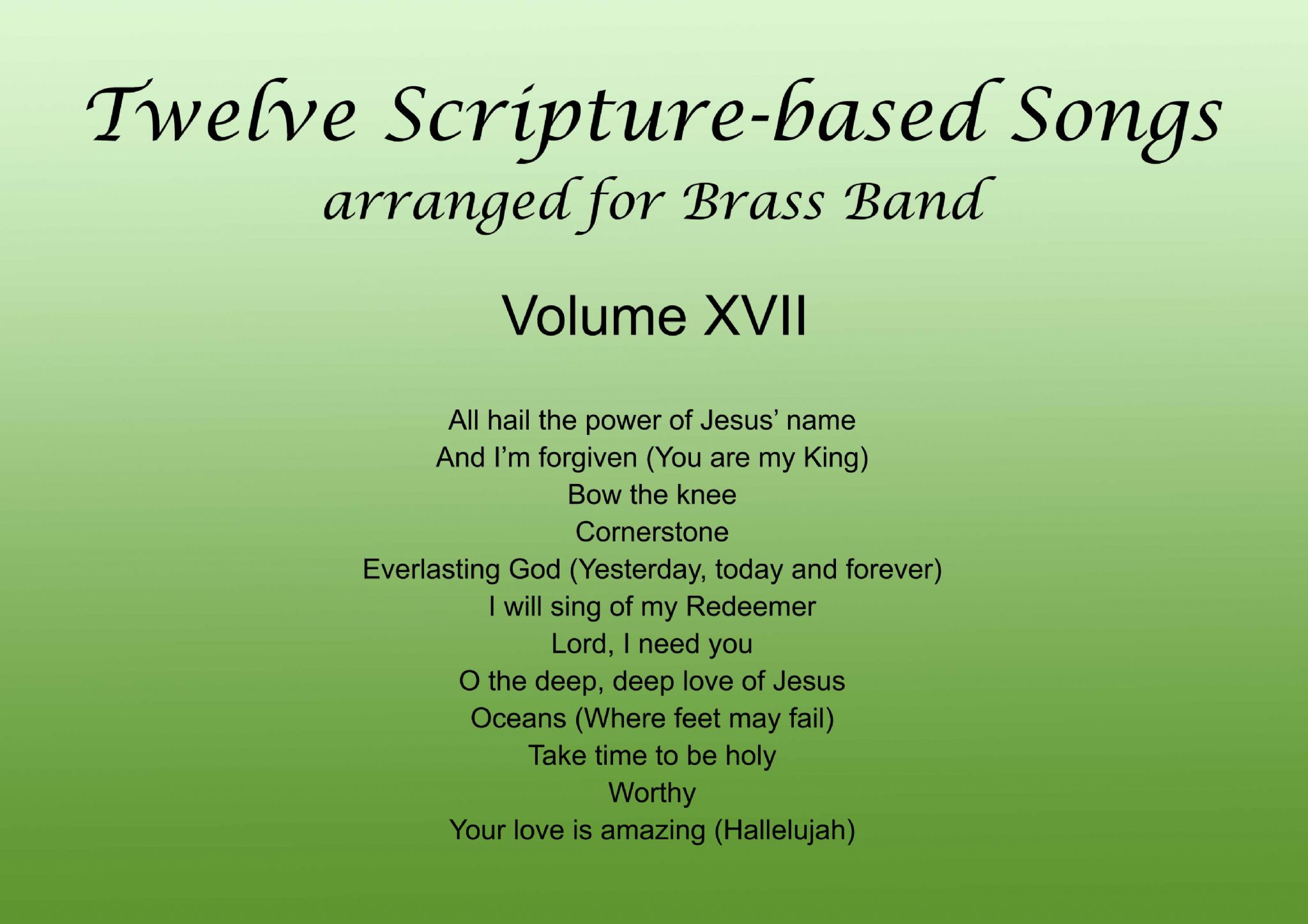
Twelve Scripture-based Songs Volume XVII
Twelve scripture-Based Songs arranged for Brass Band (Volume XVII) are packaged and marketed in complete sets which include a full score and a set of master parts. It is intended that these parts be used as 'masters', for the purpose of photocopying a quantity of parts to accommodate the precise instrumentation needs of the band for which this has been purchased.All hail the power of Jesus' nameAnd I'm forgiven (You are my King)Bow the kneeCornerstoneEverlasting God (Yesterday, today and forever)I will sing of my RedeemerLord, I need youO the deep, deep love of JesusOceans (Where feet may fail)Take time to be holyWorthyYour love is amazing (Hallelujah)
Estimated dispatch 7-14 working days
-
 £50.00
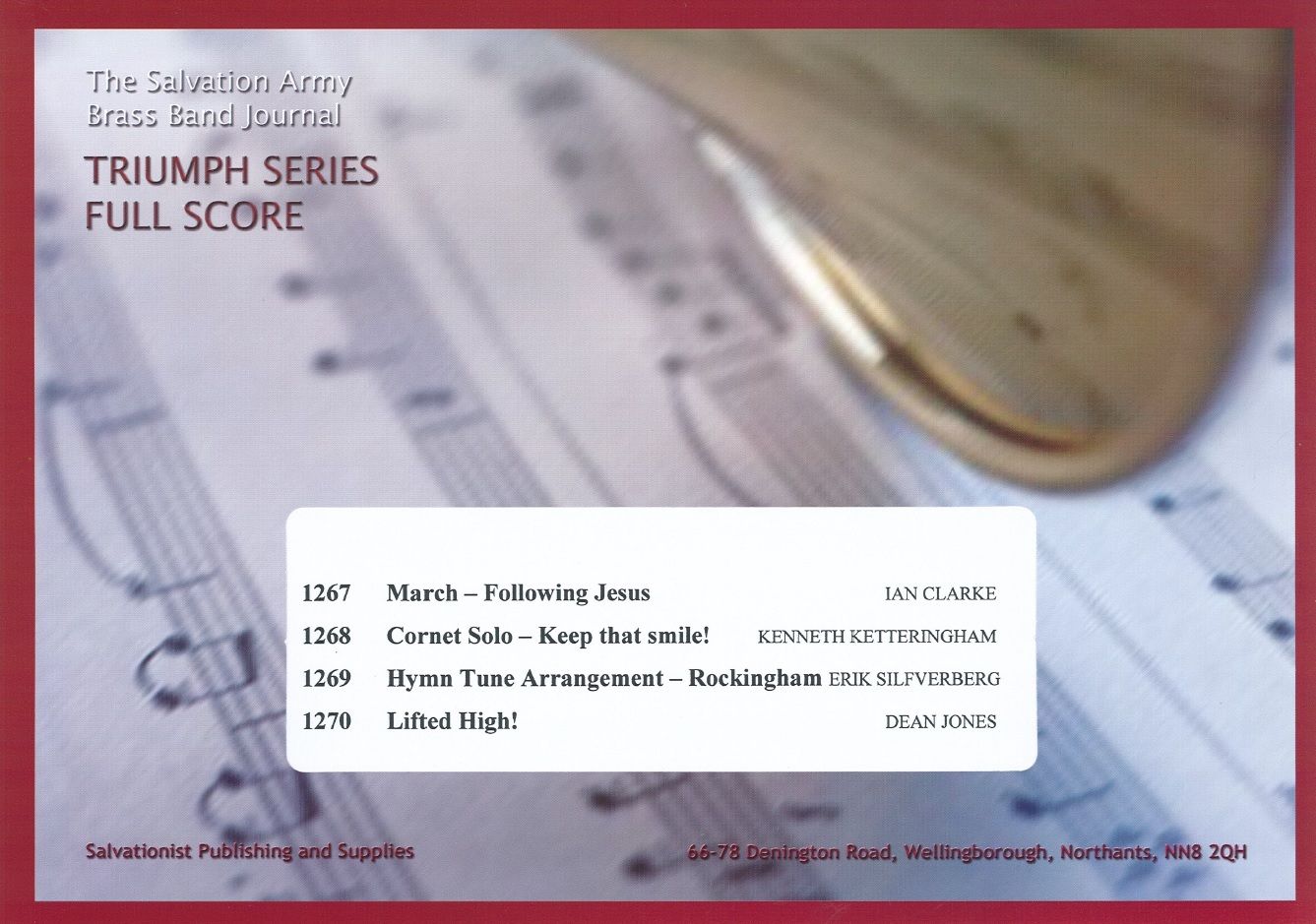
Triumph Series Band Journal November 2015 Numbers 1267 - 1270
No. 1267 March - Following Jesus (Ian Clarke)For more than two thousand years, countless Christians, the world over, have chosen to follow Jesus and try to live by his teachings. The words associated with the three tunes used in this march follow that theme: Sagina (T.B. 498), I will follow thee, my Saviour (T.B. 378) and There's joy in following (T.B.C.S. 206).No. 1268 Cornet Solo - Keep that smile! (Kenneth Ketteringham)This light-hearted, waltz-like solo features an old Army song written by Bandmaster George Marshall and Staff-Captain A.R. Wiggins.No. 1269 Hymn Tune Arrangement - Rockingham (Erik Silfverberg)A four-verse setting of the hymn tune, Rockingham, associated with the song 'When I survey the wondrous cross' by Isaac Watts.No. 1270 Lifted High! (Dean Jones)A bright, joyful arrangement of the song, 'Lord, I lift your name on high' in a Caribbean style.
Estimated dispatch 7-14 working days
-
 £59.95
Aftershock (Brass Band - Score and Parts)
In this piece, the term "aftershock" serves as a metaphor for the Christian Church: commissioned by Jesus to carry forward the impact of his ministry and message. The Church is the spiritual aftershock of Christ's life, death, and resurrection - reverberating through history and into the present.Musically, the piece is constructed in three movements and built around motifs that pulse, echo, and resonate, symbolising the ongoing influence of Christ through his Church. Several well-known Christian songs are woven into its fabric, each contributing to the narrative of mission and worship. Build your Kingdom here (Rend Collective) affirms the Church's identity as "the hope on earth," while Major Leonard Ballantine's And you will be my witnesses (M.S. 1992-10) recalls Jesus' call to spread the gospel.The reflective central section features Matt Redman's I will offer up my life in spirit and truth, expressing personal devotion of a believer seeking to serive within the global Church.The finale draws on a traditional Salvation Army song by William Drake Pennick (S.A.S.B. 937), urging believers to proclaim the gospel far and wide: Tell the world, O tell the world!Make salvation's story heard;In the highways, in the byways,And in lands beyond the sea,do some witnessing for JesusWheresoever you may be.
Estimated dispatch 7-14 working days
-
 £30.00
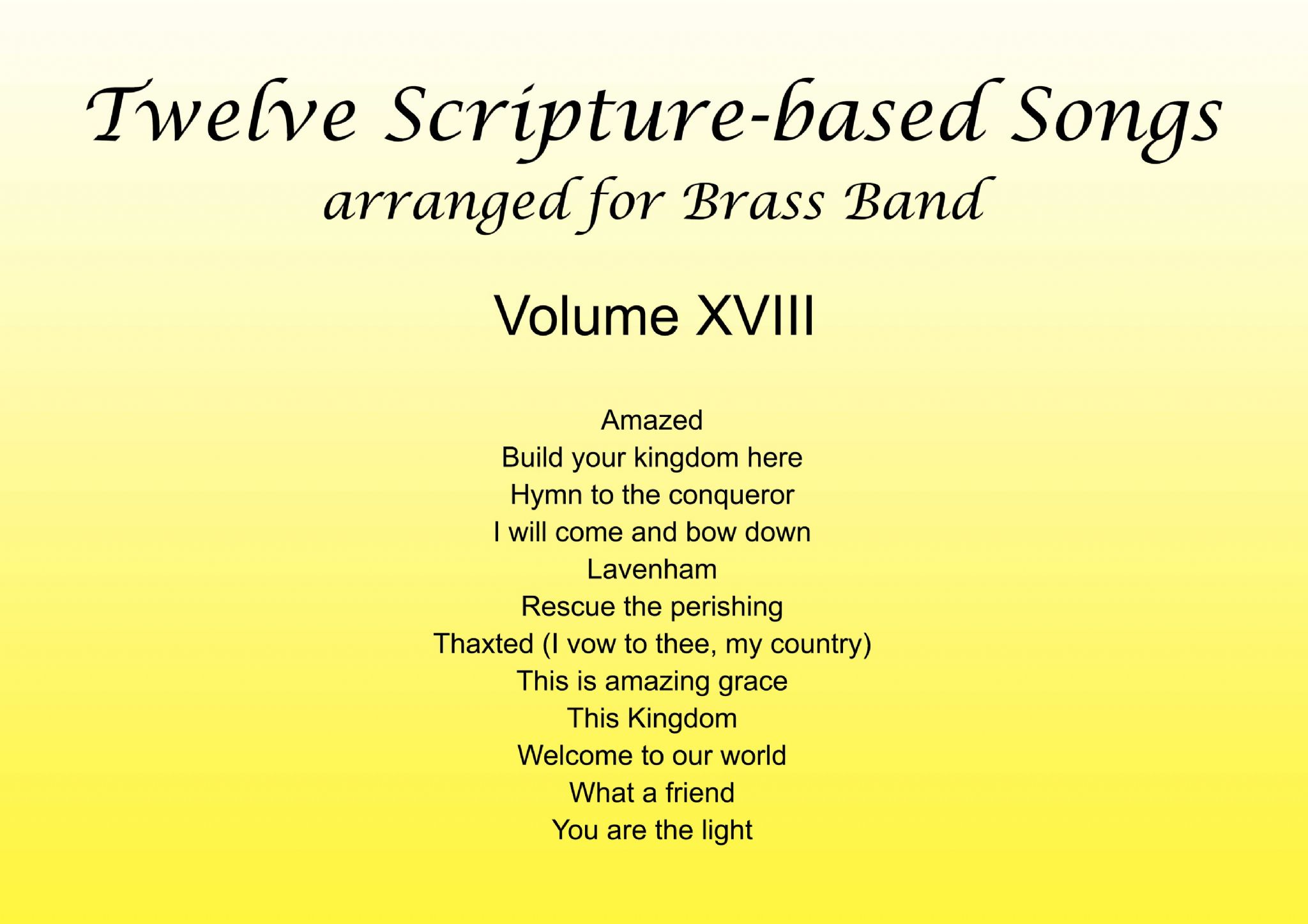
Twelve Scripture-based Songs Volume XVIII
Twelve scripture-Based Songs arranged for Brass Band (Volume XVIII) are packaged and marketed in complete sets which include a full score and a set of master parts. It is intended that these parts be used as 'masters', for the purpose of photocopying a quantity of parts to accommodate the precise instrumentation needs of the band for which this has been purchased.1. Amazed2. Build your kingdom here3. Hymn to the conqueror4. I will come and bow down5. Lavenham6. Rescue the perishing7. Thaxted (I vow to thee, my country)8. This is amazing grace9. This Kingdom10. Welcome to our world11. What a friend12. You are the light
Estimated dispatch 7-14 working days
-
 £44.95
Northumbrian Fresco
Includes: Come You Not From Newcastle?; Madam, I Will Buy You; Morpeth Lassies/The Oak and the Ash; Doon the Waggon Way; Bobby Shaftoe; I Drew My Ship; Billy Boy.
Estimated dispatch 7-14 working days
-
 £34.95
Escape Velocity (Brass Band - Score and Parts)
Escape Velocity is the scientific term for the speed at which a body overcomes the gravitational pull of another body. Thematically, the music seeks to capture the busyness and 'gravitational pull' of the fallen world and the struggle of the believer to overcome and escape into the restful presence of God. Eventually, the believer breaks free from the world, the work culminating in a presentation of the popular Hillsong anthem, 'I will run to you'.
Estimated dispatch 7-14 working days
-
 £30.00
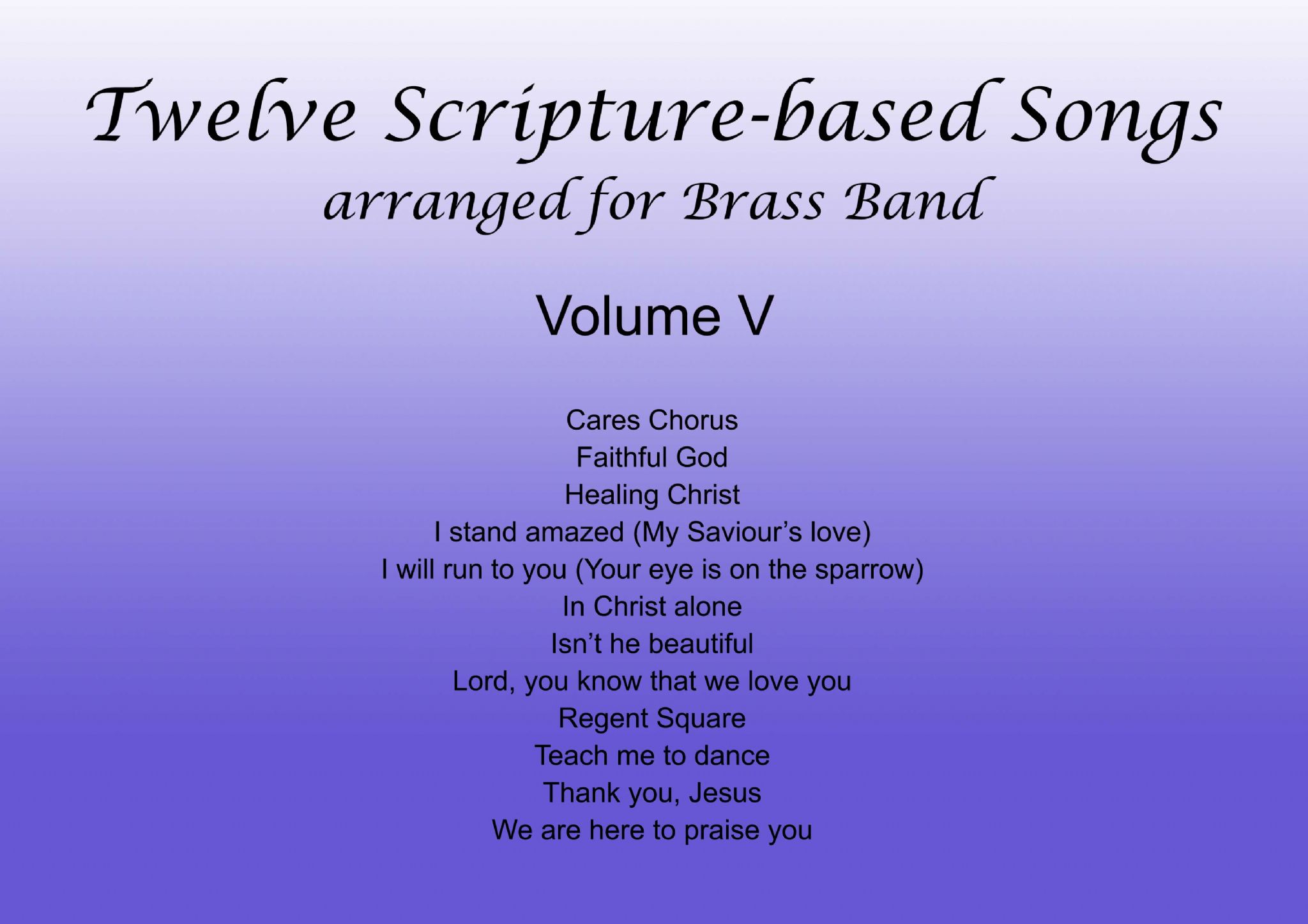
Twelve Scripture-Based Songs Volume V
Twelve scripture-Based Songs arranged for Brass Band (Volume V) are packaged and marketed in complete sets which include a full score and a set of master parts. It is intended that these parts be used as 'masters', for the purpose of photocopying a quantity of parts to accommodate the precise instrumentation needs of the band for which this has been purchased.Cares ChorusFaithful GodHealing ChristI stand amazed (My Saviour's love)I will run to you (Your eye is on the sparrow)In Christ aloneIsn't he beautifulLord, you know that we love youRegent SquareTeach me to danceThank you, JesusWe are here to praise you
Estimated dispatch 7-14 working days