
Results
-
 £146.80
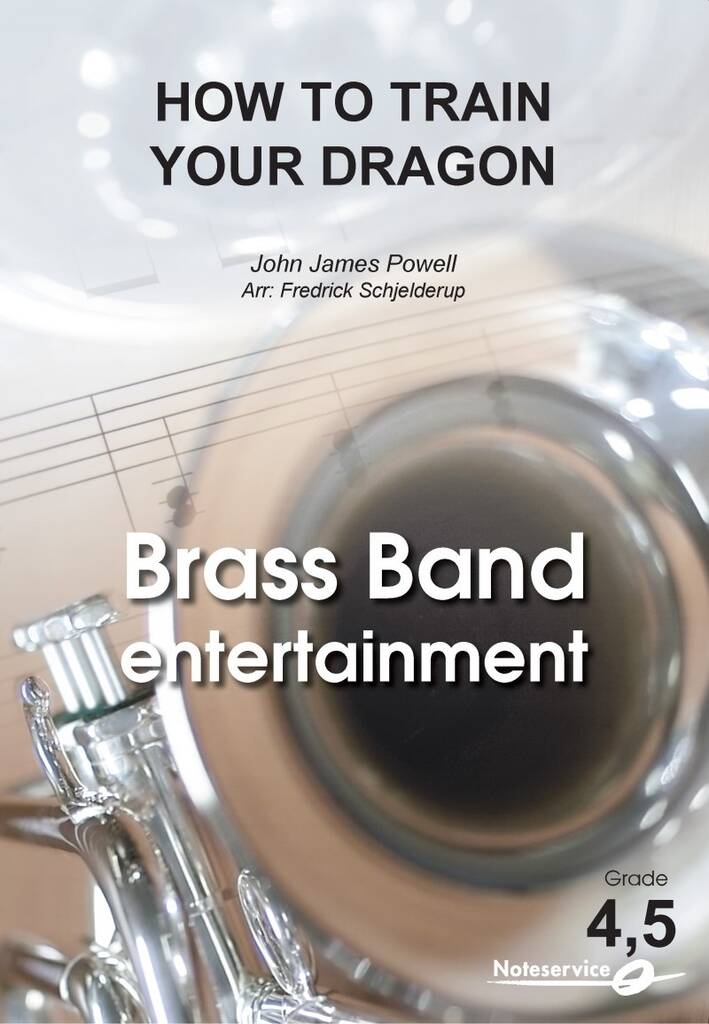
How to Train Your Dragon - John James Powell - Fredrick Schjelderup
"How to train your dragon" is an American animation film about a little viking village which gets attacked by dragons.In the movie, the young character Birk must convince his father and the rest of the village that he will be a viking warrior and fight the dragons.During the process of becoming a real warrior, Birk wants to become friends with the dragons, rather than fight them.The film music is originally written by John James Powell and describes the drama, tension og romance.In this arrangement you'll find the themes "This is Birk" and "Dragon Battle".
Estimated dispatch 5-14 working days
-
 £127.30
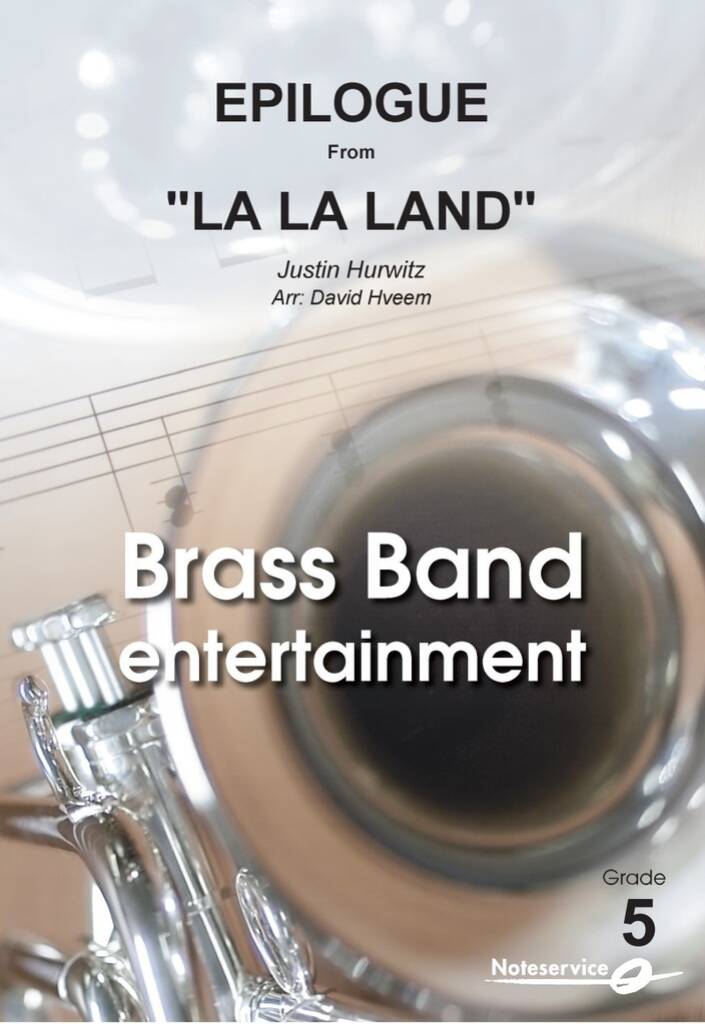
Epilogue from La La Land - Justin Hurwitz - David Hveem
Epilogue is taken from the movie La La Land, released in 2016. La La Land won several important prizes that year, and especially the soundtrack written by American composer Justin Hurwitz received widely acclaim.Epilogue is a medley, presented in the original soundtrack, consisting of many of the most well-known themes from the movie.This arrangement was commissioned by Jaren Hornmusikkforening in 2018. The arranger has tried to transcribe the original music as closely as possible. However, some parts are slightly different from the piano-based original music. There are also some changes in keys to make the music more playable for brass band.The piece changes style and tempo often (as the original soundtrack), which requires good abilities for both flexibility and precision in the band.There are also several rhytmically demanding parts, as well as challenging parts for soloists.
Estimated dispatch 5-14 working days
-
 £74.99
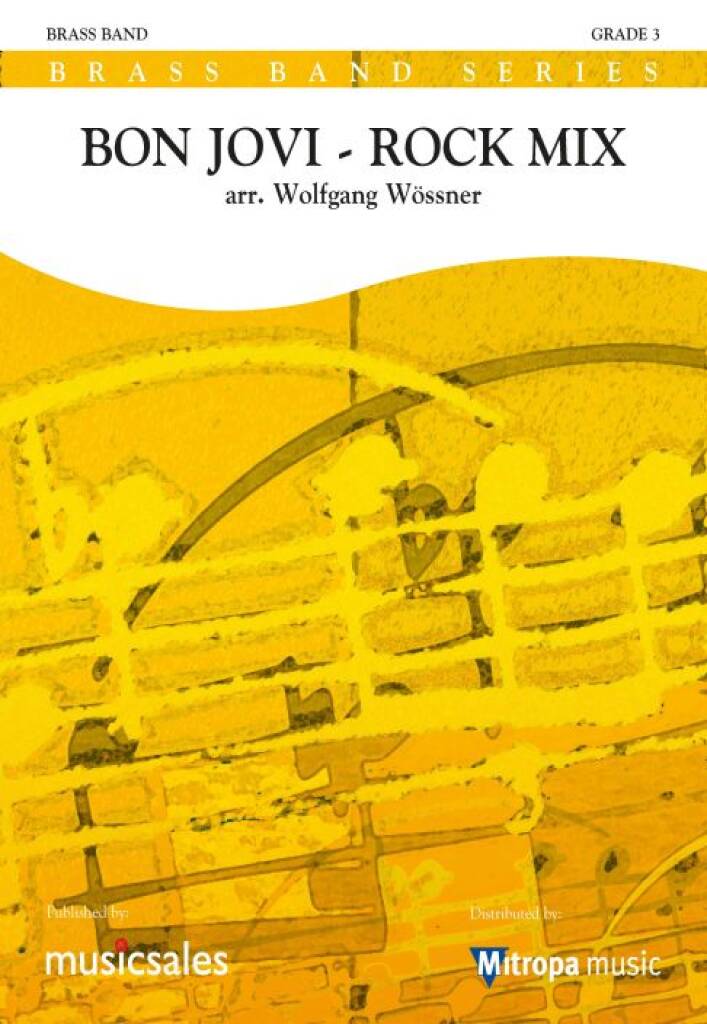
Bon Jovi - Rock Mix - Jon Bon Jovi - Wolfgang Wössner
Wolfgang Wssner has created yet another energetic and exciting medley for concert band, following in the footsteps of his previous successful medley, Bryan Adams - The Best of Me.This time Wssner has moulded four hits by the American rock band Bon Jovi into one sensational work. Combining Runaway, It's My Life, Livin' On a Prayer and You Give Love a Bad Name, creates an incredibly fun medley that will rock your next concert!
Estimated dispatch 5-14 working days
-
£74.99
Fanfare and Jubiloso - James Curnow
Accessible even to particularly advanced Jr. High bands or honor groups, James Curnow's brilliant fanfare and treatment of Renaissance composer Tylman Susato's RONDO is truly a jubilant musical expression. FANFARE AND JUBILOSO is dedicated to Harry Begian, the world renowned and highly respected American music educator and conductor, and is a creative exploration of joyous energy.Investigating those intriguing Renaissance harmonic concepts, this celebratory offering will be a fresh and vigorous addition to your concert repertoire!
Estimated dispatch 5-14 working days
-
 £104.99
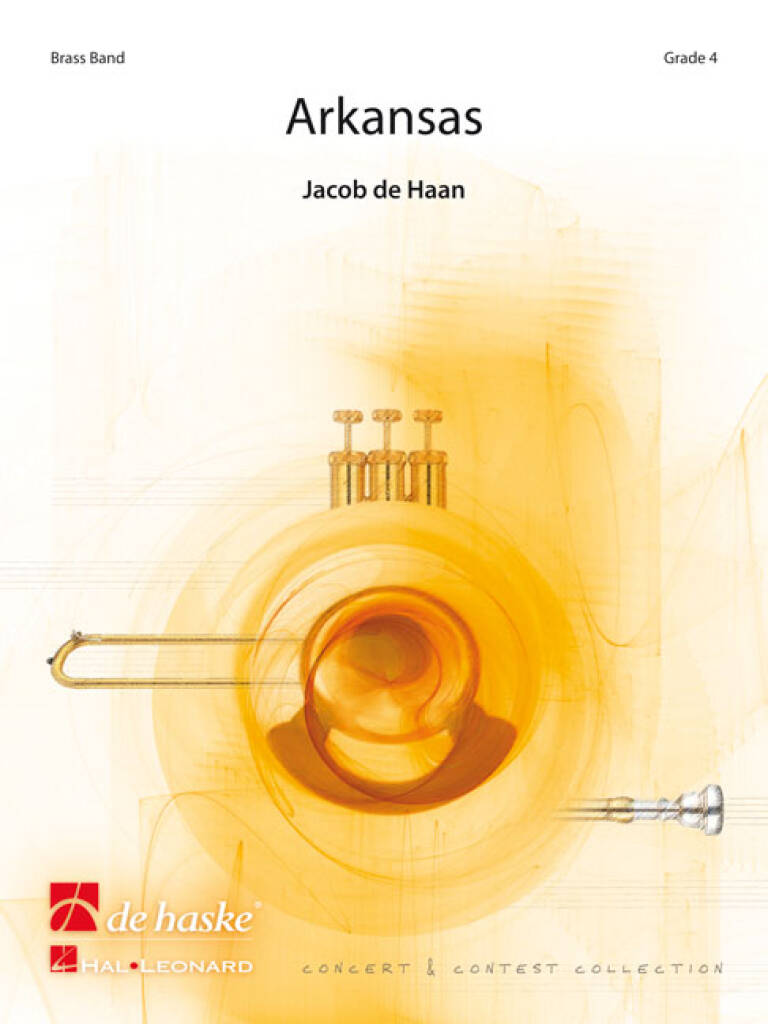
Arkansas - Jacob de Haan
This concert work, the latest of Jacob de Haan works based on American states, is a suite in three movements, based on a well-known folk tune from Arkansas. In the course of this varied work the folk song appears in its complete form and in fragments, in major and in minor, as a ballad in a lyrical orchestration, as a blues, accompanied by a jazzy rhythm and at the end again in its pure form. In the process, all instrumental groups of the brass band get their chance to shine!
Estimated dispatch 5-14 working days
-
 £67.24
Dreams of America (Brass Band) Derek Jenkins
Dreams of America was commissioned by the National Youth Brass Band of America. The concept of the 'American Dream' is an indelible part of the American psyche. Over time, notions of success, fame, and fortune have become synonymous with this idea. Some have achieved their personal 'American Dreams', and yet for others they often remain only a dream. Dreams of America takes a look at certain, generalised aspects of the 'American Dream' and pits them against the harsh realities faced by many, both in the past and present. To heighten these dichotomies, each movement is accompanied by a slideshow of historic and modern images related to the issues at hand. Movement 1: Yearning to Breathe Free explores the anger, fear, and subjugation that seems rampant in recent years, but has been present throughout the country's founding. Movement 2: Take my Stand looks at the role that change, protest, and equality has had and continues to have in our society. Movement 3: It Beckons and Beckons examines the beauty of nature and our role in preserving and protecting this country's natural wonders while illustrating the ease of which our environment can be ruined and destroyed. Movement 4: Sweet Land of Liberty reflects onthe composer's interpretation at what truly makes the United States of America a great country - the people who call this place home. The patriotic tune America the Beautiful has been woven throughout, in part for its poetic depiction of the American landscape and its call for "brotherhood from sea to shining sea!" Sheet music available from: UK - www.brassband.co.uk USA - www.solidbrassmusic.com Difficulty Level: 1st Section + Instrumentation: 1 Soprano Cornet (Eb) 9 Cornets (Bb) 1 Flugelhorn 3 Tenor Horns (Eb) 2 Baritones (Bb) 2 Trombones (Bb) 1 Bass Trombone 2 Euphoniums (Bb) 2 Basses (Eb) 2 Basses (Bb) 4 Percussion
In Stock: Estimated dispatch 1-3 working days
-
£29.95
ROLL CALL, The (Brass Band Set) - William Broughton Snr
This march derives its title from the American hymn When the roll is called up yonder which is used as a bass solo. British expatriate William Broughton became a master of the American street march, the trio and break-up strain of this march being unmistakeably American and reminiscent of the golden age of American band music under Sousa, King and Fillmore.
Estimated dispatch 7-14 working days
-
 £29.95
Judd: The Roll Call
This march derives its title from the American hymn When the roll is called up yonder which is used as a bass solo. British expatriate William Broughton became a master of the American street march, the trio and break-up strain of this march being unmistakeably American and reminiscent of the golden age of American band music under Sousa, King and Fillmore.
Estimated dispatch 7-14 working days
-
£29.95
ARMY OF GOD (Brass Band Set) - Emil Soderstrom
This march was awarded first prize in the 1930 American Golden Jubilee National Music Competition and was published the same year in the first edition of the American Festival Series. It was subsequently re-printed in the General Series of 1984. Soderstrom's imaginative use of syncopation and chromatic harmony brought a new, American sound to the Salvation Army march. For example, he took the old Salvation Army fight song Hark, hark my soul written and changes its metre from 6/8 to 4/4 while also syncopating it!
Estimated dispatch 7-14 working days
-
 £29.95
Judd: Spirit of Joy
This march was awarded first prize in the 1930 American Golden Jubilee National Music Competition and was published the same year in the first edition of the American Festival Series. It was subsequently re-printed in the General Series of 1984. Soderstroms imaginative use of syncopation and chromatic harmony brought a new, American sound to the Salvation Army march. For example, he took the old Salvation Army fight song Hark, hark my soul written and changes its metre from 6/8 to 4/4 while also syncopating it!
Estimated dispatch 7-14 working days
 View Music