
Results
-
 £290.99
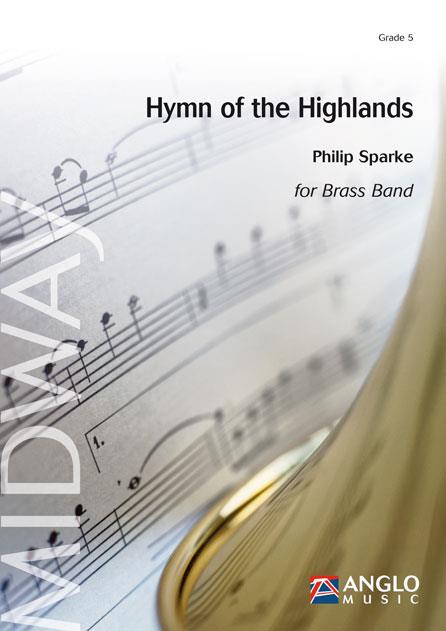
Hymn of the Highlands (Complete Edition) (Brass Band - Score and Parts) - Sparke, Philip
Hymn of the Highlands was commissioned by David King and the Yorkshire Building Society Band for first performance at the 2002 European Brass Band Championships Gala Concert in Brussels. The complete suite lasts approximately 35 minutes however it is possible that pieces of different lengths can be constructed to feature particular soloists or fit different programming constraints.Includes:Ardross Castle, Duration: 7:00Summer Isles (Euphonium solo), Duration: 4:00Flowerdale (Soprano Cornet solo), Duration: 4:30Strathcarron (Sword Dance), Duration: 5:30Lairg Muir (Cornet solo), Duration: 4:30Alladale (Flugel Horn, Horn and Baritone trio), Duration: 4:15Dundonnell (Finale), Duration: 5:45Duration: 35:00
Estimated dispatch 7-14 working days
-
 £40.00
UNSQUARE DANCE (Brass Band - Score and Parts) - Brubeck, Dave - Freeh, Mark
Dave Brubeck, the American jazz pianist, has contributed a huge amount of material to the genre, responsible for many titles now so often referred to as 'jazz standards'. Brubeck has experimented with irregular time signatures throughout his musical career including 'Pick Up Sticks' (which is in 6/4 time), Blue Rondo a la Turk (in 9/8 but over four beats as 2.2.2.3) and of course his most famous work, 'Take Five' (in 5/4!). His 'Unsquare Dance' (in 7/4 time) has been expertly arranged for brass band by Mark Freeh.Duration: 4.00
Estimated dispatch 7-14 working days
-
£40.00
JOCK MCKENZIE MINI CHRISTMAS COLLECTION Concert Band Value Set - McKenzie, Ian
Score and 29 parts (Part 1: 4 x Bb, 1 x Eb, 3 x C (flute), 1 x C (oboe); Part 2: 4 x Bb, 1 x Eb, 1 x F, 1 x C; Part 3: 1 x Eb, 1 x F, 1 x Bb TC (3rd clarinet), 1 x Bb TC, 1 x C BC; Part 4: 1 x Bb TC, 1 x Eb TC (baritone sax) 1 x C BC; Part 5: 1 x Eb, 1 x Bb, 1 x C BC; 1 x Kit Percussion, 1 x Auxillary Percussion). Contains: Let the Rock Roll Out for Christmas; Season's Greetings!; Glory Shone Around; Oh Yes It's Christmas!.
Estimated dispatch 7-14 working days
-
 £40.00
Slavonic Dance No.8 (Brass Band - Score and Parts) - Dvorak, Antonin - Littlemore, Phillip
Antonin Dvorak composed his first set of eight Slavonic Dances in 1878. The music is lively and overtly nationalistic, although the tunes themselves are all original and are not taken from any Slavic folk dances. Slavonic Dance No.8 is high-spirited and in the style of a furiant, the boldest of Czech folk dances. Although written in a 3/4 metre throughout, Dvorak creates cross-rhythms that shift this metre in to 2/4, which is an important characteristic of the furiant. Duration: 4.10
Estimated dispatch 7-14 working days
-
 £94.95
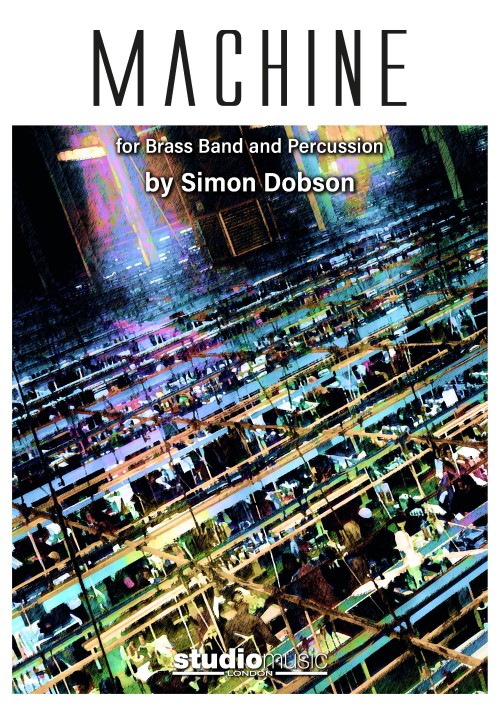
Machine (Brass Band - Score and Parts) - Dobson, Simon
Machine, was commissioned by the Salvation Army Trading Company for the National Youth Brass Band of Great Britain.The work speaks of the perils of the fast fashion industry, the part it plays in our current understanding of late-stage capitalism and it's complicity in the destruction wrought on our one home planet. It also seeks to portray the incredible efforts of the Salvation Army in their quest to slow the fast fashion industry and recycle clothing in the most innovative and progressive ways.The work is through composed and comprises five movements.Movement 1: The great Machine. The band is placed into 8 groups of three (expect tubas, in their normal position as a 4), who stand in specific places on the stage. This will create machine like antiphonal movement in the written music. The great Machine in question is the fast fashion industry, in all its chaos, seeming grandeur and relentless momentum.Movement 2: Mode phmre is fast, angular and quirky, a nod to the perilous speed and waste of the fast fashion industry (the movement title is the French for fast fashion).Movement 3: A planet to treasure (for DA) is a love letter to our home planet and its finite resources and as well as the beauty of the natural world, which unfortunately, we are destroying (hence the dedication to David Attenborough on his 100th year).Movement 4: The wheels keep turning, returns to the fast, angular, almost unstoppable grasp of capitalism and the damaging structures it promotes.Movement 5: Recycle, re-use, mirrors the opening (though without stage directions) in reference to the cyclic nature of fast fashion and the wonderful work that The Salvation Army do in trying to halt this system.
Estimated dispatch 7-14 working days
-
 £44.95
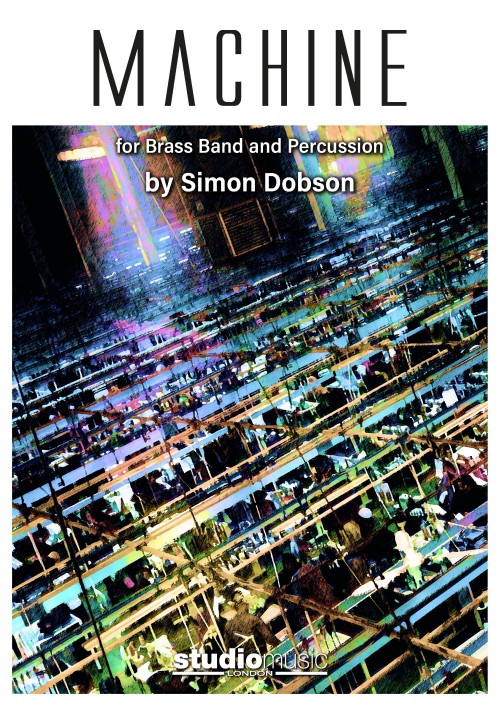
Machine (Brass Band - Score only) - Dobson, Simon
Machine, was commissioned by the Salvation Army Trading Company for the National Youth Brass Band of Great Britain.The work speaks of the perils of the fast fashion industry, the part it plays in our current understanding of late-stage capitalism and it's complicity in the destruction wrought on our one home planet. It also seeks to portray the incredible efforts of the Salvation Army in their quest to slow the fast fashion industry and recycle clothing in the most innovative and progressive ways.The work is through composed and comprises five movements.Movement 1: The great Machine. The band is placed into 8 groups of three (expect tubas, in their normal position as a 4), who stand in specific places on the stage. This will create machine like antiphonal movement in the written music. The great Machine in question is the fast fashion industry, in all its chaos, seeming grandeur and relentless momentum.Movement 2: Mode phmre is fast, angular and quirky, a nod to the perilous speed and waste of the fast fashion industry (the movement title is the French for fast fashion).Movement 3: A planet to treasure (for DA) is a love letter to our home planet and its finite resources and as well as the beauty of the natural world, which unfortunately, we are destroying (hence the dedication to David Attenborough on his 100th year).Movement 4: The wheels keep turning, returns to the fast, angular, almost unstoppable grasp of capitalism and the damaging structures it promotes.Movement 5: Recycle, re-use, mirrors the opening (though without stage directions) in reference to the cyclic nature of fast fashion and the wonderful work that The Salvation Army do in trying to halt this system.
Estimated dispatch 7-14 working days
-
 £59.95
Sinfonietta - Saints and Devils (Brass Band - Score and Parts) - Wiffin, Rob
Saints and Devils is a challenging three movement work:Dance with the Devil (4.30)A Glimpse of Paradise (4.45)Reyes Magos (3.45)I wrote it when I was living in Spain where the Catholic culture is still much more prevalent than in the UK. The first two movements are a transition from dark to light; Dance with the Devil is aggressive and occasionally macabre whereas A Glimpse of Paradise is serene.The first and final parts of the second movement were originally written for a sequence in the Royal Military Tattoo 2000, played under the John Magee poem High Flight - 'Oh I have slipped the surly bonds of Earth ............ Put out my hand, and touched the face of God'- with videos of eagle owls in flight dramatically projected onto the buildings of Horse Guards in Whitehall, London.The last movement, Reyes Magos, is the joyous fiesta of the Three Kings. In Spain, January 6th, rather than Christmas Day, is the main day of present-giving, marking the Epiphany, the arrival of the Kings from the Orient at the Nativity. Saints and Devils is technically and expressively demanding but is written within the realms of tonal language.- Rob WiffinDuration: 13.00
Estimated dispatch 7-14 working days
-
£29.95
Army Of God (Brass Band - Score and Parts) - Soderstrom, Emil
This march was awarded first prize in the 1930 American Golden Jubilee National Music Competition and was published the same year in the first edition of the American Festival Series. It was subsequently re-printed in the General Series of 1984. Soderstrom's imaginative use of syncopation and chromatic harmony brought a new, American sound to the Salvation Army march. For example, he took the old Salvation Army fight song Hark, hark my soul written and changes its metre from 6/8 to 4/4 while also syncopating it!
Estimated dispatch 7-14 working days
-
£14.95
Army Of God (Brass Band - Score only) - Soderstrom, Emil
This march was awarded first prize in the 1930 American Golden Jubilee National Music Competition and was published the same year in the first edition of the American Festival Series. It was subsequently re-printed in the General Series of 1984. Soderstrom's imaginative use of syncopation and chromatic harmony brought a new, American sound to the Salvation Army march. For example, he took the old Salvation Army fight song Hark, hark my soul written and changes its metre from 6/8 to 4/4 while also syncopating it!
Estimated dispatch 7-14 working days
-
 £44.95
Princethorpe Variations (Brass Band - Score and Parts) - Downie, Kenneth
Colourful harmony, rhythmic flair and melodic invention are the hallmarks of this excellent set of variations by Kenneth Downie, based on the well known church tune, Princethorpe.This major work demonstrates the well-known characteristics of the composer: colourful harmony, rhythmic flair and melodic invention, all encapsulated in scoring which is engulfing both to players and listeners alike. Following a presentation of the theme there are five variations culminating in what can be described as either a finale or coda.Theme. The composer shows his originality in the harmonic sense of this introduction. Perhaps it could be suggested that over-indulgence of rubato may be a temptation to be avoided.Sections A to F. Relentless rhythmic drive is of paramount importance in this first variation. Conscientious observance of dynamics is of course an essential requirement in conveying the exciting quality of the music; there are moments of sudden contrast of which all will need to be aware. Moving between the time-signatures of 5/4 and 6/4 these sections are built from strong easily-identifiable fragments of the theme. These is a significant increase in temp at letter F which will further the exciting impact of the music.Sections G & H. In a pastorale style this short, gentle variation affords a contrast in style between the previous and succeeding ones. The gentle undulating character of the melodic lines is governed by the Allegretto grazioso directive.Sections I to M. Commencing two bars before letter I the music is now exuberant and the tempo and style is that of a march in compound time. In this exhilarating movement there are moments of contrast and indeed of delicacy which are a foil to the more energetic moments. Rhythmic control will be essential to maintain a consistent tempo. As elsewhere in the work, the percussion section will contribute much to the success of the performance there are bars where this section alone is heard and there are important entries for glockenspiel.Sections N & O. With emotional content this Adagio variation has the first two notes of the melody as its melodic impetus. Apart from just over two bars at O (where there is an interpolatory phrase from Cornets and Trombones), the melodic line is entrusted to the plaintive sounds of the horn section. Cornets and Trombones provide a change of tone colour at the beginning of section O. Under a poco rall, this very expressive variation is concluded; there is an important link supplied by Eb Bass.Sections P & Q. A lively march-tempo is launched immediately and these sections are in the nature of an introduction to the final variations. There is a quickening of pace at Q which assists the generation of excitement which should be an essential part of the performance. Solo Cornets introduce a melodic line at Q which anticipates the compound time of the following section.Sections R & S. The Solo Cornet theme of the previous section is now a contrapuntal line accompanying the theme tune. With an elongation of the notes in the melody, the conductor will need to call on the sustaining powers of the band and at no time should the interesting accompanying lines be allowed to detract from the sonorous presentation of the basic theme.Sections T, U & V. Following a poco rit, the finale begins at letter T with the directive, molto vivace. There is much detail to be rehearsed, not least being the dynamic contrasts which are encountered. As throughout the work, the listener should have no difficulty in identifying the thematic sources of the composer's music.
Estimated dispatch 7-14 working days
 View Music