Searching for Wind Band Music? Visit the Wind Band Music Shop
We've found 344 matches for your search. Order by

Results

  • £47.50

    Silent Night - Franz Xaver Gruber - William Gordon

    Austrian composer and organist Franz Xaver Gruber composed the original version of this Christmas work in 1818. It is probably one of the most famous of all Christmas carols and should not be missed from any Christmas concert. American composer William Gordon has produced this arrangement for brass band.

    Estimated dispatch 5-14 working days
  • £54.99

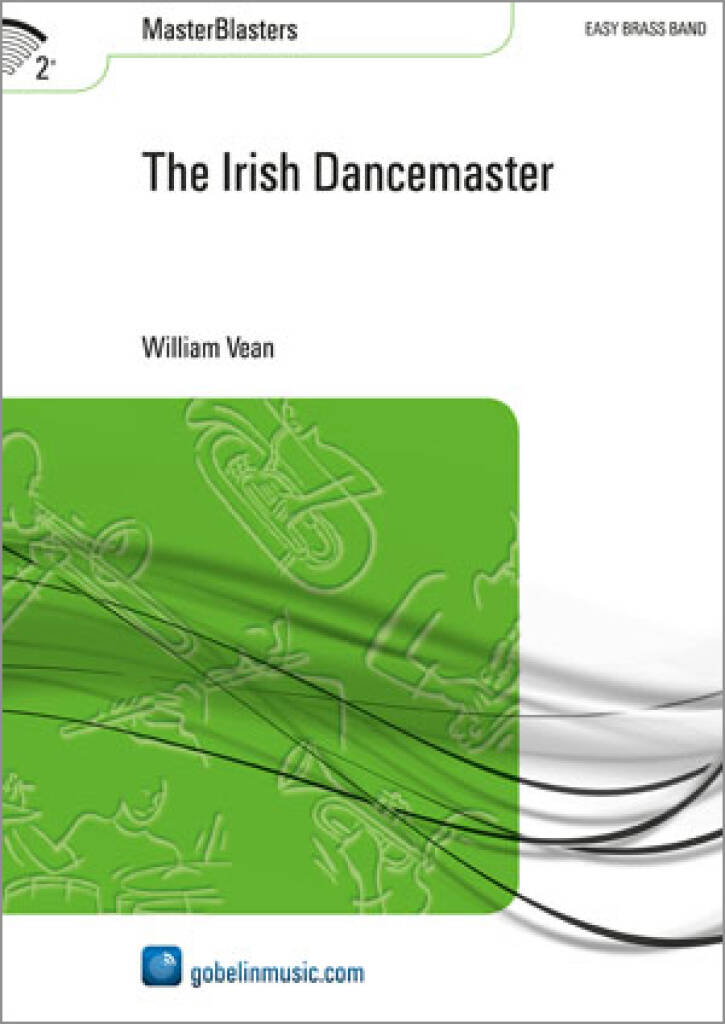
    The Irish Dancemaster - William Vean

    During the eighteenth century a person called 'the Dance Master' made his appearance in Ireland. He was a travelling dance-teacher, who moved from one village to another to teach the people there how to dance. They were often flamboyant personalities, gorgeously dressed and holding a staff in one hand. In order to teach their pupils the difference between their right and left leg, the dance master used to tie a small bunch of straw or hay to their leg and then would order them to either lift their 'hay-leg' or their 'straw-leg'. The dancing masters used to stay in one particular village for about six weeks (if they were not claimed by a neighbouringvillage), after which they continued their journey. Having a famous dance master gave a village a certain distinction and did not seldom lead to boasting and pride. Also on account of the popularity of Celtic music in general at the moment, William Vean was inspired to writing 'The Irish Dance Master'. He 'teaches' you two dances, the Reel and the Jig. In between these two dances there is a short breathing space, during which a traditional Irish rhythm can be enjoyed.

    Estimated dispatch 5-14 working days

     PDF View Music

  • £76.99

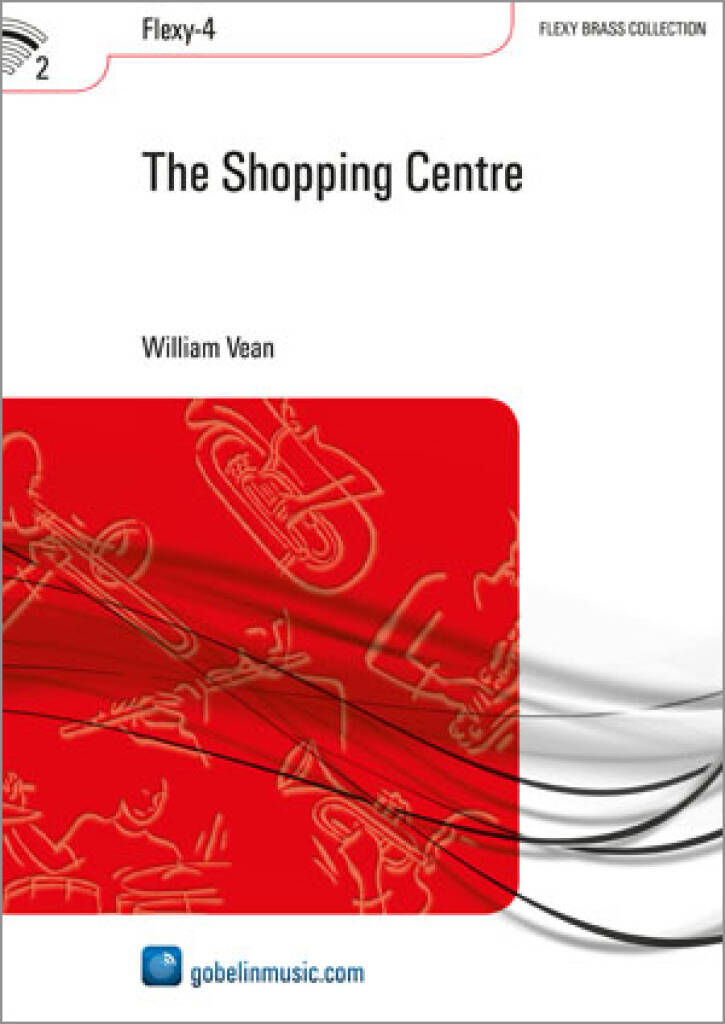
    The Shopping Centre - William Vean

    Many people when asked the question 'Do you have any hobbies?' will answer 'Shopping' (even though the female part of the population may be more interested in this than the male one). Of course it is great fun to walk about in a Shopping Mall, browsing in various small shops, looking for things you have always wanted to possess. This was what William Vean was doing one day when he came across the idea to write a composition in which several shops could try to sell their wares (and this idea didn't cost him a penny). First, the audience are taken to a 'Jeans store', then a 'Phone shop' is visited, after which a visit is made to a 'Perfumery'. Thefourth part depicts a profession which is practised in several premises, namely that of shoplifter. In the fifth part there is room for a bite to eat at a Chinese restaurant, and finally after a visit to the hairdresser's it's time to go home.

    Estimated dispatch 5-14 working days

     PDF View Music

  • £39.60
  • £29.95

    In the Love of Jesus (Cornet Solo with Brass Band - Score and Parts) - Hammond, William - Steadman-Allen, Ray

    There are some pieces of music that evoke a sense of belonging, not only for the message it conveys, but the association of what it represents. In the Love of Jesus, by William Hammond and Ivy Mawby, the song brings an emotive response to words of commitment and devotion to Jesus. The melodic line starts with a somewhat hypnotic charm and expands into a beautifully shaped line of music. Duration: 3.30

    Estimated dispatch 7-14 working days

     PDF View Music

  • £95.00

    A Wartime Sketchbook (Brass Band - Score and Parts) - Walton, William - Hindmarsh, Paul

    Early in 1941 William Walton, 39, received his call-up papers. He was by then one of the most eminent of British composers and was exempted from military service on condition that he provided music for films deemed to be of 'national importance'. Scoring Lawrence Olivier's Shakespeare epic Henry V in 1943 was the most substantial of these wartime projects. His role in patriotic films from 1941 and 42 like The Foreman went to France, Next of Kin, Went the day Well and The First of the Few was to provide appropriate title music and some underscoring at key moments. Walton extracted the most substantial portions of the latter as the popular Spitfire Prelude and Fugue for orchestra. The remaining music remained unpublished until 1990, when Christopher Palmer assembled the highlights into A Wartime Sketchbook. I was intrigued to hear these examples of Walton's wartime music and having discovered that they would fit naturally and idiomatically onto the brass band, I arranged six of the numbers into a suite for Besses o' th' Barn Band, which I was conducting at the time.In 1995 the brass band suite was recorded by the famous Black Dyke Mills Band as part of an all Walton album which I produced for the ASV label (ASV CD WHL 2093). This award- winning CD also included Walton's First Shoot, in the edition by Elgar Howarth, my transcription of movements from Music for Children and two substantial brass versions by Edward Watson of the suite from Henry V (with narrator) and the March and Siegfried Music from The Battle of Britain music.Prologue: This is the stirring title music from Went the day Well, a screen play by Graham Greene about a German airborne invasion of an English village. The main theme leads toBicycle Chase: Characteristic musical high-jinks for J.B.Priestley's The Foreman went to France.Refugees: From the same film, this is a poignant accompaniment to the long march of refugees. As Ernest Irving, the film's musical director, put it, "this really makes your feet sore and your knees sag."Young Siegfrieds: This lively movement comes from the music that Walton composed for The Battle of Britain in 1968, with the assistance of Malcolm Arnold, but which the film's producer rejected. It portrays first the Berliners, cheerfully ignoring the black-out and then, in the trio, the Young Siegfrieds of the Luftwaffe, courtesy of a parody of Siegfried's horn call from Wagner's opera.Romance: A soldier and a Dutch refugee snatch a few tender moments together in Next of Kin.Epilogue: At the end of The Foreman went to France, the French look forward with hope and optimism to eventual liberation.- Paul HindmarshDuration: 14.00

    Estimated dispatch 7-14 working days

     PDF View Music

  • £40.00

    A Wartime Sketchbook (Brass Band - Score only) - Walton, William - Hindmarsh, Paul

    Early in 1941 William Walton, 39, received his call-up papers. He was by then one of the most eminent of British composers and was exempted from military service on condition that he provided music for films deemed to be of 'national importance'. Scoring Lawrence Olivier's Shakespeare epic Henry V in 1943 was the most substantial of these wartime projects. His role in patriotic films from 1941 and 42 like The Foreman went to France, Next of Kin, Went the day Well and The First of the Few was to provide appropriate title music and some underscoring at key moments. Walton extracted the most substantial portions of the latter as the popular Spitfire Prelude and Fugue for orchestra. The remaining music remained unpublished until 1990, when Christopher Palmer assembled the highlights into A Wartime Sketchbook. I was intrigued to hear these examples of Walton's wartime music and having discovered that they would fit naturally and idiomatically onto the brass band, I arranged six of the numbers into a suite for Besses o' th' Barn Band, which I was conducting at the time.In 1995 the brass band suite was recorded by the famous Black Dyke Mills Band as part of an all Walton album which I produced for the ASV label (ASV CD WHL 2093). This award- winning CD also included Walton's First Shoot, in the edition by Elgar Howarth, my transcription of movements from Music for Children and two substantial brass versions by Edward Watson of the suite from Henry V (with narrator) and the March and Siegfried Music from The Battle of Britain music.Prologue: This is the stirring title music from Went the day Well, a screen play by Graham Greene about a German airborne invasion of an English village. The main theme leads toBicycle Chase: Characteristic musical high-jinks for J.B.Priestley's The Foreman went to France.Refugees: From the same film, this is a poignant accompaniment to the long march of refugees. As Ernest Irving, the film's musical director, put it, "this really makes your feet sore and your knees sag."Young Siegfrieds: This lively movement comes from the music that Walton composed for The Battle of Britain in 1968, with the assistance of Malcolm Arnold, but which the film's producer rejected. It portrays first the Berliners, cheerfully ignoring the black-out and then, in the trio, the Young Siegfrieds of the Luftwaffe, courtesy of a parody of Siegfried's horn call from Wagner's opera.Romance: A soldier and a Dutch refugee snatch a few tender moments together in Next of Kin.Epilogue: At the end of The Foreman went to France, the French look forward with hope and optimism to eventual liberation.- Paul HindmarshDuration: 14.00

    Estimated dispatch 7-14 working days

     PDF View Music

  • £29.95

    The Roll Call (Brass Band - Score and Parts) - Broughton, William

    This march derives its title from the American hymn When the roll is called up yonder which is used as a bass solo. British expatriate William Broughton became a master of the American street march, the trio and break-up strain of this march being unmistakeably American and reminiscent of the golden age of American band music under Sousa, King and Fillmore.

    Estimated dispatch 7-14 working days
  • £14.95

    The Roll Call (Brass Band - Score only) - Broughton, William

    This march derives its title from the American hymn When the roll is called up yonder which is used as a bass solo. British expatriate William Broughton became a master of the American street march, the trio and break-up strain of this march being unmistakeably American and reminiscent of the golden age of American band music under Sousa, King and Fillmore.

    Estimated dispatch 7-14 working days