
Results
-
£29.95
Rhapsody in Brass (Score Only)
Rhapsody in Brass is in three movements and was written for the British Open Championships in 1949, held at Belle Vue in Manchester. The contest winners were Fairey Aviation Works Band under the baton of Harry Mortimer. Eric Ball came second with Ransome & Marles and Stanley Boddington 3rd with Munn and Felton Band. Rhapsody in Brass had the unusual distinction of being written as a test piece by a Salvation Army composer. Eric Ball's Resurgam was the only other piece to achieve that dual personality in that era.Dean Goffin was born in 1916 in Wellington, New Zealand, son of Henry Goffin, a Salvation Army officer and composer. At 19 he was appointed Bandmaster of the Wellington South Band and when World War II started, he enlisted in the New Zealand Armed Forces where he became Bandmaster of the 20th Infantry Battalion and later the 4th Brigade Band. During the time he served with them in the Middle East and Europe, he composed and arranged numerous pieces among which Rhapsody in Brass and the march Bel Hamid, later adapted for Salvation Army use and renamed Anthem of the Free.After the war, Dean kept on composing and his work was featured by the Wellington South Band. Later he transferred to Timaru for another job and became Bandmaster there. He was studying music at the time and as he wanted to take part in a competition for devotional selections for Salvation Army use, he sent some of his compositions to the International Headquarters. When Rhapsody for Brass was chosen as the test-piece for the British Open Championships, people at the Salvation Army started asking questions about the lack of publications of his work. It was discovered that the pieces submitted for the competition didn't meet the exact criteria. Among these pieces was one of his most appealing works The Light of the World which was published a year later, in 1950, the same year as he completed his Bachelor of Music studies at Otagu University.After entering the Salvation Army Training College in Wellington with his wife, Marjorie, Dean was in 1956 appointed National Bandmaster in the British Territory. Later he became National Secretary for Bands and Songster Brigades and in this period he organised the yearly festival in the Royal Albert Hall and was responsible for the national music schools in the UK. Dean returned to his home country in 1966 and to mark the centenary of the Salvation Army in New Zealand he was knighted by the Queen in 1983. Sir Dean Goffin died on 23 January 1984.
Estimated dispatch 7-14 working days
-
 £189.95
'The New Christmas Collection' - Full Set March Card Size
The new Christmas Collection carol books contain all the traditional Christmas Carols, with some new 'pop' music arrangements included to add more variety to your carolling this year.
* Note, these are not compatible with the New Christmas Praise books.
Full list of works in The Christmas Collection:-
• A child this day is born
Estimated dispatch 7-14 working days
• A Christmas lullaby
• A great and mighty wonder
• All I want for Christmas is you
• All my heart this night rejoices
• Angels, from the realms of Glory (Come and worship)
• Angels, from the realms of Glory (Iris)
• Angels we have heard on high
• A starry night
• As with gladness men of old
• Auld lang syne
• A virgin most pure
• Away in a manger (The manger scene)
• Away in a manger (Traditional)
• A winter’s tale
• Bethlehem
• Brightest and best (Spean)
• Brightest and best (Traditional)
• Calypso Carol
• Carol for the Nativity
• Carol of the bells
• Carol of the drum
• Child of Mary
• Christians Awake!
• Christ is born (Il est né)
• Christ was born on Christmas Day
• Come and join the celebration
• Come, children, come quickly
• Coventry Carol
• Deck the hall
• Ding dong! merrily on high
• Do you hear what I hear?
• Frosty the snowman
• Gabriel’s Message
• Gaudete
• Glory in the highest
• Glory in the highest Heaven
• God of God, the uncreated
• God rest you merry, gentlemen
• Good Christian men, rejoice
• Good King Wenceslas
• Go, tell it on the mountain!
• Happy Christmas (War is over)
• Hark the glad sound!
• Hark! the herald angels sing
• Have yourself a merry little Christmas
• Here we come a-wassailing
• How far is it to Bethlehem?
• Huron Carol
• Infant Holy
• In the bleak midwinter (Cranham)
• In the bleak midwinter (Darke)
• I saw mommy kissing Santa Claus
• I saw three ships come sailing in
• It came upon a midnight clear (Traditional)
• It came upon a midnight clear (Willis)
• It’s beginning to look a lot like Christmas
• It’s the most wonderful time of the year
• I wish it could be Christmas everyday
• I wonder as I wander
• Jesus, good above all other
• Jingle Bells
• Jingle bell rock
• Joy to the world!
• Last Christmas
• Let it snow!
• Little baby Jesus
• Little children, wake and listen
• Little Donkey
• Little Jesus, sweetly sleep
• Lo! he comes with clouds descending
• Long, long ago
• Love came down at Christmas
• Mary’s boy child
• Mary’s Child
• Masters in this hall
• Merry Christmas everyone
• Mistletoe and wine
• Noel
• O Christmas tree
• O come, all ye faithful
• O come, Immanuel
• O Heaven-sent King
• O holy night!
• O little town of Bethlehem (Christmas Carol)
• O little town of Bethlehem (Forest Green)
• O little town of Bethlehem (St Louis)
• Once in royal David’s city
• Past three o’clock
• Patapan
• Personent Hodie
• Praise ye the Lord
• Ring the bells
• Rise up, shepherd!
• Rockin’ around the Christmas tree
• Rudolph, the red-nosed reindeer
• Sans day carol
• Santa Claus is comin’ to town
• Saviour’s Day
• See, amid the winter’s snow
• Silent Night!
• Sleigh Ride
• Softly the night is sleeping
• So here it is, merry Christmas
• Stars are shining
• Still, still, still
• Stop the cavalry
• Sussex Carol
• Sweet chiming bells
• Sweet chiming Christmas bells
• The candle song
• The cherry tree carol
• The Christmas song
• The first Nowell
• The holly and the ivy
• The infant King
• The light has come
• The shepherds’ farewell
• The stable door
• The star in the east
• The twelve days of Christmas
• The virgin Mary had a baby boy
• They all were looking for a king
• Thou didst leave thy throne
• Three kings’ march
• Unto us a boy is born
• Walking in the air
• We gather round the manger-bed
• We three kings of Orient are
• We wish you a merry Christmas
• What child is this?
• When a child is born
• When Santa got stuck up the chimney
• Whence is that goodly fragrance flowing?
• When wise men came seeking
• While shepherds watched (Cranbrook)
• While shepherds watched (Handel)
• While shepherds watched (Winchester Old)
• White Christmas
• Who is he?
• Winter Wonderland
• Worldwide Christmas message
• Zither Carol
• A starry night
• Christmas Joy
• Christmas Praise
• Coventry Carol
• Infant Holy
• Mid-winter
• Rudolph, the red-nosed reindeer
• The everlasting light
• To celebrate his birth
• Yuletide Rag
-
 £89.95
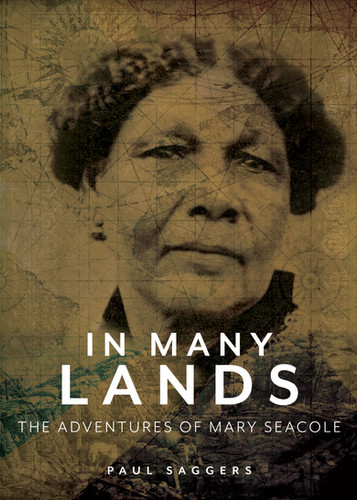
In Many Lands - The Adventures of Mary Seacole - Paul Saggers
In Many Lands - The Adventures of Mary Seacole was commissioned by The Royal Marines Band Service for The National Youth Brass Band of Great Britain. The first performance of the piece was on 16 April 2022 in Huddersfield Town Hall to celebrate the 70th anniversary of the NYBBGB. It was next performed in Birmingham Town Hall (on 28 April 2022) at a joint charity concert of the NYBBGB and The Band of Her Majestyas Royal Marines, Collingwood, for the European Brass Band Association Prelude Concert. The work is a musical account of the life of Mary Seacole who was a British-Jamaican nurse and businesswoman who set up the "British Hotel" behind the lines during the Crimean War. The work takes inspiration from Seacoleas biography Wonderful Adventures of Mrs. Seacole in Many Lands. The work is divided into three movements:
-
 £41.09
At the Going Down of the Sun (Brass Band) Mike Fitzpatrick
At The Going Down Of The Sun is a deeply moving musical tribute dedicated to the courage, resilience, and ultimate sacrifice of those who have defended the nation of Australia. Inspired by the heroic legacy of the 2/25th Battalion and their storied defense of the Kokoda Track during World War II, this composition serves as a solemn reminder of the immense gratitude owed to its fallen heroes. This piece is born from a legacy of service. It was composed in honor of Keith Fitzpatrick, who enlisted in the AIF on November 28, 1941. Keith served two tours in New Guinea, spending 359 days on the treacherous Kokoda Track. Keith Fitzpatrick lived to celebrate his 100th birthday in 2023, leaving behind a profound legacy through his wife of 67 years, Valda, and three generations of descendants. At The Going Down Of The Sun captures this spirit of endurance and devotion. It is an ideal addition to any program focused on: Anzac Day & Remembrance Day services Military Commemorations Historical Tributes To view a rolling score video of the work please visit www.youtube.com/watch?v=ydO9PKOKTpk Duration: 7.00 minutes Difficulty Level: 3rd Section + This PDF download includes the full score and parts. Sheet music available at www.brassband.co.uk (UK) or https://satradecentral.org (USA) Instrumentation: Soprano Cornet Eb Solo Cornet 1&2 Bb Solo Cornet 3&4 Bb Repiano Cornet Bb 2nd Cornet Bb 3rd Cornet Bb Flugel Horn Bb Solo Horn Eb 1st Horn Eb 2nd Horn Eb 1st Baritone Bb 2nd Baritone Bb 1st Trombone Bb 2nd Trombone Bb Bass Trombone Euphonium Bb Bass Eb Bass Bb Percussion Tubular Bells
In Stock: Estimated dispatch 1-3 working days
-
 £29.88
Bones in the Stores (Trombone Feature with Brass Band) Rob Wiffin
This arrangement for trombone section and band combines two well-known wartime songs, The Quartermaster's Store and Bless 'em All, giving the trombone section a thorough workout as well as a lot of fun. The Quartermaster's Store is a traditional song from England; the origins of both tune and words are uncertain and may date back as far as the English Civil War. The origins of Bless 'Em All are also unclear - the words have been credited to Fred Godfrey in 1917, set to music composed by Robert Kewley, though earlier versions of the song may have existed among British military personnel in the 1880s in India. It was first recorded by George Formby Jr in 1940 and became a patriotic song. Audio demo: https://soundcloud.com/user-565396545/bones-in-the-stores-trombone Duration: Approx. 2.50 minutes Difficulty Level: Medium This PDF download includes the full score and parts. Sheet music available at www.brassband.co.uk (UK) or https://satradecentral.org (USA)
In Stock: Estimated dispatch 1-3 working days
-
 £33.62
Call of the Victor (Brass Band) Marcus Venables
VIEW SCORE PDF The music within this piece by Canadian composer Marcus Venables portrays the image of a victorious and triumphant call - the battle's won and the victor proclaims supreme authority. As with any ruling authority and power, the growing opposition rise to conquer. After the opening fanfare and a call of victory, the music portrays the lavishness of victory with this driving sense of impending conflict. Once again, the victor must go to war and battle the threats. The music continues to express the sorrow and the loss that comes with being the victor. With sacrifice and pain, the victor now grows in passion and motivation to once again conquer the enemies. With a final swift battle, the victor calls out to claim supremacy once again. PDF download includes score and full set of parts. Sheet music available from: UK - www.brassband.co.uk USA - www.solidbrassmusic.com Difficulty Level: Second Section + Instrumentation: Soprano Cornet Eb Solo Cornet Bb Repiano Cornet Bb 2nd Cornet Bb 3rd Cornet Bb Flugel Horn Bb Solo Horn Eb 1st Horn Eb 2nd Horn Eb 1st Baritone Bb 2nd Baritone Bb 1st Trombone Bb 2nd Trombone Bb Bass Trombone Euphonium Bb Bass Eb Bass Bb Timpani Percussion 1-3
In Stock: Estimated dispatch 1-3 working days
-
 £29.88
March from 'The Love for Three Oranges (Brass Band) Prokofiev arr. Wilkinson
This thrilling brass band arrangement of the March from 'The Love for Three Oranges' by Prokofiev has been skillfully arranged by Keith M. Wilkinson. This setting captures the essence of the original orchestral work, while showcasing the power and brilliance of the brass band. In 1918, Sergei Prokofiev undertook his first visit to the United States. A number of concerts of his works were held in Chicago, which were received very favourably. As a result, the director of the Chicago Opera Association, Cleofonte Campanini, commissioned Prokofiev to write an opera. It just so happened that, during his trip, he had written a draft of a libretto, based on the Italian play by Gozzi, L'amore delle tre melarance, adding some additional surrealism to the text. Given Prokofiev's poor English, and Americans unlikely to accept an opera in Russian, French was his final choice. The result, L'amour des trois oranges (or The Love for Three Oranges), which premiered at the Auditorium Theatre in Chicago on 30 December 1921, conducted by Prokofiev himself. The March from this opera is probably the most familiar part and has been used by CBS in the radio-drama series The FBI in Peace and War. It was also used in films such as The Brink's Job and Prokofiev quoted it in the second act of his ballet Cinderella. To view a rolling score video of the work please visit www.youtube.com/watch?v=I136sf8hxlU Duration: Approx. 2.10 minutes Difficulty Level: 3rd Section + PDF download includes parts and score. Sheet music available from www.brassband.co.uk Instrumentation: Soprano Cornet Eb Solo Cornet Bb Repiano Cornet Bb 2nd Cornet Bb 3rd Cornet Bb Flugel Horn Bb Solo Horn Eb 1st Horn Eb 2nd Horn Eb 1st Baritone Bb 2nd Baritone Bb 1st Trombone Bb 2nd Trombone Bb Bass Trombone Euphonium Bb Bass Eb Bass BbTimpani Percussion 1-2
In Stock: Estimated dispatch 1-3 working days
-
 £33.62
Menuet (Brass Band) Ravel arr. Rob Bushnell
Le Tombeau de Couperin (The Grave of Couperin) was written by Maurice Ravel between 1914 and 1917, originally a suite of piece for solo piano. Based on what was considered a traditional Baroque suite, Ravel wanted to pay homage to Baroque French keyboard music, whilst retaining his 20th-century chromaticism, making the work neoclassicist. Each movement is dedicated to the memory of a friend of the composer who died fighting in World War I. Ravel produced an orchestral version in 1919, omitting two of the original six movements. The Menuet was written in memory of Jean Dreyfus; Ravel had recuperated at his home. This arrangement is for the British-style brass band, with alternative parts for horns in F and bass-clef lower brass. A recording of the original composition can be found here: www.youtube.com/watch?v=jnNwEcBTSmk. Duration: Approx. 4 minutes Difficulty Level: 2nd Section + Duration: 4 minutes (depending on tempo and without any cuts) PDF download includes parts and score. Sheet music available at www.brassband.co.uk (UK) or https://satradecentral.org (USA) Instrumentation: Soprano Cornet Eb Solo Cornet Bb Repiano Cornet Bb 2nd Cornet Bb 3rd Cornet Bb Flugel Horn Bb Solo Horn Eb 1st Horn Eb 2nd Horn Eb 1st Baritone Bb 2nd Baritone Bb 1st Trombone Bb 2nd Trombone Bb Bass Trombone Euphonium Bb Bass Eb Bass Bb Timpani Percussion - Vibraphone & Glockenspiel
In Stock: Estimated dispatch 1-3 working days
-
 £48.56
Perspectives from Gallipoli (Brass Band) Fendall Hill
This powerful and evocative work by Australian-New Zealand composer Fendall Hill pays tribute to the ANZAC soldiers who passed through Weymouth, Dorset during World War I. Inspired by first-hand accounts, the piece follows the emotional journey of a young soldier - from eager enlistment, through the harrowing Gallipoli campaign, to recovery and reflection in Weymouth. Structured in four movements, the music captures anticipation, fear, fierce resistance, and eventual healing, culminating in a moment of remembrance. The hymn tune Wareham -written by Dorset composer William Knapp - features prominently as a thematic thread, honouring the region's historical connection to the ANZAC legacy. A deeply moving addition to the brass band repertoire, this work is both a musical narrative and a heartfelt gesture of gratitude to the people of Dorset for their care and ongoing commemoration of the ANZACs. To view a performance of the work featuring ANZAC Brass please visit www.youtube.com/watch?v=diz9TRz7rwE Duration: approx. 8.00 minutes Difficulty Level: 1st Section + PDF download includes parts and score. Sheet music available at www.brassband.co.uk (UK) or https://satradecentral.org (USA) Instrumentation: Soprano Cornet Eb Solo Cornet Bb Repiano Cornet Bb 2nd Cornet Bb 3rd Cornet Bb Flugel Horn Bb Solo Horn Eb 1st Horn Eb 2nd Horn Eb 1st Baritone Bb 2nd Baritone Bb 1st Trombone Bb 2nd Trombone Bb Bass Trombone Euphonium Bb Bass Eb Bass Bb Timpani Percussion 1-3
In Stock: Estimated dispatch 1-3 working days
-
 £79.95
Corineus - Christopher Bond
Corineus, in medieval British legend, was a prodigious warrior, a fighter of giants, and the eponymous founder of Cornwall. The first of the legendary rulers of Cornwall, he is described as a character of strength and power. It is on the medieval ruler that this new work, Corineus, is based, presented in three contrasting sections. The work opens with heraldic fanfares and a sense of jubilance before presenting musical material which changes and develops organically, portraying the journey taken by Corineus, Brutus, and the Trojans from modern-day mainland Europe to Britain. The central section of the work is slower, creating a feeling of longing. Brutus' son, Locrinus, had agreed to marry Corineus' daughter, Gwendolen, but instead fell in love with a German princess. In writing this part of the work, the composer portrays the longing of Gwendolen for her husband, knowing he is in love with somebody else. After Corineus died, Locrinus divorced Gwendolen, who responded by raising an army in Cornwall and making war against her ex-husband. Locrinus was killed in battle, and legend suggests that Gwendolen threw Locrinus' lover into the River Severn. This dramatic battle provides the inspiration for the final part of the work. In writing this work, the composer hopes to flare the imagination of young brass players around the country, in an engaging new take on a firm fixture in British folklore.
Estimated dispatch 10-14 working days
 Watch video