Results
-
 £37.08
Drink to me only (Flugel Solo with Brass Band) Trad. English Melody arr. Bowen
Enhance your solo repertoire with this evocative and timeless setting for flugel horn. Originally arranged for the New York Staff Band in 1991, this piece offers a lyrical and deeply expressive showcase for the soloist. This arrangement draws from a rich heritage, blending secular and sacred traditions. The melody, famously attributed to Colonel R. Mellish (1777-1817), is inspired by the classic 17th-century poem by Ben Johnson. Within The Salvation Army tradition, this beloved tune is paired with the sacred lyrics of William Drake Pennick, "There is a holy hill of God, its heights by faith I see" (The Salvation Army Song Book, No. 627), making it a versatile choice for both concert and worship settings. This setting is celebrated for its warm, melodic lines, perfectly suited to the mellow tonal qualities of the flugel horn. For those interested in studying the interpretation of this work, the New York Staff Band featured this arrangement on their 1992 recording, Under Three Flags (Triumphonic TRCD 1050). To view a rolling score video featuring Donald Spencer (Flugel Horn Soloist) with the New York Staff Band please visit: www.youtube.com/watch?v=ZRocgjTrli4 Sheet music available from: UK - www.brassband.co.uk USA - www.solidbrassmusic.com Difficulty Level: 4th Section + Instrumentation: Flugel Horn Soloist Bb Soprano Cornet Eb Solo Cornet Bb Repiano Cornet Bb 2nd Cornet Bb 3rd Cornet Bb Solo Horn Eb 1st Horn Eb 2nd Horn Eb 1st Baritone Bb 2nd Baritone Bb 1st Trombone Bb 2nd Trombone Bb Bass Trombone Euphonium Bb Bass Eb Bass Bb Timpani Glockenspiel
In Stock: Estimated dispatch 1-3 working days
-
 £14.83
Finale from Symphony No.3 (Organ Symphony) (Brass Band) Additional Parts
Saint-Saens' magnificent Finale from Symphony No.3 (widely known as the 'Organ Symphony') has here been arranged for brass band with optional organ by Kevin Norbury. It was recorded by The International Staff Band on its CD Manuscripts, although this version has been revised in places. Saint-Saens decided to add the organ and piano to his 3rd symphony as a pragmatic orchestration innovation. The composition of this symphony was probably started in 1885 and a first draft was completed in Prague in 1886. Saint-Saens later recalled its eventful genesis: 'The Symphony in C was three-quarters sketched out when I found it impossible to write the finale. I did not know how to resolve this situation, until one night I suddenly woke up and, in a sort of hallucination, I heard the whole finale, which I hastily wrote down in outline, knowing that if I went back to sleep without having put anything on paper, I would have forgotten it all the next day.' The symphony was first performed under the composer's direction at Saint James's Hall in London on May 19, 1886. This arrangement by Kevin Norbury can both function as a stand-alone brass band piece, and be performed with an organ by omitting the notes found in square brackets in the parts and score. To view a rolling score video please visit www.youtube.com/watch?v=OlUd_FppBY8 PDF download includes additional parts as listed below. Full set including score available here. Sheet music available from: UK - www.brassband.co.uk USA - https://satradecentral.org Difficulty Level: 1st Section + Length: 8.30 mins. Alternative Parts included in this download: Solo Horn F 1st Horn F 2nd Horn F 1st Baritone B.C. 2nd Baritone B.C. 1st Trombone B.C. 2nd Trombone B.C. Euphonium B.C. Tuba 1 B.C. (Bass Eb equivalent) Tuba 2 B.C. (Bass Bb equivalent)
In Stock: Estimated dispatch 1-3 working days
-
£48.20
Finale from Symphony No.3 (Organ Symphony) (Brass Band) Saint-Saens arr. Norbury
Saint-Saens' magnificent Finale from Symphony No.3 (widely known as the 'Organ Symphony') has here been arranged for brass band with optional organ by Kevin Norbury. It was recorded by The International Staff Band on its CD Manuscripts, although this version has been revised in places. Saint-Saens decided to add the organ and piano to his 3rd symphony as a pragmatic orchestration innovation. The composition of this symphony was probably started in 1885 and a first draft was completed in Prague in 1886. Saint-Saens later recalled its eventful genesis: 'The Symphony in C was three-quarters sketched out when I found it impossible to write the finale. I did not know how to resolve this situation, until one night I suddenly woke up and, in a sort of hallucination, I heard the whole finale, which I hastily wrote down in outline, knowing that if I went back to sleep without having put anything on paper, I would have forgotten it all the next day.' The symphony was first performed under the composer's direction at Saint James's Hall in London on May 19, 1886. This arrangement by Kevin Norbury can both function as a stand-alone brass band piece, and be performed with an organ by omitting the notes found in square brackets in the parts and score. To view a rolling score video please visit www.youtube.com/watch?v=OlUd_FppBY8 PDF download includes score and parts. Additional parts (Horn in F and Baritone, Trombone, Euphonium & Tuba in Bass Clef) available here. Sheet music available from: UK - www.brassband.co.uk USA - https://satradecentral.org Difficulty Level: 1st Section + Length: 8.30 minutes Instrumentation: Soprano Cornet Eb Solo Cornet Bb Repiano Cornet Bb 2nd Cornet Bb 3rd Cornet Bb Flugel Horn Bb Solo Horn Eb 1st Horn Eb 2nd Horn Eb 1st Baritone Bb 2nd Baritone Bb 1st Trombone Bb 2nd Trombone Bb Bass Trombone Euphonium Bb Bass Eb Bass Bb Timpani Glockenspiel Percussion Organ (optional)
In Stock: Estimated dispatch 1-3 working days
-
 £59.33
Horizon: The Promise of the Lord (Brass Band) Andrew Wainwright
Horizon: The Promise of the Lord was written at the request of Bandmaster Stephen Cobb for The International Staff Band. It is based on the much loved hymn of the church, Cwm Rhondda (Guide me O thou great Jehovah). The work was recorded on the ISB's CD Manuscripts II (released 2023). This highly descriptive piece will be an excellent addition to concert programs, as well as being appropriate as a test piece. The inspiration for the work comes from the book of Exodus. Whilst the music is not intended to be directly programmatic, like the hymn Cwm Rhondda, the work takes the listener through the Exodus from Egypt to the promised land of Israel as a metaphor of the spiritual pilgrimage of the individual Christian through his or her earthly life. The music aims to evoke a sense of God's guidance through strife and affirm the reality that God provides for us and redeems all the wrong in the world. This God who provided for the Hebrew people wandering amidst 'barren lands' with 'bread of heaven' is still and ever will be a God of provisional grace. Through listening to the music, it is the composer's intention that we are reminded of God's promise of Deliverance as set out in Exodus 6 v7-8: 'I will take you as my own people, and I will be your God. Then you will know that I am the Lord your God, who brought you out from under the yoke of the Egyptians. And I will bring you to the land I swore with uplifted hand to give to Abraham, to Isaac and to Jacob. I will give it to you as a possession. I am the Lord.' Like the hymn, Horizon: The Promise of the Lord is intended as a prayer for guidance. The Christian is a pilgrim through 'this barren land'. The music is often chromatic and in large parts verging on atonality, as a reflection of the strife that the Israelites endured in their 40 years in the wilderness. However, it ends in climactic fashion with the Hebrew people finally reaching their destination after many years of wandering in the desert - as they approach the 'Horizon' promised by the Lord. To view a performance of the work by the National Youth Brass Band of Great Britain please visit www.youtube.com/watch?v=LjOHf7QEw1g PDF download includes score and parts. Sheet music available from: UK - www.brassband.co.uk USA - https://satradecentral.org Difficulty Level: 1st Section + Length: c11.00 minutes Instrumentation: Soprano Cornet Eb Solo Cornet Bb Repiano Cornet Bb 2nd Cornet Bb 3rd Cornet Bb Flugel Horn Bb Solo Horn Eb 1st Horn Eb 2nd Horn Eb 1st Baritone Bb 2nd Baritone Bb 1st Trombone Bb 2nd Trombone Bb Bass Trombone Euphonium Bb Bass Eb Bass Bb Percussion 1-4
In Stock: Estimated dispatch 1-3 working days
-
 £49.95
Bestowal of a Century - Christopher Bond
Bestowal of a Century (2014) was commissioned by Lowenna Taylor, and funded through her Harry Mortimer Trust award which she was presented with at the 2013 British Open Championship following the completion of her studies at the Royal Welsh College of Music in Cardiff. The 15-minute work received its world premiere at the Cornwall Youth Brass Band Christmas concert in 2014 with solosit, Lowenna, working alongside the band under the baton of Les Neish. The 'Bestowal' refers to the presentation of the Royal Trophy by the then Prince of Wales to the famous West of England Bandsman's Festival in Bugle in 1913. Over the years it has been won by some of the greatest names in brass banding, including Black Dyke and Munn & Feltons - although more recently it has become a wonderful open festival that includes sections for local bands as well as visitors from all over the banding globe. 2014 marked the one-hundredth anniversary of the presentation of the trophy, which is the only brass band trophy to have the official seal of royal patronage. The work, in three distinct sections, opens in a mysterious way, building progressively with interjections from the horn. The composer notes its as though one can imagine different part of the trophy being put together, piece by piece, until the trophy is complete and a climax is reached. Following this, a playful theme is presented which is developed throughout the first section and interacting between soloist and band. The second movement, in complete contrast, is a lyrical melody; heart-wrenching throughout, and sits well both as part of the concerto and also as a stand-alone solo item. The third movement is light-hearted and virtuosic, demonstrating the technical capabilities of the instrument with fast and virtuosic playing, and a cadenza towards the end of the work.
Estimated dispatch 10-14 working days
-
 £34.95
Elixir of Youth - Christopher Bond
Elixir of Youth (2013) was written for the 2013 Brass for Heroes charity event where it was premiered on 19th October 2013 at St Paul's Hall in Huddersfield under the baton of Philip Harper. The title of the work reflects the nature of the band that was put together for that premiere performance; an all-star youth band comprising a selection of the country's young brass banding talent, with the term Elixir referring here to the everlasting talent seen in young brass players throughout the United Kingdom's brass bands and bands' and teachers abilities to keep producing such high quality musicians for the banding movement.The work, structured in three sections, is a showcase for band with a heroic opening where fanfare-like gestures in the cornets and trombones juxtapose rapid euphonium and baritone runs, alongside sweeping horns and percussion effects. As the piece progresses, a grove is introduced - just in the tubas at first, accompanied by a hi-hat - before spreading through the band, definitely stuff to tap your toes to! The middle, slower section of the work sees both flugel and cornet solos, with additional inputs from the euphonium and solo horn before a climax and return to the tempo and music of the opening section. A rousing close concludes the work where all of the work's themes are interweaved to create a sense of power, unity and grandeur; an Elixir of Youth.
Estimated dispatch 10-14 working days
-
 £29.95
Fanfare of a Nation - Christopher Bond
Fanfare of a Nation (2012) was commissioned by the Greater Gwent Youth Brass Ensemble as a short fanfare originally for ten players, and was performed in the presence of HM Queen Elizabeth II & The Duke of Edinburgh on the occasion of their visit to Wales to mark the Diamond Jubilee last year, under its original title The Royal Diamond Jubilee Fanfare. Since arranged for brass band and performed throughout the UK including by Black Dyke Band in Cardiff, this short work mesmerizes, dazzles and utilizes the fanfare effects so often associated with the brass family. Available to purchase for Brass Band or Brass Ensemble (10 players plus 1 percussion). The brass ensemble version is scored as follows: 4 x Trumpets, 1 x Horn in F, 3 x Tenor Trombones, 1 x Bass Trombone, 1 x Tuba, 1 x Percussion. Trumpet 1 is supplied in both E-flat & B-flat, Horn in F is supplied in E-flat, Tenor Trombone and Tuba parts are supplied in both bass and treble clef.
Estimated dispatch 10-14 working days
-
£60.00
Occasional Overture - Benjamin Britten
Benjamin Britten composed his Occasional Overture Op.38, for the opening of the BBC Third Programme on 29th September 1946, when it was performed by the BBC Symphony Orchestra under Sir Adrian Boult. It was not heard again until 1982, when the composer's Executors decided that it should be revived. Given the dominance of brass and woodwind in this concise but exciting work, versions for brass band and wind band have been prepared for Britten's centenary year.Brass Band Grade 6: Championship.Duration: 8 Minutes.
In Stock: Estimated dispatch 1-3 working days
-
£85.00
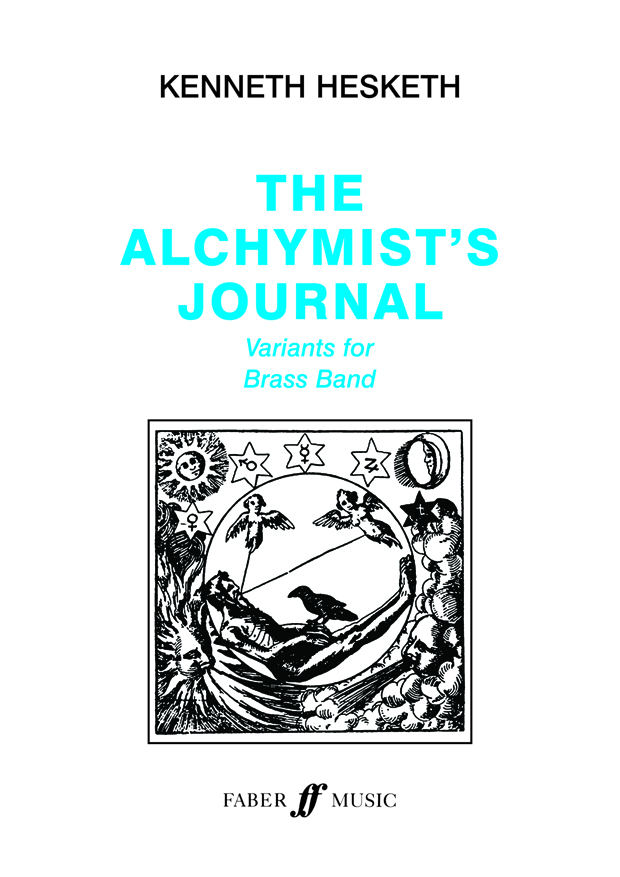
The Alchymist's Journal - Kenneth Hesketh
The Alchymist's Journal (Variants for Brass Band) was commissioned by Faber Music Band Consultant Paul Hindmarsh in 2001, with the support of the Brass Band Heritage Trust, as a substantial concert/contest challenge that would be within the compass of the country's most able youth and first section bands. It received its first performance in January 2002, by Black Dyke Band under Nicholas Childs, as part of the Royal Northern College of Music Festival of Brass.Since its original publication, composer Kenneth Hesketh has made a number of revisions to the work. Most of these were included in the recording made by Foden's Band (Bramwell Tovey) for NMC Recordings (NMC D142). This definitive new edition, including all the composer's revisions, has been specially prepared for the 2015 National Brass Band Championships of Great Britain and is the text that all bands performing will be required to use.Brass Band Grade 5: 1st SectionDuration: 12 minutes.
In Stock: Estimated dispatch 1-3 working days
-
 £79.95
Amundsen - Jonathan Bates
DURATION: 14'00". DIFFICULTY: 1st+. 'Amundsen' was commissioned by rskog Brass, Norway for their winning performance at the 2020 Norwegian National Championships held at the Grieghallen in Bergen. In December 1911, Norwegian Roald Amundsen gained global fame by becoming the first explorer to lead a team to the geographic South Pole. Amundsen and 4 other members of his team arrived 5 weeks ahead of a rival team from the UK led by Robert Falcon Scott, all of which perished on their attempted return from the pole. Initially when Amundsen's team set out in 1910, they were under the impression that they would be making the far shorter journey to the arctic drift to attempt to reach the North Pole, but Amundsen had received news that American explorers Peary and Cook had beaten them to this goal, and so Amundsen's focus changed southward. 'Fram, Forward' - 'Fram' (translating to English as "forward") was the name of the ship Amundsen used for this particular polar expedition. Amundsen had only informed 2 people of his real intentions of conquering the South Pole when the ship first left port in Kristiansand before heading south to the Portuguese island of Madeira in the Atlantic Ocean. After weeks at sea - causing the uninformed members of the crew to raise a number of questions and produce a general feel of uncertainty and low spirits - it was here that Amundsen announced his true plans to the rest of his crew. They were asked whether they wished to continue with their expedition, to which all - some begrudgingly - agreed to sail on to the South Pole, through the great Ice Barrier before docking in the Bay of Whales on the Ross Ice Shelf. 'Ross Ice Shelf' - Upon Amundsen's arrival in the Bay of Whales, the team were greeted by the sight of the enormous ice plateau's and glaciers, towering into the Antarctic sky. In 1907, Ernest Shackleton had attempted - and failed - to reach the South Pole, but his route and mapping was by now well documented. Scott and the UK team were to follow this route, whereas Amundsen and his men forged their own way to the pole through unchartered territory and deadly terrain littered with deep crevasses and canyons. The music here though, is a picture of tranquility. The eerie silence of total emptiness with only the heavy snow falling around Amundsen as Fram and the Bay of Whales disappears into the distance, faced by the maginute of the expedition ahead. 'Advance to Polheim' - The first new challenge Amundsen discovered on this route was a rough, sharp and extremely steep glacier (which was later named the Axel heiberg Glacier after the Norwegian monarch who funded much of the expedition), which would take his team up from sea level to an altitude of over 9,000ft in just 20 miles, with most of this over just 7 miles. Once scaled, only the vast Antarctic Plateau stood between Amundsen and the pole. Here the race began, with only one aim - victory for himself, his team, and for the whole of Norway. .
In Stock: Estimated dispatch 1-3 working days