
Results
-
 £42.95
TIME TO SAY GOODBYE (Brass Band) - Sparke, Philip
Estimated dispatch 7-14 working days
-
 £56.00
Time to Say Goodbye (Cornet and Euphonium Duet with Brass Band - Score and Parts) - Quarantotto & Sartori - Fernie, Alan
Duration: 4.00
Estimated dispatch 7-14 working days
-
 £56.00
Time to Say Goodbye (Cornet and Tenor Horn Duet with Brass Band - Score and Parts) - Quarantotto & Sartori - Price, Dan
Duration: 3.45
Estimated dispatch 7-14 working days
-
 £115.60
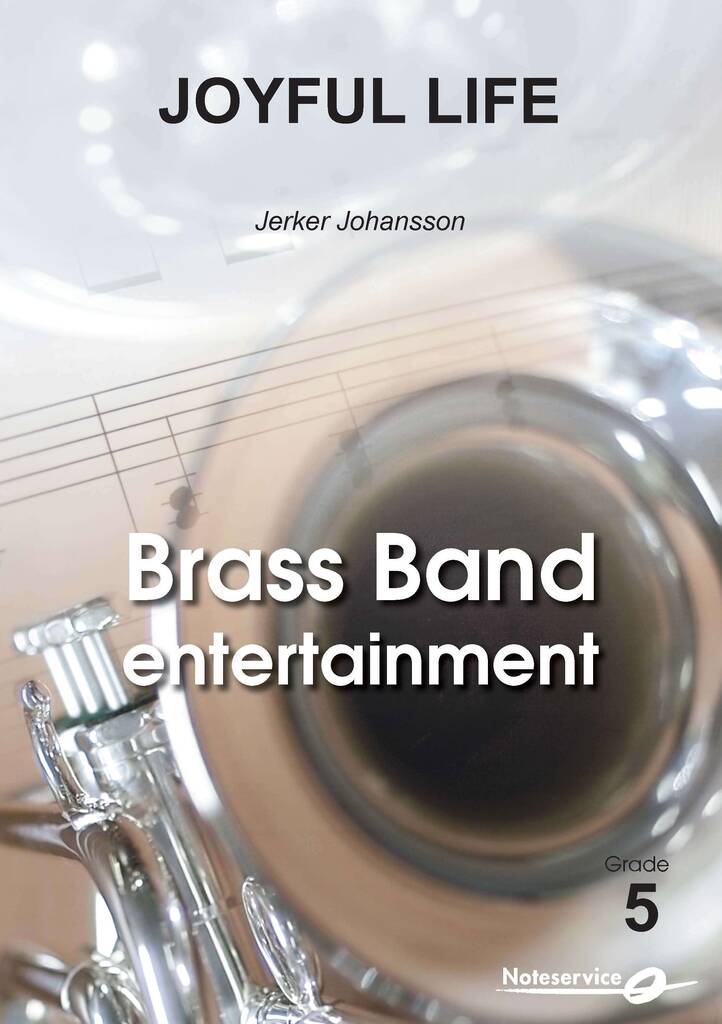
Joyful Life - Jerker Johansson
When Jerker Johansson in the 80's started to compose he was for a while obsessed with writing music in odd time signatures, more specifically 7/8. He was asked during the fall of 2020 by Leif Karlsson (former member of the legendary percussion ensemble Kroumata and nowadays conductor) to write something challenging for Uppsala Blasarsymfoniker and this resulted in Joyful Life. The piece is, to say the least, difficult to tap the pulse along to and is something of a baptism of fire for the musicians, regarding rhythmic precision. Joyful Life is dedicated to the always likeable Leif Karlsson (Joyful Leif!) and was premiered on the 15th November 2020 by The Swedish Air Force Band under the baton of the composer.
Estimated dispatch 5-14 working days
-
 £104.99
Cambridgeshire Impressions - Rieks van der Velde
In a four-part composition Rieks van der Velde takes us to the richly varied area surrounding the university city of Cambridge. The Dutch composer was especially inspired by the atmosphere of Cambridgeshire, the county which lies north ofLondon. 1. The Journey. Although on arrival the area looks peaceful and friendly, the ruggedness of its inhabitants and landscape have an unmistakable influence on the music. In the course of the tour, which starts with an Allegromovement, we are shown the vitality, energy and freshness of the Cambridgeshire countryside. Short themes, swift and sudden motifs and rhythmical patterns supported by the drive of percussion instruments give expression to this image. Thefirst part is concluded by two Calmo movements in which the music expresses how the cathedral in the city of Ely comes into sight and is gradually approached. 2. Visit to Ely Cathedral. The famous Norman cathedral church of Ely, whichwas built in 1109, has attracted tourists from all over the world apart from being a place of worship and heritage site. A cornet solo introduces the contemplative mood of the composition at this point. The mystical atmosphere of thecathedral runs through this lyrical part like a continuous thread. 3. The Pub. The thirst caused by this intensive journey makes a visit to the local pub a definite must. These "public houses", which may be open until the earlyhours of the morning, offer all kinds of entertainment. Drinks are served liberally and the atmosphere is lively. 4. The Journey Back. Time has flown: In other words, the moment of departure has come sooner than one would havewished. In a flashback which recaptures elements of the first part of the composition we say goodbye to Cambridgeshire in a fitting manner. Two scintillating final measures bring us abruptly back to the present.
Estimated dispatch 5-14 working days
-
 £64.40
Vera Lynn Forever - Willy Hautvast
Lady singer Dame Vera Lewis-Welch, better known as Vera Lynn, performed with the bands of Joe Loss, Charlie Kunz and Ambrose. During the Second World War she inspired all British soldiers involved in the war and got the surname Sweetheart Of The Forces. In the fifties she presented her own B.B.C. television shows. Willy Hautvast arranged her four most famous songs We'll Meet Again, Now Is The Hour, From The Time You Say Goodbye and The White Cliffs Of Dover. (Newly engraved 2016)
Estimated dispatch 5-14 working days
-
 £34.00
Meditation: It is Well With My Soul
ABOUT THIS PIECE: Cantatio are pleased to release this hymn meditation on the much-loved hymn by Adam D J Taylor. Commissioned by the world famous Wingates Band, this arrangement became a centrepiece of the band's online presence during the COVID pandemic. Story time... Horatio Spafford was a successful attorney and real estate investor who lost a fortune in the great Chicago fire of 1871. Around the same time, his beloved four-year-old son died of scarlet fever. Thinking a vacation would do his family some good, he sent his wife and four daughters on a ship to England, planning to join them after he finished some pressing business at home. However, while crossing the Atlantic Ocean, the ship was involved in a terrible collision and sunk. More than 200 people lost their lives, including all four of Horatio Spafford's precious daughters. His wife, Anna, survived the tragedy. Upon arriving in England, she sent a telegram to her husband that began: "Saved alone. What shall I do?" Horatio immediately set sail for England. At one point during his voyage, the captain of the ship, aware of the tragedy that had struck the Spafford family, summoned Horatio to tell him that they were now passing over the spot where the shipwreck had occurred. As Horatio thought about his daughters, words of comfort and hope filled his heart and mind. He wrote them down, and they have since become a well-beloved hymn: When peace like a river, attendeth my way, When sorrows like sea billows roll-- Whatever my lot, thou hast taught me to say It is well, it is well with my soul. ENSEMBLE: Standard British Brass Band WHEN YOU BUY THIS PRODUCT, YOU GET: High-quality printed score and parts LEVEL: 2 - 3 LISTEN: DURATION: c. 7-minutes, 30-seconds EXAMPLE SCORE: Click here LEVEL GUIDE: Level 1- Accessible to all Level 2 - c. UK third section and higher Level 3 - c. UK second section and higher Level 4 - c. UK first section and higher Level 5 - c. UK championship section level
Estimated dispatch 5-7 working days
-
 £31.50
Edward Gregson: Postcard to Grimethorpe
DescriptionComposer's NoteI composed the original version of Postcard to Grimethorpe in 1993 at the request of Elgar Howarth, for a concert at the Queen Elizabeth Hall, London, given by the Grimethorpe Colliery Band. This was at a time when after the Grimethorpe Colliery pit closed the future of the band was in severe jeopardy. The concert was given in aid of the band, both through publicity and funding.Then in late 2022 Jack Stamp, the American composer, conductor and educator, and at that time international composer-in-association with Grimethorpe, contacted me to say that he had discovered my short piece in the band library, and asked if I might extend it for a recording he was sponsoring for the band - the repertoire to consist entirely of music specially composed for Grimethorpe.I agreed and decided to extend the piece by using the miner's hymn Gresford, as a symbolic gesture of protest at the many thousands of miners in the UK who were made redundant from their jobs. After an angular (atonal) first section, the hymn enters, softly at first, but with each phrase it becomes more powerful and insistent, ending with the final phrase triumphantly accompanied by melodic percussion (replacing the drums and cymbals of the earlier phrases, as if the band were then on the march). However, this short work ends softly and gently, as if anger has been replaced by quiet resolution and determination, looking to the future with confidence.For more information on Edward Gregson's music please visit the composer's website: www.edwardgregson.com
Estimated dispatch 7-14 working days
-
 £10.00
The Once and Future King
DescriptionThe Once and Future King is a suite of three movements; each movement was inspired by an Arthurian legend. The first movement, 'Tintagel', concerns the famous Cornish promontory said to be the birthplace of King Arthur. In Arthur's time, Tintagel was part of the court of King Mark of Cornwall and the music imagines a visit by the King of the Britons to his Cornish neighbour and the place of his birth, reflecting the ceremony and drama of such an occasion; the music is strongly antiphonal, contrasting the more strident fanfares of the cornets and trombones with the warmth of the saxhorns and tubas.The second movement, 'Lyonesse', takes its inspiration from the mythical land which once joined Cornwall to the Isles of Scilly. One legend claims that after the disastrous battle of Camlan where Arthur and Mordred were both killed, the remnants of Arthur's army were pursued across Lyonesse to Scilly, whereupon Merlin cast a spell to sink Lyonesse behind them and drown the pursuers. Some say the bells of the 140 churches inundated that day can still be heard ringing. All the material in this movement derives from two short motifs heard in counterpoint at the very beginning, which are intentionally dissonant and bitonal in character.The final movement, 'Badon Hill', takes its title from the legendary site of Arthur's last battle with the Saxons and is a lively toccata based on the medieval secular song L'Homme Armee ('The Armed Man'). The music uses a number of medieval devices including "hocketing" (passing melody from one voice to another). The actual site of Badon Hill is unknown but it has been associated with Badbury Rings in Dorset and a lot of evidence now points towards the town of Bath. Arthur's victory at Badon Hill was the last great victory for Celtic Britain over the Saxon invaders, but in the end only set the conquest back by a few decades. Arthur himself was dead by then, betrayed and defeated by his nephew Mordred, but it is said that Arthur only sleeps and will return in a time of dire need - hence the legend that Arthur's dying words were: Bury me in Britain, for I am the Once and Future King.Performance NotesWhere space and practicality permits the opening movement should be played with cornets and trombones standing behind the band facing the audience; they should retake their seats for the second and third movements.PercussionConcert Bass Drum (ideally NOT Kit/Pedal Bass Drum), Suspended Cymbal, pair of Clash Cymbals, Glockenspiel, Snare Drum, Tambourine, 2 x Timpani (Eb-G, Bb-D), 2 x Tom-toms, Triangle, Tam-Tam* (only if available), Tubular Bells *(only if available).MutesBaritones, all cornets and trombones will require metal straight mutes; all trombones and cornets will require cup mutes.*The Once and Future King was set as the test-piece for the 3rd section of the Swiss National Championships in 2007. The score was then slightly revised in July 2008, the main alteration being the exclusion of the tubular bells part for the Regional Championships of Great Britain in 2009. Some parts which were optional (or cued on other instruments) at the request of the Swiss Brass Band Association were restored to their original octaves and instruments. In 2015 the tubular bells part was restored in the optional Percussion 3 part; all parts in Percussion 3 are optional, although some are cued in the percussion 1 & 2 parts (and the cues should be played if only two players are available).Listen to a preview and follow along with the score below!
Estimated dispatch 7-14 working days
-
 £35.00
Postcard to Grimethorpe (Brass Band - Score and Parts)
I composed the original version of Postcard to Grimethorpe in 1993 at the request of Elgar Howarth, for a concert at the Queen Elizabeth Hall, London, given by the Grimethorpe Colliery Band. This was at a time when after the Grimethorpe Colliery pit closed the future of the band was in severe jeopardy. The concert was given in aid of the band, both through publicity and funding.Then in late 2022 Jack Stamp, the American composer, conductor and educator, and at that time international composer-in-association with Grimethorpe, contacted me to say that he had discovered my short piece in the band library, and asked if I might extend it for a recording he was sponsoring for the band - the repertoire to consist entirely of music specially composed for Grimethorpe.I agreed and decided to extend the piece by using the miner's hymn Gresford, as a symbolic gesture of protest at the many thousands of miners in the UK who were made redundant from their jobs. After an angular (quasi-atonal) first section, the hymn enters, softly at first, but with each phrase it becomes more powerful and insistent, ending with the final phrase triumphantly accompanied by melodic percussion (replacing the drums and cymbals of the earlier phrases, as if the band were then on the march). However, this short work ends softly and gently, as if anger has been replaced by quiet resolution and determination, looking to the future with confidence.- Edward GregsonDuration: 3.00
Estimated dispatch 7-14 working days
 View Music