
Results
-
 £105.20
Lullaby for small goblins - Gudny Hagen - Philip A. Kruse
"Amalies Christmas" is a Norwegian TV series for children, produced by NRK in 1995, and broadcasted again in 19976, and in 2000.The program consisted of 24 episodes, and follows Amalie Wang (Anne Marie Ottesen) making preperations forChristmas in an old house where there lived goblins. The program was the first of many to follow, based on the author Gudny I. Hagens characters. The music is composed by Philip A. Kruse, and all episodes ended with the goblin family (HaraldHeide-Steen jr., Brit Elisabeth Haagensli og Pia Borgli) singing "Lullaby for small goblins".This arrangement for young concert band may be performed with different instrumental soloist or vocalist.Chords are included for piano/guitar. It isimportant to focus on the dynamics and the tempo. The soloist must be heard clearly and adding a choir in the refrains makes it even nicer. It is a melodic song that suits being performed in churches and rooms with ambience. The song is often usedaround Christmas time, but it is written as a small lullaby that can be played anytime.
Estimated dispatch 5-14 working days
-
£104.99
Firestorm - Stephen Bulla
The inspiration for this piece, commissioned by the United States Army Band, came from the Gulf and its constant presentation to the world as a media event on television. The composer wanted to capture the colour and events of war as they were played out on the television screen. Composed as a single movement rhapsody, the work is framed by the riveting sounds of airborne bombing raids with brass and percussion combining to create a gripping sense of tension.
Estimated dispatch 5-14 working days
-
 £91.99
Fanfares, Songs & Dances - Philip Sparke
Fanfares, Songs & Dances was commissioned by Brass Bands England, the Lithuanian Brass Band Association and the Dutch National Brass Band Championships (NBK), and first performed at the 43rd 'NBK' in October 2024. The work is played in three linked movements: FANFARES opens in robust fashion with a sequence of fanfare-like statements, initially featuring the horns, whose modal theme includes a figure that will reappear throughout the work. Euphoniums and then cornets introduce a second theme, which is followed by a third, again initiated by the horns. Baritones then change the mood with a more-lyrical theme, which builds to a climax, eventually leading back to a recall of the initial fanfare theme. This gradually dissolves to introduce the second movement. SONGS continues to relax the fanfare feel with a long introduction to the movement's main theme, first appearing on solo cornet. A change of key introduces a bridge passage which leads to a sonorous chorale, which builds to a triumphal return of the cornet theme. A peaceful coda leads to the final movement of the work. DANCES is a scherzo-like movement based around a series of rhythmic melodies in triple time, which lead to a majestic return of the 2nd movement's chorale theme under cornet figuration. The opening dance theme returns and heralds a joyous coda.
Estimated dispatch 5-14 working days
-
 £23.50
A Brussels Requiem - SCORE ONLY - Bert Appermont
The attacks in Brussels on 22 March 2016 created a shockwave throughout Belgium and the rest of the world. Equally, the attacks in Paris and Nice led to great public indignation, fear and disbelief. What has happened to the western world? Have our cultures grown apart to such an extent that we do not understand each other anymore? Bert Appermont's intention was to voice certain emotions that these acts of terror have caused: particularly fear, grief, anger, and helplessness. He uses the French children's song Au Claire de la Lune as a connecting thread throughout the work. This piece is also about hope and faith in another world, and is meant to pay homage to all victims, resulting in a dignified remembrance. The musical development is presented in four through-composed parts, titled Innocence, In Cold Blood, In Memoriam - We Shall Rise Again and A New Day. This work was commissioned by the Brassband Oberosterreich (Brass Band Upper Austria) to be played at the European Brass Band Championships 2017.
Estimated dispatch 5-14 working days
-
 £115.60
Valdresmarsj - Johannes Hanssen - John Philip Hannevik
Valdres is a mountain region that lies between Oslo and Bergen. Johannes Hanssen (1874-1967) composed the march for the Valdres Battalion between 1901 and 1904, using the Battalions horn-signal combined with a traditional style folk-tune. The march has been named "one of the greatest marches in the world" on many occasions, and it is a firm favourite with it's national flavor and unusual style. This version is similar to Johannes Hanssens revised version for Wind Band from 1954. However, it is interesting to notice that in Hanssens very first version of the march half a century earlier, the first theme was played by the Eb-Cornet, just like in this arrangement for brassband.
Estimated dispatch 5-14 working days
-
 £105.00
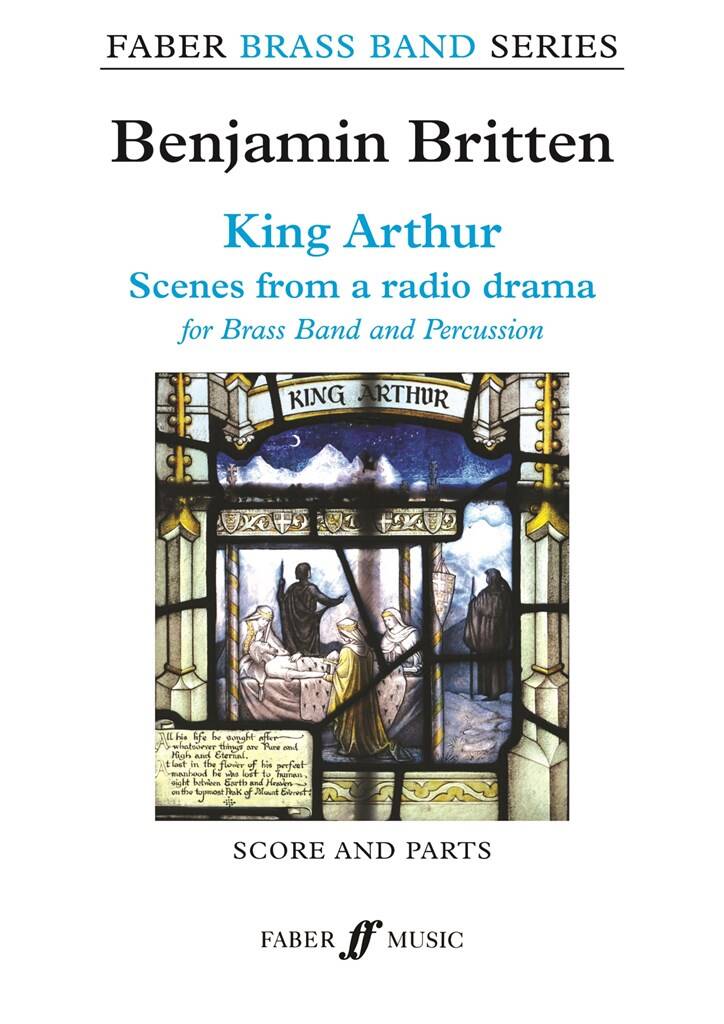
King Arthur - Benjamin Britten
King Arthur was the first of 28 scores Benjamin Britten (1913-1976) composed for radio between 1937 and 1947. It was an ambitious dramatisation of King Arthur's life and times - part pageant, part play, partcantata - written by D.G. Bridson. This colourful suite incorporates the Introduction, a dramatic Wild Dance, some of the music underscoring the scenes for Galahad and The Holy Grail, and two vividbattle scenes, ending with The Final Battle and Apotheosis. King Arthur (scenes from a radio drama) for brass band should not be confused with a much longer orchestral suite which Paul Hindmarsh devised from the same sourcein1995. King Arthur (scenes from a radio drama) will be played by the 20 First Section finalists on 16th September 2018 at this year's National Brass Band Championships of Great Britain.
Estimated dispatch 5-14 working days
-
 £154.99
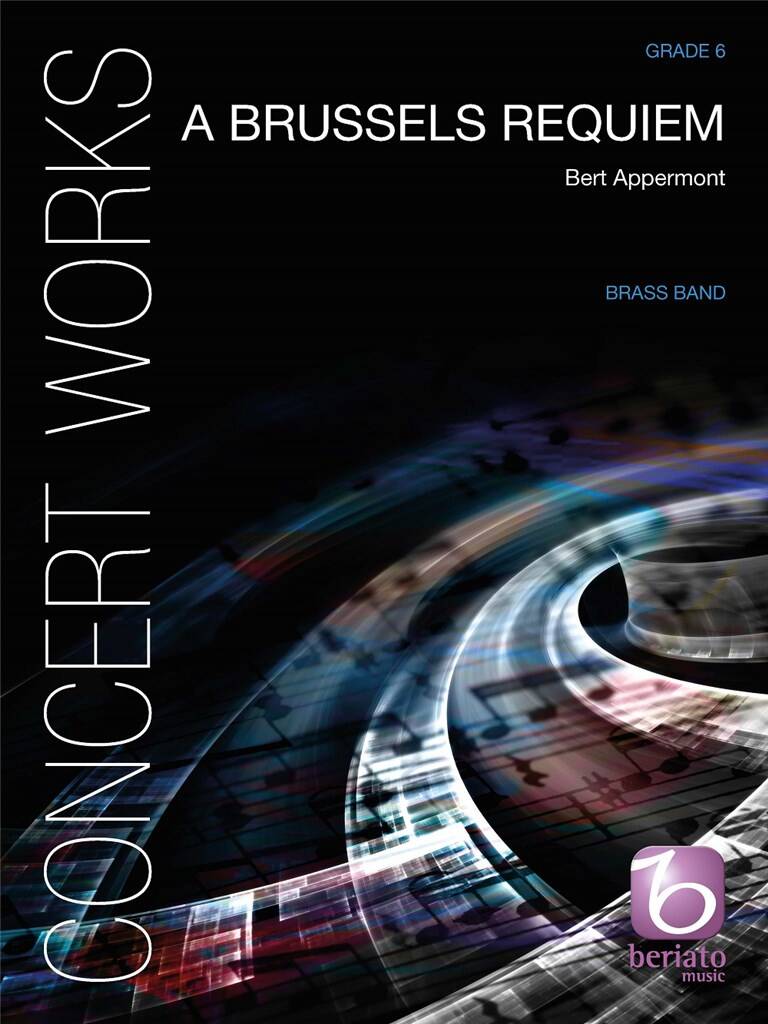
A Brussels Requiem - Bert Appermont
The attacks in Brussels on 22 March 2016 created a shockwave throughout Belgium and the rest of the world. Equally, the attacks in Paris and Nice led to great public indignation, fear and disbelief.What has happened to the western world? Have our cultures grown apart to such an extent that we do not understand each other anymore? Bert Appermont's intention was to voice certain emotions that these acts of terror have caused: particularly fear, grief, anger, and helplessness. He uses the French children's song Au Claire de la Lune as a connecting thread throughout the work.This piece is also about hope and faith in another world, andis meant to pay homage to all victims, resulting in a dignified remembrance. The musical development is presented in four through-composed parts, titled Innocence, In Cold Blood, In Memoriam - We Shall Rise Again and A New Day.This work was commissioned by the Brassband Obersterreich (Brass Band Upper Austria) to be played at the European Brass Band Championships 2017.
Estimated dispatch 5-14 working days
-
 £105.20
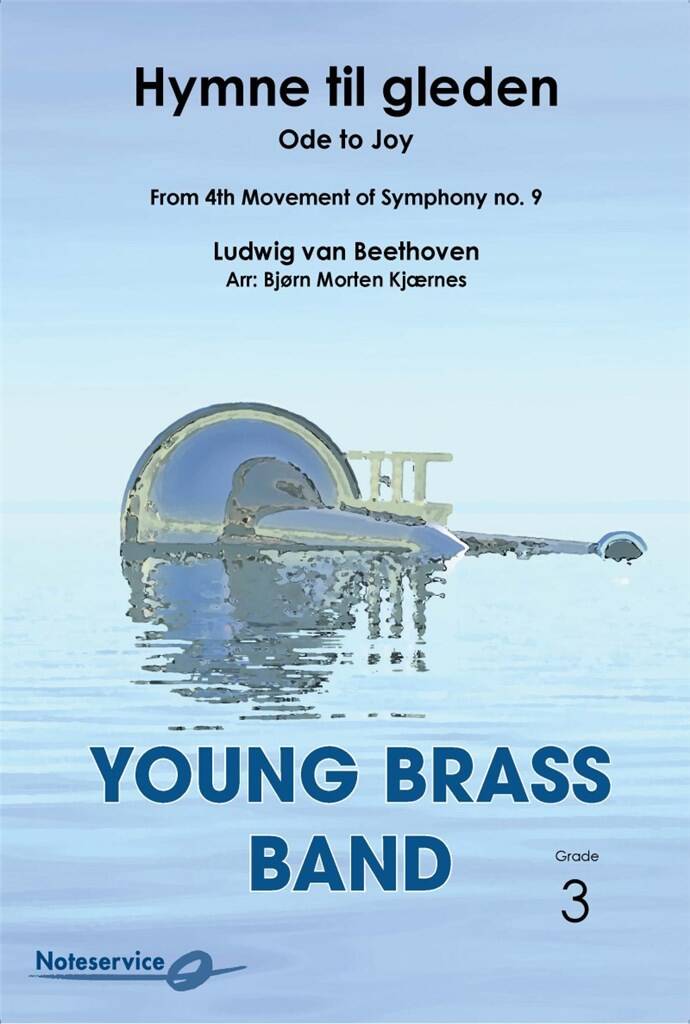
Hymne til gleden - Ludwig van Beethoven - Bjorn Morten Kjaernes
Schiller's text of 1785 was partially used by Beethoven in1824 when he did finish the 4th movement of his 9th Symphony. The melody has later been used in very many contexts. As the anthem of the European Union, a lot of movies (A clockwork Orange, Die Hard, etc.), music to video games, as the anthem of Rhodesia, as rebel song in Chile and by FIFA. Therefore, it can be used in most settings This Young Band arrangement focuses on the main melody. In the original, the B part is repeated in each variation, but to get three variations (out of four), this repetition has been cut. The first variation should be played as soft as possible, but still with a nice sound. Crescendo to forte(f) and going back to pp should be as a surprise.
Estimated dispatch 5-14 working days
-
 £115.60
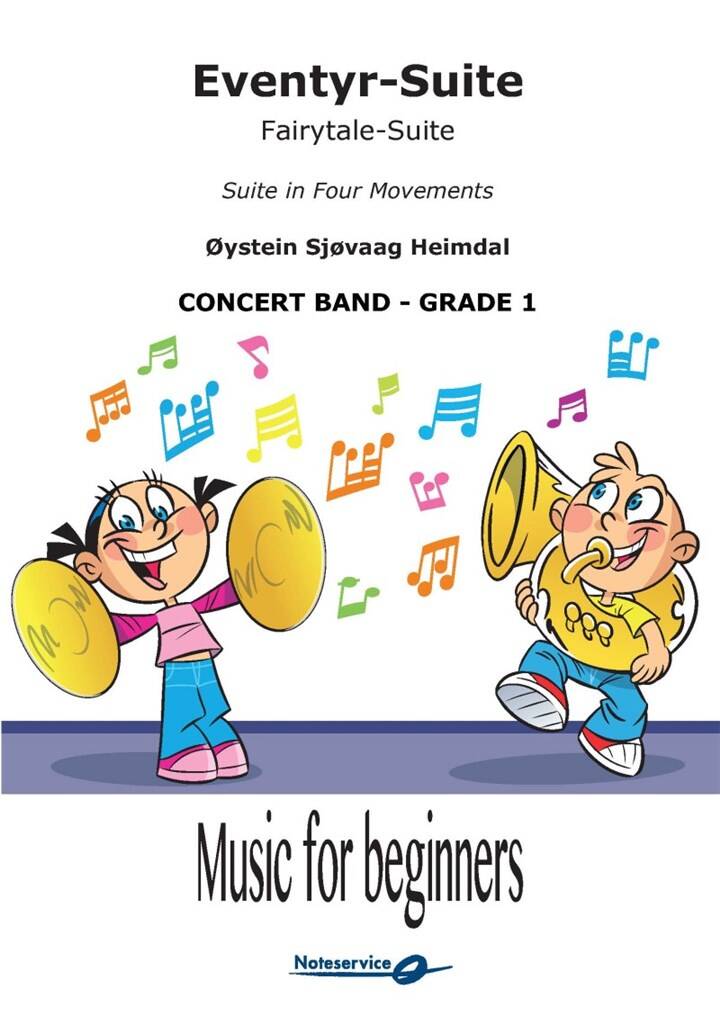
Eventyr-Suite - Øystein Sjøvaag Heimdal
Fairytale-Suite is an original work for beginning band. The name of the movements are taken from well-known themes from Norwegian fairytales. The music may not tell a story itselv, but it may be a good base for an exciting fairytale on a concert? This piece gives challenging parts to every player and it's a good choice to showcase the entire band. To the conductor: It's several doublings of the voices. This makes it possible to omit certain instruments or parts. The Drum Set part may be split and played by several players.
Estimated dispatch 5-14 working days
-
 £115.60
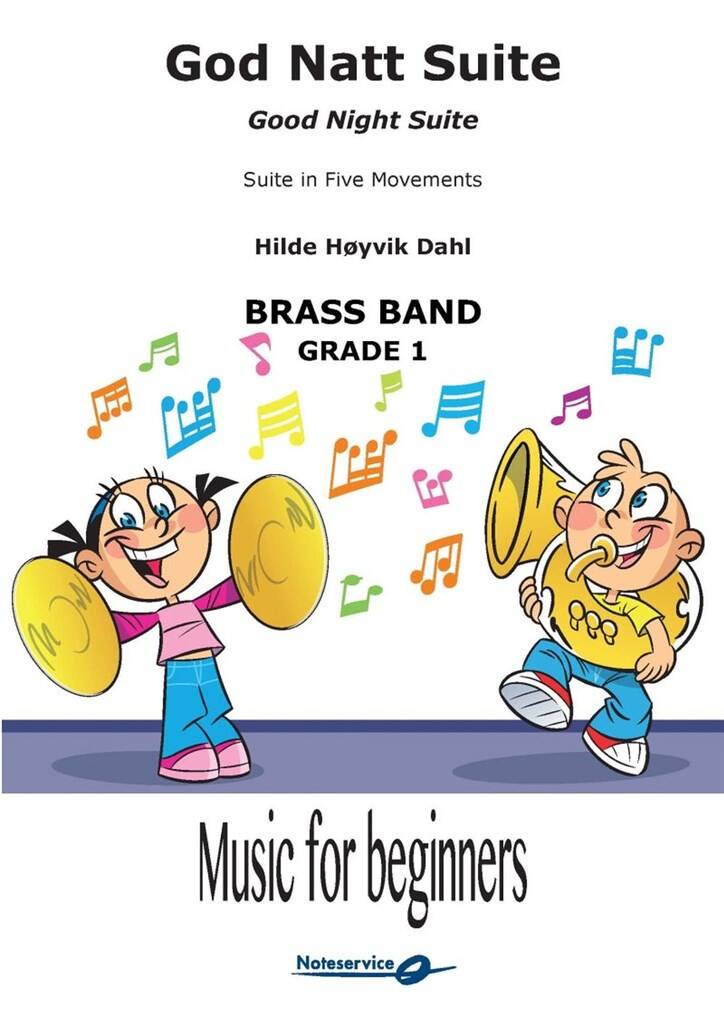
God Natt Suite - Hilde Høyvik Dahl
Good Night Suite is written for beginning band and suitable for the youngest musicians. The level of difficulty is at lowest grade and the rhythms are equal in all wind parts. The register on each instrument is also customized to each part. Some easy solos appears in some sections and in Mvt. 4 there are different rhythm in the melody and bass parts. The level of difficulty is the same for all five movements. The movements may of course be played as single pieces. When all movements are mastered it's possible to play the suite as a kind of fairytale with simple dramaturgy or choreography. Maybe the whole band can be dressed in their pajamas?
Estimated dispatch 5-14 working days
 View Music