
Results
-
 £48.00
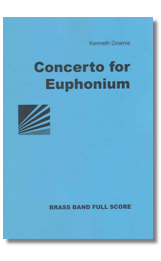
Concerto for Euphonium - Kenneth Downie
An accessible and enjoyable showpiece for soloists of all ages. The concerto's three movements are in a tuneful, melodic style and bravura passages are mixed with others designed to exploit the singing qualities of the instrument. The first movement is a vigorous allegro in which the short, pithy motifs of the opening theme contrast with the broad sweep of the second subject. A short cadenza-like passage yields to a high-spirited episode before a reprise of the opening ends the movement quietly. The second movement opens with a warm, romantic melody which is soon taken up by the soloist. A short animated section gives way to the earlier tutti theme, this time with passionate decoration from the soloist before the music gently unwinds in a tranquil coda. The finale has a bouncy, festive feel. After the first subject runs its course there is a brief journey through a more contrapuntal style, before a spirited presto moves into a compound episode before returning to the opening idea. A jubilant coda brings the work to a conclusion.
Estimated dispatch 7-9 working days
-
 £60.00
Concerto for Euphonium (Parts only) - Kenneth Downie
An accessible and enjoyable showpiece for soloists of all ages. The concerto's three movements are in a tuneful, melodic style and bravura passages are mixed with others designed to exploit the singing qualities of the instrument. The first movement is a vigorous allegro in which the short, pithy motifs of the opening theme contrast with the broad sweep of the second subject. A short cadenza-like passage yields to a high-spirited episode before a reprise of the opening ends the movement quietly. The second movement opens with a warm, romantic melody which is soon taken up by the soloist. A short animated section gives way to the earlier tutti theme, this time with passionate decoration from the soloist before the music gently unwinds in a tranquil coda. The finale has a bouncy, festive feel. After the first subject runs its course there is a brief journey through a more contrapuntal style, before a spirited presto moves into a compound episode before returning to the opening idea. A jubilant coda brings the work to a conclusion.
Estimated dispatch 7-9 working days
-
 £42.00
Euphonium Music (Score only) - Brian Bowen
Written in 1978, the work is constructed in three movements and is virtually a concerto for euphonium and band. The first movement begins with an unaccompanied motto theme, which uses all twelve notes of the scale but with a tonal feel. The slow second movement is based on an original song melody by the composer - 'The Eyes of God' - and affords lyrical and richly expressive playing that is typically euphonium. Movement three follows without a break - a capricious movement which ends triumphantly. Now available in versions for piano, brass band, wind band, and orchestra, Euphonium Music can be seen as a major contribution to the literature for the instrument. Duration: 15 minutes An orchestral version is available on hire.
Estimated dispatch 7-9 working days
-
 £52.00
Euphonium Music (Parts only) - Brian Bowen
Written in 1978, the work is constructed in three movements and is virtually a concerto for euphonium and band. The first movement begins with an unaccompanied motto theme, which uses all twelve notes of the scale but with a tonal feel. The slow second movement is based on an original song melody by the composer - 'The Eyes of God' - and affords lyrical and richly expressive playing that is typically euphonium. Movement three follows without a break - a capricious movement which ends triumphantly. Now available in versions for piano, brass band, wind band, and orchestra, Euphonium Music can be seen as a major contribution to the literature for the instrument. Duration: 15 minutes An orchestral version is available on hire.
Estimated dispatch 7-9 working days
-
 £42.00
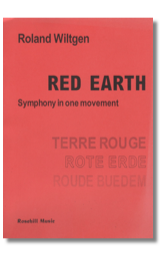
Red Earth (Score only) - Roland Wiltgen
The structure of Red Earth contracts and summarizes the classical four-movement symphony (Allegro, Lento, Scherzo, Allegro) into one movement, where the final Allegro is a modified recapitulation of the opening section. The musical substance of the work derives from a four-note 'motto', whose various statements throughout the piece clarify the structure. The title refers to the Luxemburg-born composer's native soil - a land of forsaken iron mines, smelting factories, and metal workers.
Estimated dispatch 7-9 working days
-
 £52.00
Red Earth (Parts only) - Roland Wiltgen
The structure of Red Earth contracts and summarizes the classical four-movement symphony (Allegro, Lento, Scherzo, Allegro) into one movement, where the final Allegro is a modified recapitulation of the opening section. The musical substance of the work derives from a four-note 'motto', whose various statements throughout the piece clarify the structure. The title refers to the Luxemburg-born composer's native soil - a land of forsaken iron mines, smelting factories, and metal workers.
Estimated dispatch 7-9 working days
-
 £44.00
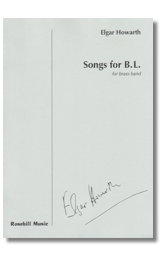
Songs for B.L. (Score only) - Elgar Howarth
Songs for B.L. was commissioned by BBC North for the 1995 BBC Festival of Brass and first performed by the Eikanger/Bjorsvik Musiklag Band in February that year. It was selected as the championship section test-piece for the 1995 National Brass Band Championships of Great Britain. The piece is in seven sections: Romanza; First Scherzo; Ballad; March; Second Scherzo; Romanza reprise; Coda. It is romantic but charged with highly chromatic harmony, and makes much use of chamber music textures. The work is dedicated to the composer's wife, Mary. 'The meaning of the title,' says the composer, 'is a secret, and will remain so'.
Estimated dispatch 7-9 working days
-
 £56.00
Songs for B.L. (Parts only) - Elgar Howarth
Songs for B.L. was commissioned by BBC North for the 1995 BBC Festival of Brass and first performed by the Eikanger/Bjorsvik Musiklag Band in February that year. It was selected as the championship section test-piece for the 1995 National Brass Band Championships of Great Britain. The piece is in seven sections: Romanza; First Scherzo; Ballad; March; Second Scherzo; Romanza reprise; Coda. It is romantic but charged with highly chromatic harmony, and makes much use of chamber music textures. The work is dedicated to the composer's wife, Mary. 'The meaning of the title,' says the composer, 'is a secret, and will remain so'.
Estimated dispatch 7-9 working days
-
£60.50
A Gallimaufry Suite - Harper, P
I - Fanfare & ThemeII - SongIII - HymnIV - Toccata & FinaleA Gallimaufry Suite consists of four movements, all thematically independent. The first movement consists of a sparkling Fanfare followed by a stately Theme which ends quietly. The second movement is a Children's Song; quirky but cute, and the Hymn which follows is a study in calm and tranquillity, featuring a quartet-group of cornet, baritone, trombone and euphonium. The last movement is a virtuosic Toccata which eventually begins to recall the other themes of the suite before a grand reprise of the first movement Theme brings the work to a dazzling conclusion.Approximate duration: 11 minutes
In Stock: Estimated dispatch 1-3 working days
-
£60.00
Calling - Hill, N-R
This tone poem was inspired by a bible passage which declares "called you out of the darkness into his wonderful light". The piece journeys through doubts, tensions and moments of grandeur, before heading towards the climactic statement at the end of the work depicting the 'wonderful light'.This piece was the winner of the UniBrass Composition Competition 2024, receiving its world premiere by the Foden's Band in February 2024.Link to video 'Calling'1st SectionDuration 6 mins
In Stock: Estimated dispatch 1-3 working days
 View Music