
Results
-
 £44.95
Partita (Score Only)
Partita was written in 1989 to a commission from Eikanger/Bjrsvik Musikklag (Norway) who were European Champions at the time.There are three movements.1 The first movement is almost a miniature concerto for band. It opens with a relentless quaver passage in the basses, which builds until the whole band is involved. Horns and baritones are first to take centre-stage in close harmony and the euphoniums and basses follow them. These forces combine to introduce the cornets that have a 10-part fanfare to themselves before the trombones interrupt. The opening quaver figure returns, somewhat ominously, and, after the full band recalls previous material, brings the movement to a close.2. Starts with a cornet solo over a pulsating accompaniment after which the band builds to a noble tune on the trombones. The full band takes over and brings back the opening cornet tune with which the soloist, with the aid of a euphonium counter-melody, quietly ends the movement, leading directly into:3. A sparkling vivo, which opens with the fanfare-like figures throughout the band until a solo cornet, emerges with an acrobatic tune. The whole band takes this up until horns; baritones and trombones introduce an energetic second subject, which leads to a full band climax in the form of a jubilant chorale. This died away to reintroduce the opening fanfare against a new theme from the trombones, which eventually leads back to a recapitulation. We are then thrown headlong into a 12/8 presto, which hurtles to a coda, which recalls the opening themes.
Estimated dispatch 7-14 working days
-
 £89.95
Tuba Concerto (Score and Parts)
This work was commissioned by the Besses o' th' Barn Band with funds provided by the Arts Council of Great Britain. It was written for, and is dedicated to, John Fletcher, who gave the first performance in Middleton Civic Hall, near Manchester, on 24 April, 1976, with Besses o' th' Barn Band conducted by the composer. Another interesting feature about the premire was that it was recorded by BBC Television for an Omnibus programme with Andr Previn as presenter. The concerto exists in three versions: with brass band (1976), orchestra (1978) and wind band (1984).The concerto is in three movements, following the usual, quick-slow-quick pattern: Allegro deciso,Lento e mesto, Allegro giocoso. The first movement has a sonata form shell with two contrasting themes, the first one being rhythmic in character, the second lyrical. There is a reference made in passing to the Vaughan Williams Tuba Concerto, but this merges into the other material in the development section.The second movement begins with a chorale, but after the entry of the tuba it leads to a cantabile theme, softly unfolded by the soloist. The opening chorale passage returns, this time briefly on muted brass, and leads to a middle section which is more chromatic in style and soon builds to a powerful climax, where the opening cantabile theme triumphantly returns. The music subsides, returning to the opening chorale and ending peacefully.The finale is light and breezy in style, and is cast in rondo form. After a brief introduction the tuba announces the main rondo theme, which is dance-like and a little jaunty. There are two episodes: the first a broad sweeping tune, the second a slowish waltz and a little jazz-like. After a virtuoso cadenza reference is made to the very opening of the concerto before the work ends with a triumphal flourish.The Tuba Concerto has established itself as one of the main works in the solo tuba repertoire. It has been performed and broadcast in over 40 countries all over the world. There are currently six commercial recordings of the concerto in its various versions.resolution in C major, pointed by a simple but expansive melody towards which the piece has been heading, and ending in a blaze of joyful colour.
Estimated dispatch 7-14 working days
-
 £79.95
Corineus - Christopher Bond
Corineus, in medieval British legend, was a prodigious warrior, a fighter of giants, and the eponymous founder of Cornwall. The first of the legendary rulers of Cornwall, he is described as a character of strength and power. It is on the medieval ruler that this new work, Corineus, is based, presented in three contrasting sections. The work opens with heraldic fanfares and a sense of jubilance before presenting musical material which changes and develops organically, portraying the journey taken by Corineus, Brutus, and the Trojans from modern-day mainland Europe to Britain. The central section of the work is slower, creating a feeling of longing. Brutus' son, Locrinus, had agreed to marry Corineus' daughter, Gwendolen, but instead fell in love with a German princess. In writing this part of the work, the composer portrays the longing of Gwendolen for her husband, knowing he is in love with somebody else. After Corineus died, Locrinus divorced Gwendolen, who responded by raising an army in Cornwall and making war against her ex-husband. Locrinus was killed in battle, and legend suggests that Gwendolen threw Locrinus' lover into the River Severn. This dramatic battle provides the inspiration for the final part of the work. In writing this work, the composer hopes to flare the imagination of young brass players around the country, in an engaging new take on a firm fixture in British folklore.
Estimated dispatch 10-14 working days
-
 £34.95
Of Wind & Weeping - Christopher Bond
The relationship between Achilles and Patroclus is a key element of the myths associated with the Trojan war.. Its exact nature has been a subject of dispute in both the classical period and modern times. In the lliad, the two heroes have a deep and meaningful friendship. Achilles is tender towards Patroclus, while he is callous and arrogant towards others. Of Wind & Weeping (2015) is a flugel solo, with the soloist representing Greek warrior Achilles and the pain he faces following the death of Patroclus. For a brief moment, Achilles' character shifts from a strong and unbreakable warrior to an emotional and vulnerable character. The solo should be played with expression and feeling, a character who is mourning a loved one with mixed feelings of sadness, shock and vengeance. The work was written in early 2015 for flugel soloist David James and Tongwynlais Temperance Band, with whom he is a member.
Estimated dispatch 10-14 working days
-
 £34.00
Meditation: It is Well With My Soul
ABOUT THIS PIECE: Cantatio are pleased to release this hymn meditation on the much-loved hymn by Adam D J Taylor. Commissioned by the world famous Wingates Band, this arrangement became a centrepiece of the band's online presence during the COVID pandemic. Story time... Horatio Spafford was a successful attorney and real estate investor who lost a fortune in the great Chicago fire of 1871. Around the same time, his beloved four-year-old son died of scarlet fever. Thinking a vacation would do his family some good, he sent his wife and four daughters on a ship to England, planning to join them after he finished some pressing business at home. However, while crossing the Atlantic Ocean, the ship was involved in a terrible collision and sunk. More than 200 people lost their lives, including all four of Horatio Spafford's precious daughters. His wife, Anna, survived the tragedy. Upon arriving in England, she sent a telegram to her husband that began: "Saved alone. What shall I do?" Horatio immediately set sail for England. At one point during his voyage, the captain of the ship, aware of the tragedy that had struck the Spafford family, summoned Horatio to tell him that they were now passing over the spot where the shipwreck had occurred. As Horatio thought about his daughters, words of comfort and hope filled his heart and mind. He wrote them down, and they have since become a well-beloved hymn: When peace like a river, attendeth my way, When sorrows like sea billows roll-- Whatever my lot, thou hast taught me to say It is well, it is well with my soul. ENSEMBLE: Standard British Brass Band WHEN YOU BUY THIS PRODUCT, YOU GET: High-quality printed score and parts LEVEL: 2 - 3 LISTEN: DURATION: c. 7-minutes, 30-seconds EXAMPLE SCORE: Click here LEVEL GUIDE: Level 1- Accessible to all Level 2 - c. UK third section and higher Level 3 - c. UK second section and higher Level 4 - c. UK first section and higher Level 5 - c. UK championship section level
Estimated dispatch 5-7 working days
-
 £40.00
Reflections of Freedom. Andrew Duncan
Recommended - Championship & 1st Section Reflections of Freedom depicts the feelings and emotions of the many migrant farmers who left 19th Century Scotland to set up a new life in the 'New World'. In particular, the joy experienced on reaping their first harvest, so the American folk tune, Bringing in the Sheaves in featured throughout the piece. Reflections of Freedom was Written for the US Army Brass Band in Washington DC and premiered by them in 1997. Reflections of Freedom was the title track on the Whitburn Band CD of the same name, recorded in 2004. Suitable as a test piece for 1st section brass bands. Includes score & parts
-
£40.00
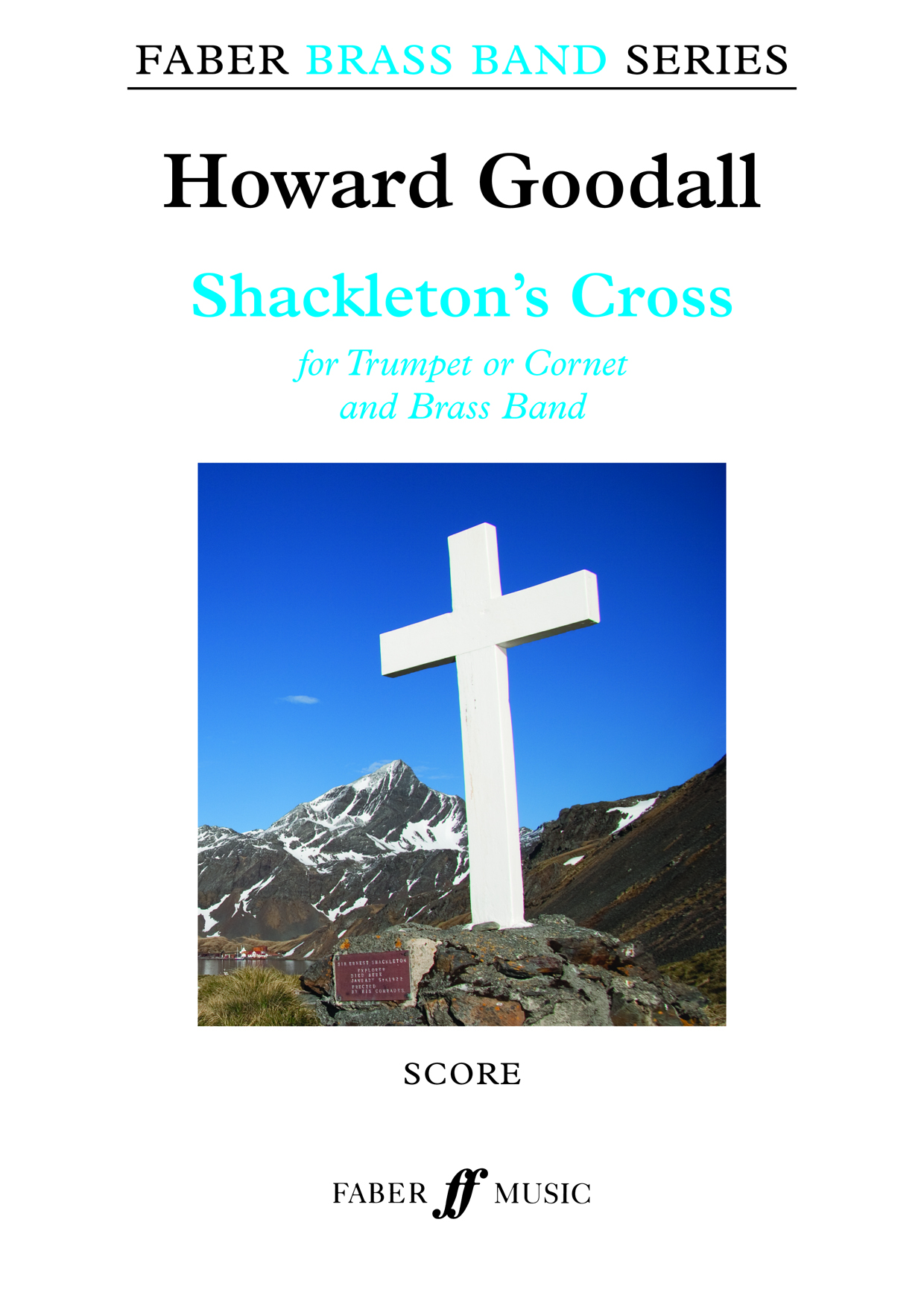
Shackleton's Cross - Howard Goodall
Shackleton s Cross was inspired by a painting created in 1957 by the English artist Edward Seago (1910 1974). The title refers to a cross which was erected to the memory of Sir Ernest Shackleton, who led a number of explorations to the Antarctic. Shackleton died in 1922 whilst on a Polar expedition, and the cross can be found on a promontory at the entrance to the bay at Grytviken Whaling Station in South Georgia. The painting is owned by HRH The Duke of Edinburgh, and was part of an exhibition at Buckingham Palace from October 2011 to April 2012.Originally scored for oboe, trumpet and small orchestra, Daniel Hall s sensitive arrangement for trumpet or cornet and brass band follows the composer s alternative version for solo trumpet and organ, created for Crispian Steele-Perkins (trumpet) and David Goode (organ).
In Stock: Estimated dispatch 1-3 working days
-
£95.00
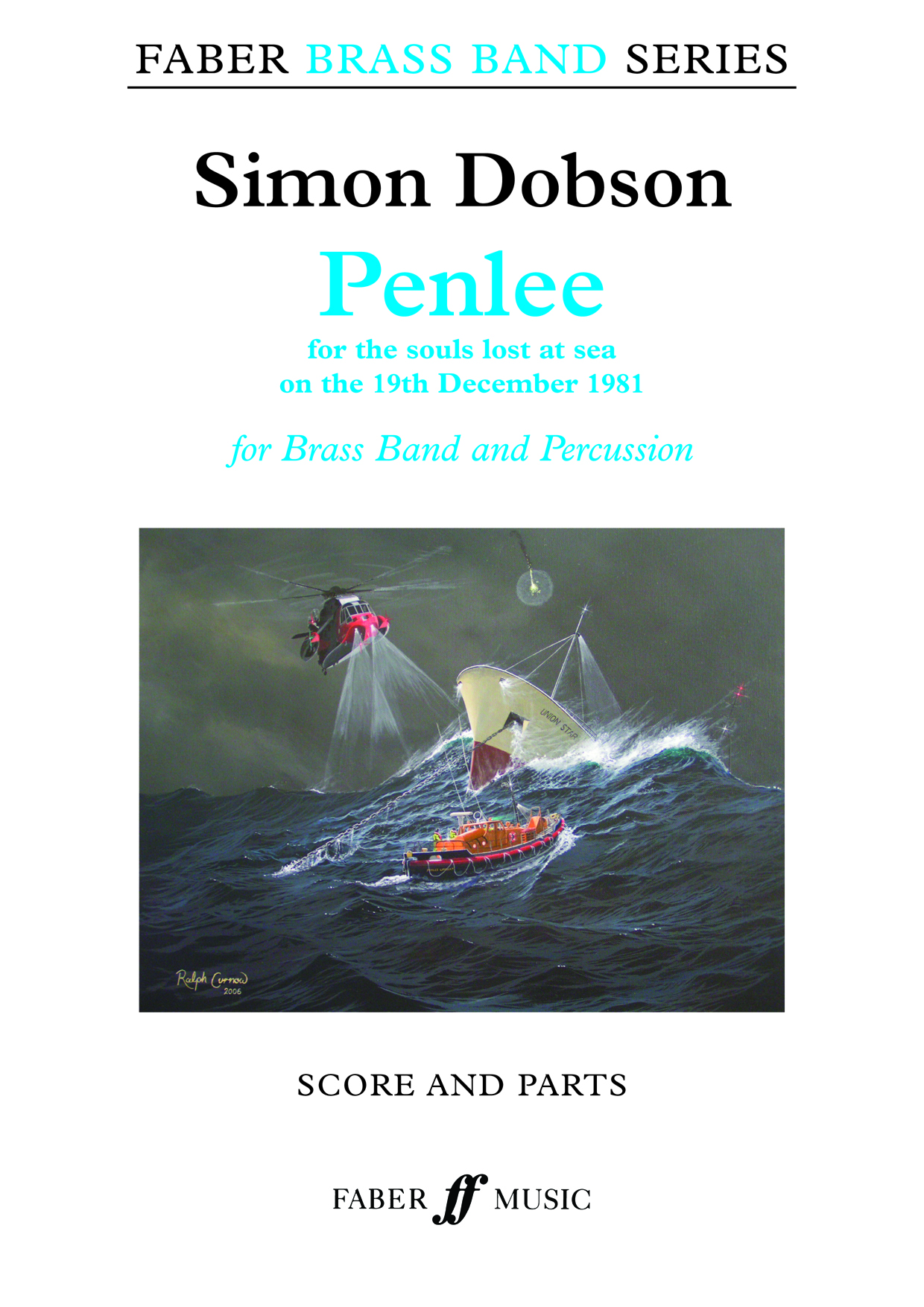
Penlee (Score & Parts) - Simon Dobson
To some, the tragic story of the Penlee lifeboat, Solomon Browne, would need no introduction, and to some the pain felt is still very much a reality. The composer, born just a few weeks before that fateful night on the 19th December 1981, has created this work as a musical homage to the bravery of the souls who lost their lives and has dedicated it to their memory.Penlee was commissioned by the Cornwall Youth Brass Band using funds bequeathed by Michael Pickett. The first performance was given by the Cornish Youth Brass Band, conducted by Ian Porthouse, at St. Michael's Church, Newquay, on 30th December 2008.Penlee has been voted into the Classic FM Hall of Fame 2011 at No.106. Not only is it the first time a brass work has been featured in the Hall of Fame, but it was also the highest new entry.The work has subsequently been recorded by the Leyland Band, conducted by Jason Katsikaris, on the CD entitled Penlee.Brass Band Grade 4: Advanced Youth and 3rd SectionDuration: 13 minutes
In Stock: Estimated dispatch 1-3 working days
-
£70.00
A Tallis Anthem - Geert Jan Kroon
A Tallis Anthem is based on If Ye Love Me by Thomas Tallis (1505-1585). He was one of the first who set English words to the Rites of the Church of England. If Ye Love Me is a classic example of the new English anthems: mainly homophonic, but with brief moments of imitation. The opening is a triumphant version of the first homophonic phrases of the song, interrupted by a calm melody build with material from a motive from the original. The anthem is played by a quartet placed in front of the band or of stage for efect. This is followed by a more modern anthem leading to a triumphant finale.
-
 £29.95
Cafe 1719 - Jonathan Bates
DURATION: 2'30". DIFFICULTY: 1st Section+. 'Caf 1719' was composed for the Wantage Silver Band as part of their entertainment contest sets based on the music of Johann Sebastian Bach in 2019. This particular short, jazz-inspired work is composed in tribute to the great French Pianist Jacques Loussier (1934-2019) who received global acclaim for his jazz interpretations of Bach's music, along with many other classical composers. Despite being born in the same year and living in the same country, Bach and Handel never actually met, but what if they had? Cafe 1917 acts as a musical meeting point - in a fictional Jazz Cafe by the Rhine, with the tenor horn section performing a 'Loussier-esque' version of Bach's 'Prelude No.2 in C Minor' whilst on the other side of the cafe, the trombone section follow suit with their take on Handel's 'Bourree from Music for the Royal Fireworks'. Eventually the two meet, share ideas and incorporate them into each other's melodies. Amongst the 2 main featured works by Bach and Handel, the tutti interludes are constructed on music from Bach's 'Toccata and Fugue in D Minor'. .
In Stock: Estimated dispatch 1-3 working days
 View Music