
Results
-
 £14.95
Deep River (Brass Band - Score only) - Broughton, William
An arrangement, in 'Count Basie' style, of the spiritual of the same name. The tempo indication on the original manuscript states "the slower the better" and therein lies probably the most difficult aspect of the piece.
Estimated dispatch 7-14 working days
-
 £54.20
SPIRIT OF THE SEASON, The (Brass Band) - Smith, Sandy
Includes: Just a Closer Walk; I'm On My Way; Deep River; Down By the Riverside; When the Saints. Grade: Medium
Estimated dispatch 7-14 working days
-
 £69.99
Ol' Man River (Brass Band - Score and Parts) - Kern, Jerome - Freeh, Mark
This scintillating arrangement by the American Mark Freeh of the Jerome Kern and Oscar Hammerstein classic, Showboat, is a classic in the brass band repertoire. This 'up tempo' big band arrangement is a perfect opener or closer to any programme and is also a fantastic way to showcase your drummer. Definitely one not to be missed!Recorded on QPRL237D Master Brass Vol.24Duration: 6.00
Estimated dispatch 7-14 working days
-
 £125.00
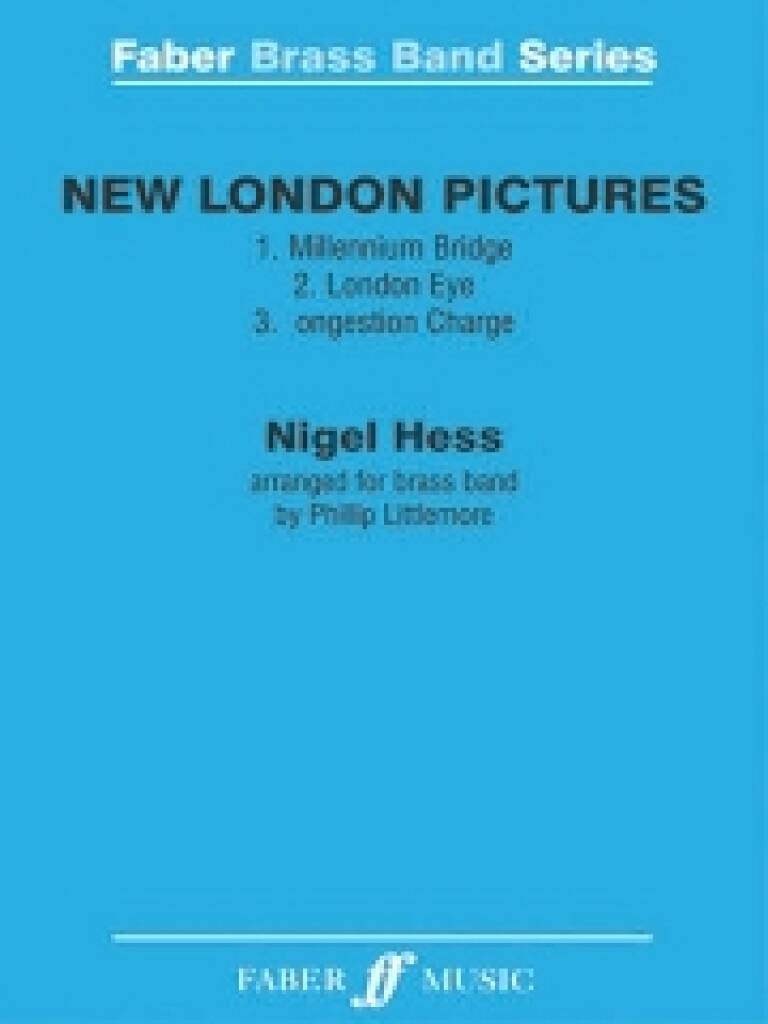
New London Pictures - Nigel Hess
New London Pictures represents elements of London in the 21st Century. The Millennium Bridge describes the pedestrian's journey across this wonderful new landmark bridge over the Thames,starting at the imposing Tate Modern, crossing the busy river, and onwards to St. Paul's Cathedral with its bells ringing out over the great city. London Eye is an incredibly large ferris wheel situated onthe South Bank of the River Thames. This movement depicts a 'flight' on this riverside wheel, at the top of which the panoramic view of London is breath-taking and the expanse of the music is a suitable depiction oftheview. As with all modern cities, London is over-crowded with motor vehicles. London is the first major city in Europe to adopt a Congestion Charge, and this piece (with its stop and go traffic lights) is both racyand comical. Here are Londoners attempting to go about their business in the face of overwhelming odds.....Brass Band Grades 4/5: Premier Youth and 2nd Section Duration: 15 minutes
Estimated dispatch 5-14 working days
-
 £59.99
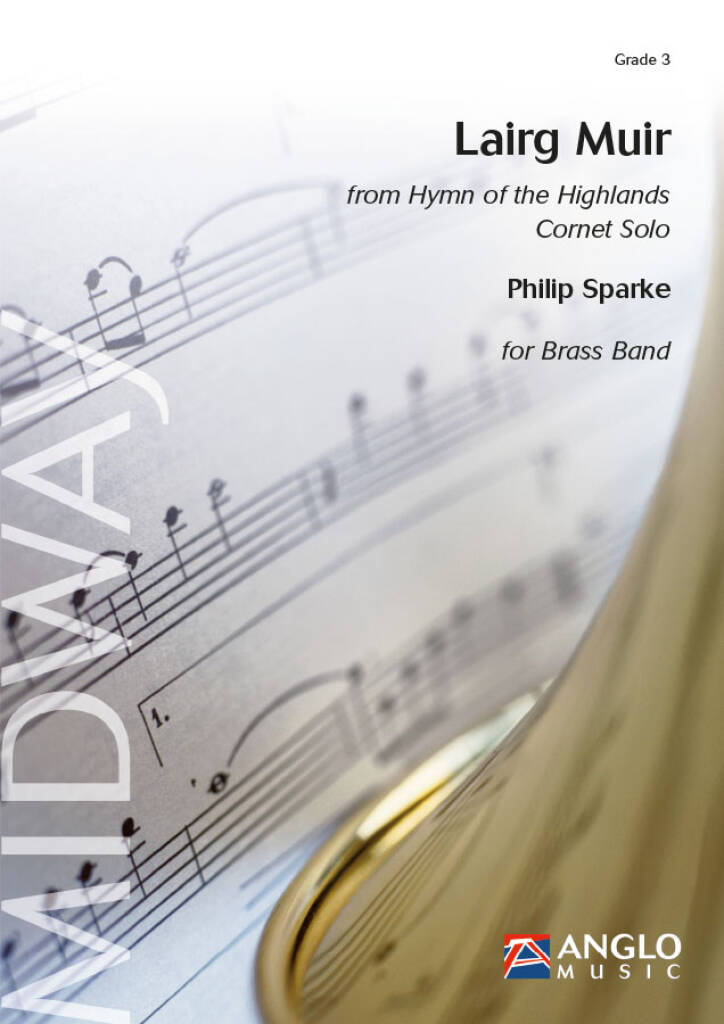
Lairg Muir - Philip Sparke
The River Alladale provides the inspiration for this lyrical piece which has a lilting melody with an unmistakeable Scottish feel. The trio of Flugel Horn, Tenor Horn and Baritone provide a wonderful sense of flowing with the river which, as the piece progresses, broadens and grows stronger as it nears the outlet to the sea by the Summer Isles. Bring a touch of Scots magic to your concert with this delightful piece.
Estimated dispatch 5-14 working days
-
 £69.99
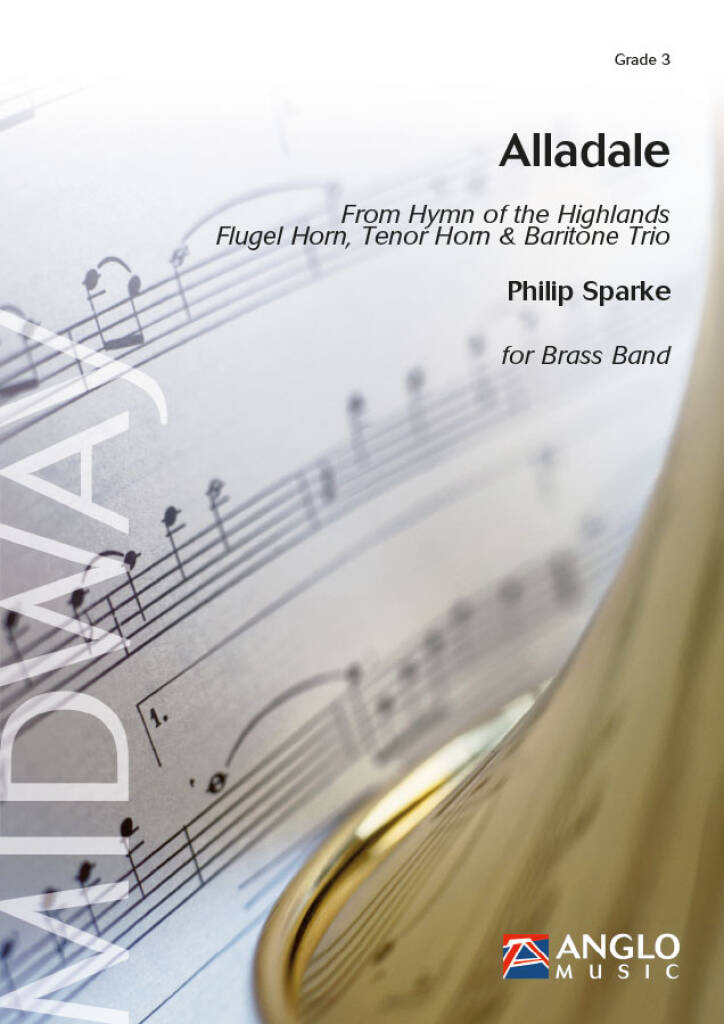
Alladale - Philip Sparke
The River Alladale provides the inspiration for this lyrical piece which has a lilting melody with an unmistakeable Scottish feel. The trio of Flugel Horn, Tenor Horn and Baritone provide a wonderful sense of flowing with the river which, as the piece progresses, broadens and grows stronger as it nears the outlet to the sea by the Summer Isles. Bring a touch of Scots magic to your concert with this delightful piece.
Estimated dispatch 5-14 working days
-
 £228.70
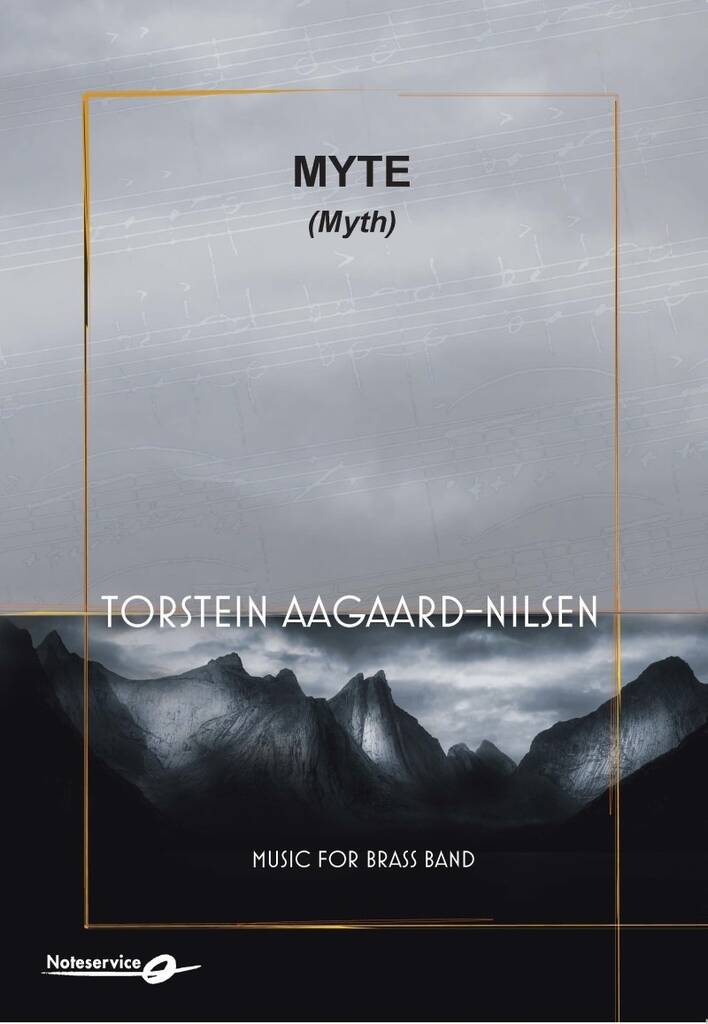
Myte - Myth - Torstein Aagaard-Nilsen
Commissioned by Radoy Brass for their 20 years anniversary.This version was first performed by Manger Skulemusikklag in 2005.The Work is devided into Five Scenes:1. Sverdet (The Sword) 3:452. Advarsel - fra en vis mann (Warning - from a Wise Man) 2:303. Dragen (The Dragon) 3:004. Advarsel II - fra syngende fugler (Warning II - from singing birds) 1:355. Gull - forbannelsen (Gold - The Curse) 2:50Total durata 13:30This work is based on five scenes from the tale about "Sigurd Favnesbane" (Sigurd the dragonslayer). Moods and atmospheres in the piece represent my way of retelling the old myth.1. The SwordThe dwarf blacksmith Regin is hammering and sharpening the edges of the magical sword Gram. After three attempts the sword is finally sharp enough to kill a dragon. 2. Warning - from a Wise manRichard Wagners opera Sigfried is based on the same story. In the opera the hero get warned by a wise man. He tells the secret of how to survive an attack of the dragon by hiding in a hole in the pathway and then kill the dragon with the sword as thedragon passes on its way to the river to drink water.3. DragonThe Dragon (Favne) guards a fantastic treasure, but he is also the brother of the blacksmith Regin. Favne get killed and his blood flows slowly while he laments (trombone/bass trombone).4. Warning II - from singing birdsWhile frying the heart, Sigurd burns his thumb and put it into his mouth to cool it down. Then he swallow a drop of fresh magic dragon blood which transfers the ability to understand the birdlanguage. The birds sing warnings to Sigurd telling himthat Regin will betray him and later kill him. Sigurd then kills Regin instead.5. Gold - the CurseSigurd takes the gold treasure and escapes on the horseback of Grane. But his robbery of the gold lead him into trouble: The gold is banned and a curse will hit everyone whotakes it...Myth is a programmatic work where the story is quite clearly illustrated throughout the piece:In the first movement you can hear the blacksmith working with hammer on ambolt while the heat is intense from the glows. The dwarf has got his own theme i lower brass (bar 4-5). The hero Sigurd has his own identifying chord (2 bars before F). Thechord is also a symbol of the sword.In the second movement the warning from the wise man is expressed in the lyric bass line.The airblow in instruments illustrate the dragon Favne on his way out of his cave, and later the blood flows slowly. The dragon takes his last deep breath after a painful duet in trombones. The birds sing their motifs (lightly, but not cheerfulthough), until Sigurd cuts the head off Regin and it hits the ground.The last movement describes the atmosphere andstate of mind as the curse infects the obsessed thief.
Estimated dispatch 5-14 working days
-
 £60.99
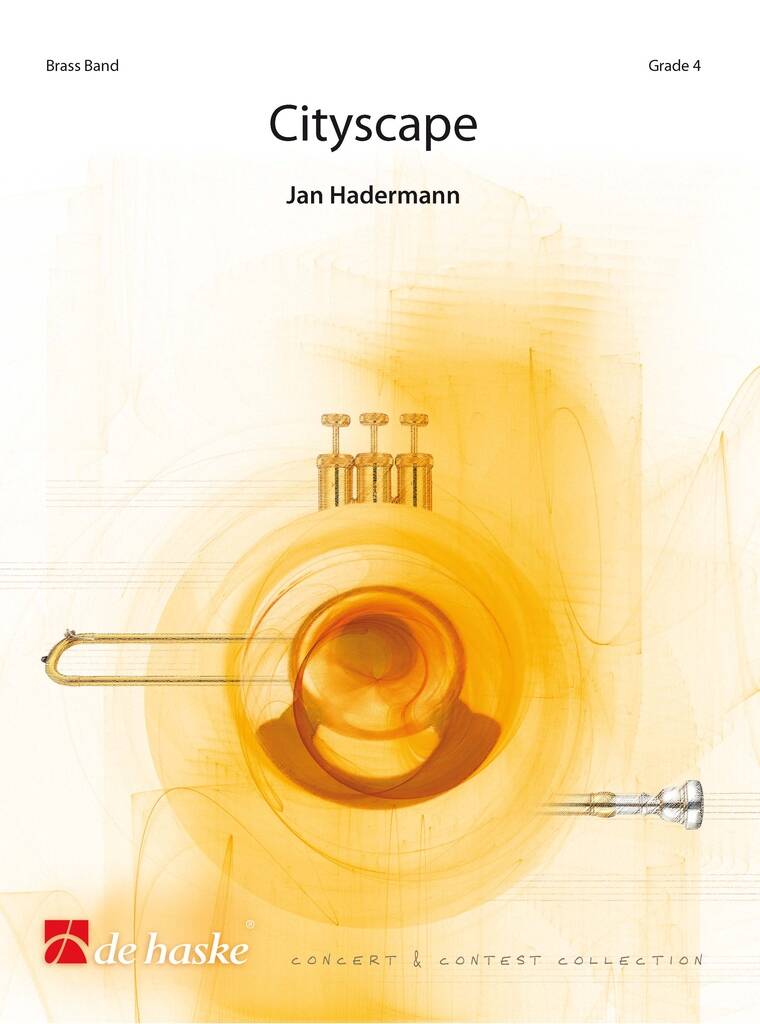
Cityscape - Jan Hadermann
Cityscape was commissioned for the 't Stad Geblazen event, which took place during the weekend of European Heritage Days in 2024.This short concert piece describes the impressions given when approaching and visiting the beautiful Belgian city of Antwerp from the north across the river Scheldt. We first pass the busy bustle of the harbour, home to the impressive Port House. Then the old city comes into view: the graceful cathedral tower, surrounded by smaller church spires and modern buildings, dominates the distinctive skyline. After setting foot ashore, we are struck by the beautiful way the medieval buildings here blend harmoniously with modern architecture. Our walk through the city continues: we visit the serene cathedral and are impressed by the picturesque facades of and around the city hall, as well as the Brabo Fountain on the Grote Markt (Large Market Square). Finally, it is time to enjoy the merriment taking place on the many squares of the lively city centre.
Estimated dispatch 5-14 working days
-
£54.99
Hymnus Antverpiae - Jan Van der Roost
This hymn was commissioned by "Antwerpen 93". And this city, on the banks of the river Schelde has been nominated "Cultural Capital of Europe" for 1993. The work-group "animatie" took the initiative and commissioned a hymn, which -as the finale to a grand open-air event on 27th March- was premiered by hundreds of musicians from all over Europe. Philippe Langlet (France) was the conductor at this majestic occasion.Musically speaking the piece can no doubt be labeled easy. Indeed it is meant to represent a hymn, playable by all in different instrumental combinations. Consequently a variable instrumentation was chosen and a type of music, which by native is easily accessible anduncomplicated.The conductor is free -in the instrumentation- to score this piece according to his own taste. It is perhaps advisable to use the sharp brass in the forte parts, in order to make the range in the sound of the orchestra as colouful as possible. The percussion parts are not absolutely essential, so that the hymn can also be performed without percussion.
Estimated dispatch 5-14 working days
-
 £74.99
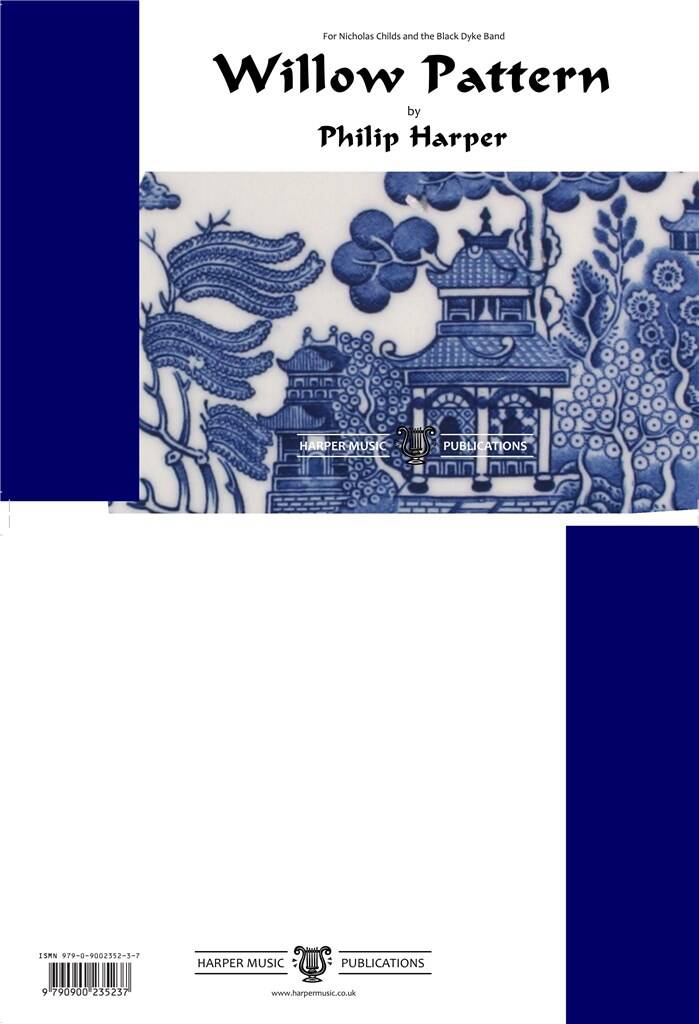
Willow Pattern - Philip Harper
Composed in 2009 for Nicholas Childs and the Black Dyke BandThis piece tells the Willow Pattern legend through music. Several leitmotifs are used both for the different characters and also for some of the important emotions in the tale. Additionally, Knoon-se's part is mainly played by the flugel horn, Changby the euphonium, the Mandarin by the Eb Bass and the Duke Ta-jin by the trombone. The Willow Pattern LegendOnce, in ancient China, there lived a wealthy and powerful Mandarin who had a beautiful daughter, Knoon-se. She had fallen in love with Chang, a humble accountant, which angered her father who imprisoned her in the Pavilion by the river with only theexotic birds for company. She learnt that the Mandarin planned to marry her to the pompous Duke Ta-jin and that the wedding would take place on the day the blossom fell from the willow tree, so she sent Chang a message: "Gather thy blossom, ere it bestolen". The Duke arrived by sea amid great fanfare when the tree was heavy with bud, and nights of magnificent banquets followed. After one such occasion when the Mandarin slept, Chang crept over the crooked fence and tiptoed into the Pavilion to rescueKnoon-se, but as they escaped the alarm was raised. They fled over the bridge with the Mandarin close on their heels brandishing his whip.They managed to escape by boat to a secluded island where they lived happily for a time. Meanwhile, the Mandarin learned of their refuge and, intent on revenge, he ordered his soldiers to kill them. As Knoon-se and Chang slept at night, the men setfire to the pagoda in which they lived and the lovers perished in the flames. However, the Gods, moved by the lovers' plight, transformed their souls into two turtle-doves which rose from the charred remains, soaring above the Earth, symbolising eternal happiness. Willow Pattern is dedicated to the memory of Jean Harper who passed away as I was completing the piece and who was a great collector of porcelain and china-ware. NOTES ON PERFORMANCEMute Requirements:Metal mutes soprano cornet, repiano cornet, 2nd cornets, 3rd cornets (6 in total) Cup mutes all cornets and trombones (10 + 3) Harmon mutes soprano cornet, solo cornets, repiano cornet (6) Percussion Requirements:There are two parts for percussion on the score. The minimum requirements are as follows: 2 players - Timpani, 2 Large tom toms, 2 Wood Blocks, Triangle, Sleigh Bells, Whip, Clash Cymbals, Suspended Cymbal, Hi-hat, Glockenspiel, Xylophone, Tam tam (or susp. cym.) For performances with extra resources, and to achieve closer authenticity, the full requirements are as follows: 3 players - Timpani, 3 Taiko Drums played with thick wooden sticks (or Large tom toms), 2 Wood Blocks, Triangle, Chinese Bells (or Sleigh Bells), Whip, Clash Cymbals, Chinese Cymbals (small clash cymbals approx 12"), Suspended Cymbal, Glockenspiel,Xylophone, Tam tam
Estimated dispatch 5-14 working days
 View Music