
Results
-
 £87.99
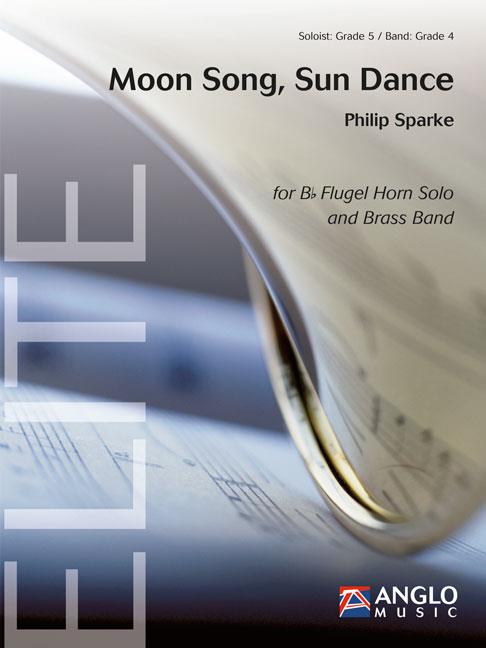
Moon Song, Sun Dance (Flugel Horn Solo with Brass Band - Score and Parts) - Sparke, Philip
Moon Song, Sun Dance was commissioned by flugel horn virtuoso, Claude Romailler, and premiered by him at the Swiss National Solo and Quartet Championships in April 2012. As the title implies, the work is in two contrasting movements, which can be performed separately or together. Moon Song opens with a flowing modal theme, which the soloist embellishes before the band takes centre stage. A central section brightens the mood with a new melody over the lightest of accompaniments; this is once again developed by the soloist until the original theme reappears, played by the band. This introduces a cadenza for the soloist which either closes the movement, or can be extended to link directly to the second movement. Sun Dance is a vivace 6/8 scherzo which opens with a flourish from the band. The soloist then introduces the main theme, which in turn is taken up by the band. A short bridge passage heralds a change of key and a new melody from the soloist. A brief central interlude then introduces a change of meter and recalls the main melody of Moon Song, before a recapitulation leads to a florid coda, which brings the work to a close.Duration: 8:45
Estimated dispatch 7-14 working days
-
 £59.99
Magga (Brass Band - Score and Parts) - Sparke, Philip
The Four Noble Truths was commissioned by the Dutch National Brass Band Championships for their 2003 competition. The Four Noble Truths are the most basic expression of the teaching of Buddha and therefore still form the guidelines for Buddhists to this day. They concern themselves with Dukkha, which has no exact translation but can mean suffering, stress or sadness etc. Magga is The Noble Truth of the Path Leading to the Cessation of Dukkha - the Fourth Noble Truth - which gives us a description of eight disciplines which can help us eliminate the origins of stress from our lives.Duration: 4.45
Estimated dispatch 7-14 working days
-
 £89.99
Ross Roy (Brass Band - Score and Parts) - De Haan, Jacob
In this composition, Jacob de Haan sees the "Ross Roy" as a metaphor for the years spent at school (a monument in time), where one's personality is formed. So, the opening theme the artist calls the Ross Roy theme initially has monumental characteristics.The rhythmic motion, which strides along in the lower register and percussion at the beginning of the next section is typical of "Tempo di Marcia". This movement, accompanied by repetitions of sound, is a metaphor for the structure and discipline in school. This is the introduction to a march theme, symbolic of "passing through" the classes up to the final examinations.Then, the Ross Roy theme is dealt with again, now in a playful, humorous variation. As if the composer is saying there should also be time for a smile in school. The same theme can be heard in major key and a slower tempo in the following section, expressing pride and self-confidence. This is also the introduction to the expressive middle section that represents love, friendship and understanding.We then return to the march theme in a slightly altered construction. The oriental sounds, constituting the modulation to the final theme, are symbols of the diversity of cultures in the school. The characteristic final theme first sounds solemn, but turns into a festive apotheosis. It is no coincidence that the final cadence is reminiscent of the close to a traditional overture, for the school years can be considered the "overture" to the rest of one's life.Duration: 9:20
Estimated dispatch 7-14 working days
-
£34.95
Come And Get Saved (Brass Band - Score and Parts) - Broughton, Bruce
This fantasia is based on the old Salvation Army song, 'Never can tell' which includes the words, 'You never can tell when the Lord will call you...Come and get saved and happy be'. The piece has many different and contrasting moods but is generally light-hearted and amiable like the straightforward message of the song and its genial melody.
Estimated dispatch 7-14 working days
-
£17.50
Come And Get Saved (Brass Band - Score only) - Broughton, Bruce
This fantasia is based on the old Salvation Army song, 'Never can tell' which includes the words, 'You never can tell when the Lord will call you...Come and get saved and happy be'. The piece has many different and contrasting moods but is generally light-hearted and amiable like the straightforward message of the song and its genial melody.
Estimated dispatch 7-14 working days
-
 £60.99
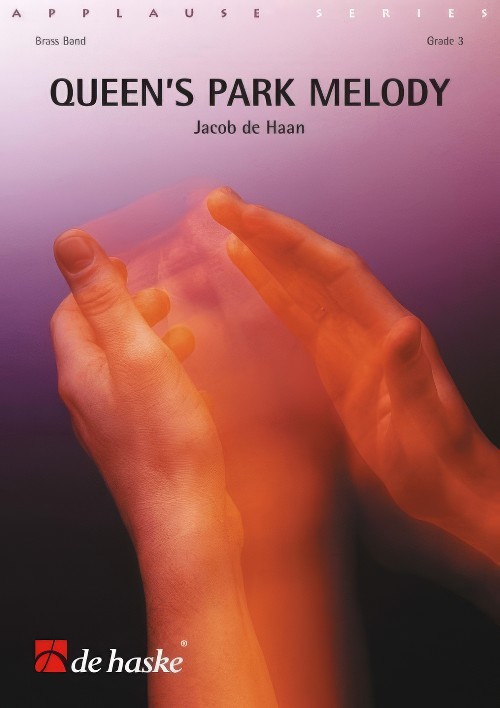
Queen's Park Melody (Brass Band - Score and Parts) - De Haan, Jacob
The atmosphere in a busy town park in the spring provided me with the inspiration for this piece. The style of this piece can be described as light music with baroque influences. These baroque influences directly point to the richly ornamental statues, which can be found in the park.Duration: 4.20
Estimated dispatch 7-14 working days
-
 £60.99
Play That Funky Music (Brass Band - Score and Parts) - Parissi, Robert - Minnebo, Stef
Play that funky Music is an unflagging classic which, since its first success in the seventies, is still often played. The exciting and stirring groove always ensures an enthusiastic atmosphere. This atmosphere can only be reached if the groove is good. At the end everyone that isn't playing can sing along. Duration: 3.20
Estimated dispatch 7-14 working days
-
 £60.99
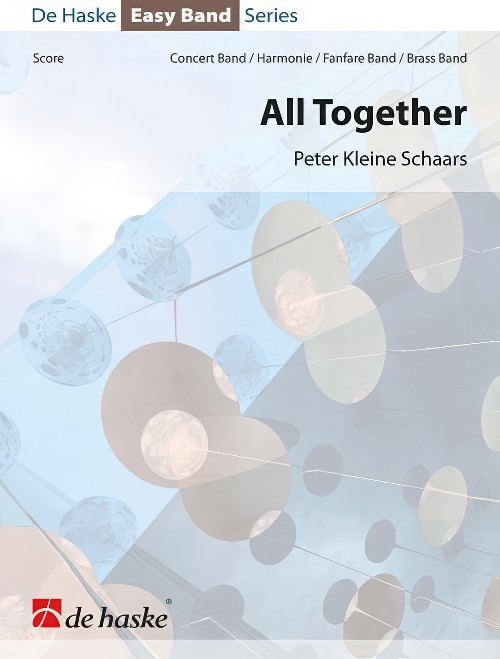
All Together (Brass Band - Score and Parts) - Schaars, Peter Kleine
All Together is a sparkling piece that is suitable for various playing levels, and offers the ideal motivation for young musicians within your society. Peter Kleine Schaars wrote this composition especially for (combined) ensembles with different playing skills. Musicians can display their abilities at their own level - and in between, they all play together. The grade three parts contain all levels in cues, so that this composition can also be played by the large band only.
Estimated dispatch 7-14 working days
-
 £95.00
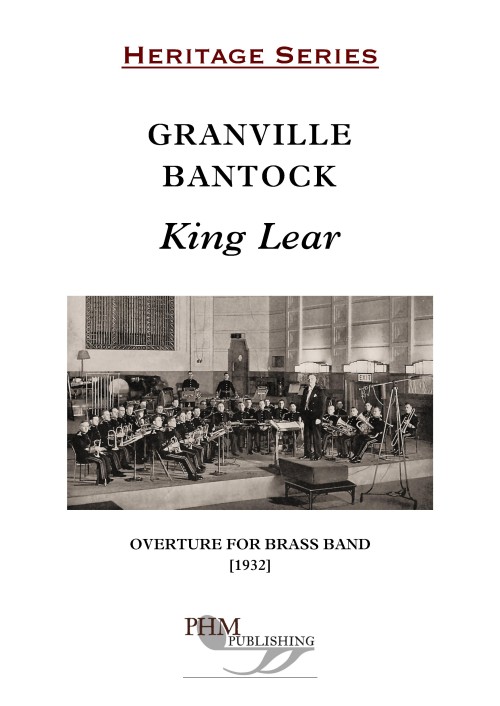
King Lear (Brass Band - Score and Parts) - Bantock, Granville - Hindmarsh, Paul
Sir Granville Bantock (1868 - 1946) composed the second of his five major brass band work for Callender's Cableworks Band, completing the commission on 30 November 1932. Based in the Thames-side district of Belvedere near Erith, the band was active between 1898 and 1961. The works band of the Callender Cable & Construction Co. Ltd, it was at the peak of its popularity during the 1930s and was a frequent broadcaster on the radio. The band employed an in-house arranger and played saxophones in its lighter material. King Lear was one of the band's major commissions and was not published in Bantock's lifetime. The manuscript score and parts were thought to be lost for decades, but were found in the library of the Haydock Band (Lancashire), which had inherited part of Callender's library of manuscripts material and bespoke arrangements after it has been transferred to nearby Prescott Cables Band after Callender's Cable Works closed.King Lear is a substantial work, in essence a dramatic tone poem in the romantic Tchaikovskian manner, presenting a series of character portraits of the foolish old king and his three daughters, Goneril, Regan and Cordelia. The music is dramatic and lyrical by turns, with the most generous lyrical episode revealing perhaps the warm-hearted Cordelia. An expansive melody that flows from this is brought back towards the end as the main climax of the work.In 2001, Bantock's score was recorded by the University of Salford Brass Band, conducted by Dr. Roy Newsome. The original is serviceable, but in comparison with the orchestral version he made in 1936 (part of which was recorded on a Paxton 78 rpm) and later brass band scores, performing editions of which were prepared by others, it lacks colour and range typical of Bantock's orchestral work. Above all it lacks percussion, which can be heard on the recorded extract. With the kind permission of the Bantock Estate, I have prepared a performing edition for publication that incorporates percussion, derived from the orchestral recording and added editorially in similar manner elsewhere. I have revoiced some of the low- lying instrumental parts to present the material in more comfortable ranges. Editorial interventions more elaborate than revoicing the original text have been identified as cue notes.- Paul HindmarshDuration: 15.00
Estimated dispatch 7-14 working days
-
£40.00
King Lear (Brass Band - Score only) - Bantock, Granville - Hindmarsh, Paul
Sir Granville Bantock (1868 - 1946) composed the second of his five major brass band work for Callender's Cableworks Band, completing the commission on 30 November 1932. Based in the Thames-side district of Belvedere near Erith, the band was active between 1898 and 1961. The works band of the Callender Cable & Construction Co. Ltd, it was at the peak of its popularity during the 1930s and was a frequent broadcaster on the radio. The band employed an in-house arranger and played saxophones in its lighter material. King Lear was one of the band's major commissions and was not published in Bantock's lifetime. The manuscript score and parts were thought to be lost for decades, but were found in the library of the Haydock Band (Lancashire), which had inherited part of Callender's library of manuscripts material and bespoke arrangements after it has been transferred to nearby Prescott Cables Band after Callender's Cable Works closed.King Lear is a substantial work, in essence a dramatic tone poem in the romantic Tchaikovskian manner, presenting a series of character portraits of the foolish old king and his three daughters, Goneril, Regan and Cordelia. The music is dramatic and lyrical by turns, with the most generous lyrical episode revealing perhaps the warm-hearted Cordelia. An expansive melody that flows from this is brought back towards the end as the main climax of the work.In 2001, Bantock's score was recorded by the University of Salford Brass Band, conducted by Dr. Roy Newsome. The original is serviceable, but in comparison with the orchestral version he made in 1936 (part of which was recorded on a Paxton 78 rpm) and later brass band scores, performing editions of which were prepared by others, it lacks colour and range typical of Bantock's orchestral work. Above all it lacks percussion, which can be heard on the recorded extract. With the kind permission of the Bantock Estate, I have prepared a performing edition for publication that incorporates percussion, derived from the orchestral recording and added editorially in similar manner elsewhere. I have revoiced some of the low- lying instrumental parts to present the material in more comfortable ranges. Editorial interventions more elaborate than revoicing the original text have been identified as cue notes.- Paul HindmarshDuration: 15.00
Estimated dispatch 7-14 working days
 View Music