
Results
-
 £29.50
Clarinet Concerto (Adagio): Mozart - W.A. Mozart - Bill Willis
The most popular movement from Mozart's Clarinet Concerto in A is now available as a beautiful solo for Euphonium (with an optional Tenor Horn soloist part also included). The work was originally composed for Anton Stadler and composed in 1791. This arrangement tests the range of the soloist with some large intervals to contend with during the lyrical melodies, utilising the full range of the instrument. The tender accompaniments also require the band to be sympathetic to the soloist as band show off the controlled nature of their playing.
In Stock: Estimated dispatch 1-3 working days
-
 £37.50
Violin Concerto (Adagio) - Max Bruch - Steven Hague
Skilfully arranged by Steven Hague for Kirsty Abbots of Carlton Main Frickley Brass Band, this beautiful second movement will not only keep the cornet soloist on their toes, but the rest of the band too, with some tricky rhythms and articulation. Although much of the work of Max Bruch remains unknown to modern audiences, his G Minor Concerto enjoys widespread popularity.
In Stock: Estimated dispatch 1-3 working days
-
 £60.99
Adagio From Symphony No. 2 - Sergei Rachmaninov - Georges Moreau
In addition to 4 piano concertos Sergei Rachmaninov (1873-1943) also wrote some symphonies. The clarinet solo from the adagio in his second symphony opus 27 is probably one of the most beautiful melodies from this period.
Estimated dispatch 5-14 working days
-
 £104.99
Lake of the Moon - Kevin Houben
The travels of the Aztec people as they headed south through North America looking for a new home, acted as the inspiration for Lake of the Moon.The composition contains small fragments of Oriental music and South American rhythms and occasionally, Russian Cossacks seem to raise their heads. The journey from North to South is not without danger, which is represented by threatening sounds within the music.In the Adagio divotothe composer takes us along to the Texcoco Lake, which the Aztecs called the lake of the moon. Bring a little bit of South American history to your concert with Lake of the Moon.
Estimated dispatch 5-14 working days
-
 £54.99
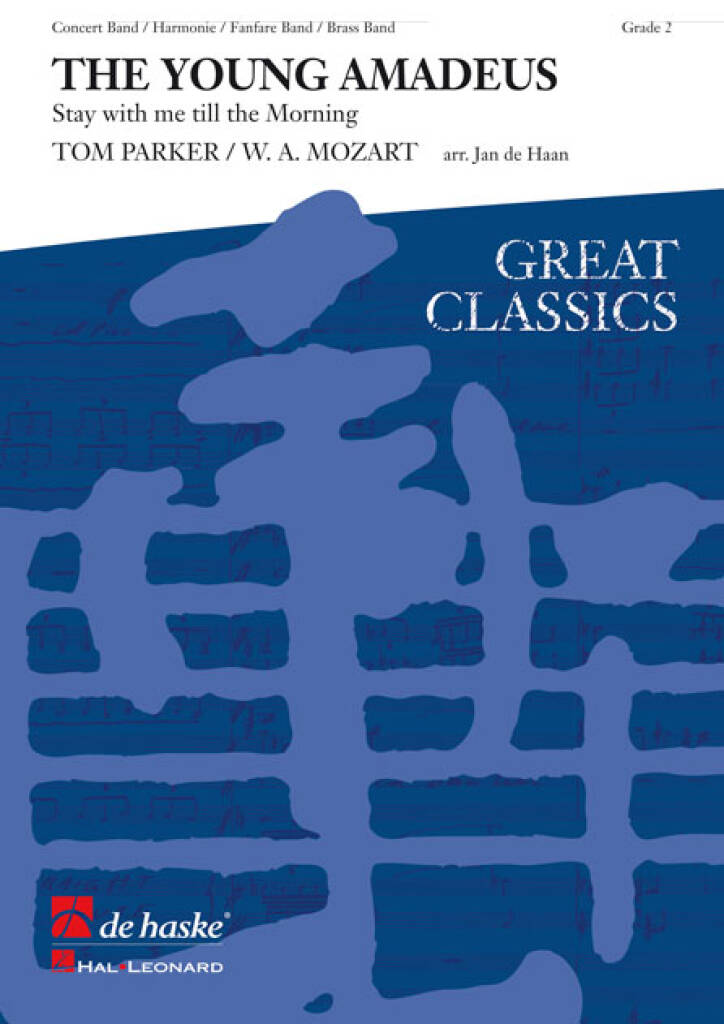
The Young Amadeus - Wolfgang Amadeus Mozart - Jan de Haan
Based on the famous melody from the Adagio movement of the Clarinet Concerto by Wolfgang Amadeus Mozart, this work has a beautiful lyrical quality to it. Compositions of this nature require the ability to play with great expression. The wonderful talent and genius of Mozart is clearly perceptible in this unforgettable melody. Celebrate Mozart's 250th anniversary with this most popular brass band work.
Estimated dispatch 5-14 working days
-
 £49.95
Adagio and Rondo - and Robert Childs
One of Mozart's best-loved and most performed pieces is the lively 'Rondo Alla Turca' from the Piano Sonata in A minor, K331, written in Paris in 1778. In this arrangement the Rondo is preceded by a little-known adagio, K580a, which existed previously as a fragment scored for solo clarinet and three basset horns. This completed version of the adagio is in sonata form, its main theme closely resembling Mozart's famous motet Ave verum corpus.
Estimated dispatch 7-9 working days
-
 £69.99
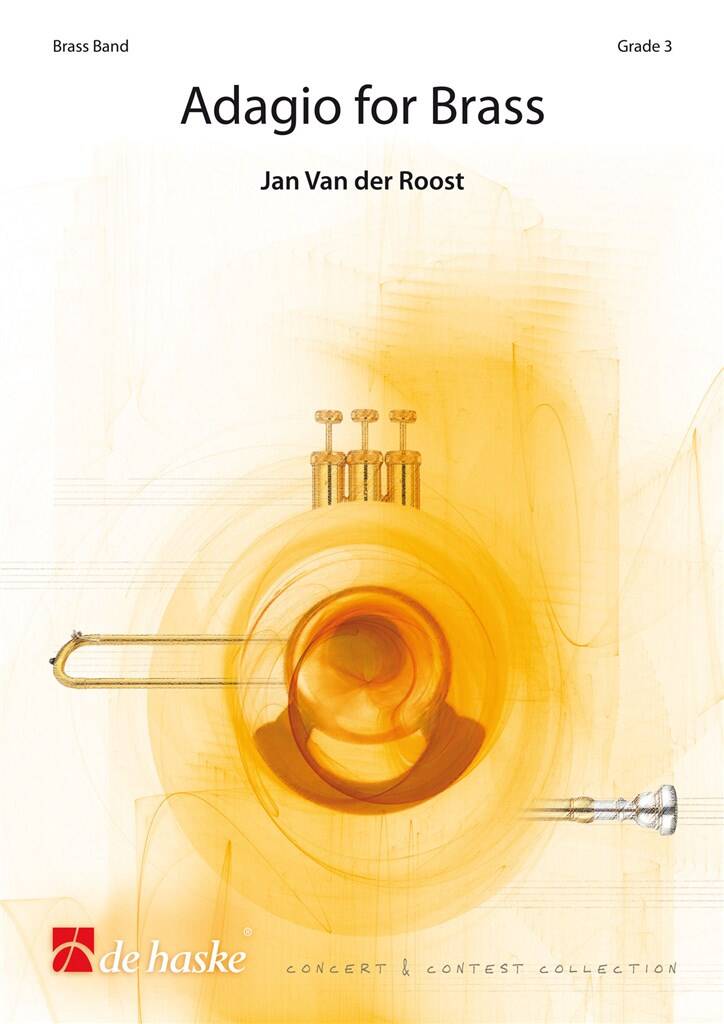
Adagio for Brass - Jan Van der Roost
Adagio for Brass is full of beautiful lyrical melodies and the warm harmony and full orchestration give the audience and the band the chance to give their thoughts free reign in a contemplative atmosphere. A wonderfully uplifting work suitable for concerts on all occasions and certainly not one to be missed.
Estimated dispatch 5-14 working days
-
 £54.99
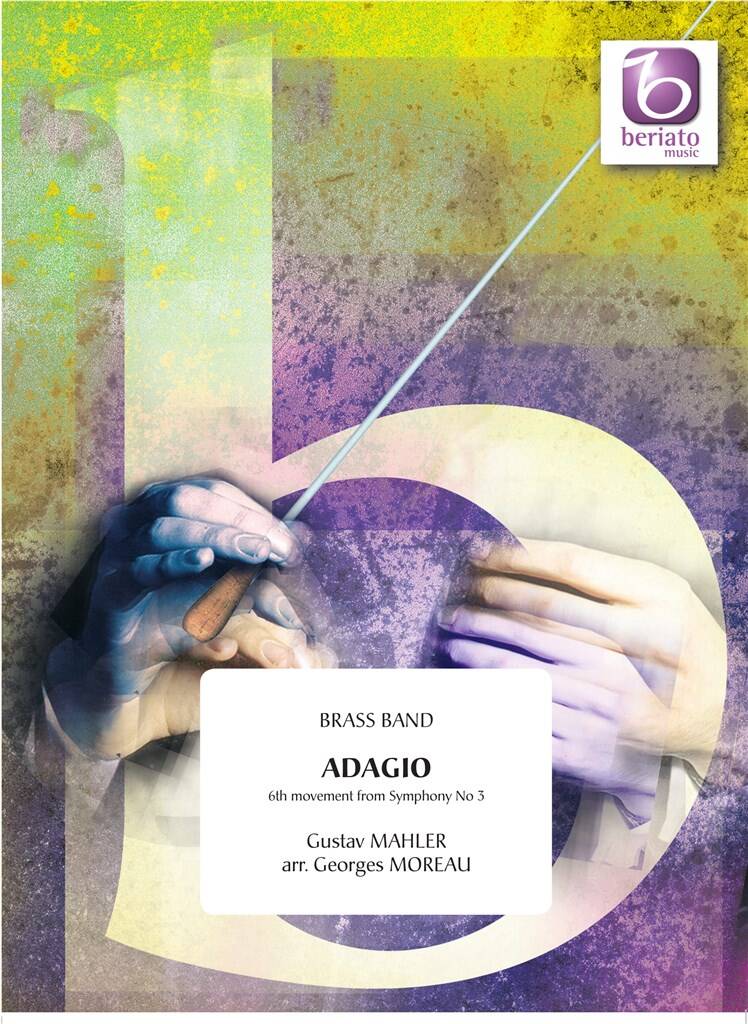
Adagio From Symphony No. 3 - Gustav Mahler - Georges Moreau
Gustav Mahler is probably one of the most important composers of late Romanticism. His symphonies are emotional extravaganzas of hectic, near neurotic movements on the one hand and extremely beautiful melodies and wonderful choral music on the other hand. This Adagio from his 3th symphony, which has been arranged in a majestic way by Georges Moreau, is a perfect example.
Estimated dispatch 5-14 working days
-
 £68.80
When the lights go down - Kevin Houben
Kevin Houben created with When the Lights Go Down, a wonderful chorale that can be a moment of reflection in any concert program.The resigned, magnificent melodies at the beginning of this composition slowly build up to a highlight with an increasing orchestration. The piece starts with a suggestive Adagio Meditativo, after which the main theme is immediately announced. A central bridge section takes the listener along through the different spheres at which the melodic and rhythmic drums embellish the chorale melodies. Thematic elements from the introduction brings the piece to a quiet and peaceful end.The sheer simplicity with which this work is written, makes it a resplendent, magnificent concert piece. 'When the Lights Go Down', refers to a moment when time stand still for a while, stillness within and around yourself.
Estimated dispatch 5-14 working days
-
 £60.99
Adagio - Tomaso Albinoni - Jacob de Haan
If you need a beautiful slow interlude for any concert then this is the piece for you. This short work by Italian composer Thomaso Albinoni has a luscious melody that will bring tears to any eyes. For hundreds of years the manuscript of this work had been lost and was only discovered in 1945. Despite this it has become Albinoni's best known work and has topped the classical charts on many occasions. Wonderful figures for the flugel and soprano cornet bring out extra emotion in this arrangement by Jacob de Haan.
Estimated dispatch 5-14 working days
 View Music