
Results
-
 £29.95
Dream Sequence - Jonathan Bates
DURATION: 3'00". DIFFICULTY: 3rd+. Composed for Strata Brass in 2020 as part of their COVID-19 induced, virtually recorded 'A Christmas Carol' (a new suite for brass bandlasting around 30 minutes in total), 'Dream Sequence' is an ethereal texture-driven work relying heavily on the use of tuned percussion to create a dreamy layer of sound within which the band intersperse. In the context of the story, this work is used to set the scene of Scrooge drifting to sleep, contemplating his ways before the visit of the 3 ghosts later that evening. The 2 Christmas carols utilised in this work are 'O Come Emmanuel' and 'Carol of the Bells'. .
In Stock: Estimated dispatch 1-3 working days
-
 £29.95
Ghost of Christmas Past, The - Jonathan Bates
DURATION: 2'30". DIFFICULTY: 2nd+. Composed for Strata Brass in 2020 as part of their COVID-19 induced, virtually recorded 'A Christmas Carol' (a new suite for brass bandlasting around 30 minutes in total), 'The Ghost of Christmas Past' is a lively and virtuosic cornet solo portraying the visions Scrooge is shown of his childhood. Beginning in a jovial mood, the ghost then shows Scrooge his early love life, before showing how Scrooge's unsympathetic and callous ways lead to his loss of love and friendship throughout the years as the music gets gradually darker and darker with each passing section. .
In Stock: Estimated dispatch 1-3 working days
-
 £90.00
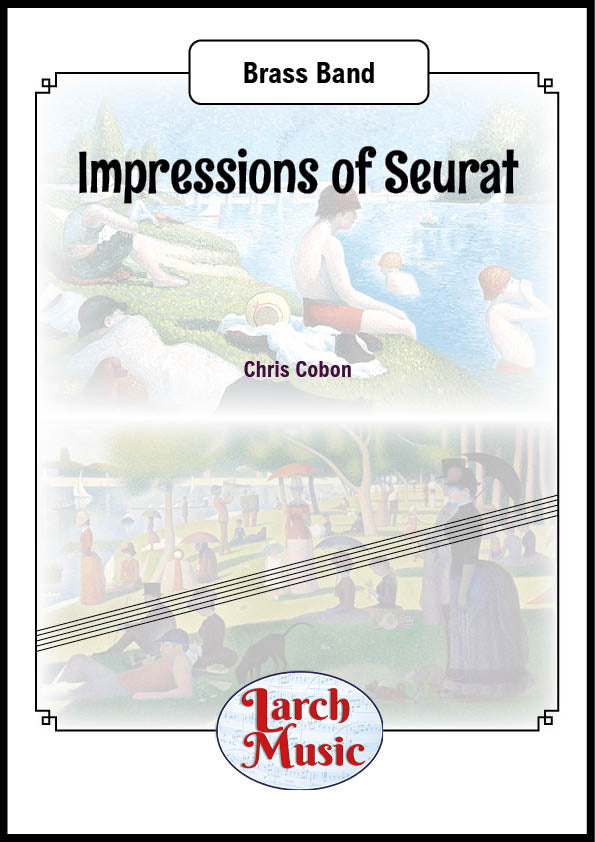
Impressions of Seurat (Chris Cobon) - Brass Band Full Score and Parts - LM482 - Chris Cobon
COMPOSER: Chris Cobon1 - Stone breakersThe Suite opens with the only picture, of the five, which is not in the pointillist style. Several pictures were produced on the Stone Breaker theme, painted in oil on small panels called croquetons. The subjects in the art are breaking stones for use in road building. Musically the piece starts canonically alluding to the repetitive nature of the labour. A more direct, rhythmic link of three hammer blows, are first heard in the opening passages in the percussion. These hammer blows are also built into each third bar of the cannon and, therefore, become embedded into the opening section. Arising from the flurry of activity are two, three bar legato phrases in a majestic style until it falls to a more dramatic sounding of the legato phrase over a resounding of the cannon in a new textural order. This leads to a short, new section, featuring a trombone trio underneath rising scales in the cornet section.2: Bathers at AsnieresBathers at Asnieres was Seurat's first major painting...The canvas is of a suburban, Parisian riverside scene. Isolated figures, with their clothes, piled sculpturally on the riverbank, together with trees, austere boundary walls and buildings, and the River Seine are presented in a formal layout. This moment aims to capture the tranquillity of a summer's day in the park. This painting led the development of the pointillist technique whereby the colours were applied as small dots that combine to form a picture when viewed at a distance. The trombones capture this idea in the opening bars with their carillon-style entries. The 2nd/3rd cornets make a more direct link by individual picking out single notes of a melody being sounded on Baritones and trombones at C. The use of mutes adds a subtle darker side to this movement which nods to the industrial working-class aspects of the painting.3: White DogWhite Dog features a few characters relaxing in the sun, and a white dog with its tail held high. Having two dogs myself, I've taken the idea of an excited dog with a waggy tail as the basis for this short, middle, movement.4: Sunday Afternoonon the Island of La Grande Jatte Sunday Afternoon on the Island of La Grande Jatte is arguably Seurat's most famous work.5: Parade de CirqueCircus Sideshow Parade de Cirque encompasses a circus scene's boisterousness, vitality and chaos. However, the painting, constructed with the new pointillist technique, also portrays stillness, calmness and precision. As expected from looking at the picture, the trombone takes centre stage in various locations on either side of the calming circus waltz and pointillist section (I).LM482ISMN : 9790570004829
In Stock: Estimated dispatch 3-5 working days
-
£50.00
Harry Potter And The Goblet Of Fire (Score & Parts) - Patrick Doyle
Harry Potter and The Goblet of Fire is the pivotal fourth novel in the seven-part tale of Harry Potter's training as a wizard and his coming of age. This seven-minute suite for brass band includes the themes Harry In Winter, The Quidditch World Cup, Hogwarts' Hymn, Hogwarts' March and The Death Of Cedric. Brass Band Grade 4: Advanced Youth and 3rd Section Duration: 7 minutes
In Stock: Estimated dispatch 1-3 working days
-
 £44.95
MEMORY - Stuart Pullin
This piece was written originally as the middle movement of a short suite for brass band, called Musings
Published Closed for Holidays. Est dispatch 13th Nov
-
 £11.50
A FESTIVAL SUITE (score) - Hollamby, Steve
Includes parts for orchestral brass parts and Flute.Contents / Comments:
In Stock: Estimated dispatch 1-3 working days
-
 £42.50
A FESTIVAL SUITE (score & parts) - Hollamby, Steve
Includes parts for orchestral brass parts and Flute.Contents / Comments:
In Stock: Estimated dispatch 1-3 working days
-
£59.95
DEVON FANTASY (Brass Band Set) - Eric Ball
About the lovely county of Devon are songs and stories galore, for it has 'the best of both worlds' in its seascapes and inland scenery. This suite will perhaps bring to remembrance a few aspects of its beauty. The fantasy is in four easily distinguished parts; I. Moorland Songs; here is loneliness as well as beauty. II. The Fair; containing a reference to the song, Widdicombe Fair. III. Quiet Village; little disturbs the even tenor of life, and the 'echo' of music from the church serves to deepen the peace all around. IV. Seafarers; swashbuckling music with reminiscences of half-forgotten shanties.
Estimated dispatch 7-14 working days
-
 £80.00
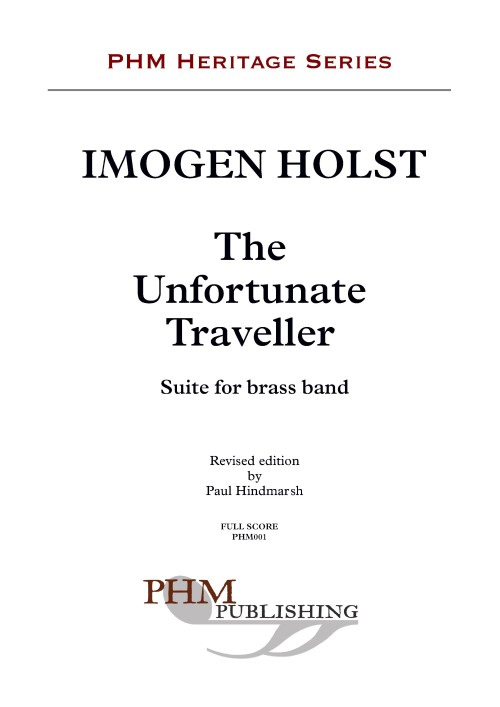
The Unfortunate Traveller (Brass Band - Score and Parts) - Holst, Imogen - Hindmarsh, Paul
Imogen Holst (1907-1984) submitted The Unfortunate Traveller (1929) as her final work as a student portfolio at the Royal College of Music, where her composition teacher was Gordon Jacob. The title was taken from Thomas Nashe's famous 1594 picaresque novel of the same title. The Suite was first performed on 12 February 1933 at her Majesty's Theatre, Carlisle, by the St. Stephen's Band, with the composer conducting. Te concert was given in memory of Holst's uncle, Dr. H.A. Lediard. Holst had been impressed with the band's performance of his A Moorside Suite at the 1928 National Brass Band Championships (The Crystal Palace, South London) and was keen to work with them. Writing in Imogen Holst, a life in music, Christopher Grogan indicates that it was Gustav Holst's suggestion to include his daughter's work in the programme, quoting Imogen Holst's remarks made in interview to The Daily Mail as follows: "....it is the first time, so far as I know, that a woman has conducted a brass band at a public concert....It has been a delight to rehearse the St. Stephen's Band. It was their performance at the Crystal Palace Festival that inspired me to write this Suite, which I have dedicated to them."Imogen Holst accompanied her father to the Crystal Palace in 1928 to hear the performances of A Moorside Suite, and was so excited by the played and, audibly, by her father's music that she decided to write a brass band piece for her final examination. Te result was The Unfortunate Traveller (1929). However, it was not possible for her to present a brass band work for examination. She arranged it for string orchestra so that it could be played before she left the RCM in July 1930. Following the premiere of the original in 1933, the manuscripts did not resurface until 1969 Imogen found them among her late mother's effects. Although she requested score and parts be destroyed, they ended up in the possession of Manchester composer John Golland, who marked up the score presumably with the intention of creating a new performing edition. The original scoring reveals a lack of experience with what can be a tricky medium.With the agreement of the Holst Foundation, a revised edition, with additional percussion, was prepared in 2011 since when the work has been fortunate to travel round the world as a concert and contest piece. The original includes drums in the March only. The title was taken from Tomas Nashe's famous 1594 picaresque novel of the same title. Several Morris Dance tunes are introduced during the course of the four short movements, including Bonnie Green Garters, Shepherd's Hey, The Rose and The Wind Blaws Cauld. Quirky twists and turns of harmony and spirited rhythms that remind us how much Imogen Holst loved tradition English dance music.In September 2025, I made a performing edition of the composer's arrangement for string orchestra. The manuscript lacks the final movement, which I arranged in a similar style, ie. without extending the upper ranges. Making this edition raised some issues regarding the accuracy of my band version and some of the solutions I used to smooth out the voicing. I have used the composer's second thoughts to refine my performing edition and to correct a textual errors.- Paul HindmarshDuration: 10.00
Estimated dispatch 7-14 working days
-
£40.00
The Unfortunate Traveller (Brass Band - Score only) - Holst, Imogen - Hindmarsh, Paul
Imogen Holst (1907-1984) submitted The Unfortunate Traveller (1929) as her final work as a student portfolio at the Royal College of Music, where her composition teacher was Gordon Jacob. The title was taken from Thomas Nashe's famous 1594 picaresque novel of the same title. The Suite was first performed on 12 February 1933 at her Majesty's Theatre, Carlisle, by the St. Stephen's Band, with the composer conducting. Te concert was given in memory of Holst's uncle, Dr. H.A. Lediard. Holst had been impressed with the band's performance of his A Moorside Suite at the 1928 National Brass Band Championships (The Crystal Palace, South London) and was keen to work with them. Writing in Imogen Holst, a life in music, Christopher Grogan indicates that it was Gustav Holst's suggestion to include his daughter's work in the programme, quoting Imogen Holst's remarks made in interview to The Daily Mail as follows: "....it is the first time, so far as I know, that a woman has conducted a brass band at a public concert....It has been a delight to rehearse the St. Stephen's Band. It was their performance at the Crystal Palace Festival that inspired me to write this Suite, which I have dedicated to them."Imogen Holst accompanied her father to the Crystal Palace in 1928 to hear the performances of A Moorside Suite, and was so excited by the played and, audibly, by her father's music that she decided to write a brass band piece for her final examination. Te result was The Unfortunate Traveller (1929). However, it was not possible for her to present a brass band work for examination. She arranged it for string orchestra so that it could be played before she left the RCM in July 1930. Following the premiere of the original in 1933, the manuscripts did not resurface until 1969 Imogen found them among her late mother's effects. Although she requested score and parts be destroyed, they ended up in the possession of Manchester composer John Golland, who marked up the score presumably with the intention of creating a new performing edition. The original scoring reveals a lack of experience with what can be a tricky medium.With the agreement of the Holst Foundation, a revised edition, with additional percussion, was prepared in 2011 since when the work has been fortunate to travel round the world as a concert and contest piece. The original includes drums in the March only. The title was taken from Tomas Nashe's famous 1594 picaresque novel of the same title. Several Morris Dance tunes are introduced during the course of the four short movements, including Bonnie Green Garters, Shepherd's Hey, The Rose and The Wind Blaws Cauld. Quirky twists and turns of harmony and spirited rhythms that remind us how much Imogen Holst loved tradition English dance music.In September 2025, I made a performing edition of the composer's arrangement for string orchestra. The manuscript lacks the final movement, which I arranged in a similar style, ie. without extending the upper ranges. Making this edition raised some issues regarding the accuracy of my band version and some of the solutions I used to smooth out the voicing. I have used the composer's second thoughts to refine my performing edition and to correct a textual errors.- Paul HindmarshDuration: 10.00
Estimated dispatch 7-14 working days

 View Music