
Results
-
 £34.95
Judd: To Stand with Jesus
A thoughtful treatment of Envoy Ferguson's simple yet powerful song, the first verse of which reads 'You must go home by the way of the cross, to stand with Jesus in the morning'.
Estimated dispatch 7-14 working days
-
 £34.95
To Stand With Jesus In The Morning (Brass Band - Score and Parts) - Downie, Kenneth
A thoughtful treatment of Envoy Ferguson's simple yet powerful song, the first verse of which reads 'You must go home by the way of the cross, to stand with Jesus in the morning'.
Estimated dispatch 7-14 working days
-
£17.50
To Stand With Jesus In The Morning (Brass Band - Score only) - Downie, Kenneth
A thoughtful treatment of Envoy Ferguson's simple yet powerful song, the first verse of which reads 'You must go home by the way of the cross, to stand with Jesus in the morning'.
Estimated dispatch 7-14 working days
-
 £24.50
Morning (From 'Peer Gynt') - Edvard Grieg - Gavin Somerset
With many bands this time of year doing "Proms" concerts, this new release comes at the perfect time. Skillfully arranged to make this playable by most bands, this is one of the most memorable tunes of all time. Used in countless TV adverts and films, this full arrangement of the classical work is sure to make the audience smile. The piece was originally composed as incidental music for a play by Henrik Ibsen in 1876.Over time, it has become a stand alone favorite on the classical music stage. Perfect for any concert.
In Stock: Estimated dispatch 1-3 working days
-
 £29.50
A Partridge In A Pear Tree - Gavin Somerset
The perfect Christmas concert finale!!! The Twelve Days of Christmas is known for being one of the most tedious pieces for any band to play - now the band get their own back! As the M.D starts to conduct the "Twelve Days Of Christmas", the band has other ideas. Throughout the piece, well-known carols are blasted out from all corners of the stage. This item is ideally suited for each band to add their own choreography. As the M.D fights to keep the front row playing all twelve days, the trombones stand to blast out Jingle Bells, the horns decide to join in and the back row then show their retaliation by giving a round of "Once In Royal David's City" - and the fun goes on. Eventually the M.D & front row finally loose their battle and give in at the end to a rousing line of "We Wish you a Merry Christmas". Fanfares, Jazz Waltz's and Christmas bedlam leave your audience in stitches and wanting more!!
In Stock: Estimated dispatch 1-3 working days
-
£24.50
The Cheshire Waltz - Traditional - A. Cook
A gentle setting of the traditional Cheshire folk melody, featuring solo and ensemble contributions from around the stand, this arrangement is playable by most levels of band and ideal for a lighter moment in your concert programme as an alternative to a slow melody.Starting as softly as a summer breeze, slowly gaining enthusiasm, before waltzing brightly to its peaceful conclusion, it's music as light as a victoria sponge and as English as a game of cricket on the village green.
In Stock: Estimated dispatch 1-3 working days
-
 £115.60
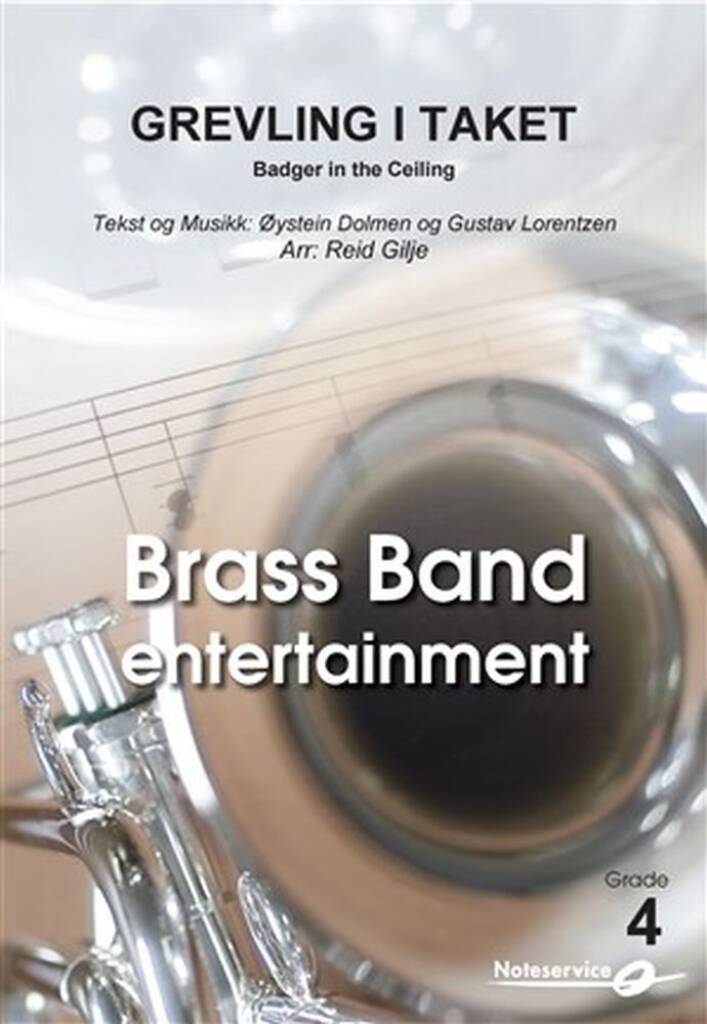
Grevling i taket - Øystein Dolmen og Gustav Lorentzen - Reid Gilje
This is an arrangement which has to be performed a bit humorous in the spirit of the original.It starts with a kazoo-like opening, played on the mouthpieces. At C, baritones and euphoniums should stand up. Maybe the musicians can play it by heart?Two bars before D, the tempo increase. On E, the cornet players should stand (and play by heart)?New, even higher tempo two bars before F. The trombonists should stand up in bar 103 to prepare for a terrific tempo. But G will be played like a laidback reggae-version. Flugelhorn and horns can stand up simultaneous with the glissando in bar 120.The tempo at H should be high and fresh and with several sections standing. In bar 158 should almost all players sit. At bar 160 everyone should stand up.In bar 162, all players should turn to the audience during the crescendo.
Estimated dispatch 5-14 working days
-
 £105.20
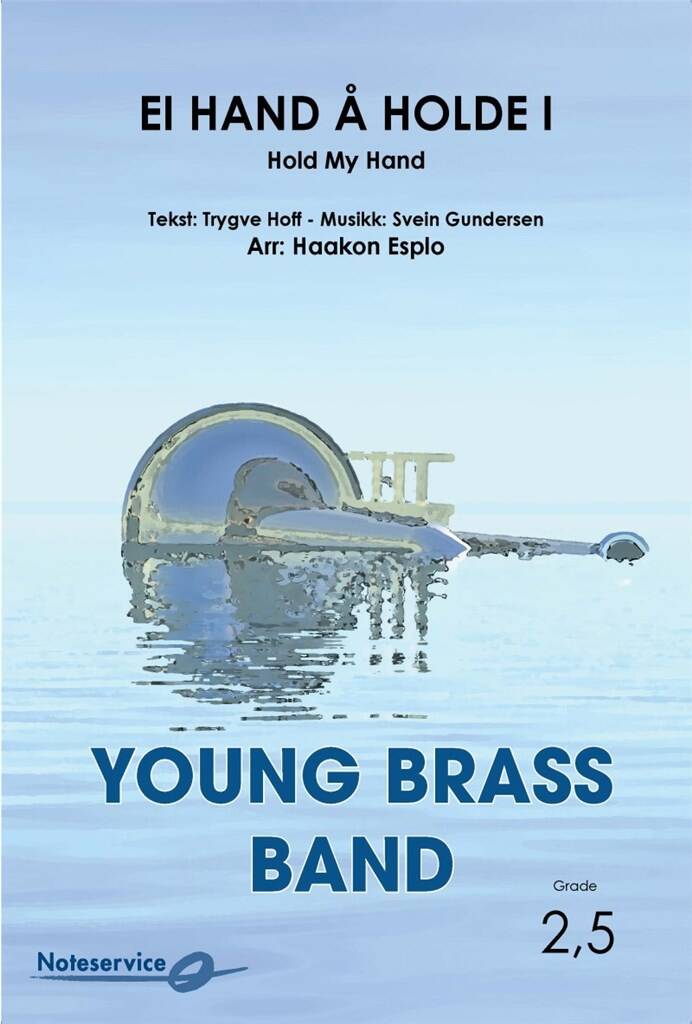
Ei hand a holde i - Trygve Hoff - Haakon Esplo
Norwegian artist Jorn Hoel made his breakthrough with his album Varme ut av is released in 1987. The songs "Have a Dream" and "Hold My Hand" became big hits and still stand out as some of the most played songs even today. The music was written by Svein Gundersen and lyrics by Trygve Hoff on both of them. Jorn Hoel was awarded "Singer/songwriter of the year" for this release.
Estimated dispatch 5-14 working days
-
 £107.80
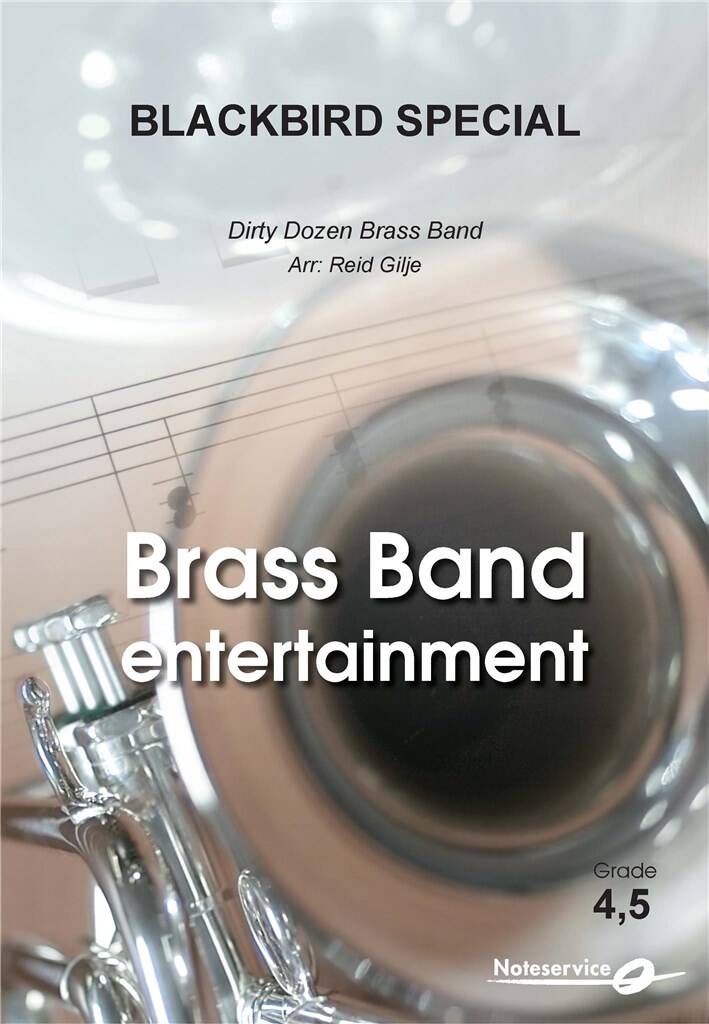
Blackbird Special - Davis - Reid Gilje
Blackbird Special" is a song by American band Dirty Dozen Brass Band. The song is an entertainment piece, a good concert opener or encore. When used as a concert opener one may let the different sections of the band enter the stage one by one playing in order of appearance. Percussion section may play their parts ad lib. The most important is the groove of the piece. Please pay attention to strict articulation from bar 17. Be aware of the marcatos at 33. The last note of the slurs at 41 must be not be too short. It's important to hold the note values, especially in bars 49, 51, 53 and 55. From 57 and throughout the piece, the percussion may invite the audience to join forhandclaps. As an extra effect, the Bass Tubas may stand at 57, the Horns at 59, backrow Cornets and Trombones at 61 and Euphonium/Baritone/Solo Cornets at 63. ||||||
Estimated dispatch 5-14 working days
-
 £85.80
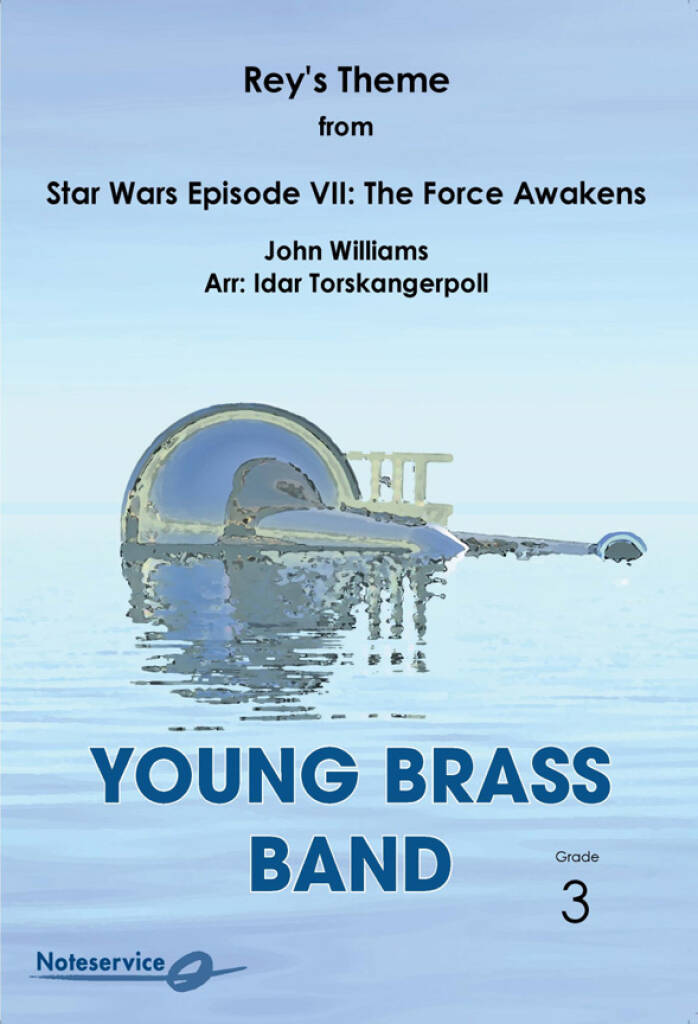
Star Wars Episode VII: The Force Awakens - John Williams - Idar Torskangerpoll
The iconic soundtrack composed by John Williams continues with "The Force Awakens", the seventh Star Wars movie. This arrangement for Young Band tries to capture the rich timbre of the original orchestral music. It is very important to be aware ofthe balance in the band when performing this music. The horns should stand out dynamically when they plays the melody. Also make shure that the rhythmic are played as clear as possible, especially in the bass tubas and other low instruments. You maychoose whether to play the upper or lower octave in the cornet parts.
Estimated dispatch 5-14 working days
 View Music
 Listen to MP3