
Results
-
 £109.99
Columbus - Rob Goorhuis
Christopher Columbus was born in Genoa in 1451. His father was a wool merchant. Originally he seemed destined to follow in his father's footsteps, and thus sailed the oceans to countries as far apart as Iceland and Guinea. In 1476 his ship was sunk during a battle off the coast of Portugal. Columbus saved his own life by swimming to shore. In 1484 he conceived the idea of sailing to the Indies via a westward sea route, but it was only in 1492 that he was able to realize this plan. On this first voyage he was in command of three ships: the flag-ship, called the Santa Maria, the Pinta, and the Ni?a. From Spain Columbus sailed via the Canary Islands to the Bahamas, whichhe sighted on October 12th 1492. Without being aware of it Columbus discovered the 'New World' he thought he had landed in the eastern part of Asia. The motif from Dvooak's 9th Symphony 'Aus der neuen Welt' forms a little counterfeit history at this point in the composition. After this first voyage Columbus was to undertake another three long voyages to America. These voyages were certainly not entirely devoid of misfortune. More than once he was faced with shipwreck, mutiny and the destruction of settlements he had founded. After Columbus had left for Spain from Rio Belen in 1503, he beached his ships on the coast of Jamaica. The crew were marooned there and it was only after a year that Columbus succeeded in saving his men and sailing back to Spain with them. In the music the misunderstanding about which continent Columbus discovered in his lifetime resounds, for does this part in the composition not contain Asiatic motifs? Poor Columbus! In 1506 the famous explorer died in Valladolid.
Estimated dispatch 5-14 working days
-
 £84.99
Voyage with the VOC - William Vean
The Netherlands have been an important trading nation for a long time partly as a result of their geographical situation. One of the first multinationals in The Netherlands was the 'Verenigde Oostindische Compagnie' (VOC). The aim of the VOC was to send ships to Asia in order to buy pepper and spices, and to take over the Portuguese monopoly in this field. The Company was successful. An era of great prosperity resulted, in which the art of painting (Rembrandt van Rijn) as well as science (Constantijn Huygens) flourished alongside a thriving economy. 1. The Sails are set : There is a lot of hustle and bustle on the quay. The crew are preparing fordeparture. Goodbyes are said and once the sails have been hoisted the ship sets out to sea.2. A Visit to the Rajah of Yogyakarta: After a voyage of many months the place of destination is reached. A visit to the Radja, the king of the area around Yokyakarta, follows. The dishes and beverages and the native culture in general are very pleasant after having been on a diet of ship's biscuit and water for such a long time.3. The Holds have been loaded: The holds have been loaded to the brim, and the voyage home can be begin!4. Death sails along: Life at sea is rough. not seldom did a sailor die of a tropical disease or scurvy. After a memorial service, the Captain would speak the words 'One, two, three, in God's name ...' and the body, wrapped in canvas, would be committed to the sea.5. A joyful homecoming: After many months of hardship coming home is perhaps the best part of the entire voyage. The quay is filled with people eager to give the crew a warm welcome.
Estimated dispatch 5-14 working days
-
£54.99
The Simpsonsa - Danny Elfman - Paul Lavender
Homer Simpson and his yellow friends and family have become one of the world's most loved TV cartoon series of all time. Homer and the gang have also finally made it to the big screen. Here's a hot arrangement of one of the most recognizable theme songs ever. Paul Lavender makes sure all the fun and entertainment of the series is recreated by your brass band!
Estimated dispatch 5-14 working days
-
 £54.99
Home - Michael Brown
Recorded by American Idol winner Phillip Phillips, this dynamic hit song was featured during the 2012 Olympics as NBC's theme for women's gymnastics.
Estimated dispatch 5-14 working days
-
 £115.60
Eventyr-Suite - Øystein Sjøvaag Heimdal
Fairytale-Suite is an original work for beginning band. The name of the movements are taken from well-known themes from Norwegian fairytales. The music may not tell a story itselv, but it may be a good base for an exciting fairytale on a concert? This piece gives challenging parts to every player and it's a good choice to showcase the entire band. To the conductor: It's several doublings of the voices. This makes it possible to omit certain instruments or parts. The Drum Set part may be split and played by several players.
Estimated dispatch 5-14 working days
-
 £115.60
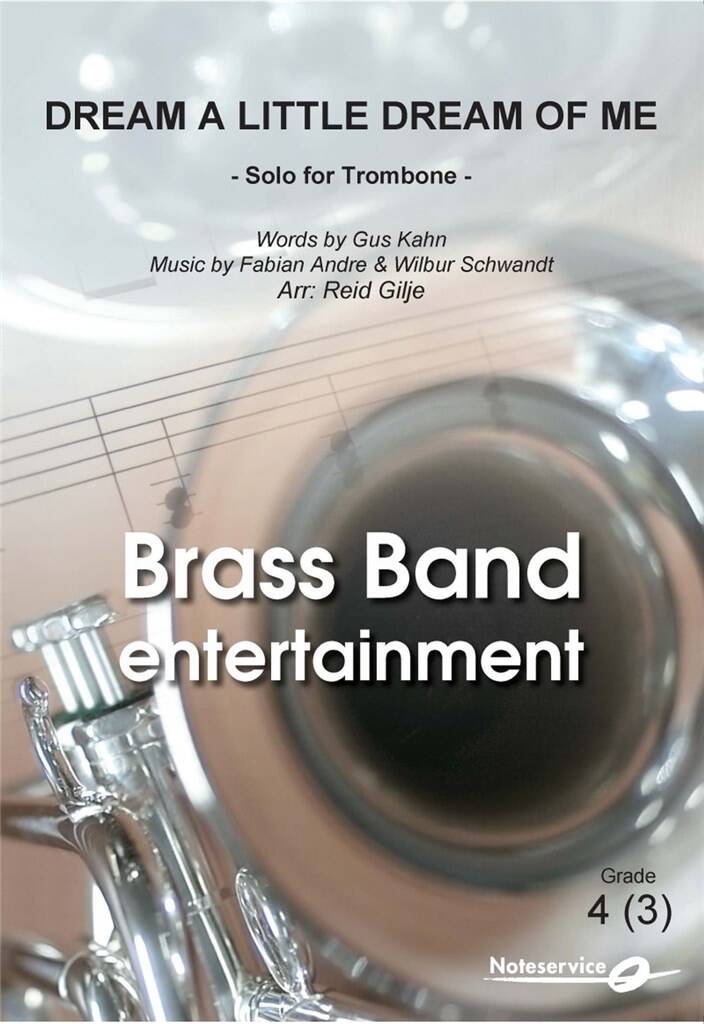
Dream a Little Dream of Me - Gus Kahn - Reid Gilje
This song was written in 1931 by Fabian Andre and Wilbur Schwandt with lyrics by Gus Kahn. It's now one of the most popular songs from the Great American Songbook and it's also recorded in many versions. Ella Fitzgerald, Louis Armstrong and Nat King Cole are among the most famous ones that have recorded it. In later years singers like Michael Buble, Diana Krall land Robin Williams have all recorded "Dream a Little Dream of Me". This arrangement is inspired by the version by American band Chicago from their 1995 album release "Night & Day".
Estimated dispatch 5-14 working days
-
 £379.99
Tranquil Abiding - Paul Mealor
An 18-minute work for brass band, written for the world renowned Foden's Band. This is a melodic work divided into three movements. All sections of the band are featured with solo parts. Each movement is headed by a line from a poem by James Agee, the American novelist and poet. 'Tranquil Abiding', often referred to as 'Shamatha' in Buddhist traditions, signifies a state of peaceful and calm mental stillness, achieved through focused meditation, where the mind rests peacefully and without agitation."The term has always resonated with me particularly during my long, regular walks into, around and along the amazingly beautiful woodlands, mountains and streams of North Wales at night lit only by the stars. It's during these walks that my meditative focus is at its most emotive and I am at one with the 'it' that surrounds us", says Paul Mealor. "Often on these walks and meditations I am reminded of the American poet, James Agee's pantheistic vision of the natural world and the stars above, 'Sure on this Shining Night' which conjures a serene and harmonious image of a summer night, illuminated by celestial bodies and bathed in kindness. The poem evokes a sense of peace and tranquillity as nature heals and the earth is rejuvenated".
Estimated dispatch 5-14 working days
-
 £60.99
Brass Fire - Thomas Doss
This sparkling composition by Thomas Doss, full of energy and playfulness, was commissioned by the National Youth Brass Band of Switzerland. Bursting with enthusiasm and freshness, it's exactly what you'd expect from a band brimming with young talent.With its infectious rhythms, brilliant tonal colors, and vibrant dynamics, this composition is ideal as a festive concert opener. It also makes the perfect whirlwind encore, allowing both musicians and the audience to end the concert on a high note.A composition that celebrates the strength, vitality, and future of the brass band world - enjoy listening!
Estimated dispatch 5-14 working days
-
 £49.99
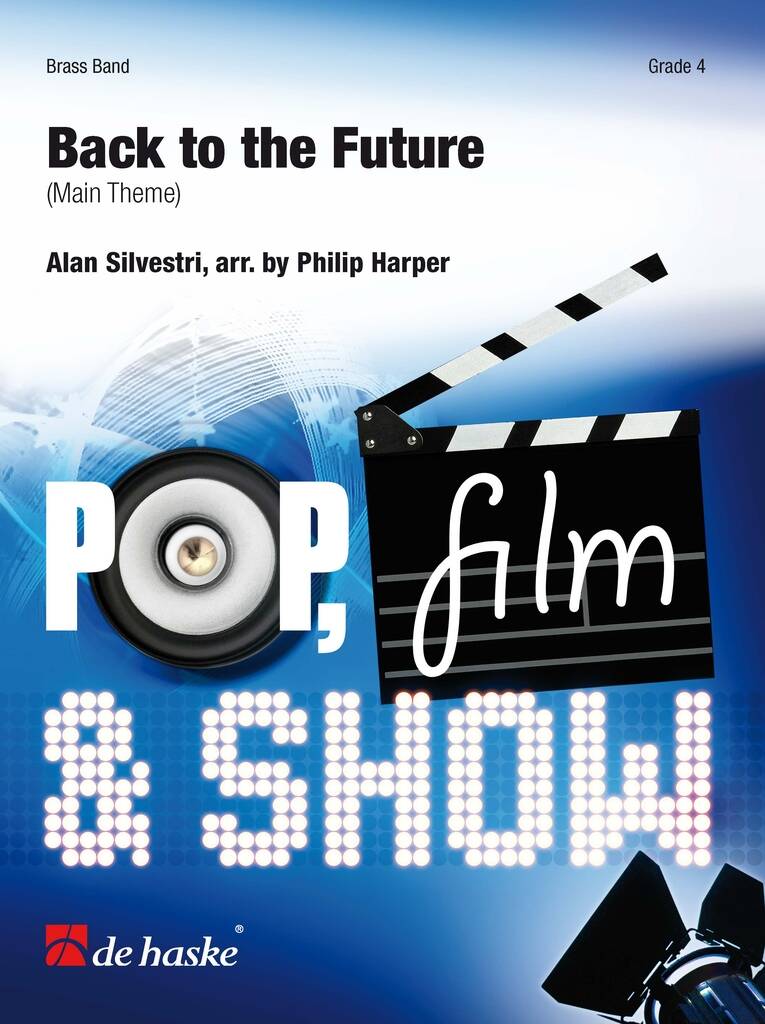
Back to the Future - Alan Silvestri - Philip Harper
Alan Silvestri's unforgettable, dramatic theme from the iconic movie Back to the Future (1985) has become a true film music classic. In this brilliant arrangement for brass band, Philip Harper has perfectly preserved the original energy and grandeur of the soundtrack. The result is a powerful, recognizable, and compelling arrangement that is guaranteed to impress any audience.
Estimated dispatch 5-14 working days
-
 £53.50
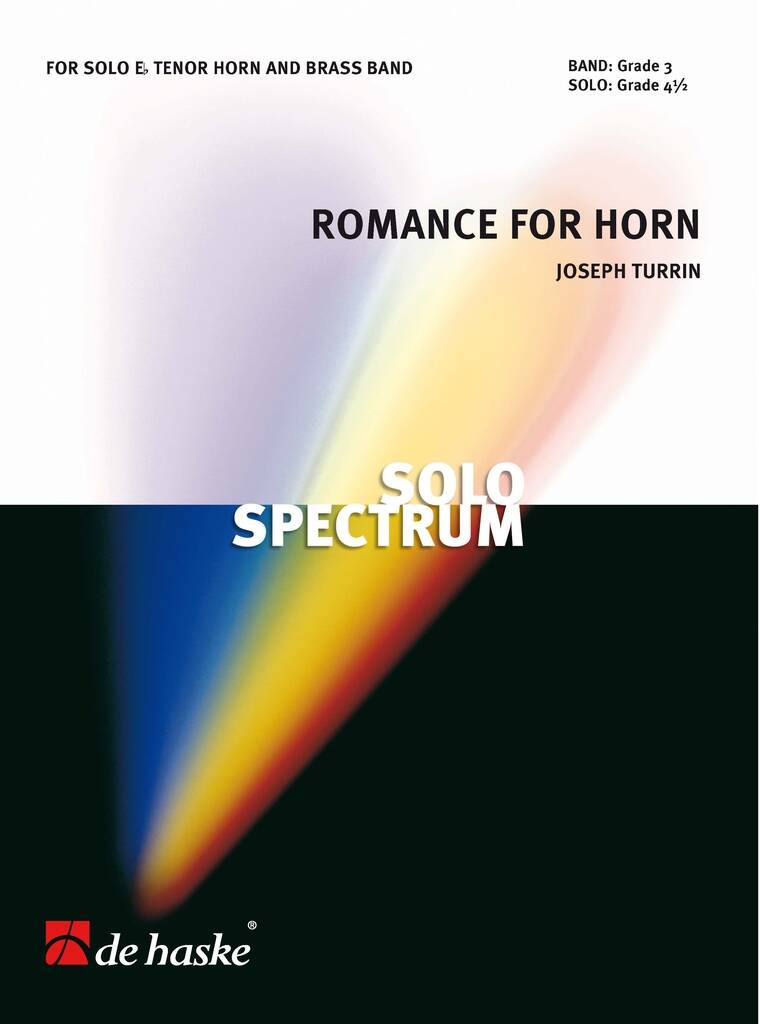
Romance for Horn - Joseph Turrin
Several years ago, I attended an Imperial Brass concert in the United States, which featured soloist Sheona White on tenor horn. I was so impressed with her playing that I asked if I could write something for her. The result of the conversation is this piece, Romance for Horn. I thought I'd compose something melodically flowing with grace and tenderness that was very carefully crafted to match Sheona's beautiful sound on the tenor horn. As for the overall structure of the work, it basically consists of flowing melodic lines in the solo part supported by a pulsing harmonic current that runs throughout. A piano reduction of this fine Romance is also available.Joseph Turrin
Estimated dispatch 5-14 working days
 View Music