Searching for Wind Band Music? Visit the Wind Band Music Shop
We've found 63 matches for your search. Order by

Results

  • £19.95

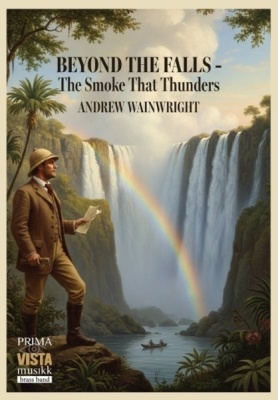
    Beyond the Falls - The Smoke That Thunders (Brass Band - Study Score) - Wainwright, Andrew

    David Livingstone was a renowned Scottish missionary and explorer whose legendary expeditions from 1841 until his death in 1873 took him deep into the interior of central and southern Africa. While his initial aim was to spread Christianity and commerce, his legacy became defined by his relentless spirit of discovery.This work captures the harrowing and ultimately triumphant journey that led to his discovery of Victoria Falls. Originally composed for the GUS Band's performance at the 2012 Brass in Concert Championships, the work was expanded in 2026 for the Black Dyke Band's recording, Gothique Fantasy - The Music of Andrew Wainwright.The music opens with an air of trepidation, reflecting the weight of the mission ahead. This tension soon gives way to a more optimistic section featuring the Scottish folk song A Man's a Man for a' That. Livingstone reportedly hummed this Rabbie Burns tune to bolster his spirits while travelling. The score then depicts the immense hardships of the expedition (letters F to L), illustrating skirmishes with suspicious local tribes, wild animal attacks, and bouts of African fever.Following these trials, a more reflective, emotive movement (Letters L to R) explores Livingstone's internal struggle and his doubts about continuing. This emotional core is built upon the hymn Lord, Send Me Anywhere, a melody composed by Livingstone himself. Emerging from this prayer with renewed purpose, the final section (Letter R to the end) follows his path along the Zambezi River. The music builds to a triumphant climax, capturing his elation at seeing the magnificent Victoria Falls - known locally as 'Mosi-oa-Tunya' (The Smoke that Thunders).Duration: 13.30

    Estimated dispatch 7-14 working days
  • £34.95

    The Covenanters (Brass Band - Score and Parts) - Downie, Kenneth

    In 1638, many members of the Presbyterian Church of Scotland signed a document called the National Covenant. By doing so, they were declaring that they acknowledged only Jesus Christ as the spiritual head of their church, and not any king or queen. This had become necessary because the Stuart kings believed in the Divine Right of Monarchs and saw themselves as head of the church. In the previous year, Charles I had forcibly introduced the Book of Common Prayer, invoking the wrath of the common people who faced the threat of torture, transportation or execution if they did not use the new liturgy and worship at their local church. The net result of this was that many met illegally in the countryside or in barns and large houses. These meetings became known as 'conventides' and many took place in the south-west of the country. Anyone caught attending was at risk of execution by the muskets of the dragoons who were employed in the area for that specific purpose. This music was written to honour the bravery and loyalty of these Christians to their faith, in the face of extreme danger, in the hope that it will inspire us also to be faithful. There are overtones of military threat, secrecy and solidarity. An old pentatonic tune is used, which the composer heard as a boy being sung to the words The Lord's My Shepherd.

    Estimated dispatch 7-14 working days
  • £17.50

    The Covenanters (Brass Band - Score only) - Downie, Kenneth

    In 1638, many members of the Presbyterian Church of Scotland signed a document called the National Covenant. By doing so, they were declaring that they acknowledged only Jesus Christ as the spiritual head of their church, and not any king or queen. This had become necessary because the Stuart kings believed in the Divine Right of Monarchs and saw themselves as head of the church. In the previous year, Charles I had forcibly introduced the Book of Common Prayer, invoking the wrath of the common people who faced the threat of torture, transportation or execution if they did not use the new liturgy and worship at their local church. The net result of this was that many met illegally in the countryside or in barns and large houses. These meetings became known as 'conventides' and many took place in the south-west of the country. Anyone caught attending was at risk of execution by the muskets of the dragoons who were employed in the area for that specific purpose. This music was written to honour the bravery and loyalty of these Christians to their faith, in the face of extreme danger, in the hope that it will inspire us also to be faithful. There are overtones of military threat, secrecy and solidarity. An old pentatonic tune is used, which the composer heard as a boy being sung to the words The Lord's My Shepherd.

    Estimated dispatch 7-14 working days
  • £24.95

    The Pilgrim's Prayer (Brass Band - Score and Parts) - Rouse, Sydney - Ball, Eric

    Introduction - This could hardly be more simple. Inexperienced players may have some little difficulty in intonation, especially as they are starting 'cold', but a useful lesson can be learned in this connection when rehearsing these two bars. Section A - The music is hymn tune-like in character, but it should not become stilted. Close intonation is still a point to study, especially in view of the chromatic nature of some of the harmony. Section B - Aim to secure just balance in the accompanying parts, especially in the second phrase, where the 1st comets may be inclined to treat their moving part as an independent melody rather than part of the 'colour' background. Section C -This is a reprise of the first theme, with a different arrangement. The same comments apply, however. Section D - Here the music becomes more song-like in style, and provides an interesting contrast. The scoring, too, is more varied, and there are a number of points that call for attention. Note that the 1st and 2nd comets and 2nd trombone work as a team throughout; see that the pulsating, syncopated background adds to the movement of the music without giving a jerky effect; the new entries in the fourth and twelfth bars are to be made quite smoothly; and do not allow the texture of the music, especially in the last eight bars of the section, to overshadow the simplicity of the main tune. Section E - Here the first subject appears again. In the arrangement the colour contrasts are quite clear-cut. In order to secure true balance in the fifth and sixth bars, it may be necessary to adjust the amount of tone given by the bass trombone, as this part is not doubled as are the other parts. Section F -This section forms a simple but expressive coda.

    Estimated dispatch 7-14 working days
  • £12.50

    The Pilgrim's Prayer (Brass Band - Score only) - Rouse, Sydney - Ball, Eric

    Introduction - This could hardly be more simple. Inexperienced players may have some little difficulty in intonation, especially as they are starting 'cold', but a useful lesson can be learned in this connection when rehearsing these two bars. Section A - The music is hymn tune-like in character, but it should not become stilted. Close intonation is still a point to study, especially in view of the chromatic nature of some of the harmony. Section B - Aim to secure just balance in the accompanying parts, especially in the second phrase, where the 1st comets may be inclined to treat their moving part as an independent melody rather than part of the 'colour' background. Section C -This is a reprise of the first theme, with a different arrangement. The same comments apply, however. Section D - Here the music becomes more song-like in style, and provides an interesting contrast. The scoring, too, is more varied, and there are a number of points that call for attention. Note that the 1st and 2nd comets and 2nd trombone work as a team throughout; see that the pulsating, syncopated background adds to the movement of the music without giving a jerky effect; the new entries in the fourth and twelfth bars are to be made quite smoothly; and do not allow the texture of the music, especially in the last eight bars of the section, to overshadow the simplicity of the main tune. Section E - Here the first subject appears again. In the arrangement the colour contrasts are quite clear-cut. In order to secure true balance in the fifth and sixth bars, it may be necessary to adjust the amount of tone given by the bass trombone, as this part is not doubled as are the other parts. Section F -This section forms a simple but expressive coda.

    Estimated dispatch 7-14 working days
  • £24.95

    SECRET PRAYER (Brass Band Set) - Erik Leidzen

    An interesting and varied treatment of the old chorus 'O the voice to me so dear, breathing gently on my ear! Needy soul, look up and see, 'Tis the Saviour speaks to thee'.

    Estimated dispatch 7-14 working days
  • £24.95

    Secret Prayer (Brass Band - Score and Parts) - Leidzen, Erik

    An interesting and varied treatment of the old chorus 'O the voice to me so dear, breathing gently on my ear! Needy soul, look up and see, 'Tis the Saviour speaks to thee'.

    Estimated dispatch 7-14 working days
  • £12.50

    Secret Prayer (Brass Band - Score only) - Leidzen, Erik

    An interesting and varied treatment of the old chorus 'O the voice to me so dear, breathing gently on my ear! Needy soul, look up and see, 'Tis the Saviour speaks to thee'.

    Estimated dispatch 7-14 working days
  • £56.00

    The Unst Boat Song (Brass Band - Score and Parts) - Fernie, Alan

    The Unst Boat Song is an old Norn sea prayer and Shetland's oldest surviving song.

    Estimated dispatch 7-14 working days

     PDF View Music

  • £24.95

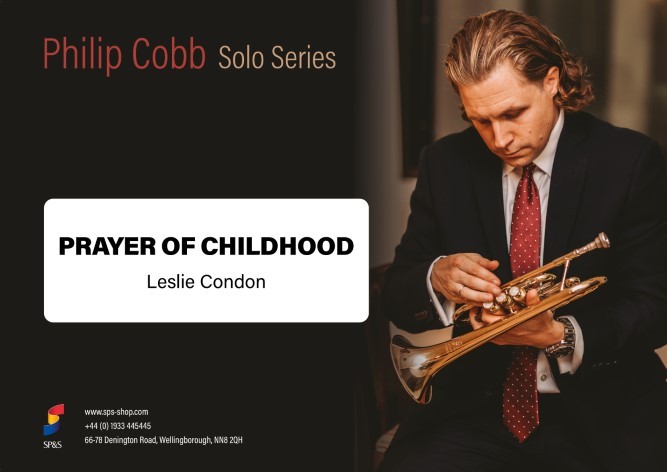
    PRAYER OF CHILDHOOD (Cornet Solo with Brass Band Set) - Leslie Condon

    Leslie Condon originally wrote this alternative tune for the Charles Wesley hymn, 'Gentle Jesus, meek and mild' in 1963. He later scored it for cornet solo and it appears here with brass band accompaniment.

    Estimated dispatch 7-14 working days