
Results
-
 £87.95
Masquerade (Score and Parts)
The first performance took place on the 4th. September 1993 at the Free Trade Hall in Manchester during the British Open Brass Band Championships.Note by Philip Wilby:Masquerade is a centenary tribute to Verdi's last opera Falstaff and takes its final scene as the basis for my own piece. Thus I have used some of Verdi's music, and some of Shalespeare's plot, and woven them into a fabric with highly demanding music of my own to produce a work in the great tradition of operatically-based brass band pieces. Such scores date from the very beginnings of band repertory and are often not direct arrangements in the established sense but new compositions produced in homage to a past master. They may still offer performers and audience alike something familiar interwoven with something new. My own piece reuses some elements from the original story: . .Falstaff has been caught in a web of his own lies by the ladies of the town, who propose to teach him a lesson. The story opens at night in Windsor Great Park. The plotters, variously disguised in Hallowe'en fashion (as fairies,elves hobgoblins etc!) assemble in the park to await Falstaff's arrival (musicologists will, perhaps, note a rare use of 'large bottle in F' being used during this scene of suppressed alcoholic revelry!). Falstaff's companions, Bardolph,Piston and Robin, enter (represented here by the three trombones!), and are variously abused by the masqueraders. At the height of the Tout an alarm sounds and Falstaff (euphonium cadenza) enters as Midnight strikes. From a safe hiding place he watches as the disguised Nanetta (principal comet) sings a serene solo as the moon appcars above the trees. With sudden force the others seize him and drag him from his hiding place. As in the traditional game 'Blind Man's Buff', he is roughly turned seven times (a sequence of solo accelerandi) until, at last, he recognizes his assailants as his sometime friends. Far from complaining, Verdi's character concludes the opera with a good-humoured fugue on the words.... 'All the World's a Joke... Every mortal laughs at the others, But he laughs best who has the final laugh. Philip Wilby.
Estimated dispatch 7-14 working days
-
 £44.95
Masquerade (Score Only)
The first performance took place on the 4th. September 1993 at the Free Trade Hall in Manchester during the British Open Brass Band Championships.Note by Philip Wilby:Masquerade is a centenary tribute to Verdi's last opera Falstaff and takes its final scene as the basis for my own piece. Thus I have used some of Verdi's music, and some of Shalespeare's plot, and woven them into a fabric with highly demanding music of my own to produce a work in the great tradition of operatically-based brass band pieces. Such scores date from the very beginnings of band repertory and are often not direct arrangements in the established sense but new compositions produced in homage to a past master. They may still offer performers and audience alike something familiar interwoven with something new. My own piece reuses some elements from the original story: . .Falstaff has been caught in a web of his own lies by the ladies of the town, who propose to teach him a lesson. The story opens at night in Windsor Great Park. The plotters, variously disguised in Hallowe'en fashion (as fairies,elves hobgoblins etc!) assemble in the park to await Falstaff's arrival (musicologists will, perhaps, note a rare use of 'large bottle in F' being used during this scene of suppressed alcoholic revelry!). Falstaff's companions, Bardolph,Piston and Robin, enter (represented here by the three trombones!), and are variously abused by the masqueraders. At the height of the Tout an alarm sounds and Falstaff (euphonium cadenza) enters as Midnight strikes. From a safe hiding place he watches as the disguised Nanetta (principal comet) sings a serene solo as the moon appcars above the trees. With sudden force the others seize him and drag him from his hiding place. As in the traditional game 'Blind Man's Buff', he is roughly turned seven times (a sequence of solo accelerandi) until, at last, he recognizes his assailants as his sometime friends. Far from complaining, Verdi's character concludes the opera with a good-humoured fugue on the words.... 'All the World's a Joke... Every mortal laughs at the others, But he laughs best who has the final laugh. Philip Wilby.
Estimated dispatch 7-14 working days
-
 £64.00
Three Spanish Impressions (Score and Parts)
Three Spanish Impressions originally were part of a large, single movement work called " SPAIN" Whilst happy with the content of the work, I realised that it was rather unwieldy and a bit too long, so, with the publishers blessing, created a shorter suite from the existing material.The brooding and repetitive opening movement takes its mood perhaps from the Miles Davis/Gil Evans album "Sketches of Spain", albeit in a less stringent harmonic language. The middle movement is a delicate and fragile waltz, with shades of a romance within, and the finale, a colourful and robust fandango, also contains a lyrical heart!The thematic material, whilst written very much as a pastiche of the music of Spain, is original, and the accent is firmly on melody and musicianship!Alan FernieJune 2007
Estimated dispatch 7-14 working days
-
 £24.00
Three Spanish Impressions (Score Only)
Three Spanish Impressions originally were part of a large, single movement work called " SPAIN" Whilst happy with the content of the work, I realised that it was rather unwieldy and a bit too long, so, with the publishers blessing, created a shorter suite from the existing material.The brooding and repetitive opening movement takes its mood perhaps from the Miles Davis/Gil Evans album "Sketches of Spain", albeit in a less stringent harmonic language. The middle movement is a delicate and fragile waltz, with shades of a romance within, and the finale, a colourful and robust fandango, also contains a lyrical heart!The thematic material, whilst written very much as a pastiche of the music of Spain, is original, and the accent is firmly on melody and musicianship!Alan FernieJune 2007
Estimated dispatch 7-14 working days
-
 £32.50
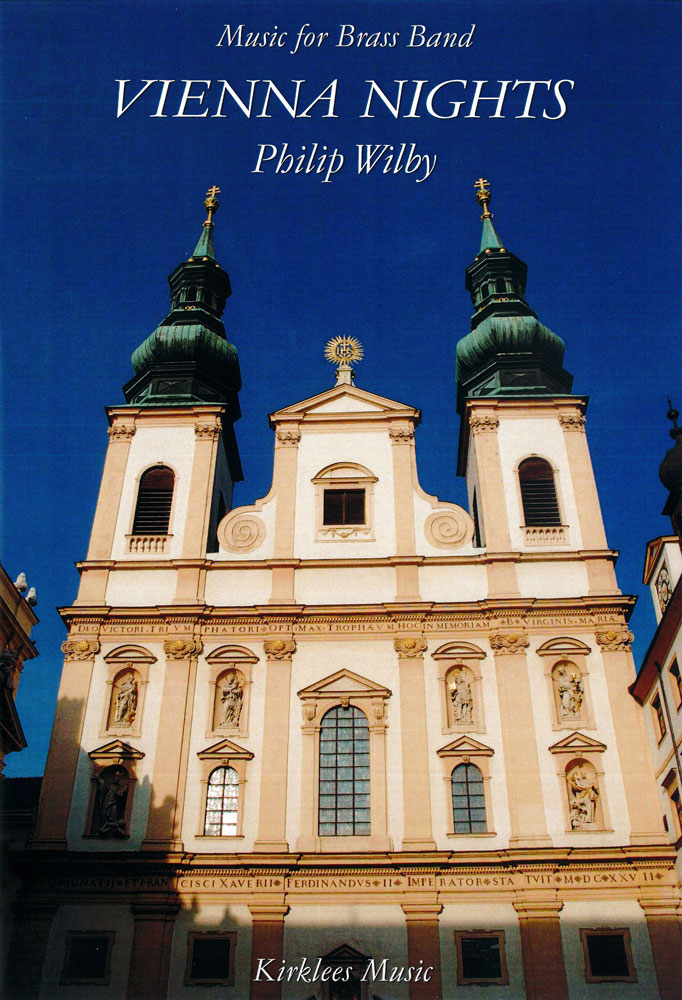
Vienna Nights (Score Only)
The City of Vienna stands at one of the historic crossroads of the world, linking east and west and embracing artistic influences from all sides. In the 250th anniversary year of Mozart's birth, this fantasy on Mozart's celebrated Piano Sonata in A (K331), has been composed true to the form and content of the original, but also to the underlying substance of the conception.One of Mozart's distinguishing features, and one that links him to later music by Beethoven, Schubert, Mahler and Schoenberg, is the breadth of his musical vision. His music links intellectual rigour with ecstatic utterance and darker preoccupations. It is, perhaps, this shadow-laden side of his musical nature which gives his work a profundity often absent in the work of his contemporaries. Admirers of his Requiem Mass or the Statue music in Don Giovanni will recognise that it is this extra sense of reality which makes Mozart so relevant to the modern age, and where he may link hands with the other great Viennese thinkers such as Berg, Webern and Adorno.The composer follows the three movement plan of the Sonata closely. The original begins with a Theme and Variations which is freely quoted. His Minuet is mirrored in the Recitative and Notturno, where each section of the band lays down a metaphoric rose to his memory. Famously, the sonata ends in populistic style with a Turkish Rondo. Ever since the Hapsburg-Ottoman Wars, which came to an end in the seventeenth century, Viennese composers have included Turkish elements in their music, not least in the use of certain percussion instruments. Vienna Nights is thusly a homage.It celebrates the world's greatest composer, but also the city which fostered his work. Here, in your imagination, you might easily conjure up a caf table near the Opera House, where Mozart, Mahler and Sigmund Freud, observed by us all from a discreet distance, may meet as old friends.
Estimated dispatch 7-14 working days
-
 £79.95
Indian Summer (Fantasy) (Brass Band - Score and Parts)
The 'Indian Summer' is that of North America, and the music, entertaining but more than half serious, will perhaps evoke memories of tales of Native Americans.There are four movements:The Great Chief SpeaksBy the Cool WatersTotem DanceHymn to the Great SpiritProgramme Notes:This Fantasy is in the form of a Suite, although there should be no long break between each movement. The composer sometimes concocts a little story to illustrate the music, somewhat as follows:"The Great Chief Speaks": the warmth of Autumn's "Indian Summer" will soon be a memory, and hard Winter will set in; so the Chief must hold a great Powwow with his people"By the Coll Waters": a little girl, not interested in grown-up solemnities, slips away to a nearby lake. She gazes at her reflection in the water; executes a little dance, then falls to dreaming."Totem Dance": this will be exciting - the little girl goes running to see! The dancing becomes wilder, then rhythm more insistent, then suddenly silence."Hymn to the Great Spirit": the Powwow closes with a majestic utterance by the Great Chief. A hymn is sung to the "Great White Spirit", and the people turn their thoughts to preparations for the coming Winter.
Estimated dispatch 7-14 working days
-
£39.95
Indian Summer (Fantasy) (Brass Band - Score only)
The 'Indian Summer' is that of North America, and the music, entertaining but more than half serious, will perhaps evoke memories of tales of Native Americans.There are four movements:The Great Chief SpeaksBy the Cool WatersTotem DanceHymn to the Great SpiritProgramme Notes:This Fantasy is in the form of a Suite, although there should be no long break between each movement. The composer sometimes concocts a little story to illustrate the music, somewhat as follows:"The Great Chief Speaks": the warmth of Autumn's "Indian Summer" will soon be a memory, and hard Winter will set in; so the Chief must hold a great Powwow with his people"By the Coll Waters": a little girl, not interested in grown-up solemnities, slips away to a nearby lake. She gazes at her reflection in the water; executes a little dance, then falls to dreaming."Totem Dance": this will be exciting - the little girl goes running to see! The dancing becomes wilder, then rhythm more insistent, then suddenly silence."Hymn to the Great Spirit": the Powwow closes with a majestic utterance by the Great Chief. A hymn is sung to the "Great White Spirit", and the people turn their thoughts to preparations for the coming Winter.
Estimated dispatch 7-14 working days
-
 £33.43
Principio (Brass Band) Rob Wiffin
Principio is a vivacious concert opener. The word 'Principio' means start or beginning in both Spanish and Italian and this piece sets out to be just that - an energetic concert opener. Most of the melodic material is derived from the main theme which starts and ends the piece with its slightly lopsided rhythm. The piece is mostly conventional in language though with a touch of crunch here and there. I recently revised it, but originally composed it quite a few years ago and, at the time, showed it to Philip Sparke during the course of some composition lessons with him. Perhaps this is a good point at which to say on behalf of myself and many others - 'Thanks for all that red pen Philip'!Duration: Approx. 3.40 minutesDifficulty Level: MediumThis PDF download includes the full score and parts.Sheet music available at www.brassband.co.uk (UK) or https://satradecentral.org (USA)
In Stock: Estimated dispatch 1-3 working days
-
 £66.88
Dance Spirit (Brass Band) Rob Wiffin
Dance Spirit is a three movement suite of dances comprising Stomping Dance, Waltz Interlude and Duende linked by solo dancer cadenzas. In it I attempted to capture some of the elements of this most fundamental of human activities, the urge to move our bodies to the rhythm of the music.Stomping DanceThe suite starts with perhaps the most basic dance feeling - the desire to stomp our feet to the music - unrefined, no knowledge of steps needed. The heavy stomp is not always present in the music here, and sometimes you can sense the dancers trying something a little more refined, but it is always lurking in the background, ready to draw us back to the elemental rhythm of the beat.Waltz InterludeOf course, dance does not always have to have heat, it can be elegant and restrained, emphasising fluidity of line and movement. In the waltz it is occasionally suspended by the held poses before the motion starts again. Unlike the outer movements, the Waltz Interlude is cool, danced in moonlight rather than under the sun. The two dancers sometimes move as one and at other times the man provides a frame for the more intricate arabesques of his partner.DuendeDuring my time living in Spain I went to watch some flamenco dancing. I was expecting the normal tourist cliches but the dancers were serious students of Flamenco 'Nuevo y Viejo' (new and old). They performed with passion to some pounding asymmetric rhythms and their performance was the inspiration for Duende. 'Duende' as a term is hard to define. It is a spirit of performance - that moment when you are right in the middle of the creative spirit of the music. It is about soul and a heightened state of emotion. Federico Garcia Lorca wrote: "I have heard an old maestro of the guitar say, 'The duende is not in the throat; the duende climbs up inside you, from the soles of the feet.' Meaning this: it is not a question of ability, but of true, living style, of blood, of the most ancient culture, of spontaneous creation."Duration: Approx. 13.45 minutesDifficulty Level: Major WorkThis PDF download includes the full score and parts.Sheet music available at www.brassband.co.uk (UK) or https://satradecentral.org (USA)
In Stock: Estimated dispatch 1-3 working days
-
 £33.43
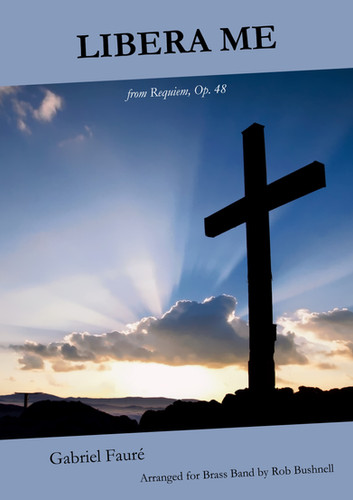
Libera Me from 'Requiem' (Brass Band) Faure arr. Rob Bushnell
Composed between 1887 and 1890, Gabriel Faure's Requiem is not only one of his best-known works but one of the most popular piece of choral music in the Classical repertoire, coming 23rd in the Classic FM's Hall of Fame 2024. Believed to be a tribute to his father (who died in 1885), Faure himself said "My Requiem wasn't written for anything - for pleasure, if I may call it that!" It started life as a five-movement work but was later expanded to be the final seven-movement work we know today. The first version (which Faure called "un petit Requiem") was first performed on 16 January 1888, with Faure conducting, a second version premiered on 21 January 1893 before the final version (reworked for full orchestra) was played on 12 July 1900; the Requiem was performed at the composer's own funeral in 1924.The Libera Me, or Deliver Me, was actually written in 1877 and is the sixth part of the Requiem.Faure once said of the work, "Everything I managed to entertain by way of religious illusion I put into my Requiem, which moreover is dominated from beginning to end by a very human feeling of faith in eternal rest." Upon interview, he also said, "It has been said that my Requiem does not express the fear of death and someone has called it a lullaby of death. But it is thus that I see death: as a happy deliverance, an aspiration towards happiness above, rather than as a painful experience. The music of Gounod has been criticised for its inclination towards human tenderness. But his nature predisposed him to feel this way: religious emotion took this form inside him. Is it not necessary to accept the artist's nature? As to my Requiem, perhaps I have also instinctively sought to escape from what is thought right and proper, after all the years of accompanying burial services on the organ! I know it all by heart. I wanted to write something different."This arrangement is for the British-style brass band, with alternative parts for horns in F and bass-clef lower brass. The tenor solo is featured on the euphonium.A recording of the original composition can be found here: www.youtube.com/watch?v=fXwFNoBHCf0Duration: 4.20 minutes approx.Difficulty Level: 4th Section +PDF download includes parts and score.Sheet music available from www.brassband.co.ukInstrumentation:Soprano Cornet EbSolo Cornet BbRepiano Cornet Bb2nd Cornet Bb3rd Cornet BbFlugel Horn BbSolo Horn Eb1st Horn Eb2nd Horn Eb1st Baritone Bb2nd Baritone Bb1st Trombone Bb2nd Trombone BbBass TromboneEuphonium BbBass EbBass BbTimpani
In Stock: Estimated dispatch 1-3 working days