
Results
-
 £64.95
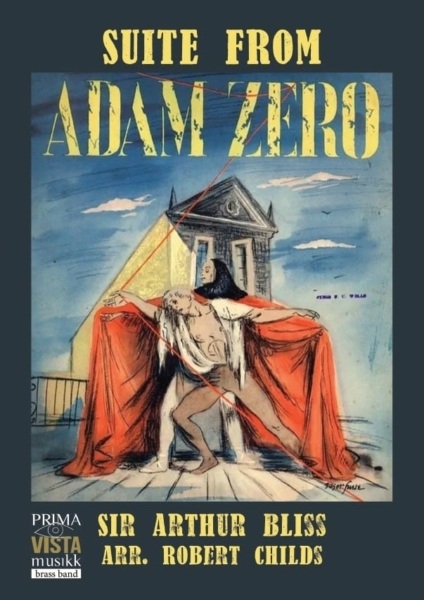
Adam Zero, Suite from (Brass Band - Score and Parts)
Selected as the Section 2 test piece for the National Brass Band Championships of Great Britain 2025Following his ballet Checkmate, Bliss composed another score for the, by then, Sadler's Wells Ballet, Miracle in the Gorbals, which was choreographed by Robert Helpmann, to a scenario by Michael Benthall. Premired in 1944, the ballet made a considerable impact and was a box-office success. It was followed in turn by a further collaboration with Helpmann and Benthall, Adam Zero. This would serve Helpmann, in the eponymous role, as a vehicle in two respects: demonstrating his gifts as a dancer-actor and as a choreographer. First performed at the Royal Opera House, Covent Garden, on 8 April 1946, Adam Zero was conducted by Constant Lambert, the work's dedicatee. Bliss considered it 'his most varied and exciting ballet score'. Benthall provided a synopsis for the programme:There is a philosophy that life moves in an endless series of timeless cycles. As Nature passes through Spring, Summer, Autumn and Winter, so man is born, makes a success in his own particular sphere, loses his position to a younger generation, sees his world crumble before his eyes and only finds peace in death. This age-old story is told in terms of a Company creating a ballet and calling on the resources of the theatre to do so. Lighting, stage mechanism, dance conventions, musical forms and costumes and scenery of all periods are used to symbolize the world of 'Adam Zero'.Apart from Adam, as the Principal Dancer, other main roles included the Stage Director (representing Omnipotence), and Adam's Fates (Designer, Wardrobe Mistress, and Dresser). 'The Woman in this allegory', wrote Bliss, 'under the symbol of the Choreographer, was both the creator and destroyer of Adam: his first love, his wife, his mistress, and finally the figure of beneficent Death.' When the curtain rose, the 'audience saw the Covent Garden stage right back to the wall, completely empty except for the protagonists, 'the Company poised, still and expectant, as they await the birth of... Adam Zero.'Unfortunately, soon after the premire, Helpmann injured himself and had to withdraw from the remaining performances. Despite generally positive reviews, the ballet did not capture the imagination of audiences and, to Bliss's considerable disappointment, was not revived. Seventy years would elapse before its first major return to the stage, in 2016, performed by the ballet company of Stadttheater Bremerhaven with choreography by Sergei Vanaev.Bliss extracted a concert suite from the ballet, conducting its first performance with the City of Birmingham Symphony Orchestra on 28 October 1948. For his own suite, arranged for brass band in 2023, Dr Robert Childs chose three dances linked to the seasons, book-ending them with the ebullient 'Fanfare Overture' and 'Fanfare Coda'. After Adam has grown to manhood, his Fates clothe him in a costume synonymous with confident youth, appropriate for the virile, ardent 'Dance of Spring'. In the 'Approach of Autumn', Adam, now wearing a sombre costume, has grown older: his Fates have streaked grey in his hair and put lines on his face. But they had earlier raised Adam to the zenith of his power, and the 'Dance of Summer' depicts him in the prime of life, in music of sweeping grandeur. The 'Fanfare Coda' signals that the next cycle of life is about to begin.Duration: 10.30
Estimated dispatch 7-14 working days
-
 £29.95
In the Love of Jesus (Cornet Solo with Brass Band - Score and Parts)
There are some pieces of music that evoke a sense of belonging, not only for the message it conveys, but the association of what it represents. In the Love of Jesus, by William Hammond and Ivy Mawby, the song brings an emotive response to words of commitment and devotion to Jesus. The melodic line starts with a somewhat hypnotic charm and expands into a beautifully shaped line of music.Duration: 3.30
Estimated dispatch 7-14 working days
-
 £29.95
Love Song (Cornet Solo with Brass Band - Score and Parts)
Kenneth Downie is not only a fine brass band composer but has a noted catalogue of excellent choral works. Love Song was originally written as a vocal piece, and this arrangement was especially written for Philip Cobb.Duration: 5.15
Estimated dispatch 7-14 working days
-
 £50.00
Solemn Procession (Brass Band - Score and Parts)
Richard Strauss (1864 - 1949) was a famous conductor and composer when he wrote Feierlicher Einzug der Ritter des Johanniter-Ordens (Solemn Entrance of the Knights of the Order of Saint John) in 1909. One of only a handful of his works written exclusively for winds, Strauss composed Feierlicher Einzug for the investiture ceremonies of the Order of St. John, a Christian military order that was founded in Jerusalem in 1023 to care for poor, sick, or injured pilgrims journeying to the Holy Land.Strauss scored Feierlicher Einzug (TrV 224) for a large ensemble of fifteen trumpets, four horns, four trombones, two tubas and timpani. He saw enough potential in its stately character and majestic conclusion to produce a version for symphony orchestra with organ and it has been arranged for a variety of brass ensembles with or without organ since then.This version for British style brass band was adapted from the original in 1990 by Paul Hindmarsh for the exclusive use of Besses o' th' Barn Band, of which he was then the musical director. Now that the music of Richard Strauss published in his lifetime is in the public domain, Solemn Procession, as it has been rendered in English, can be enjoyed by all brass bands and their audiences.- Paul HindmarshDuration: 6.00
Estimated dispatch 7-14 working days
-
 £45.00
The Thunderer (Brass Band - Score and Parts)
This march, one of Sousa's most popular compositions, was written in 1889 and was dedicated to the Knights Templar of Washington, D.C. Sousa had been knighted by that organization three years earlier. The origins of the name of the march are unclear and the march is noteworthy not only for Sousa's usual creative skills but also for the use, in two sections of the march, of military-style percussion and, in the last section, of featured fanfares.This arrangement was prepared for the 2009 Summer concerts of Brass Band of the Western Reserve, musical director Dr Keith M Wilkinson. The arrangement highlights the particular features mentioned above and performances will be enhanced by following the indicated staging directions.
Estimated dispatch 7-14 working days
-
 £9.99
£9.99Dreamsong (Score Only)
Dreamsong was commissioned by Geir Ulseth and the Nidaros Brass Band from Trondheim, Norway. After a short introduction, the soloist introduces a rather nostalgic melody, accompanied by the lower brass parts. A fast central section is then played by the band, which leads to a climax. Eventually, the main melody played by the solo cornet and flugel horn returns, overlaid with an ornamented counter-melody from the soloist, who then closes the piece with a short cadenza.
Estimated dispatch 7-14 working days
-
 £96.99
Purcellian Fantasia (Brass Band - Score and Parts)
This composition is based on the march from Henry Purcells Music for the funeral of Queen Mary II, a work written in 1694. In this fantasia, various movements flow from one to the next following the main theme; these movements not only elaborate on the theme, but also contrast with it. At times, the thematic material diverges so much, that the work acquires a character of its own; however, the composer often refers back to fragments of the theme. This work was test piece in the 4th division of the Dutch National Brass Band Championships (NBK) in 2017. Duration: 10.30
Estimated dispatch 7-14 working days
-
 £15.99
Viking Age (Brass Band - Score Only)
The Viking age lasted from the late eighth, to the middle of the eleventh century. During this period, Scandinavian warriors and merchants explored, plundered and left their mark on numerous territories. This work is based on a series of four notes that appear in different forms, consisting of 4 movements: Northern Men, Explorer, Raids and Heritage. It is an impressive and spectacular piece, with lots of interesting and playful parts for all sections. This is a perfect contest piece or an outstanding work for thematic concerts.Duration: 10.40
Estimated dispatch 7-14 working days
-
 £19.99
Brass Quintet (Score Only)
Programme NoteThe piece relies heavily on a steady, energetic pulse, closer to the articulation in a jazz/rock context than that of the classical. In hoquetus fashion the piece starts out with the musicians throwing short motifs between each other, giving the music a playful, rocking character. In between the pulse-driven sections, there are also parts with floating textures, notably some moments where the sound of music being played backwards in mimicked. Toward the end, the hoquetus-music from the opening returns, and the piece fades out in a lyrical chorale.
Estimated dispatch 7-14 working days
-
 £34.95
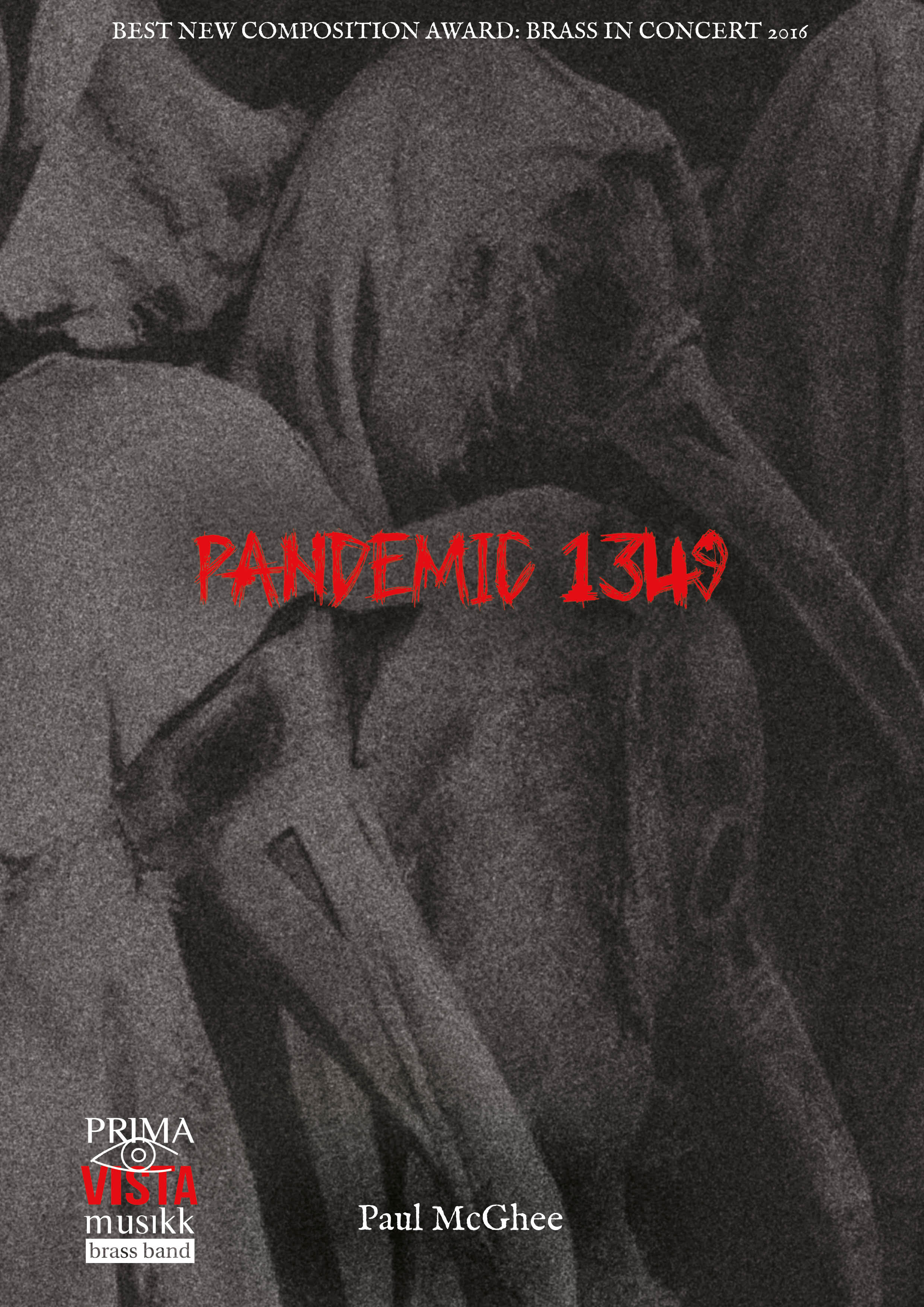
Pandemic 1342 (Brass Band - Score and Parts)
'Pandemic 1349' was written during September and October 2016 and received its premiere on Sunday 20 th November at the 40 th Brass in Concert Championships at the Sage, Gateshead where it received the best new composition/arrangement award.'Pandemic 1349' is a concert work that aims to capture the atmosphere of fear and terror as the plague spreads throughout the city. The cries and screams get louder and reach a chaotic climax, before a calmer and reflective passage takes over - although the chaos and fear never totally leaves as the melodic material is played against the backdrop of what has gone before.London lost almost half of its population during the Black Death, making this one of the single most devastating events in the city's dark history. The outbreak not only shaped the number of inhabitants in London but also changed their mind-sets with many turning to religion - even the English language was to be forever altered.
Estimated dispatch 7-14 working days