
Results
-
 £115.60
Stjernen og Rosa - John Philip Haqnnevik
The Star and a Rose is a big-scale Christmas piece for band, featuring four seasonal chorales.The first is a Gregorian-like chant Hodie Christus natus est.In this section of the piece, a soloist can be placed away from the band, maybe on a gallery. The soloist can be a tenor instrument, maybe trombone, or you can feature a vocal soloist.After this, the music leads us on to the old German Christmas chorale Lo, how a rose e'er blooming. This song is given a fairly rhythmical treatment, but make sure that the melody is presented in a cantabile style.An interlude follows, before the piece presents one of the most used and loved Scandinavian Christmas chorales, Mitt hjerte alltid vanker (My Heart will always wander), composed by the Danish bishop Hans Adolph Brorson around 1732. This song is building towards a climax, before the solo horn brings it all down to the Stable view described in the lyrics.Then comes a transition that brings us in to the final section of the piece, which presents the international Christmas Carol Adeste Fideles. As many will notice, I have borrowed a section from David Wilcocks majestic harmonization towards the end.The title of the piece has its background form the lyrics in My heart will always wander, where the text speaks about the stars in the sky. But also in the latin text for Adeste Fideles:Stella duce, Magi, Christum adorantesThe Rose is of course from the lyrics in the chorale Lo, how a Rose.
Estimated dispatch 5-14 working days
-
 £115.60
Tenn Lys - Eyvind Skeie - Reid Gilje
"Candles in Advent" is a beautiful melody with great lyrics. It was originally written for an Norwegian Advent TV-series in 1985.In this arrangement, the flugelhorn has some solo lines. I Have tried to vary the instrumentation without going beyond the beautiful Christmas mood.The harmonization is simple and functional. Let the soloists "speak" with good phrasing and focus also on harmony in the unison melody lines. Good balance and intonation in the accompaniment can make the performance a little gem on the Christmas concert.- Reid Gilje -
Estimated dispatch 5-14 working days
-
 £102.60
Cherubic Hymn of Ukraine - Yakiv Yatsynevych - John Philip Hannevik
Ukraine was invaded on February 24, 2022, and the world again became spectators to a conflict between unequal opponents. Once again we saw lies, injustice and brutality up close.I must admit that a feeling of powerlessness arose when experiencing this, an empty feeling of not being able to do anything useful.One early Monday morning, a few weeks into the conflict, I sat down to listen to Ukrainian music.I hardly knew any Ukrainian music, but I was familiar with the composer Mykola Leontovych, the man who composed "Carol of the Bells". He was a member of the Ukrainian liberation movement, and he was assassinated by a Soviet agent in 1921.One of his contemporary colleagues was the composer, teacher and conductor Yakiv Yatsynevych (1869-1945). He wrote church music and choral music, and I became very taken by his Hymn to the Cherubim, a part of the Orthodox Mass.I could not find any sheet music for this. But I have listened to numerous choral recordings, and I have tried to notate the music as I believe the composer himself has done originally.I chose to do the arrangement for a solo group of 4 players. These players can be placed at a distance from the ensemble, maybe on a gallery or at the back of your concert hall.The arrangement was made for Brottum Brass for their participation in the Oslo Brass Festival in April 2022.The performance in the church this particular night was met with a long-lasting silence after the last note. The warm respect, the moving response and love we felt from the audience is a memory I will carry with me for a long time.In the lyrics to this psalm, one finds the phrase:Let us now lay aside all earthly cares- John Philip Hannevik -
Estimated dispatch 5-14 working days
-
 £76.99
Suite from Miss Saigon - Claude-Michel Schönberg - André Waignein
The musical Miss Saigon was a massive hit in London, Broadway and throughout the world. Based on Puccini's opera, Madame Butterfly, this epic production centers on the romance between a strong-willed Vietnamese woman and an American soldier during the Vietnam War. The story tells of two young lovers torn apart by war yet still held together by a burning passion. This medley features three of the best songs from the musical and mixes desperate love with optimism and joy. Relive the hit show with this catchy medley.
Estimated dispatch 5-14 working days
-
 £54.99
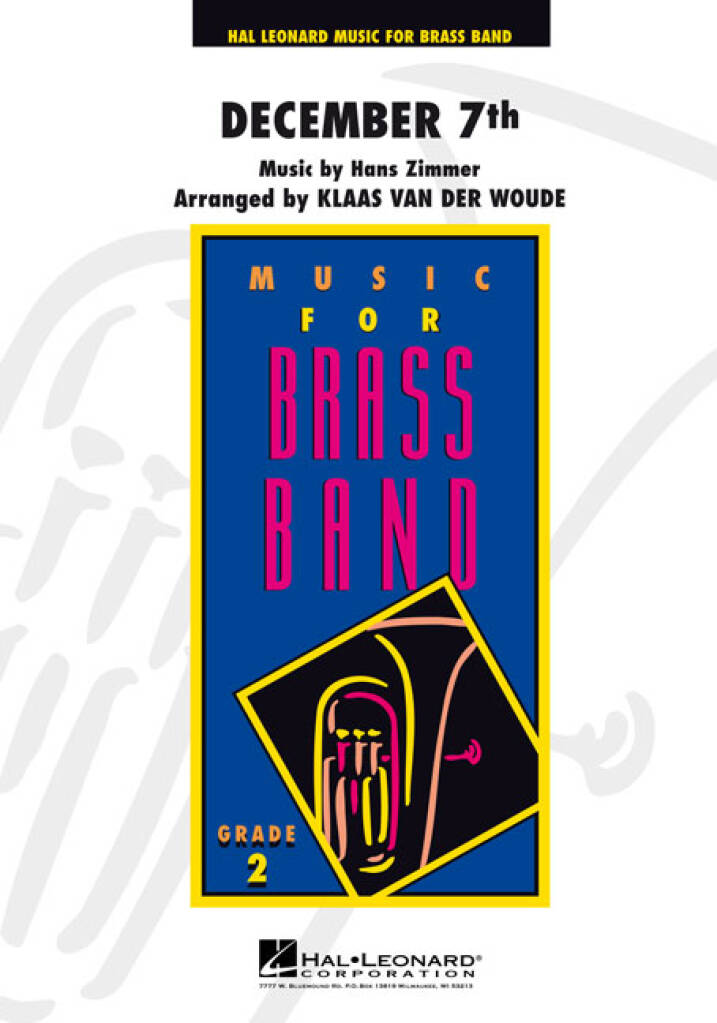
December 7th - Hans Zimmer - Klaas van der Woude
The commemoration of the Japanese attack on Pearl Harbour on 7th December 1941 was portrayed in the unique film Pearl Harbour, staring Tom Cruse. The music was composed by the prize winning composer Hans Zimmer. The piece December 7th is a dramatic work which accompanies the high point of the film and Klaus van der Woude's arrangement looses none of the excitement of the original.
Estimated dispatch 5-14 working days
-
 £79.99
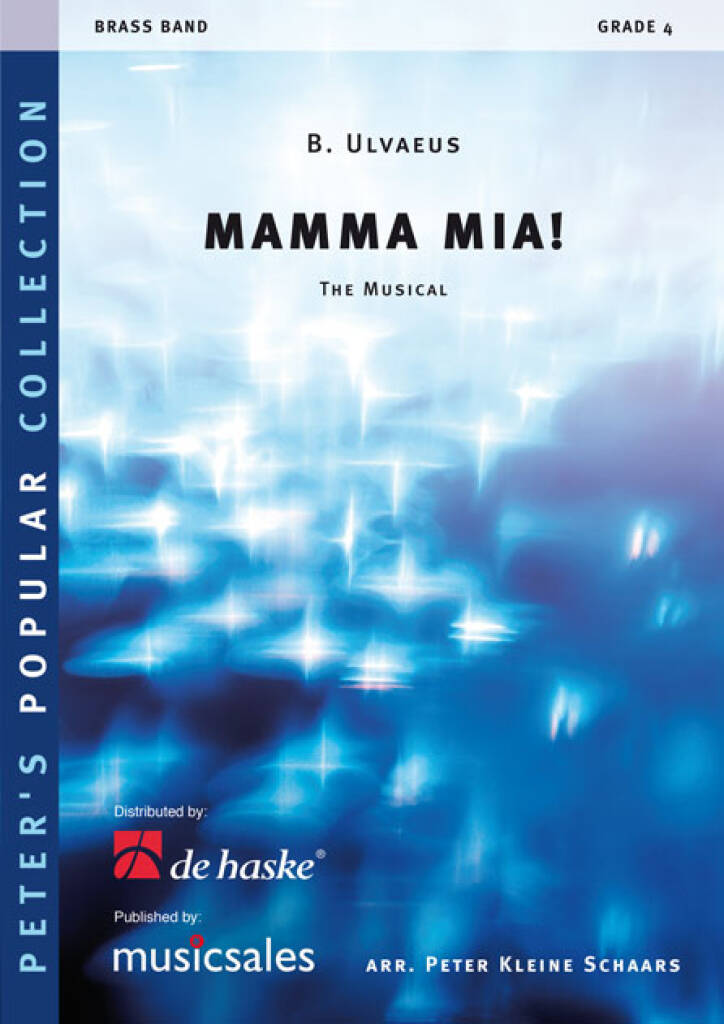
Mamma Mia! - Björn Ulvaeus - Peter Kleine Schaars
On the 6th of April 1999, exactly 25 years after ABBA had won the Eurovision Song Contest with the song Waterloo, the musical Mamma Mia! opened in London. The funny and appealing love story, based on 22 ABBA classics, became an immediate success. Arranger Peter Kleine Schaars has selected five of the most famous titles from the musical, added the hit Waterloo and used his musical imagination. The result is a catchy ABBA medley that will appeal to young and old.
Estimated dispatch 5-14 working days
-
 £60.99
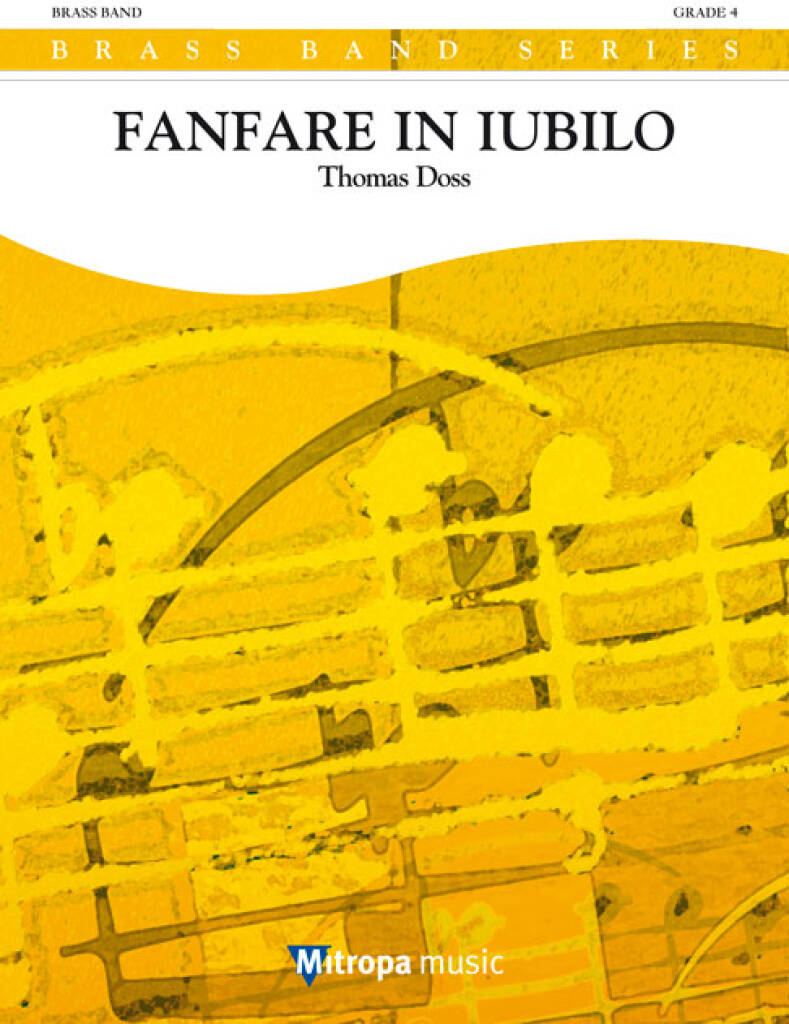
Fanfare in Iubilo - Thomas Doss - Brian Johnson
The power of this bright fanfare reflects the optimism, joy and commitment to tradition that the people of the Italian town of Schlanders have deep within their souls. The golden trumpets from the valleys of South Tyrol echo across the mountains on both sides of the Austrian-Italian border and help to convey the composer's message: just as the sun shines on all parts of the world, music knows no boundaries. This message echoes throughout this brilliant fanfare.
Estimated dispatch 5-14 working days
-
 £106.99
Kaleidoscope - Philip Sparke
Kaleidoscope is a set of five variations of on the 'Brugger Lied' (Brugg Song) which is the traditional song of the town of Brugg. The lyrics tell of the geography, people and traditions of this charming and historic town, which is situated in the north of Switzerland, near to the German border, about halfway between Basel and Zurich.Each variation is based on tiny extracts of the theme, the whole piece therefore resembling the effect of a kaleidoscope, which juxtaposes small fragments of colour in a constantly changing pattern.
Estimated dispatch 5-14 working days
-
 £87.99
Centennial Salute - Philip Sparke
Just based on its title, this piece has to be celebratory and up-beat, which it is! It opens with a stately fanfare, first played on the low brass before the entire band joins in. This gives way to a contrasting lyrical theme which develops until it joins up with the fanfare to complete the opening section. A lively and heavily syncopated vivo follows, cast as a traditional march, complete with a 'bass strain' and trio. After the original march theme returns, a climax leads back to a reprise of the majestic opening, which brings the piece to an appropriately triumphant close.
Estimated dispatch 5-14 working days
-
 £183.99
Perihelion: Closer to the Sun - Philip Sparke
Perihelion was commissioned by the Cory Band as their own-choice piece for the 2013 European Brass Band Championships, held in Oslo, Norway. Winning the set piece section of the contest and coming second to Eikanger-Bjorsvik Musikklag with their own choice selection, Cory went on to become European Champions for the fifth time.Cory MD Philip Harper had asked for a 'Concerto for Band' to fully exploit his outstanding band of virtuosi, and composer Philip Sparke created a one-movement work with contiguous sections, first featuring horns and flugel, then trombones followed by cornets and a slower central section for percussion and baritones, euphonium andbasses.The piece is abstract in nature, without a specific programme, and the title merely reflects the fact that the piece was begun on January 2nd 2013, the day of Earth's perihelion - the point in its orbit when it is closest to the sun. It could also be argued that the piece weaves between moments of brilliant optimism and dark shadow, both of which can be the result of bright sunshine.
Estimated dispatch 5-14 working days
 View Music