
Results
-
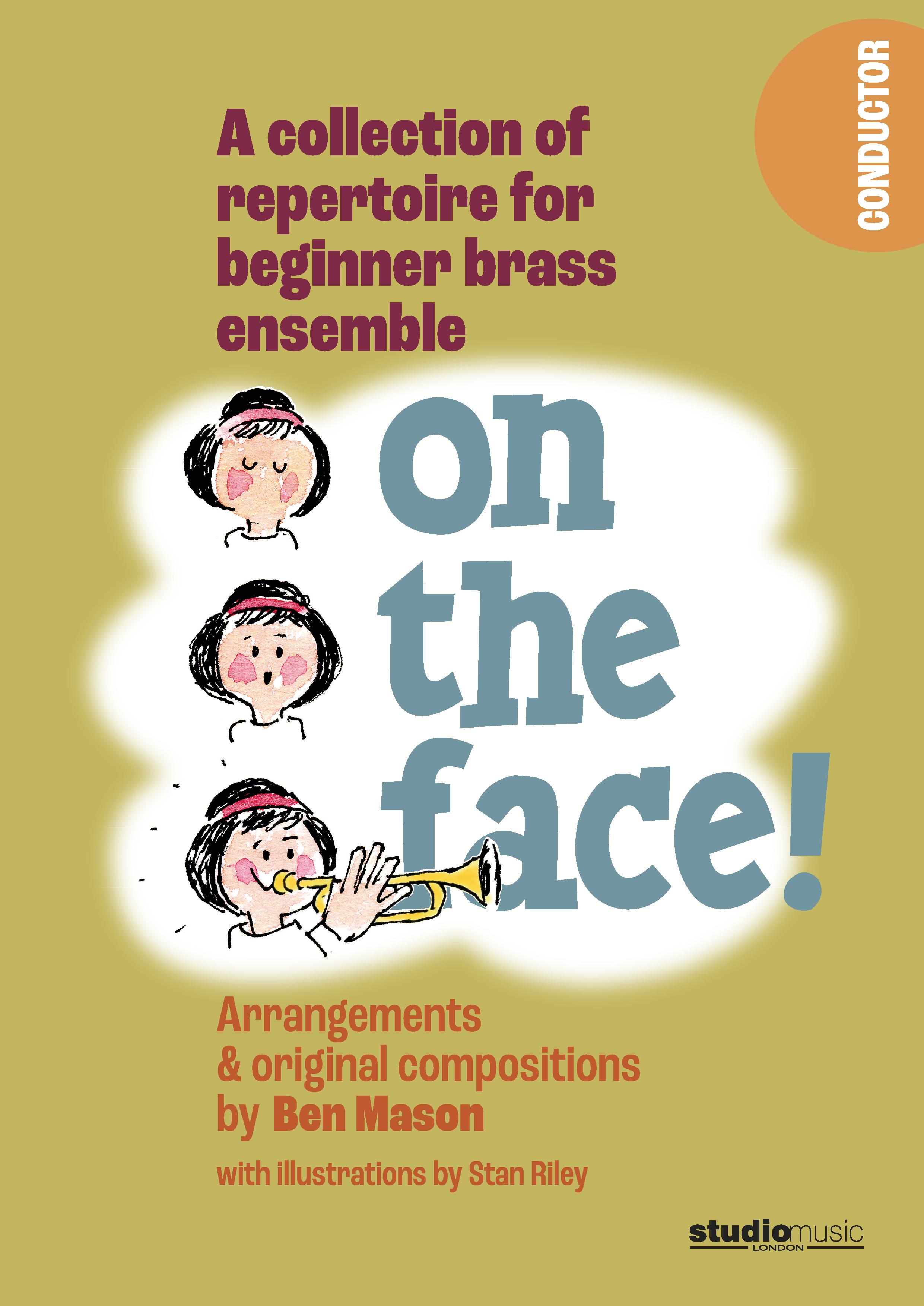
£15.99Brass Essentials - An Study Companion (for all valve instruments in treble clef)
This book of 32 studies has been drawn from those Paul Cosh used as a student at the Royal Academy of Music, throughout his years as a professional player and as a teacher at the Guildhall School of Music & Drama.The studies are divided into four main sections: Articulation, Finger Technique, Lyrical & Flexibility and Stamina & Technique and are drawn from those written by Arban, Charlier, Boehme, Brandt, Kopprasch and Sachse. Some of the studies have been re-imagined and edited to include new tempi and expression.There are helpful tips at the start of each section with most of the studies given suggested practice and performance tempi, although these are just a guide. Slow practise of the highly technical passages is vital to adhere to the overriding principle that every note counts.The Brass Essentials Study Companion can also work in conjunction with both the Brass Essentials: Arban Companion and the Brass Essentials: Practice Companion to vary your practice diet.
Estimated dispatch 7-14 working days
-
£15.00Symphony in Two Movements (Study Score Only)
Selected as the Championship Section test piece for the National Brass Band Championships of Great Britain 2025This work was jointly commissioned by the National Youth Brass Band of Great Britain (NYBBGB) and the National Youth Brass Band of Wales (NYBBW), the latter with funding from T Cerdd (Music Centre Wales), to celebrate their 60th and 30th anniversaries respectively. The first performances were given at Cadogan Hall, London, in April 2012, by the NYBBGB, conducted by Bramwell Tovey; and at the Great Hall, Aberystwyth University, in July 2012, by the NYBBW, conducted by Nicholas Childs.When I was approached about a joint commission to write a new work to celebrate the anniversaries of these two outstanding youth bands I was delighted to accept, and decided to respond by writing a work apposite for the magnitude of these special occasions, namely a 'symphony for brass'.Through a long journey of writing music for brass band, which commenced with Connotations (1977), and continued with Dances and Arias (1984), Of Men and Mountains (1991), The Trumpets of the Angels (2000) and Rococo Variations (2008), I arrived at what I regard as the most important work of the cycle to date, combining as it does serious musical intent with considerable technical demands. It is perhaps my most abstract work for brass band, avoiding any programmatic content.The symphony lasts for some 19 minutes and is structured in two linked movements. The form is based on that used by Beethoven in his final piano sonata (Op.111), which is in two movements only: a compact sonata-form allegro, followed by a more expansive theme and four variations. Prokofiev also adopted this model in his 2nd Symphony of 1925.The opening Toccata of this Symphony is highly dramatic but compact, whilst still retaining the 'traditional' structural elements of exposition, development and recapitulation; indeed, it also has the 'traditional' element of a contrasting second subject - a gentle, lyrical modal melody first heard on solo cornets.In contrast, the longer and more substantial second movement Variations is built around a theme and four variations. The slowly unfolding chorale-like theme accumulates both added note harmony and increasing instrumentation, whilst the four variations which follow are by turn mercurial (fast, starting with all the instruments muted), march-like (menacing, with short rhythmic articulations underpinning an extended atonal melody), serene (a series of 'romances' for solo instruments alongside echoes of the chorale) with an emerging theme eventually bursting into a climax of passionate intent; whilst the final variation is a dynamic scherzo (concertante-like in its series of rapid-fire solos, duets, trios and quartets) with the music gradually incorporating elements of the main ideas from the first movement, thus acting as a recapitulation for the whole work. It reaches its peroration with a return to the very opening of the symphony, now in the 'home' tonality of F, and thus creating a truly symphonic dimension to the music.Most of the melodic material of the symphony is derived from the opening eleven-note 'row', which contains various intervallic sets, and although the work is not serially conceived it does use some typical quasi-serial procedures, such as canons, inversions, and retrogrades. The symphony uses somewhat limited percussion, in line with a 'classical' approach to the sound world of the brass band, alongside a use of multi-divisi instrumentation, whereby each player has an individual part rather than the traditional doubling within certain sections of the band.- Edward GregsonDuration: 19.00
Estimated dispatch 7-14 working days
-
£38.95Unity Series Band Journal - Numbers 538 - 541, February 2025
538: For Christ alone (Morgan Juel Stavik)This gentle and delicate march takes its title from the chorus of Fred Fry's song (S.A.S.B. 960).539: Calling Today! (Noel Jones)The words for this three-verse arrangement were written by Fanny Crosby, with music composed by George Cole Stebbins. While the song doesn't feature in the current Salvation Army Song Book, it was included in both the 1955 and 1986 editions. This arrangement was prepared during the pandemic, where people were encouraged to make contact by telephone as much as possible, and certainly welcomed phone calls from so many friends. Thinking of the calls, led to the words of this song.540: When the saints go marching in (Thomas Mack)This arrangement was written for the service celebrating the life of Irma Long at the request of her daughter. Irma, a gentle and kind woman, was a soldier for 70 years, 40 of which were at Corry Corps, Pennsylvania, USA, where she was also a songster, a pre-school Sunday School teacher, and corps treasurer. She drove the country roads from her village to Corry five times a week, even during the hard snow and ice of winters, so that she and her three daughters could attend corps activities. 541: There is sunshine (Wilfried Weiland)This work introduces a new composer to our band journals. Wilfried Weiland was the Band master at Berlin Central Corps and a member of the German Staff Band for several years. Although this is Wilfried's first published contribution with The Salvation Army, he has had several brass pieces published in the United Kingdom and abroad. The arrangement was originally written in July 2022 for the 25th anniversary of the Naumburg Corps, Germany. The reggae genre, employed here, has not been featured within our journals before but suits the style of a brass band well.
Estimated dispatch 7-14 working days
-
£77.00General Series Brass Band Journal, Numbers 2250 - 2253, December 2024
2250: Prelude on 'Rhosymedre' (Ralph Vaughan Williams trs. Douglas Engle)The English composer Ralph Vaughan Williams' work Three Preludes (founded on Welsh Hymn Tunes) was published for the organ in 1920. This is a transcription of the second movement of that work. The words associated with the hymn tune are by Samuel Crossman, My song is love unknown (S.A.S.B. 149), and vividly depict the events of Holy Week. The music is gentle and solemn and would be appropriate for a Good Friday service or as a moment of repose in a concert. 2251: Hosanna Shuffle (Sam Creamer)The half-time shuffle groove is a popular feel developed by alternative rock/pop bands of the 1980s. It marries elements of rock and swing styles together to form a new and infectious feel - Hosannah Shuffle being written as a tribute to this fusion of musical styles. Contrary to a swing style, shuffle brings the pulse back onto the beat while maintaining the swung quaver rhythms to create a rock-type rhythmic drive. 2252: Everlasting Love (Keith Manners)This piece was written for the London North East Music School in 2004. The theme of the week was 'Making a stand for Christ', reminding the school that it only takes one person to make such a stand before others follow. The music starts with a lone Solo Cornet playing the melody of Graham Kendrick's song Such Love (S.A.S.B. 199). One by one, other parts join in with the theme.2253: Festival March (Michael Cooper)This piece represents the first published brass composition of Bandmaster Michael Cooper, who is the Bandmaster at Brisbane City Temple Corps. This imposing festival march features the tunes I want to be a soldier (T.B. 683), Lift up the banner (T.B. 90) and My Jesus, I love thee (T.B. 506). These tunes depict the idea that spiritual warfare is an essential component of one's faith, success of which is articulated in the final verse of My Jesus, I love thee (S.A.S.B. 878).
Estimated dispatch 7-14 working days
-
£38.95Unity Series Band Journal - Numbers 530 - 533, June 2024
530: Carol Arrangement - God rest you merry, gentlemen (Noel Jones)This swing arrangement of the traditional English carol also features references to O come, all ye faithful (C.C. 61) and Jingle Bells (C.C. 121). Play with imagination and a sense of style!531: Go, tell it on the mountain! (Nathanael Watchorn)Historically, the passion of enslaved people in America for singing about the Gospel of Jesus is well documented, but it was men of three generations, each named John Wesley Work, who enabled spirituals to become more widely known. John Wesley Work Sr, a church choir director in Nashville, Tennessee, wrote and arranged music for the pioneering Fisk Jubilee Singers whose early repertoire consisted largely of spirituals. This passion and knowledge of spirituals was passed down through the generations. John Work III travelled hundreds of miles to collect songs by attending church services in remote areas. In 1940, he published a collection of 230 songs which included a setting of Go, tell it on the mountain! that is still performed today.Nathanael Watchorn, a Bandsman at Regent Hall Corps in London, is a new contributor to the journals. He originally wrote this as a vocal arrangement for the group FourHymn, subsequently transcribing it for the corps' Young People's Band, while he was Band Leader.532: Carol Arrangement - They all were looking for a king (Stephen Hull)At the North American Composers Forum, Major Len Ballantine challenged participants to find an unfamiliar song in the Salvation Army Song Book and try to write an arrangement of the listed tune. Stephen Hull happened across They all were looking for a king (S.A.S.B. 128) and the tune Childhood (T.B. 421) which lead to this arrangement.533: March - Washed and healed (Eiliv Herikstad)The Christian experience of many people will have been positively impacted by the life of the late Bandmaster Eiliv Herikstad, either personally or through his musical leadership and compositions. This march is the second publication from this well-known Salvation Army composer since his Promotion to Glory last year. This march is more traditional in style that many of his compositions but contains a strong Christian message and demonstrates his compositional expertise.
Estimated dispatch 7-14 working days
-
£44.95Powerhouse (Brass Band - Score and Parts)
Spirit divine, come as of old. So begins the song by Brindley Boon (S.A.S.B. 311), and that phrase becomes the message of this piece, and an important motif in the music. It appears at the very beginning of the work and recurs at important points during the piece. The theme of the need for spiritual power is further underlined by the use of the hymns Show your power (S.A.S.B. 365), Wonder-working power (S.A.S.B. 451) and the very old chorus Send a new touch of power on my soul, Lord (S.A.S.B. 785).The composer first heard Boon's song Spirit Divine when it was sung by Parkhead Songsters in the Sunday morning meeting at his home Corps of Greenock Citadel. They were visiting for the weekend from Glasgow, and were conducted by Songster Leader Walter Chalmers, himself a beautiful lyric tenor soloist. They sang it in a moving fashion, unaccompanied, and such was the impact that, at the conclusion, many people went to the mercy seat. It made a huge impression on the young composer. It was the first time that Downie discovered the enormous power of music in worship. It also serves as a reminder to us all that young people of a tender age are very capable of grasping deeply significant events happening around them. This music was written for the 2020 UK Territorial Youth Band course.
Estimated dispatch 7-14 working days
-
£55.00Triumph Series Brass Band Journal, Numbers 1359 - 1362, March 2024
1359: Festival March - Coastal Celebration (Sam Creamer)Coastal Celebration was commissioned in 2019 by Nambour Salvation Army Band for the Corps' 125th anniversary celebrations. Nambour was the birthplace of The Salvation Army's work on the Beautiful Sunshine Coast in Queensland, Australia. Firring with this theme are subtle tributes to iconic Sunshine Coast landmarks, referenced with small phrases of popular secular melodies intertwined with the main tunes What a faithful God (S.A.S.B. 378) and All through the years (S.A.S.B. 826).1360: He's always been faithful (Craig Woodland)This meditative selection is an arrangement of the song by American singer and record producer Sara, Groves, He's always been faithful. The words express the joy and thankfulness in having a relationship with Jesus and knowing his presence in life. The melody and motifs of the traditional hymn, Great is thy faithfulness (S.A.S.B. 26), are heard throughout.1361: Christ's living water (Dean Jones)Christ's sacrificial love has been beautifully portrayed through the imagery of water in many songs, none more so that the skilfully crafted words we find in the chorus of I know a fount (S.A.S.B. 197), written by Oliver Cooke. To enhance the sentiments expressed, the pure sounds derived from Handel's Water Music fit perfectly in terms of music and imagery.1362: March - Fear Not! (Avelan Ntsiete)The Salvation Army continues to proclaim its music ministry in all corners of the world and, with this item under review, we introduce a new composer, originally from Congo Brazzaville, Central Africa. Avelan Ntsiete is currently a Bandsman at the Lilas Corps in Paris but has previously served in the Congo Brazzaville Territorial Band. This march, in traditional format, was written for an evangelistic campaign in Kindamba, where civil war has brought upheaval to the area and uncertainty for the local Salvationists. The composer was part of a small brass group which travelled for over 24 hours by truck and on foot to reach Kindamba and bring encouragement to the Salvationists within that community.
Estimated dispatch 7-14 working days
-
£38.95Unity Series Band Journal - Numbers 526 - 529, February 2024
526: March - Summit Cross (Beat Hari)This exciting and energetic work introduces a new contributor to our journals. Beat Hari helps lead the band at Frutigen Corps, Switzerland. This march was composed with the intention of featuring it in an open-air concert beside the ski slopes. Members of the corps regularly join the band, instigating conversations with skiing guests by distributing bible verses and sweets. The composer has named this march because of the many Swiss mountains that have crosses on their summit as symbols of God's protection over the population living in the valleys below. The march follows a traditional format with a solid rhythmic construction built from the bass line.527: Christ is all (Olaf Ritman)The Salvation Army song, Christ is all (S.A.S.B. 588) is one that is cherished by the composer. The verses by Herbert Booth are both powerful and vulnerable and the melody by William A. Williams really touches the soul.528: My all to follow (David Edmonds)This piece pays tribute to all who have accepted the call to become Salvation Army officers and envoys. Such a calling involves significant change and can be difficult when leaving their comfort zone or moving away from family.529: We shall win (Alan Williams)William Hodgson's song We're a band that shall conquer the foe (S.A.S.B. 990) is one of confidence and encouragement in our daily fight against evil, sin and injustice, both in the world and in our lives. As such, this music should be full of that same confidence.
Estimated dispatch 7-14 working days
-
£38.95Unity Series Band Journal - Numbers 522 - 525, October 2023
522: Festival March - The Rescuers (Andrew Hedley)This exciting and bright festival march comes from a new contributor to the band journals. Andrew Hedley is a bandsman at Chester-le-Street Corps and a member of the Euphonium Section of the International Staff Band. This work contains inventive harmonic and melodic patterns and we hope this will be the first of many works from this composer to be seen in our journals.523: Moses and Pharaoh (Ralph Pearce)This piece owes its creation to the playing of the Montclair Citadel Young Peoples' Band in the Sunday School assembly every weekend. The song Pharaoh, Pharaoh is extremely popular and is sung with gusto and much movement. The presentation of this song derives for an accompaniment written for the band to play along with the singing. To widen its use, the spiritual Go down, Moses (STTL Vol.7, Part 2) was added to make the present composition. This music should have drive throughout and be played with a sense of fun.524: Lord, to thee (Alan Williams)This is a setting of the tune Hendon (T.B. 249). The piece uses the first verse of Frances Ridley Havergal's commonly associated text 'Take my life and let it be consecrated, Lord, to thee' (S.A.S.B. 623), and from there it takes its title.525: Song Arrangement - This is why (Noel Jones)This music is based on the tune This is why (T.B. 353) by Elisha Albright Hoffman and this two-verse arrangement reflects the great song of testimony Would you know why I love Jesus (S.A.S.B. 912). An associated scripture reference is found in Mark 10:45 'For even the Son of Man did not come to be served, but to serve, and to give his life as a ransom for many'. The motif 'Would you know' occurs in the opening bars and is repeated throughout the piece, along with fragments of the first verse. The chorus confirms the hoy that Christians experience knowing that Christ's sacrifice has bought forgiveness for our wrongdoings.
Estimated dispatch 7-14 working days
-
£34.95Trusting Faith (Euphonium Solo with Brass Band - Score and Parts)
This piece is based on the melody Faith is the victory (T.B. 128) and throughout the solo we follow a person's journey of faith. In the first movement, the bold and confident opening depicts a seemingly strong and certain faith, although perhaps a little naive and immature. The music suggests that if we are certain enough, then we will see our prayers immediately answered and will witness miracles. But what happens when we don't see those miracles happen, or our prayers seem unanswered? Doubt creeps in and the music quickly becomes a full struggle continuing through to the end of the moment.What do you do when you faith amounts to something other than what you thought it to be? The beginning of the second movement reflects this questions and starts hesitantly and full of doubt. Soon, a new melody is introduced, Trusting as the moments fly (T.B. 263). The words of the chorus remind us that true faith should bot be affected by fears or disappointments, that our trust in God should remain. Realising that a faith that holds firm, though being tested over time, becoming deeper and stronger, is a liberating truth. We no longer need to struggle in our strength alone, but can lean on God instead.When we lean on God, reset in his care, and feel. safe in his hands, then faith has really become our victory. We will then become strong disciples who can meet life's various challenges without wavering or being afraid. This is depicted in the final movement of the solo when both melodies, whose messages complement each other, are woven together in an explosive finale.
Estimated dispatch 7-14 working days
