Searching for Wind Band Music? Visit the Wind Band Music Shop
We've found 72 matches for your search. Order by

Results

  • £33.91

    Goodbye My Love - Kevin Ackford

    Score & Parts A stunning ballad for band which has all the ingredients need to send shivers down the spines of audiences. Its beautiful melody and pure emotion make this piece a must for any concert programme

    Estimated dispatch 5-7 working days
  • £74.00

    The Squealer (Bra) - Will Huff - Neville Buxton

    William Lockwood Huff was an American composer best known for his military marches and the circus march 'The Squealer'. He briefly performed in a circus band and in the National Guard, playing cornet and alto horn. This kind of 'screamers' were mostly composed between 1895 and 1955. Circuses were in need of music that would make the audience go crazy!

    Estimated dispatch 7-14 working days

     PDF View Music

  • £44.95

    JUBILANCE (Cornet Solo with Brass Band Set) - William Himes

    This exuberant fantasia for soloist and band requires double-tonguing for the quick and brilliant introduction. Not only the soloist will be extended with this work - the band accompaniment is also demanding and will need to be given full attention. The solo builds to a brilliant climax and is an ideal showcase for Cornet soloists.

    Estimated dispatch 7-14 working days
  • £50.00

    The Tortoise and the Hare - Fuller, B

    This fun piece was the winner of the RWCMD Cory Composition Prize in 2022.It includes a role for the audience, and you'll need players with good finger dexterity for this one!ChampionshipDuration 5 mins Click to Listen - Courtesy of Cory Band

    In Stock: Estimated dispatch 1-3 working days

     PDF View Music

  • £25.00

    The Tortoise and the Hare (Score) - Fuller, B

    This fun piece was the winner of the RWCMD Cory Composition Prize in 2022.It includes a role for the audience, and you'll need players with good finger dexterity for this one!ChampionshipDuration 5 mins Click to Listen - Courtesy of Cory Band

    In Stock: Estimated dispatch 1-3 working days

     PDF View Music

  • £29.95

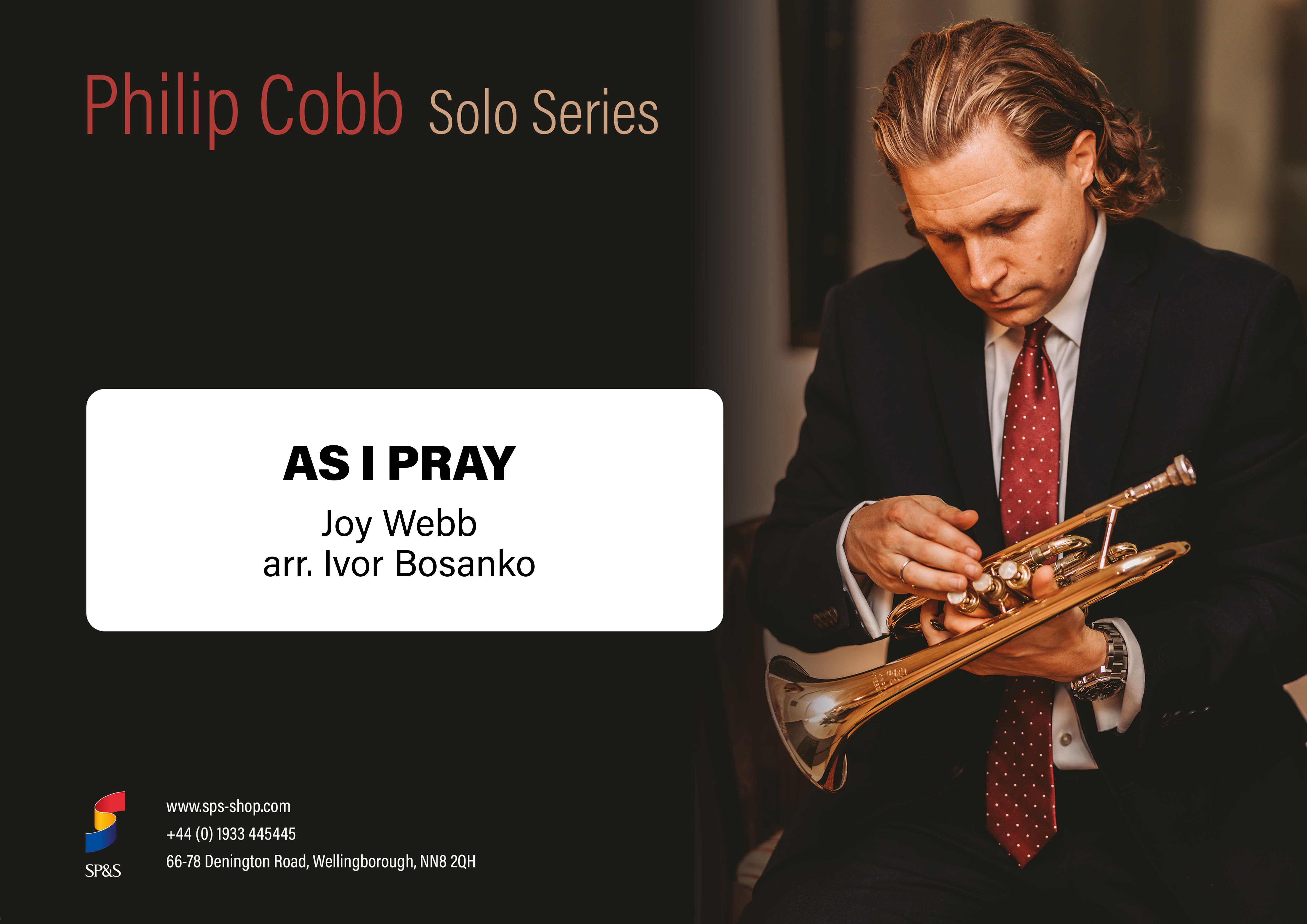
    As I Pray (Cornet Solo with Brass Band - Score and Parts)

    Joy Webb composed many Christian songs that continue to resonate with people today. As I Pray was originally written as a vocal solo and speaks of the constant need to communicate with God.Duration: 3.00

    Estimated dispatch 7-14 working days
  • £44.95

    Judd: Jubilance

    This exuberant fantasia for soloist and band requires double-tonguing for the quick and brilliant introduction. Not only the soloist will be extended with this work - the band accompaniment is also demanding and will need to be given full attention. The solo builds to a brilliant climax and is an ideal showcase for Cornet soloists.

    Estimated dispatch 7-14 working days
  • £49.95

    Arrows Ablaze

    Arrows Ablaze was commissioned by the Band of the Ancient Order of Foresters. The Order (Founded in 1834) is a strong charitable institution whose founder members recognised their duty to help their fellow men who fell into need "as they walked through the forests of life". It had an early interest in Archery which has continued throughout the ages (Foresters Friendly Society are Performance Partner for the Team GB Archery team at the 2016 Olympics).

    Estimated dispatch 7-14 working days
  • £44.95

    Princethorpe Variations (Brass Band - Score and Parts) - Downie, Kenneth

    Colourful harmony, rhythmic flair and melodic invention are the hallmarks of this excellent set of variations by Kenneth Downie, based on the well known church tune, Princethorpe.This major work demonstrates the well-known characteristics of the composer: colourful harmony, rhythmic flair and melodic invention, all encapsulated in scoring which is engulfing both to players and listeners alike. Following a presentation of the theme there are five variations culminating in what can be described as either a finale or coda.Theme. The composer shows his originality in the harmonic sense of this introduction. Perhaps it could be suggested that over-indulgence of rubato may be a temptation to be avoided.Sections A to F. Relentless rhythmic drive is of paramount importance in this first variation. Conscientious observance of dynamics is of course an essential requirement in conveying the exciting quality of the music; there are moments of sudden contrast of which all will need to be aware. Moving between the time-signatures of 5/4 and 6/4 these sections are built from strong easily-identifiable fragments of the theme. These is a significant increase in temp at letter F which will further the exciting impact of the music.Sections G & H. In a pastorale style this short, gentle variation affords a contrast in style between the previous and succeeding ones. The gentle undulating character of the melodic lines is governed by the Allegretto grazioso directive.Sections I to M. Commencing two bars before letter I the music is now exuberant and the tempo and style is that of a march in compound time. In this exhilarating movement there are moments of contrast and indeed of delicacy which are a foil to the more energetic moments. Rhythmic control will be essential to maintain a consistent tempo. As elsewhere in the work, the percussion section will contribute much to the success of the performance there are bars where this section alone is heard and there are important entries for glockenspiel.Sections N & O. With emotional content this Adagio variation has the first two notes of the melody as its melodic impetus. Apart from just over two bars at O (where there is an interpolatory phrase from Cornets and Trombones), the melodic line is entrusted to the plaintive sounds of the horn section. Cornets and Trombones provide a change of tone colour at the beginning of section O. Under a poco rall, this very expressive variation is concluded; there is an important link supplied by Eb Bass.Sections P & Q. A lively march-tempo is launched immediately and these sections are in the nature of an introduction to the final variations. There is a quickening of pace at Q which assists the generation of excitement which should be an essential part of the performance. Solo Cornets introduce a melodic line at Q which anticipates the compound time of the following section.Sections R & S. The Solo Cornet theme of the previous section is now a contrapuntal line accompanying the theme tune. With an elongation of the notes in the melody, the conductor will need to call on the sustaining powers of the band and at no time should the interesting accompanying lines be allowed to detract from the sonorous presentation of the basic theme.Sections T, U & V. Following a poco rit, the finale begins at letter T with the directive, molto vivace. There is much detail to be rehearsed, not least being the dynamic contrasts which are encountered. As throughout the work, the listener should have no difficulty in identifying the thematic sources of the composer's music.

    Estimated dispatch 7-14 working days

     PDF View Music

  • £22.50

    Princethorpe Variations (Brass Band - Score only) - Downie, Kenneth

    Colourful harmony, rhythmic flair and melodic invention are the hallmarks of this excellent set of variations by Kenneth Downie, based on the well known church tune, Princethorpe.This major work demonstrates the well-known characteristics of the composer: colourful harmony, rhythmic flair and melodic invention, all encapsulated in scoring which is engulfing both to players and listeners alike. Following a presentation of the theme there are five variations culminating in what can be described as either a finale or coda.Theme. The composer shows his originality in the harmonic sense of this introduction. Perhaps it could be suggested that over-indulgence of rubato may be a temptation to be avoided.Sections A to F. Relentless rhythmic drive is of paramount importance in this first variation. Conscientious observance of dynamics is of course an essential requirement in conveying the exciting quality of the music; there are moments of sudden contrast of which all will need to be aware. Moving between the time-signatures of 5/4 and 6/4 these sections are built from strong easily-identifiable fragments of the theme. These is a significant increase in temp at letter F which will further the exciting impact of the music.Sections G & H. In a pastorale style this short, gentle variation affords a contrast in style between the previous and succeeding ones. The gentle undulating character of the melodic lines is governed by the Allegretto grazioso directive.Sections I to M. Commencing two bars before letter I the music is now exuberant and the tempo and style is that of a march in compound time. In this exhilarating movement there are moments of contrast and indeed of delicacy which are a foil to the more energetic moments. Rhythmic control will be essential to maintain a consistent tempo. As elsewhere in the work, the percussion section will contribute much to the success of the performance there are bars where this section alone is heard and there are important entries for glockenspiel.Sections N & O. With emotional content this Adagio variation has the first two notes of the melody as its melodic impetus. Apart from just over two bars at O (where there is an interpolatory phrase from Cornets and Trombones), the melodic line is entrusted to the plaintive sounds of the horn section. Cornets and Trombones provide a change of tone colour at the beginning of section O. Under a poco rall, this very expressive variation is concluded; there is an important link supplied by Eb Bass.Sections P & Q. A lively march-tempo is launched immediately and these sections are in the nature of an introduction to the final variations. There is a quickening of pace at Q which assists the generation of excitement which should be an essential part of the performance. Solo Cornets introduce a melodic line at Q which anticipates the compound time of the following section.Sections R & S. The Solo Cornet theme of the previous section is now a contrapuntal line accompanying the theme tune. With an elongation of the notes in the melody, the conductor will need to call on the sustaining powers of the band and at no time should the interesting accompanying lines be allowed to detract from the sonorous presentation of the basic theme.Sections T, U & V. Following a poco rit, the finale begins at letter T with the directive, molto vivace. There is much detail to be rehearsed, not least being the dynamic contrasts which are encountered. As throughout the work, the listener should have no difficulty in identifying the thematic sources of the composer's music.

    Estimated dispatch 7-14 working days

     PDF View Music