
Results
-
 £69.99
Sky Raiders - Bruce Fraser
The Scottish composer Fraser is known for his popular original light music pieces. In an era of pop and musical arrangements Sky Raiders is an catching piece of original wind music. De Schotse componist Fraser laat in Sky Raiders horen dat hij zijn mannetje staat in de populaire blaasmuziek. In een tijd van pop- en musicalarrangementen is het een verademing om originele populaire blaasmuziek te spelen en te beluisteren.
Estimated dispatch 5-14 working days
-
 £76.99
A Western Suite - Andreas Ludwig Schulte - David Well
The atmosphere of the Wild West is caught in a striking and most imaginative way by young composer Andreas Schulte in this work. A caravan of gold- and fortuneseekers launch themselves into a big adventure and begin their rush westward. The first movement desciribes these first days of buoyancy and optimism in a crisp march. Near the campfire the pioneers rest themselves, and the music expresses feelings of romance, nostalgia for the past and hopes for the future. A wistful melody very characteristically communicates these feelings. Relaxation takes place in the third movement which is a musical characterization of a rodeo and its attendant festivities.It is obvious that sometimes something goes wrong and this aspect can also be heard. Nevertheless, the valiant rider wins in the end. With a flashback to the beginning, the journey is completed musically, thus giving the composition a dignified finale. Let the mystic Wild West entrance you. (Wagons ho ....!!) De sfeer van het Wilde Westen wordt door de jonge componist Andreas Ludwig Schulte op een uiterst treffende en beeldende wijze geschetst. Een karavaan van goud- en gelukzoekers stort zich in het grote avontuur en begint de grote reis naar het westen. Het eerste gedeelte beschrijft de eerste dagen van opgewektheid en optimisme in een vlotte mars. Bij het kampvuur komen de pioniers tot rust en worden gevoelens van romantiek, heimwee (verleden) en hoop (toekomst) muzikaal weergegeven. Een weemoedige melodie verwoordt die gevoelens op een zeer kenmerkende wijze. De ontspanning vindt plaats in het derde deel waarin een rodeofeest muzikaal wordt verklankt. Met een flashback van het begin wordt de tocht voltooid en de compositie waardig afgesloten. Raak in de ban van het wilde westen!
Estimated dispatch 5-14 working days
-
 £60.99
Playground - Dagmar Kildevann
In this composition the composer gives an impression of the village square where all the young people gather. In four movements he takes us along to his home town: 1. Folkdance - Moments of happiness, freedom from worries and optimism 2. Sunday Afternoon - a musical picture of a quiet day 3. Hide 'n Seek - time for sports and games 4. Saturday Night Fever - the sounds of a Saturday can also be heard on the square
Estimated dispatch 5-14 working days
-
 £104.99
A View at the Zoo - Carl Wittrock
Everybody is familiar with the zoo. Remember all those animals? Big ones, small ones. Water dwellers, air-bound birds, long legged hoppers, creeping bugs. All animals seem to have their own peculiarities. Now, Carl Wittrock (who also composed the world-famous master piece 'Lord Tullamore') invites you to join him in a musical exploration of the animal kingdom. An invitation you must not reject! In his 'A view at the Zoo', Wittrock presents ten distinctly different animals as compositions of music. You may be familiar with some of those animals, such as the white swan or the butterfly, but there are also more exotic breeds, like the lion, the monkey, or theelephant. The composition as a whole is built around a structure of shorter fragments reminiscent of 'The Paintings Exhibition' by Moussorgsky. The parts are decorated with recognizable illustrations of the different animals. At each composition, Wittrock looks for something that can fascinate both musicians and listeners. In this he succeeded extremely well.
Estimated dispatch 5-14 working days
-
 £154.99
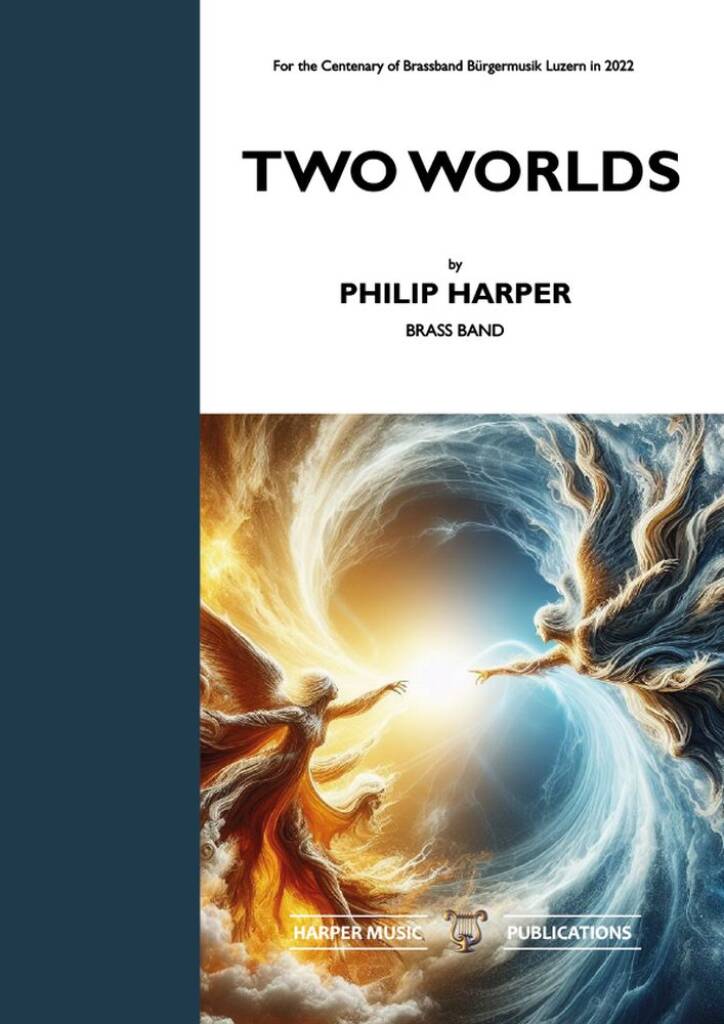
Two Worlds - Philip Harper
A powerful musical journey through time, Two Worlds explores the enduring force of storytelling. In an imaginary encounter, the Egyptian Pharaoh Tutankhamun and the American President Lincoln - in reality, separated by 5,000 years - meet to discuss the myths, truths and beliefs that shaped their respective civilizations. From the divine sun gods of Ancient Egypt to America's dream of equality, this evocative work blends fantasy and history with bold, cinematic music. At once dramatic and thought-provoking, Two Worlds reminds us that the stories we believe in can unite or divide, destroy or inspire.Commissioned for the centenary of the Swiss Brassband Burgermusik Luzern, in 2022.
Estimated dispatch 5-14 working days
-
 £64.30
Zourfaroka - Marc Jeanbourquin
One morning everything went wrong in Zourfaroka. In this forest where thousands of magical beings live, everything sparkles and shines and is full of life. But not this morning, because the terrible troll Potugor has returned. This is the opening text for the musical fairy tale written by Lise Jeanbourquin and set to music by her husband Marc Jeanbourquin. The first part is a warlike setting, showing the preparations of Kirielo and the inhabitants of Zourfaroka for the battle with Potugor. On the way they meet the fairy Xeriole, and this meeting is put to music in the second part. The soloist's role in the first few bars is left to the choice of the conductor. And as in many fairy tales, with fairies, gnomes, and amazing magical creatures, the piece ends in the third part with everyone coming together in song and dance.
Estimated dispatch 5-14 working days
-
 £115.60
On My Own - Boublil - John Philip Hannevik
"On my Own" is now regarded as one of the most famous songs from "Les Miserables", the incredibly popular musical by Claude-Michel Schonberg and Alain Boublil. The story is based on a novel by Victor Hugo. In the song, Eponine sings about her love for Marius, and she dreams about having a life with him. Solo-Options in this arrangement: Vocal. Bb-Instruments, Eb-Instruments
Estimated dispatch 5-14 working days
-
 £83.60
Los Hermanos de Bop - Mark Taylor - Sandy Smith
Los Hermanos De Bop is a composition by Mark Taylor (arr. Sandy Smith). In the Obrasso webshop are the Sheet Music for Brass Band with the article no. 16198 available. The sheet music is classified in Difficulty level C (medium). More Music for entertainment for Brass Band can be found using the flexible search function. Use the free trial score for Los Hermanos De Bop and get a musical impression from the audio samples and videos available for the Brass Band piece. With the user-friendly search function in the Obrasso webshop, you can find in just a few steps more sheet music from Mark Taylor for Brass Band. So that you can complete your concert program, show all music sheets can be displayed with one click on Music for entertainment in Difficulty level C (medium) . Los Hermanos De Bop is one of many brass music compositions that have been published by Musikverlag Obrasso. Next to Mark Taylor over 100 composers and arrangers work for the Swiss music publishing house. In addition to the notes for Brass Band you will also find literature in other formats such as Brass Band, Concert Band, Junior Band, Brass Ensemble, Woodwind Ensemble, Symphony Orchestra as well as CDs and Music Education. A large part of the publisher's own literature from top brass bands such as the Black Dyke Band, Cory Band, Brighouse & Rastrick Band or the Oberaargauer Brass Band was recorded on Obrasso Records. All sound carriers are also available digitally on the popular portals of Apple, Amazon, Google, Spotify and other providers worldwide. All Obrasso sheet music is produced on high quality paper. The slightly yellowish note paper offers a good contrast and is easy on the eyes in difficult lighting conditions. Delivery to private customers worldwide is free of shipping costs. Order your sheet music now directly from Obrasso Verlag.
Estimated dispatch 5-14 working days
-
£91.40
The Stars and Strips Forever - John Philip Sousa - Keith M. Wilkinson
The Stars And Stripes Forever is a composition by John Philip Sousa (arr. Keith M. Wilkinson). In the Obrasso webshop are the Sheet Music for Brass Band with the article no. 16535 available. The sheet music is classified in Difficulty level C (medium). More Marching music for Brass Band can be found using the flexible search function. Use the free trial score for The Stars And Stripes Forever and get a musical impression from the audio samples and videos available for the Brass Band piece. With the user-friendly search function in the Obrasso webshop, you can find in just a few steps more sheet music from John Philip Sousa for Brass Band. So that you can complete your concert program, show all music sheets can be displayed with one click on Marching music in Difficulty level C (medium) . The Stars And Stripes Forever is one of many brass music compositions that have been published by Musikverlag Obrasso. Next to John Philip Sousa over 100 composers and arrangers work for the Swiss music publishing house. In addition to the notes for Brass Band you will also find literature in other formats such as Brass Band, Concert Band, Junior Band, Brass Ensemble, Woodwind Ensemble, Symphony Orchestra as well as CDs and Music Education. A large part of the publisher's own literature from top brass bands such as the Black Dyke Band, Cory Band, Brighouse & Rastrick Band or the Oberaargauer Brass Band was recorded on Obrasso Records. All sound carriers are also available digitally on the popular portals of Apple, Amazon, Google, Spotify and other providers worldwide.
Estimated dispatch 5-14 working days
-
£83.60
Merry Christmas, Baby! - Peter Ratnik
Merry Christmas, Baby! is an arrangement by Peter Ratnik. In the Obrasso webshop are the Sheet Music for Brass Band with the article no. 17629 available. The sheet music is classified in Difficulty level B (easy). More christmas music for Brass Band can be found using the flexible search function. Use the free trial score for Merry Christmas, Baby! and get a musical impression from the audio samples and videos available for the Brass Band piece. With the user-friendly search function in the Obrasso webshop, you can find in just a few steps more sheet music from Peter Ratnik for Brass Band. So that you can complete your concert program, show all music sheets can be displayed with one click on christmas music in Difficulty level B (easy) . Merry Christmas, Baby! is one of many brass music compositions that have been published by Musikverlag Obrasso. Next to Peter Ratnik over 100 composers and arrangers work for the Swiss music publishing house. In addition to the notes for Brass Band you will also find literature in other formats such as Brass Band, Concert Band, Junior Band, Brass Ensemble, Woodwind Ensemble, Symphony Orchestra as well as CDs and Music Education. A large part of the publisher's own literature from top brass bands such as the Black Dyke Band, Cory Band, Brighouse & Rastrick Band or the Oberaargauer Brass Band was recorded on Obrasso Records. All sound carriers are also available digitally on the popular portals of Apple, Amazon, Google, Spotify and other providers worldwide.
Estimated dispatch 5-14 working days
 View Music