
Results
-
 £27.50
The Man I Love
Gershwin's gifts are now happily recognised by everyone across the musical spectrum. He entices the arranger with all kinds of opportunities to play with musical colour and tonality.
Estimated dispatch 7-14 working days
-
 £32.50
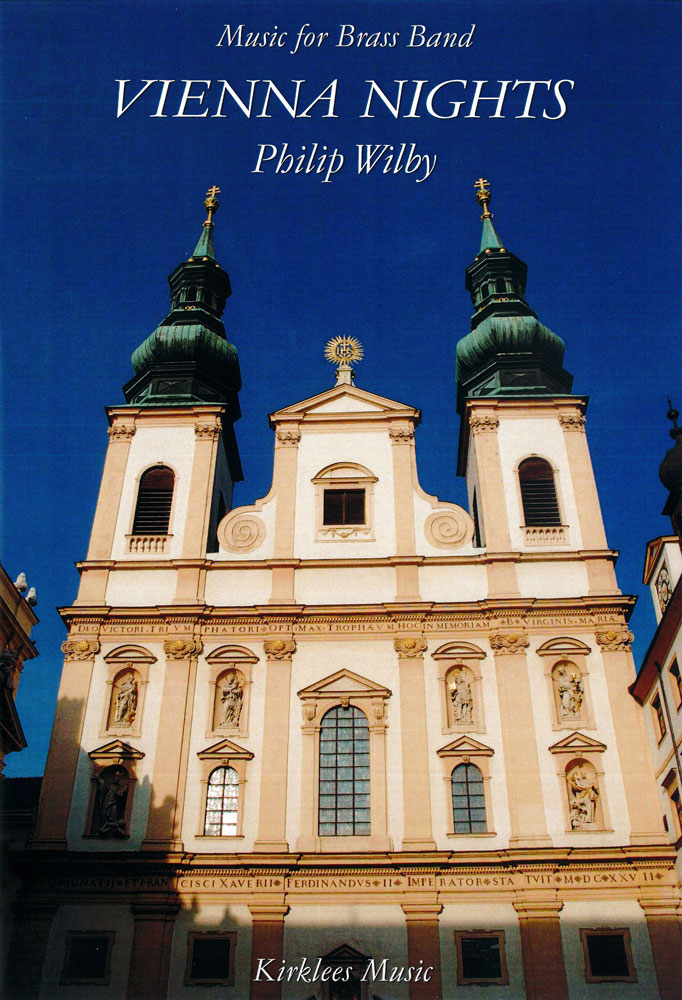
Vienna Nights (Score Only)
The City of Vienna stands at one of the historic crossroads of the world, linking east and west and embracing artistic influences from all sides. In the 250th anniversary year of Mozart's birth, this fantasy on Mozart's celebrated Piano Sonata in A (K331), has been composed true to the form and content of the original, but also to the underlying substance of the conception.One of Mozart's distinguishing features, and one that links him to later music by Beethoven, Schubert, Mahler and Schoenberg, is the breadth of his musical vision. His music links intellectual rigour with ecstatic utterance and darker preoccupations. It is, perhaps, this shadow-laden side of his musical nature which gives his work a profundity often absent in the work of his contemporaries. Admirers of his Requiem Mass or the Statue music in Don Giovanni will recognise that it is this extra sense of reality which makes Mozart so relevant to the modern age, and where he may link hands with the other great Viennese thinkers such as Berg, Webern and Adorno.The composer follows the three movement plan of the Sonata closely. The original begins with a Theme and Variations which is freely quoted. His Minuet is mirrored in the Recitative and Notturno, where each section of the band lays down a metaphoric rose to his memory. Famously, the sonata ends in populistic style with a Turkish Rondo. Ever since the Hapsburg-Ottoman Wars, which came to an end in the seventeenth century, Viennese composers have included Turkish elements in their music, not least in the use of certain percussion instruments. Vienna Nights is thusly a homage.It celebrates the world's greatest composer, but also the city which fostered his work. Here, in your imagination, you might easily conjure up a caf table near the Opera House, where Mozart, Mahler and Sigmund Freud, observed by us all from a discreet distance, may meet as old friends.
Estimated dispatch 7-14 working days
-
 £33.89
Fawkes (Brass Band) Fendall Hill
Bring explosive drama and striking historical resonance to your ensemble's repertoire with Fawkes by Fendall Hill.Dedicated to Alan Gifford and Sovereign Brass, this compelling work delves into the dark intrigue of November 5, 1605 - the fateful night Guy Fawkes and his conspirators plotted to obliterate the foundation of English royal and political power. While the 36 barrels of gunpowder hidden beneath Parliament never detonated, the looming spectre of what could have been remains one of history's most lingering images. Had a single fuse been lit, the trajectory of future empires and superpowers would have changed forever.Rather than commemorating a physical blast, Fawkes celebrates this iconic 'non-explosive event' with breathtaking musical pyrotechnics.Key Features & Musical HighlightsDramatic Narrative: Captures the suspense, secret plotting, and shadowy tension leading up to the discovery beneath the House of Lords.Virtuosic Display: Packed with fiery technical runs, powerful brass fanfare, and rapid artful passagework designed to emulate brilliant fireworks.Latent Historical Tremors: Features haunting, driving rhythmic motifs that symbolize the sheer kinetic potential of 36 barrels of gunpowder waiting in the dark.Concert Opener or Finale: An exhilarating showpiece guaranteed to captivate audiences and showcase the dynamic range, power, and precision of your ensemble.To view a video of the work featuring Wellington Brass please visit www.youtube.com/watch?v=4fZZzuVrPjgDuration: Approx. 4-5 minutes (adjust based on score specifics)Difficulty Level: 2nd Section +This PDF download includes the full score and parts.Sheet music available at www.brassband.co.uk (UK) or https://satradecentral.org (USA)Instrumentation:Soprano Cornet EbSolo Cornet BbRepiano Cornet Bb2nd Cornet Bb3rd Cornet BbFlugel Horn BbSolo Horn Eb1st Horn Eb2nd Horn Eb1st Baritone Bb2nd Baritone Bb1st Trombone Bb2nd Trombone BbBass TromboneEuphonium BbBass EbBass BbTimpaniPercussion 1-2
In Stock: Estimated dispatch 1-3 working days
-
 £41.42
A Carol Rhapsody (Brass Band) Geoffrey Nobes
Capture the mystery, wonder, and joy of the festive season with A Carol Rhapsody (Geoffrey Nobes). This dynamic and brilliantly orchestrated medley weaves together a selection of much-loved Christmas carols, balancing timeless audience favorites with beautiful, lesser-known melodies. Perfect as a centerpiece or finale for your festive concert, this rhapsody provides an engaging musical journey that highlights the full tonal palette of your band.Thoughtfully scored with accessible range demands, standard time signatures, and comfortable keys, A Carol Rhapsody is exceptionally approachable. It serves as an ideal performance piece for 4th Section bands and above, as well as Youth and Training Bands looking for a rich, full-sounding festive work. Higher-section bands will also appreciate its quick rehearsal turn-around during a busy Christmas season.The Musical JourneyAtmospheric Opening: The piece begins with an evocative introduction, featuring subtle echoes of Coventry Carol and Hark, the Herald Angels Sing.Rhythmic & Bright: The tempo shifts into a lively rendition of the old French folk carol O Leave Your Sheep, cleverly interwoven with motifs from Joy to the World and the sweeping refrain of Angels from the Realms of Glory.A Lush, Lyrical Heart: The centerpiece of the work is an extended, beautifully textured setting of another French folk carol, Whence Is That Goodly Fragrance. This section serves as a wonderful showcase, passing the melody throughout various sections of the ensemble in turn.Triumphant Finale: The pacing accelerates into a joyful romp through the traditional English carol I Saw Three Ships Come Sailing in. Excitement builds through a series of key changes, weaving several themes together before culminating in a triumphant Glory to the New-born King - complete with the ringing bells of Ding, Dong! Merrily on High echoing across the band.To view a rolling score video of this piece please visit www.youtube.com/watch?v=hYehd0CGaA8Duration: approx. 6.30 minutesDifficulty Level: 4th Section +This PDF download includes the full score and parts.Sheet music available at www.brassband.co.uk (UK) or https://satradecentral.org (USA)Instrumentation:Soprano Cornet EbSolo Cornet Bb1st Cornet Bb2nd Cornet BbFlugel Horn BbSolo Horn Eb1st Horn Eb2nd Horn Eb1st Baritone Bb2nd Baritone Bb1st Trombone Bb2nd Trombone BbBass TromboneEuphonium BbBass EbBass BbPercussion 1-3
In Stock: Estimated dispatch 1-3 working days
-
 £60.25
Diversions on Sine Nomine (Brass Band) Vaughan Williams arr. Mark Ford
Diversions on Sine Nomine is a substantial concert work for brass band, derived entirely from Ralph Vaughan Williams' celebrated hymn tune For All the Saints. Rather than a conventional set of variations, the work unfolds as a sequence of contrasting diversions, each reimagining aspects of the melody's character, harmony, and rhythmic potential.The opening establishes the noble and timeless quality of Sine Nomine before leading into episodes that explore a wide expressive range - from reflective and lyrical writing to passages of rhythmic energy and grandeur. Fragments of the hymn are continually transformed and re-contextualised, allowing the music to progress with clarity and purpose while maintaining a strong sense of structural coherence.Scored specifically with 3rd and 4th Section bands in mind, the work combines musical substance with practical playability. Idiomatic brass writing, transparent textures, and effective use of traditional band colours ensure musical impact without excessive technical demand. The final section brings the work to a broad and affirmative conclusion, reaffirming the dignity and enduring strength of Vaughan Williams' original melody.To view a rolling score video of the work please visit www.youtube.com/watch?v=Sth69ate-CsDuration: 11.00 minutesDifficulty Level: 4th Section +This PDF download includes the full score and parts.Sheet music available at www.brassband.co.uk (UK) or https://satradecentral.org(USA)Instrumentation:Soprano Cornet EbSolo Cornet 1&2 BbSolo Cornet 3&4 BbRepiano Cornet Bb2nd Cornet Bb3rd Cornet BbFlugel Horn BbSolo Horn Eb1st Horn Eb2nd Horn Eb1st Baritone Bb2nd Baritone Bb1st Trombone Bb2nd Trombone BbBass TromboneEuphonium BbBass EbBass BbTimpaniPercussion 1-2Tuned Percussion
In Stock: Estimated dispatch 1-3 working days
-
 £45.19
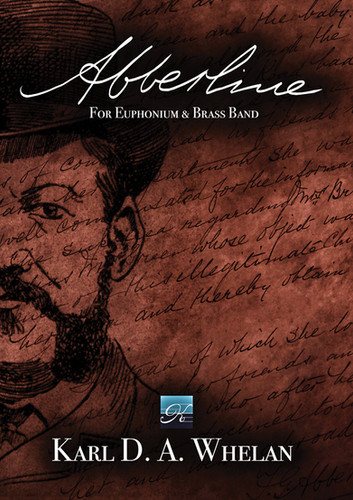
Abberline (Euphonium Solo with Brass Band) Karl Whelan
Inspired by the infamous investigation into Jack the Ripper, Abberline follows Detective Inspector Frederick Abberline through the mist-shrouded streets of Victorian London in his desperate pursuit of a killer who remains forever just out of reach. Scored for brass band and solo euphonium, the piece blends atmospheric textures, shifting musical identities, and virtuosic demands to capture a narrative that is as haunting as it is unresolved.The piece opens in a world of shadows - the foggy alleys of Whitechapel - where tension simmers beneath the surface. The euphonium enters cautiously, as if stalking unseen figures, echoing the danger and uncertainty that cloaked the city in fear. This eerie calm is broken suddenly: the Ripper strikes. The moment is brief but brutal, leaving only silence and horror in its wake.From here, the music shifts into an uneasy, angular waltz: the figure of Abberline takes center stage, portrayed by the soloist as he investigates the aftermath. The waltz is melodically off-kilter and harmonically unstable, capturing both the grotesque nature of the crime and the detective's mental burden.The scene then returns to the streets - but this time, the musical material is more intricate, fragmented, and tense. The threat has deepened, and again the silence is shattered by violence. A second, slightly altered waltz follows, further reflecting Abberline's obsessive descent into the case.In the final section, the chase begins in earnest. Themes from earlier return in quick succession, intensified and overlapping as time runs out. The ancient Dies Irae chant is woven into the texture, evoking fate and judgment. In a final, erratic surge, the euphonium and band race toward an ending that is breathless and unresolved - a reflection of history's unanswered questions and the ghost that always stayed one step ahead.To view a rolling score video of the work please visit https://www.youtube.com/watch?v=i59xYzJRMaIDuration: approx. 7.30 minutesThis PDF download includes parts and score.Sheet music available at www.brassband.co.uk (UK) or https://satradecentral.org (USA)Instrumentation:Euphonium Soloist BbSoprano Cornet EbSolo Cornet 1-2 & 3-4 BbRepiano Cornet Bb2nd Cornet Bb3rd Cornet BbFlugel Horn BbSolo Horn Eb1st Horn Eb2nd Horn Eb1st Baritone Bb2nd Baritone Bb1st Trombone Bb2nd Trombone BbBass TromboneEuphonium (tutti) BbBass EbBass BbTimpaniPercussion 1-3
In Stock: Estimated dispatch 1-3 working days
-
 £60.25
Sleigh Ride Suite (Brass Band) Leopold Mozart arr. Alex McGee
Today Leopold Mozart (1719-1787) is known almost exclusively as the stern father of Wolfgang, but he was a prominent and successful musician in his own time. The Sleigh Ride, composed just before Wolfgang was born, certainly shows that Mozart the elder had as good a sense of humour as his more famous son. Wolfgang must, in fact, have known and enjoyed his father's piece - he included a short Sleigh Ride in his German Dances, K.605, in 1791.Leopold's more complicated piece is a programmatic serenade, with short titles for each section: a musical picture of a cold evening's ride to a party. The score calls for sleigh bells, rattle, a whip, and triangle. The action begins with a short overture (Intrada), followed by the Sleigh Ride itself, a lively duple-meter dance accompanied by jangling sleigh bells and punctuated by the cracking of a whip. There is then a nice bit of musical pantomime - The Young Lady Shivers With Cold. The sleigh finally arrives at the party, a ball with a small dance orchestra. The Ball Begins, not surprisingly, with a courtly menuet, and the End of the Ball is a spirited Kehraus, a lively rondo-form dance.This transcription faithfully seeks to convey the light touch of the Age of Enlightenment to the modern brass band and provides ensembles with new material for their annual Christmas concerts.To view a rolling score video of the work please visit https://www.youtube.com/watch?v=tgrBe1u8XagDuration: Approx. 11.45 minutesDifficulty Level: 3rd Section +PDF download includes parts and score.Sheet music available from www.brassband.co.ukInstrumentation:Soprano Cornet EbSolo Cornet BbRepiano Cornet Bb2nd Cornet Bb3rd Cornet BbFlugel Horn BbSolo Horn Eb1st Horn Eb2nd Horn Eb1st Baritone Bb2nd Baritone Bb1st Trombone Bb2nd Trombone BbBass TromboneEuphonium BbBass EbBass BbTimpaniPercussion 1-2
In Stock: Estimated dispatch 1-3 working days
-
 £30.12
Beaufort Fanfare (Brass Band) Friedrich Gattermann
Beaufort Fanfare, by German composer Friedrich Gattermann, is a dynamic and vibrant musical work inspired by the Beaufort scale, a system for estimating wind speeds. Originally composed for brass ensemble and percussion, it was created to showcase Orchestral Tools' Beaufort Brass sample library, recorded at the iconic AIR Studios in London. Here it has been set for brass band.A central element of Beaufort Fanfare is its exploration of musical density. The piece begins with a single motif and gradually builds in complexity and richness, reflecting the increasing strength of the wind. As it progresses, the music intensifies, with the development of density playing a crucial role in conveying the evolving character of the elements.Through intricate brass harmonies and rhythmic drive, Beaufort Fanfare captures both the awe-inspiring beauty and raw power of nature. More than just an auditory experience, this composition takes the listener on a journey through the elements, celebrating the force of wind in all its forms.To view a rolling score video of the work please visit www.youtube.com/watch?v=vdiIIERMSDYDuration: 2.15 minutes approx.Difficulty Level: 1st Section +PDF download includes parts and score.Sheet music available from www.brassband.co.ukInstrumentation:Soprano Cornet EbSolo Cornet 1-3 BbSolo Cornet 2-4 BbRepiano Cornet Bb2nd Cornet Bb3rd Cornet BbFlugel Horn BbSolo Horn Eb1st Horn Eb2nd Horn Eb1st Baritone Bb2nd Baritone Bb1st Trombone Bb2nd Trombone BbBass TromboneEuphonium BbBass EbBass BbTimpaniPercussion 1-3
In Stock: Estimated dispatch 1-3 working days
-
 £67.78
Pyrenean Carol Suite (Brass Band) David Taylor
This attractive suite for brass band by David Taylor features five traditional carols from the Pyrenees region of Spain, as follows:i. Nadal Tindaire (Jingling Christmas) - Occitan traditionalThis Occitan Christmas song tells of musical instruments used to celebrate the Nativity - 'fifes and trumpets, timpani and pipes, or you, clear little bells, along with the angels' choir.'ii. Gabriel's Message (Birjina Gaztetto Bat Zegoen) - Basque traditionalThe most widely-known of the chosen carols, honouring Jesus's mother Mary, this is often sung in its English version, but the melody came from the Basque country. The Basque words were adapted from the Mediaeval song Angelus ad Virginem. Here, we feature the flugel horn. This movement was originally written on its own, with organ accompaniment, for the composer's wife, Diane Scott.iii. El Noi de la Mare (The Child of the Mother) - Catalan traditionalA beautiful Catalan carol celebrating the birth of Jesus, telling of the tasty gifts that the singer would bring - 'Raisins and figs and nuts and olives; Raisins and figs and honey and mato [a Catalan dessert cheese traditionally served with honey.]' Here we feature the euphonium. The tune was made famous by guitarist Andres Segovia, who used it as a favourite encore, and by John Rutter, who made a widely-used setting for choir.iv. Paure Satan (Poor Satan) - Occitan traditionalThis rather unusual carol tells of the pain that Satan is put to by the arrival of the infant Jesus. Its mocking and sarcastic tone is reflected here, where the tuba soloist (as Satan) is given musical trouble throughout by the other parts. At first they conflict with the soloist, then the soloist makes overtures of friendship, which are treated with suspicion followed by contempt. The soloist finally gives in to their accompaniment (or do they?). There are plenty of opportunities for little theatrical touches here, if the tuba player is so inclined! The tuba part in this movement is notably more difficult than the rest of the music, and a number of optional changes have been marked to make the part easier to play, if so desired. The player is also welcome to add suitable extra embellishments to taste if they wish, within the character of the music.v. Fum, Fum, Fum! - Catalan traditionalA favourite Catalan Christmas song for centuries, this rousing melody provides a fitting way to round off the suite, with its repeated rhythmic refrain of the nonsense title phrase. It tells of the Nativity, and then it tells of the celebratory feasting and good times that the singers look forward to to honour it.Although the suite is intended to be performed whole, it is also intended for usage with a selection of movements on occasions where a shorter piece is wanted. Suggested formats include a single movement alone (2, 3, and 5 are likely most appropriate), a pair of movements (any of the first four, plus 5), and a suite of three or four movements (1 and 5, plus one or two of 2, 3, or 4 in the middle). It is suggested that a good way to design a 'pick-your-own-suite' from the movements is to think of the earlier movements as introductory to the final movement.To view a rolling score video featuring Kidlington Concert Brass please visit www.youtube.com/watch?v=QIGdul-yxxgPDF download includes score and parts.Sheet music available from:UK - www.brassband.co.ukUSA - https://satradecentral.orgDifficulty Level: 3rd Section +Length: 9.45 minutesInstrumentation:Soprano Cornet EbSolo Cornet BbRepiano Cornet Bb2nd Cornet Bb3rd Cornet BbFlugel Horn BbSolo Horn Eb1st Horn Eb2nd Horn Eb1st Baritone Bb2nd Baritone Bb1st Trombone Bb2nd Trombone BbBass TromboneEuphonium BbBass EbBass BbTimpaniPercussion 1-2
In Stock: Estimated dispatch 1-3 working days
-
 £34.95
Puffing Devil, The - Christopher Bond
The Puffing Devil (2013) was commissioned by Camborne Trevithick Day Committee on the occasion of Camborne's 30th Trevithick Day celebration. The premiere performance of the work, written for brass band and children's choir, saw a massed performance by six brass bands and children from nine local schools. With the intention of being an educational work as well as a musical work, The Puffing Devil reflects the story of Richard Trevithick both in the lyrics and the musical material.A mysterious opening sees running semiquavers in the euphoniums as the flugel horn introduces the work with a solo, before the entry of the horns playing rhythmic quavers. The addition of the voices at the outset is for effect - working with the instruments to create the sound of a steam engine gathering pace simply to the words 'Trevithick'. Once a steady tempo is reached, themes are introduced and sung by the choir, where the vocal writing is a very simple singular-melody; easy for any primary school aged children to learn. An ending of grandeur in a majestic nature is presented, to create a big finish to a feel-good educational work.
Estimated dispatch 10-14 working days