
Results
-
£69.99
Far from Over
Staying Alive, starring John Travolta, was a hit film in 1983. The music for this great film was written by different composers and the soundtrack was recorded by various well-known artists, such as the Bee Gees. Frank Stallone (the brother of actor and director Sylvester Stallone) was also involved. He wrote the title song Far from Over. This song with its solid beat became a great success and was a number one hit practically all over the world. This arrangement for brass band is guaranteed to be a hit.
Estimated dispatch 5-14 working days
-
 £60.99
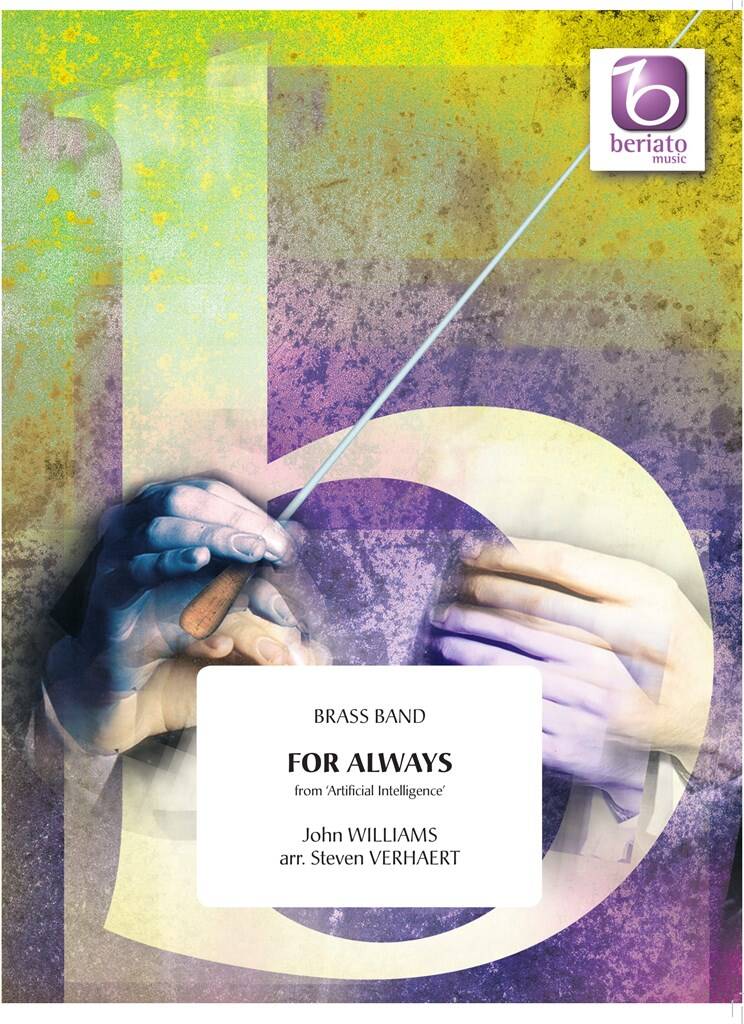
For Always (From Artificial Intelligence) - John Williams - Steven Verhaert
This beautiful piece of music comes from the movie "Artificial Intelligence", the masterpiece of the legendary duo director Steven Spielberg and composer John Williams.
Estimated dispatch 5-14 working days
-
 £54.99
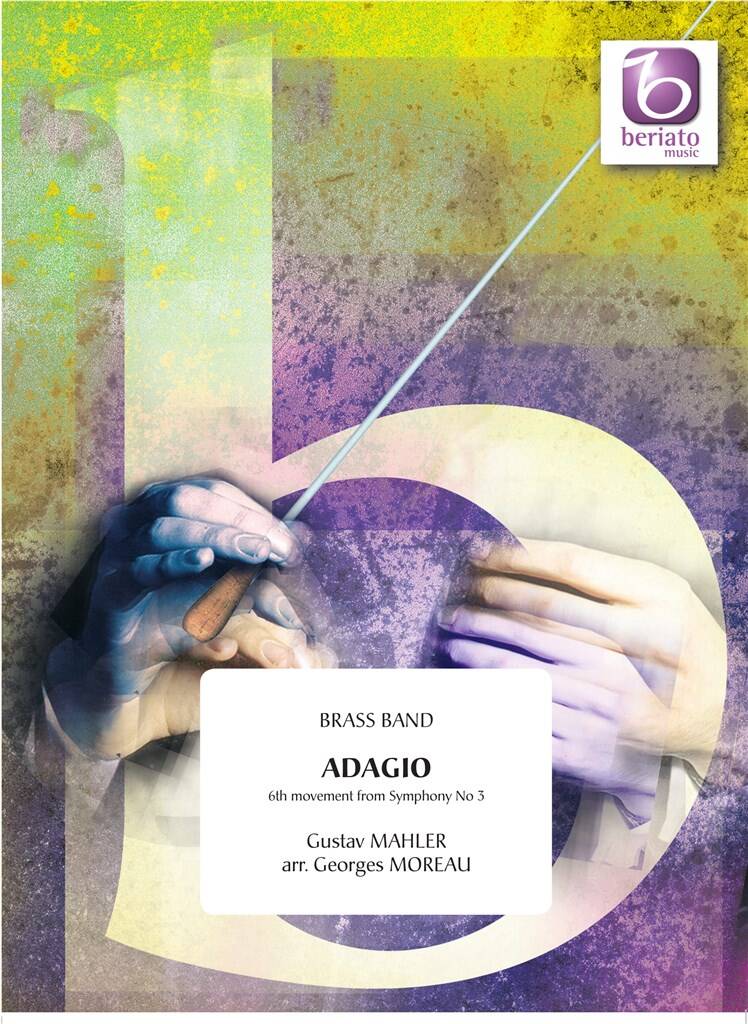
Adagio From Symphony No. 3 - Gustav Mahler - Georges Moreau
Gustav Mahler is probably one of the most important composers of late Romanticism. His symphonies are emotional extravaganzas of hectic, near neurotic movements on the one hand and extremely beautiful melodies and wonderful choral music on the other hand. This Adagio from his 3th symphony, which has been arranged in a majestic way by Georges Moreau, is a perfect example.
Estimated dispatch 5-14 working days
-
 £54.99
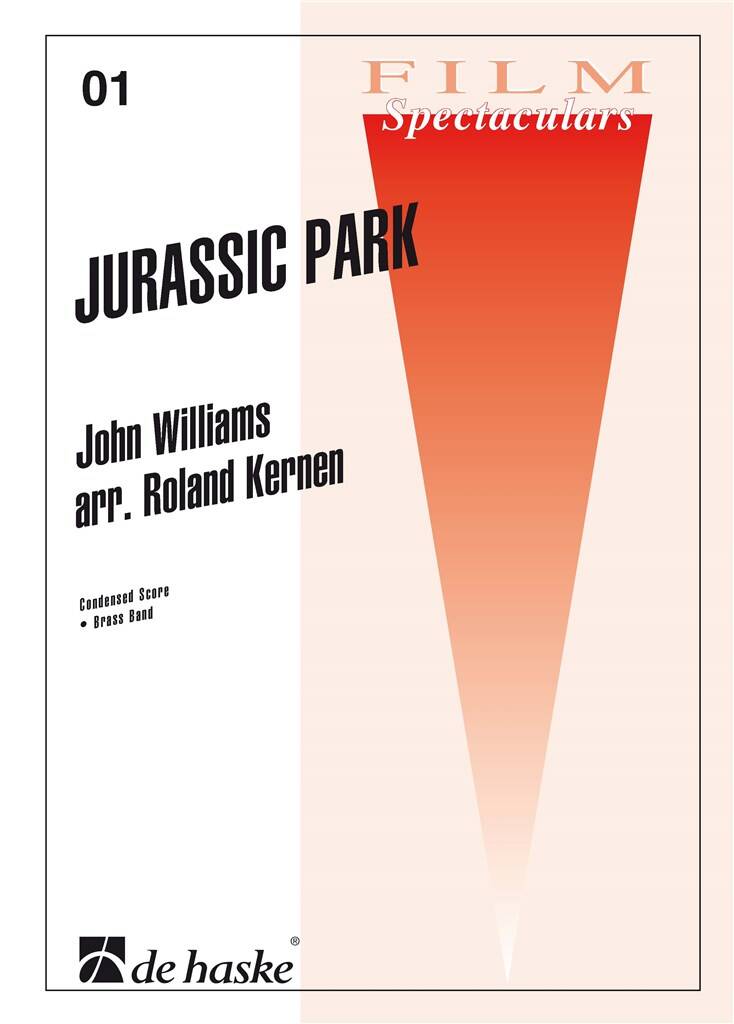
Theme from Jurassic Park - John Williams - Roland Kernen
This passionate and uplifting theme comes from one of Steven Spielberg's most successful films Jurassic Park. As with many of Spielberg's films the music has been supplied by John Williams and plays an extremely important role in creating the film's atmosphere. The melody and orchestration makes this theme ideal for the sound of the brass band and this arrangement will not disapoint.
Estimated dispatch 5-14 working days
-
£69.99
Selections from Mary Poppins - Richard M. Sherman - Ted Ricketts
Mary Poppins, starring Julie Andrews and Dick van Dyke, is one of the most endearing musicals of all time. From start to finish, the quality and appeal of the music is unparalleled. This medley is guaranteed to be a hit with your audience without two spoons of sugar! Includes: Step in Time, Supercalifragilisticexpialidocious, Chim Chim Cher-ee, Feed the Birds, and A Spoonful of Sugar.
Estimated dispatch 5-14 working days
-
£24.50
Andante Cantabile (from the String Quartet No. 1 in D major) - Tchaikovsky - Barry Strickle
The string quartet No.1 in D Maj was the first of three composed by Tchaikovsky. The melancholic Andante cantabile movement of the quartet has become famous, and was founded on a folk-song the composer heard whistled by a house painter. When the quartet was performed at a tribute concert to Leo Tolstoy, the author was said to have been brought to tears by this movement. Now arranged by Barry Strickle for full Brass Band, this is a perfect piece for any occasion or concert.
In Stock: Estimated dispatch 1-3 working days
-
£29.50
Home Away From Home - Phil Coulter - Steven Hague
This gorgeous melody has been made famous by the virtuoso flautist James Galway, popularised on Classic FM and now arranged for brass band with a solo cornet taking the starring role. A perfect concert item, such a simple melody, but heart warming and playable by most bands.
In Stock: Estimated dispatch 1-3 working days
-
 £24.50
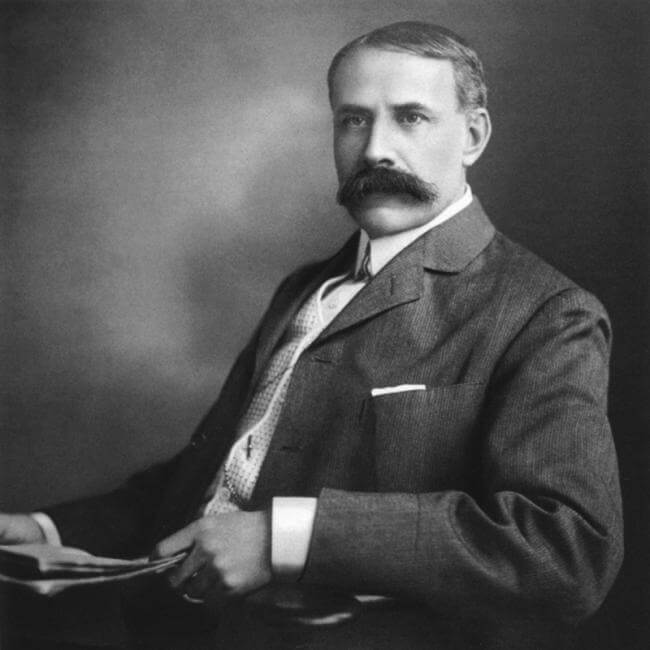
Nimrod 'From Enigma Variations' - Elgar - Gavin Somerset
The 'Enigma Variations' by Elgar are musical portraits of his friends and family. The best of these 14 variations is by far, number 9 entitled 'Nimrod'. The variation has become a piece in its own right and is common at funerals and other solemn occasions. Remembrance Day in particular would not be complete without hearing the work and is always performed at the Cenotaph in London on this day. Now, this arrangement by Gavin Somerset remains faithful to the original and with careful scoring throughout, it allows bands of most standards to play this gorgeous piece and still obtain those hair raising moments the audiences have come to expect. A must for every bands library.
In Stock: Estimated dispatch 1-3 working days
-
 £37.50
Stories From The Steel City - Jonathan Bates
In 2013, Deepcar Brass Band, based in the north of Sheffield at the foot of the Pennines, celebrated their 25th Anniversary year. To that end, they commissioned the upcoming composer Jonathan Bates to pen a new work for the band that reflected not only the band's triumphant milestone, but also the history of the steel city. This exciting work features a variety of styles and has an interlude that hears the sounds of metal being clanged to conjure up images of the cities steelwork heritage. Jonathan Bates has since gone on to compose for many of the country's top bands and all his works see success with melodic lines and skilful use of the brass band colours.
In Stock: Estimated dispatch 1-3 working days
-
 £58.70
Into the Unknown - From Frozen II - Kristen Anderson-Lopez - Haakon Esplo
Composers Kristen Anderson-Lopez and Robert Lopez have once again written music for Disneys sequel film Frozen II after great success in 2013 with Frozen.Many will probably remember Let it Go which became a big hit from this movie.The new movie continue to follow the main character Elsa, who sings her amazing musical number "Into the Unknown" in Frozen II. The song describes Elsa's inner conflict of choice to leave Arendelle or trace the source of a mysterious voice she continues to hear.The song is originally sung by Idina Menzel and the Norwegian artist Aurora and has elements and motifs inspired by Scandinavian herding calls. As always, the music is both magnificent and captivating and will surely be a hit for many years to come.
Estimated dispatch 5-14 working days
 View Music