
Results
-
 £11.99
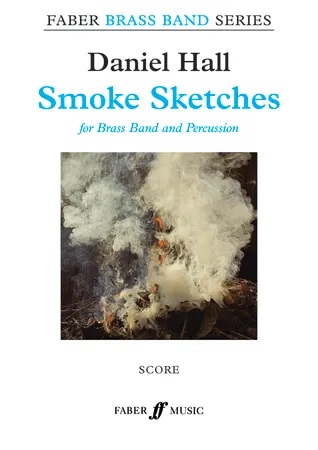
Smoke Sketches (Brass Band - Score only) - Hall, Daniel
This colourful, jazzy suite draws inspiration from the ancient art of gazing into smoke from fire to find stories through the act of divination. Into the Blaze suggests someone briskly fire-walking, barefoot, with unexpected sparks fizzling from the ground. A Lonesome Ember captures the fleeting life of a small ember, beginning insignificantly and gradually evolving into a larger being before disappearing into ash, while Spark of Light bristles with life and energy. Smoke Sketches was composed at the invitation of Brass Bands England for the Intermediate Section of the 2017 National Youth Brass Band Championships of Great Britain.Duration: 8.00
Estimated dispatch 7-14 working days
-
 £46.50
Semper Fidelis (Brass Band - Score and Parts) - Sousa, John Philip - Wilkinson, Keith M.
This march was written in 1888 and dedicated to the US Marine Corps, later being adopted as its official march. At the time of its composition Sousa was director of the US Marine Band.This brass band version contains a small amount of optional movement around the stage and a percussion feature. These will enhance the presentation.The arrangement was prepared for the Summer concerts presented by Brass Band of the Western Reserve, musical director Keith M Wilkinson, in 2008.
Estimated dispatch 7-14 working days
-
 £104.99
Lake of the Moon (Brass Band - Score and Parts) - Houben, Kevin
3rd Section Test Piece 2016 National Finals of the British Brass Band Championship.The travels of the Aztec people as they headed south through North America looking for a new home, acted as the inspiration for Lake of the Moon. The composition contains small fragments of Oriental music and South American rhythms and occasionally, Russian Cossacks seem to raise their heads. The journey from North to South is not without danger, which is represented by threatening sounds within the music. In the Adagio divoto the composer takes us along to the Texcoco Lake, which the Aztecs called the lake of the moon. Bring a little bit of South American history to your concert with Lake of the Moon.Duration: 11:15
Estimated dispatch 7-14 working days
-
 £27.50
Largo (Winter) (Brass Band - Score and Parts) - Vivaldi, Antonio - Wilkinson, Keith M.
In 1723 Antonio Vivaldi (1678-1741) composed four concerti for violin and small orchestra entitled The Four Seasons. Winter is the fourth of these and the Largo is its central slow movement depicting a cosy scene by the fireside watching the falling rain.This arrangement was prepared at the request of Brett Baker and has been recorded by him accompanied by Brass Band Of The Western Reserve, music director Dr Keith M Wilkinson, on the CD Slides Rule!
Estimated dispatch 7-14 working days
-
 £42.95
BENEDICTUS (from The Armed Man (A Mass for Peace)) (Euphonium Solo with Brass Band) - Jenkins, Karl - Small, Tony
Recorded on Polyphonic QPRL224D Master Brass (Volume Seventeen)
Estimated dispatch 7-14 working days
-
£42.95
In Memoriam R.K (Brass Band Set - Score and Parts) - Howarth, Elgar
All England National Brass Band Championship 2007. Recored on Polyphonic QPRL226D Master Brass Volume 18, QPRL056D National Brass Band Championship 1992 played by Black Dyke.Composer's NoteRudolph Kempe, the German conductor, was much admired for this interpretations of late romantic music, particularly Mahler and Strauss. No such music exists in the brass band repertoire and this piece, deliberately written in pastiche style, serves both to fill the gap and as my own small tribute to one of the greatest musicians I have known.
Estimated dispatch 7-14 working days
-
 £42.95
Salm O Dewi Sant (Tenor Horn Solo with Brass Band - Score and Parts) - Jenkins, Karl - Small, Tony
Psalm for Saint David: from Adiemus iv:The Eternal Knot
Estimated dispatch 7-14 working days
-
 £76.99
The Universal Band Collection (Brass Band - Score and Parts) - De Haan, Jacob
A collection of 5 short works in pop style which can be performed by any kind of compilation. The titles can be presented on the programme as separate works but the Universal Band Collection can also be performed as a complete suite. From a didactic point of view it is a suitable work to teach musicians something about the structure in music. For this purpose not only the big structure but also the small structure was kept very clear.Western Girl: A girl from the west of the USA rides her horse across the prairie, dreaming of her future. The rough structure: introduction - theme in a blues scale - the same thing in a different instrumentation - finale.Just a ballad: A ballad in pop style with a rough A-B-A form. First there is the introduction of the main theme (A), then follows a tenor melody in minor with a rhythmical reference to the main theme (B). Finally there is the main melody, performed tutti with a different rhythm in the drums (A').Play the Game: An English saying meaning: play fairly. Playful music in up-tempo with a wink to China, where almost all games are manufactured nowadays. Once again an A-B-A structure here.San Diego: A Mexican fugitive enjoys his freedom in America but also remembers his place of birth with melancholy. A sad minor melody with a straight trendy beat appears twice. The second time it has a slightly different instrumentation, in which the muted trumpets represent the Mexican feeling.Final Dance: Eventually there is a dance with an introduction in renaissance style, followed by a fast dance in rock style. All this composed in a classical song structure: introduction, verse, bridge, chorus, shortened verse, bridge, chorus, chorus.Duration: 10:30
Estimated dispatch 7-14 working days
-
 £42.95
SALM O DEWI SANT (Flugel Horn Solo with Brass Band) - Jenkins, Karl - Small, Tony
Psalm for Saint David: from Adiemus iv:The Eternal Knot
Estimated dispatch 7-14 working days
-
 £59.95
Concerto Grosso (Brass Quartet with Brass Band - Score and Parts) - Gregson, Edward
Concerto Grosso was commissioned in 1972 by the Scottish Amateur Music Association for the National Youth Brass Band of Scotland.I took as my starting point the 18th century concerto grosso form with its element of contrast between small and large instrumental forces. The concertino (solo) group consists of cornet, horn, trombone and euphonium. The work is cast in one continuous movement (the old concerto grosso was often in three or more). The single movement is cast in the arch-like version of the ritornello form which was the mainstay of the baroque concerto. There are three main episodes which alternate with the ritornello and these exploit slow lyrical melodies as well as more rhythmically charged music. The final coda contrasts the ritornello material with the concertino group's own material, bringing the work to a resounding conclusion.- Edward GregsonDuration: 8.00
Estimated dispatch 7-14 working days
 View Music