Results
-
 £30.00
Ave Maria (Caccini arr. by David Beal) - Flugel Horn & Brass Band Sheet Music Full Score & Parts - LM002 - Caccini - David Beal
COMPOSER: CacciniARRANGER: David BealBrass Band Sheet Music Full Score & PartsA delightful arrangement of this timeless classic.The haunting melody arranged here for flugel hornLM002 - ISMN : 9790570000029
In Stock: Estimated dispatch 3-5 working days
-
 £30.00
Be Thou My Vision (Traditional arr. by David Grace) - Brass Band Sheet Music Full Score & Parts - LM656 - Traditional - David Grace
COMPOSER: TraditionalARRANGER: David Grace"Be Thou My Vision" (Old Irish: Rop tu mo baile or Rob tu mo bhoile) is a traditional Christian hymn of Irish origin.The words are based on a Middle Irish poem that has traditionally been attributed to Dallan Forgaill in the 6th century.However, scholars believe it was written later than that.Some date it to the 8th century; others put it as late as the 10th or 11th century.That it sat untranslated for perhaps 14 centuries is astounding.The best-known English version, with some minor variations, was translated in 1905 by Mary Elizabeth Byrne, then made into verse by Eleanor Hull and published in 1912.Since 1919 it has been commonly sung to an Irish folk tune, noted as "Slane" in church hymnals, and is one of the most popular hymns in the United Kingdom.LM656 - ISMN : 9790570006564
In Stock: Estimated dispatch 3-5 working days
-
 £30.00
Beneath The River Severn (Chris Cobon) - Brass Band Sheet Music Full Score and Parts - LM283
COMPOSER: Chris CobonBeneath The River SevernProgramme NotesBeneath The River Severn follows on, chronologically,from three pieces about steam engines;LMR600 Gordon, Tornado (LNER Peppercorn Class A160163),The Lady Armaghdale and also 'Moments in Brass' Sets 1+2Living 3 miles from the River Severn, the longest river in Great Britain,I regularly cross it on the way to conduct Highley Colliery Brass Band.Beneath The River Severn aims to capture not only the beauty of the river but also the dangerous undercurrents that lie under the calm surface.The length of the complete piece is 4 minutes 11 secondsMusical Traits:Attempting to avoid stereotype water music,I started with sketches based on quartal harmony but inverted (so 5ths)For example, the first run onEuphonium starts on concert pitch G, Hrns = D, Bari=A, 1st Hrn=E etc."A" represents the undercurrent,which has claimed many lives over the years.An 11-note salute to the greatest river piece,Smetana's Vltava, is worked into this sectionSuitable Section 4 Upwards
In Stock: Estimated dispatch 3-5 working days
-
 £59.95
Bonnie Northumbria - Brass Band - LM786
COMPOSER: Laurie JohnstonProgramme NotesNorthumberland, or Northumbria as it is also known, is the most northern county in England and has magnificent and stunning landscapes just waiting to be explored. Filled with mystical castles, atmospheric ruins and historical sites and edged by spectacular coastal scenery, there is something wonderful to see at every turn. The Devils Causeway passes through Northumbria and reaches Berwick upon Tweed at the coast. Walkers and cyclists can also take the Coast and Castles Cycle Route or the North Sea Trail which journey through some of the most beautiful scenery along the way.The Blaydon Races is aGeordiefolk songwritten in the 19th century byGeordie Ridley, in a style deriving frommusic hall. It is regarded by many as the unofficialanthemofTynesideand is frequentlysungby supporters ofNewcastle United Football ClubandNewcastle Falconsrugby club.Blaydonis a small town inGateshead, situated about 4 miles (6.4km) fromNewcastle upon Tyne, inNorth East England. The race used to take place on the Stella Haugh 1 mile (1.6km) west of Blaydon.Stella South Power Station(demolished in 1995) was built on the site of the track in the early 1950s, after the races had stopped taking place in 1916.Water of Tyne (sometimes rendered as The Waters of Tyne) is a folk song (Roud number1364) from the north-east of England. The song is sung by a girl or woman lamenting the fact that her paramour is on the opposite bank of theRiver Tyne. Sleeve notes to Michael Hunt's recording of Tyneside songs states that "the ferry is believed to be that atHaughton Castleon theNorth Tyne". Alternatively the "rough river" in the last line may indicate a point further downstream, possiblyTynemouth.The song was collected byJohn Bellin 1810 and published two years later inRhymes of Northern Bards.The Keel Row is a traditional Tyneside folk song evoking the life and work of thekeelmenofNewcastle upon Tyne. A closely related song was first published in aScottishcollection of the 1770s, but may be considerably older, and it is unclear whether the tune is Scottish or English in origin.The opening lines of the song set it inSandgate, that part of the quayside overlooking the River Tyne to the east of the city centre where the keelmen lived and which is still overlooked by theKeelmen's Hospital.Versions of the song appear in both England and Scotland, with Scottish versions referring tothe Canongaterather than Sandgate. The earliest printing was in the 1770s inEdinburghin A Collection of Favourite Scots Tunes, edited by Charles Maclean, though the tune was also found in several late eighteenth-century English manuscript collections. As the term "keel" was used both sides of the border, it has not been determined which version was the original, althoughFrank Kidsonsurmised that like many other songs collected by Maclean it may originally have been aJacobiteair from the time of the1745 rebellion. Some versions of the song make reference to a "blue bonnet[...] with a snowy rose upon it", a clear attempt to evoke Jacobite symbolism, whether dating from 1745 or not.Kidson, however, also noted that he had found the tune of The Keel Row associated with an early dance called "The Yorkshire Lad" as early as 1748.By the 19th century the tune was well associated with the River Tyne; a few years before the 1850s the keelmen had met yearly to celebrate the founding of the Keelmen's Hospital, perambulating the town to the accompaniment of bands playing The Keel Row.Dance To Thy Daddyis a traditional Englishfolksong, originating inNorth East England. An early source for the lyrics, Joseph Robson's "Songs of the bards of the Tyne", published 1849, can be found on the Farne archive. In Farne's notes to the song, it is stated that these lyrics were written by William Watson around 1826.
In Stock: Estimated dispatch 3-5 working days
-
 £30.00
Music To Drive By - Alan Moorhouse
This is a great 'easy listening' item for a concert programme. Effectively scored, it opens with a cornet section feature which returns intermittently throughout the work.Because of the distribution of the main theme across the sections of the band, this arrangement lends itself well to a bit of stage choreography is the need is required!
In Stock: Estimated dispatch 3-5 working days
-
£55.00
Firefly (brass band score & parts) - Simon Dobson
Firefly was composed by award-winning composer Simon Dobson (b.1981) to provide an entertaining up-tempo concert work for community and youth bands. Composed in funk-rock style, and is based on the groove beat with which it opens. Dobson says, "Firefly was written as a break from my more serious music and as a 'hat tip' to the various types of beat orientated music I listen to." It was first performed by Oslofjord Brass in Norway and in its wind version by Harmonie Shostakovich, Switzerland. Duration: 5-6 minutes. INSTRUMENTATION: 1 Eflat Sop. Cornet, Solo Cornets (4), Bflat Rep. Cornet (1), 2nd Bflat, Cornets (2), 3rd Bflat Cornets (2); Flugel horn, Solo Eflat Horn, 1st Eflat Horn, 2nd Eflat Horn; 1st Bflat Bar., 1 2nd Bflat Bar., 1st Trombone, 2nd Trombone, Bass Trombone; Bflat Euphoniums (2); Eflat Tubas (2); Bflat Tubas (2); 2 percussion
In Stock: Estimated dispatch 1-3 working days
-
 £64.95
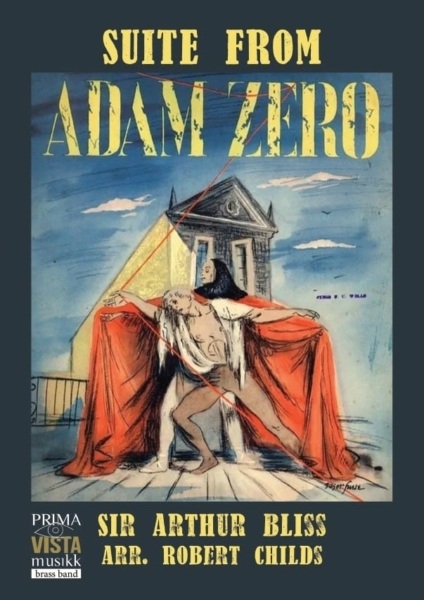
Adam Zero, Suite from (Brass Band - Score and Parts)
Selected as the Section 2 test piece for the National Brass Band Championships of Great Britain 2025Following his ballet Checkmate, Bliss composed another score for the, by then, Sadler's Wells Ballet, Miracle in the Gorbals, which was choreographed by Robert Helpmann, to a scenario by Michael Benthall. Premired in 1944, the ballet made a considerable impact and was a box-office success. It was followed in turn by a further collaboration with Helpmann and Benthall, Adam Zero. This would serve Helpmann, in the eponymous role, as a vehicle in two respects: demonstrating his gifts as a dancer-actor and as a choreographer. First performed at the Royal Opera House, Covent Garden, on 8 April 1946, Adam Zero was conducted by Constant Lambert, the work's dedicatee. Bliss considered it 'his most varied and exciting ballet score'. Benthall provided a synopsis for the programme:There is a philosophy that life moves in an endless series of timeless cycles. As Nature passes through Spring, Summer, Autumn and Winter, so man is born, makes a success in his own particular sphere, loses his position to a younger generation, sees his world crumble before his eyes and only finds peace in death. This age-old story is told in terms of a Company creating a ballet and calling on the resources of the theatre to do so. Lighting, stage mechanism, dance conventions, musical forms and costumes and scenery of all periods are used to symbolize the world of 'Adam Zero'.Apart from Adam, as the Principal Dancer, other main roles included the Stage Director (representing Omnipotence), and Adam's Fates (Designer, Wardrobe Mistress, and Dresser). 'The Woman in this allegory', wrote Bliss, 'under the symbol of the Choreographer, was both the creator and destroyer of Adam: his first love, his wife, his mistress, and finally the figure of beneficent Death.' When the curtain rose, the 'audience saw the Covent Garden stage right back to the wall, completely empty except for the protagonists, 'the Company poised, still and expectant, as they await the birth of... Adam Zero.'Unfortunately, soon after the premire, Helpmann injured himself and had to withdraw from the remaining performances. Despite generally positive reviews, the ballet did not capture the imagination of audiences and, to Bliss's considerable disappointment, was not revived. Seventy years would elapse before its first major return to the stage, in 2016, performed by the ballet company of Stadttheater Bremerhaven with choreography by Sergei Vanaev.Bliss extracted a concert suite from the ballet, conducting its first performance with the City of Birmingham Symphony Orchestra on 28 October 1948. For his own suite, arranged for brass band in 2023, Dr Robert Childs chose three dances linked to the seasons, book-ending them with the ebullient 'Fanfare Overture' and 'Fanfare Coda'. After Adam has grown to manhood, his Fates clothe him in a costume synonymous with confident youth, appropriate for the virile, ardent 'Dance of Spring'. In the 'Approach of Autumn', Adam, now wearing a sombre costume, has grown older: his Fates have streaked grey in his hair and put lines on his face. But they had earlier raised Adam to the zenith of his power, and the 'Dance of Summer' depicts him in the prime of life, in music of sweeping grandeur. The 'Fanfare Coda' signals that the next cycle of life is about to begin.Duration: 10.30
Estimated dispatch 7-14 working days
-
£29.95
Adam Zero, Suite from (Brass Band - Score only)
Selected as the Section 2 test piece for the National Brass Band Championships of Great Britain 2025Following his ballet Checkmate, Bliss composed another score for the, by then, Sadler's Wells Ballet, Miracle in the Gorbals, which was choreographed by Robert Helpmann, to a scenario by Michael Benthall. Premired in 1944, the ballet made a considerable impact and was a box-office success. It was followed in turn by a further collaboration with Helpmann and Benthall, Adam Zero. This would serve Helpmann, in the eponymous role, as a vehicle in two respects: demonstrating his gifts as a dancer-actor and as a choreographer. First performed at the Royal Opera House, Covent Garden, on 8 April 1946, Adam Zero was conducted by Constant Lambert, the work's dedicatee. Bliss considered it 'his most varied and exciting ballet score'. Benthall provided a synopsis for the programme:There is a philosophy that life moves in an endless series of timeless cycles. As Nature passes through Spring, Summer, Autumn and Winter, so man is born, makes a success in his own particular sphere, loses his position to a younger generation, sees his world crumble before his eyes and only finds peace in death. This age-old story is told in terms of a Company creating a ballet and calling on the resources of the theatre to do so. Lighting, stage mechanism, dance conventions, musical forms and costumes and scenery of all periods are used to symbolize the world of 'Adam Zero'.Apart from Adam, as the Principal Dancer, other main roles included the Stage Director (representing Omnipotence), and Adam's Fates (Designer, Wardrobe Mistress, and Dresser). 'The Woman in this allegory', wrote Bliss, 'under the symbol of the Choreographer, was both the creator and destroyer of Adam: his first love, his wife, his mistress, and finally the figure of beneficent Death.' When the curtain rose, the 'audience saw the Covent Garden stage right back to the wall, completely empty except for the protagonists, 'the Company poised, still and expectant, as they await the birth of... Adam Zero.'Unfortunately, soon after the premire, Helpmann injured himself and had to withdraw from the remaining performances. Despite generally positive reviews, the ballet did not capture the imagination of audiences and, to Bliss's considerable disappointment, was not revived. Seventy years would elapse before its first major return to the stage, in 2016, performed by the ballet company of Stadttheater Bremerhaven with choreography by Sergei Vanaev.Bliss extracted a concert suite from the ballet, conducting its first performance with the City of Birmingham Symphony Orchestra on 28 October 1948. For his own suite, arranged for brass band in 2023, Dr Robert Childs chose three dances linked to the seasons, book-ending them with the ebullient 'Fanfare Overture' and 'Fanfare Coda'. After Adam has grown to manhood, his Fates clothe him in a costume synonymous with confident youth, appropriate for the virile, ardent 'Dance of Spring'. In the 'Approach of Autumn', Adam, now wearing a sombre costume, has grown older: his Fates have streaked grey in his hair and put lines on his face. But they had earlier raised Adam to the zenith of his power, and the 'Dance of Summer' depicts him in the prime of life, in music of sweeping grandeur. The 'Fanfare Coda' signals that the next cycle of life is about to begin.Duration: 10.30
Estimated dispatch 7-14 working days
-
£19.65
Adam Zero, Suite from (Brass Band - Study Score)
Selected as the Section 2 test piece for the National Brass Band Championships of Great Britain 2025Following his ballet Checkmate, Bliss composed another score for the, by then, Sadler's Wells Ballet, Miracle in the Gorbals, which was choreographed by Robert Helpmann, to a scenario by Michael Benthall. Premired in 1944, the ballet made a considerable impact and was a box-office success. It was followed in turn by a further collaboration with Helpmann and Benthall, Adam Zero. This would serve Helpmann, in the eponymous role, as a vehicle in two respects: demonstrating his gifts as a dancer-actor and as a choreographer. First performed at the Royal Opera House, Covent Garden, on 8 April 1946, Adam Zero was conducted by Constant Lambert, the work's dedicatee. Bliss considered it 'his most varied and exciting ballet score'. Benthall provided a synopsis for the programme:There is a philosophy that life moves in an endless series of timeless cycles. As Nature passes through Spring, Summer, Autumn and Winter, so man is born, makes a success in his own particular sphere, loses his position to a younger generation, sees his world crumble before his eyes and only finds peace in death. This age-old story is told in terms of a Company creating a ballet and calling on the resources of the theatre to do so. Lighting, stage mechanism, dance conventions, musical forms and costumes and scenery of all periods are used to symbolize the world of 'Adam Zero'.Apart from Adam, as the Principal Dancer, other main roles included the Stage Director (representing Omnipotence), and Adam's Fates (Designer, Wardrobe Mistress, and Dresser). 'The Woman in this allegory', wrote Bliss, 'under the symbol of the Choreographer, was both the creator and destroyer of Adam: his first love, his wife, his mistress, and finally the figure of beneficent Death.' When the curtain rose, the 'audience saw the Covent Garden stage right back to the wall, completely empty except for the protagonists, 'the Company poised, still and expectant, as they await the birth of... Adam Zero.'Unfortunately, soon after the premire, Helpmann injured himself and had to withdraw from the remaining performances. Despite generally positive reviews, the ballet did not capture the imagination of audiences and, to Bliss's considerable disappointment, was not revived. Seventy years would elapse before its first major return to the stage, in 2016, performed by the ballet company of Stadttheater Bremerhaven with choreography by Sergei Vanaev.Bliss extracted a concert suite from the ballet, conducting its first performance with the City of Birmingham Symphony Orchestra on 28 October 1948. For his own suite, arranged for brass band in 2023, Dr Robert Childs chose three dances linked to the seasons, book-ending them with the ebullient 'Fanfare Overture' and 'Fanfare Coda'. After Adam has grown to manhood, his Fates clothe him in a costume synonymous with confident youth, appropriate for the virile, ardent 'Dance of Spring'. In the 'Approach of Autumn', Adam, now wearing a sombre costume, has grown older: his Fates have streaked grey in his hair and put lines on his face. But they had earlier raised Adam to the zenith of his power, and the 'Dance of Summer' depicts him in the prime of life, in music of sweeping grandeur. The 'Fanfare Coda' signals that the next cycle of life is about to begin.Duration: 10.30
Estimated dispatch 7-14 working days
-
 £38.95
Unity Series Band Journal - Numbers 538 - 541, February 2025
538: For Christ alone (Morgan Juel Stavik)This gentle and delicate march takes its title from the chorus of Fred Fry's song (S.A.S.B. 960).539: Calling Today! (Noel Jones)The words for this three-verse arrangement were written by Fanny Crosby, with music composed by George Cole Stebbins. While the song doesn't feature in the current Salvation Army Song Book, it was included in both the 1955 and 1986 editions. This arrangement was prepared during the pandemic, where people were encouraged to make contact by telephone as much as possible, and certainly welcomed phone calls from so many friends. Thinking of the calls, led to the words of this song.540: When the saints go marching in (Thomas Mack)This arrangement was written for the service celebrating the life of Irma Long at the request of her daughter. Irma, a gentle and kind woman, was a soldier for 70 years, 40 of which were at Corry Corps, Pennsylvania, USA, where she was also a songster, a pre-school Sunday School teacher, and corps treasurer. She drove the country roads from her village to Corry five times a week, even during the hard snow and ice of winters, so that she and her three daughters could attend corps activities. 541: There is sunshine (Wilfried Weiland)This work introduces a new composer to our band journals. Wilfried Weiland was the Band master at Berlin Central Corps and a member of the German Staff Band for several years. Although this is Wilfried's first published contribution with The Salvation Army, he has had several brass pieces published in the United Kingdom and abroad. The arrangement was originally written in July 2022 for the 25th anniversary of the Naumburg Corps, Germany. The reggae genre, employed here, has not been featured within our journals before but suits the style of a brass band well.
Estimated dispatch 7-14 working days