Results
-
 £48.56
Perspectives from Gallipoli (Brass Band) Fendall Hill
This powerful and evocative work by Australian-New Zealand composer Fendall Hill pays tribute to the ANZAC soldiers who passed through Weymouth, Dorset during World War I. Inspired by first-hand accounts, the piece follows the emotional journey of a young soldier - from eager enlistment, through the harrowing Gallipoli campaign, to recovery and reflection in Weymouth. Structured in four movements, the music captures anticipation, fear, fierce resistance, and eventual healing, culminating in a moment of remembrance. The hymn tune Wareham -written by Dorset composer William Knapp - features prominently as a thematic thread, honouring the region's historical connection to the ANZAC legacy. A deeply moving addition to the brass band repertoire, this work is both a musical narrative and a heartfelt gesture of gratitude to the people of Dorset for their care and ongoing commemoration of the ANZACs. To view a performance of the work featuring ANZAC Brass please visit www.youtube.com/watch?v=diz9TRz7rwE Duration: approx. 8.00 minutes Difficulty Level: 1st Section + PDF download includes parts and score. Sheet music available at www.brassband.co.uk (UK) or https://satradecentral.org (USA) Instrumentation: Soprano Cornet Eb Solo Cornet Bb Repiano Cornet Bb 2nd Cornet Bb 3rd Cornet Bb Flugel Horn Bb Solo Horn Eb 1st Horn Eb 2nd Horn Eb 1st Baritone Bb 2nd Baritone Bb 1st Trombone Bb 2nd Trombone Bb Bass Trombone Euphonium Bb Bass Eb Bass Bb Timpani Percussion 1-3
In Stock: Estimated dispatch 1-3 working days
-
 £44.83
Symphonic Concert March (Brass Band) Bonelli arr. William Himes
Giouse Bonelli's stirring Symphonic Concert March has here been expertly arranged for brass band by William Himes. As the title implies, the Symphonic Concert March was intended for the concert hall. The compositional style is clearly derived from the Italian school of smooth, flowing melodies, clear contrapuntal lines, and contrasting rhythmic material, leaving no doubt as to Bonelli's traditional classical training. To view a rolling score video of Goteborg Brass Band performing the work please visit www.youtube.com/watch?v=JvUldbuuyIk PDF download includes score and parts. Sheet music available from www.brassband.co.uk Difficulty Level: 1st Section + Length: 6.20 minutes Instrumentation: Soprano Cornet Eb Solo Cornet Bb 1st Cornet Bb 2nd Cornet Bb Flugel Horn Bb Solo Horn Eb 1st Horn Eb 2nd Horn Eb 1st Baritone Bb 2nd Baritone Bb 1st Trombone Bb 2nd Trombone Bb Bass Trombone Euphonium Bb Bass Eb Bass Bb Timpani Percussion
In Stock: Estimated dispatch 1-3 working days
-
 £33.62
The Wexford Carol (Brass Band) Irish Trad. arr. Andrew Wainwright
This stunning arrangement for brass band by Andrew Wainwright of the beautiful Irish carol depicts perfectly the wintery moods and landscapes evocative of the Irish countryside. The Wexford Carol is a traditional Irish Christmas carol that originated in County Wexford in the 19th century. The carol tells the story of the birth of Jesus Christ and the journey of the Magi to Bethlehem. It is written in a simple and elegant style, and its melody is both beautiful and haunting. This arrangement is a lush and evocative setting of the traditional carol. The arrangement features a rich tapestry of textures and gradually builds in intensity as the carol progresses, before fading out to a quiet, haunting conclusion. PDF download includes score and parts. Sheet music available from: UK - www.brassband.co.uk USA - www.solidbrassmusic.com Difficulty Level: 3rd Section + Instrumentation: Soprano Cornet Eb Solo Cornet Bb Repiano Cornet Bb 2nd Cornet Bb 3rd Cornet Bb Flugel Horn Bb Solo Horn Eb 1st Horn Eb 2nd Horn Eb 1st Baritone Bb 2nd Baritone Bb 1st Trombone Bb 2nd Trombone Bb Bass Trombone Euphonium Bb Bass Eb Bass Bb Timpani Cymbals Tam-Tam Tuned Percussion
In Stock: Estimated dispatch 1-3 working days
-
 £11.20
Trumpet Concerto with Brass Band (Andrew Batterham) Soloist Part in Bb
Andrew Batterham's tour de force Trumpet Concerto showcases the incredible spectrum of emotions the trumpet can convey, in the hands of a dedicated performer. The music ranges from Classical to minimalism, ballads to fanfares, culminating in a wild dance full of stamina and energy. Commissioned by ABC Classic through the ABC Fresh Start Fund, Concerto was premiered by David Elton, Principal Trumpet with the Sydney Symphony Orchestra (previously with London Symphony Orchestra). The brass band version was premiered by David and Victoria Brass, conducted by Matt van Emmerik. To view a video of David Elton performing the work with Victoria Brass, please visit www.youtube.com/watch?v=zImGHAL9mIE This PDF download includes soloist part in Bb. Brass band accompaniment version available here. Piano accompaniment version available here. Sheet music available from: UK - www.brassband.co.uk USA - https://satradecentral.org Difficulty Level for Soloist: Advanced Duration: approx. 19 minutes
In Stock: Estimated dispatch 1-3 working days
-
 £33.62
Verleih Uns Frieden (Brass Band) Mendelssohn arr. Edward Mylechreest
Felix Mendelssohn's stunning Choral Cantata has here been adapted to the brass band by Edward Mylechreest. A setting of Martin Luther's sacred words, this short piece is a staple of the choral canon and is widely regarded as a choral masterpiece. The hymn tune melody repeats three times throughout the piece (first from the trombones, then the horns, followed by a full band chorale), each time an emploring prayer and statement of the text. This arrangement can also be used for accompaniment to the original Chorale, remaining in the original Eb major key signature. Knowledge of the original piece will be of great benefit to the performer and conductor alike. Sheet music available from: UK - www.brassband.co.uk USA - www.solidbrassmusic.com Difficulty Level: 4th Section + Instrumentation: Soprano Cornet Eb Solo Cornet Bb 1st Cornet Bb 2nd Cornet Bb Flugel Horn Bb Solo Horn Eb 1st Horn Eb 2nd Horn Eb 1st Baritone Bb 2nd Baritone Bb 1st Trombone Bb 2nd Trombone Bb Bass Trombone Euphonium Bb Bass Eb Bass Bb Percussion Tacet
In Stock: Estimated dispatch 1-3 working days
-
 £40.00
Born on the Fourth of July. Solo for Trumpet (or cornet) & Brass band
Recommended for - Championship to 2nd Section bands The theme music from the original motion picture, Born on the Fourth of July, starring Tom Cruise. The music was composed by John Williams and this arrangement (as a feature for solo trumpet or cornet and brass band) is by Andrew Duncan.
-
 £50.00
Lord of the Rings, Fellowship of the Ring. Howard Shore arranged for brass band by Andrew Duncan
A music selection of key themes from Howard Shore's film score to the 1997 blockbuster, The Lord of the Rings : The Fellowship of the Ring , arranged for brass band by Andrew Duncan. Brass Band Grade 4: Advanced Youth and 3rd Section Duration: 7 minutes
-
£55.00
A Braveheart Suite (Brass Band Score & Parts) - James Horner
Mel Gibson's epic film Braveheart was a cinema hit and the music by James Horner was incredibly memorable. Andrew Duncan has taken some of these themes and created A Braveheart Suite for brass band.Brass Band Grade 4: Advanced Youth and 3rd SectionDuration: 7 minutes
In Stock: Estimated dispatch 1-3 working days
-
 £30.00
Angels from the Realms of Glory (French Traditional arr. Brian Harper) - Brass Band Full Score & Parts - LM649 - French Traditional - Brian Harper
COMPOSER: French TraditionalARRANGER: Brian HarperA great addition to the brass band repertoire from Brian HarperA concert opener for your next Christmas concert
In Stock: Estimated dispatch 3-5 working days
-
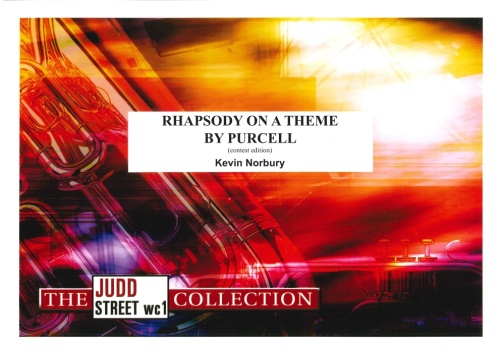 £94.95
Rhapsody on a Theme by Purcell (Brass Band - Score and Parts)
Contest VersionIn his relatively short lifetime, Henry Purcell (1659 -1695) achieved stellar musical success and was known and admired internationally by his contemporaries. He is justifiably considered one of England's greatest composers.I thought long and hard before using this magnificent theme as the basis for a band piece because I think that Benjamin Britten has said just about everything possible regarding it in his The Young Person's Guide to the Orchestra. Bearing this in mind, I tentatively set about working on this composition. Once started though, the job became fun because the theme still yielded possibilities - even after Britten!The piece is basically a set of linked variations, much like Rachmaninov's great Rhapsody on theme by Paginini. The music starts slowly and makes much use of crisply dotted rhythms - a Purcellian characteristic. The theme is heard twice before the music changes into a jaunty duple time variation based on the opening motif of Purcell's theme. After this, the mood changes to a waltz-like variation in which clear references to the original theme can be heard. The slow movement follows, and is based on rising and descending scalic figures. This variation is an 'A-B-A' movement with two similar passages framing a more vigorous middle section which features antiphonal fanfare-like figures. Without any preamble, the last variation launches itself - a rumbustious dance which has a distinctive feel to it.The theme eventually reappears as a counter-melody to this dance music before a final triumphant treatment of the melody featuring a somewhat athletic bass line. The music accelerates at the Coda and disappears in a 'puff of smoke'.- Kevin Norbury
Estimated dispatch 7-14 working days
 Watch video