
Results
-
 £42.95
ANDANTE (from 6th Symphony) (Brass Band) - Barry, Darrol
This famous melody is adored around the world. It was also the basis for a very popular 'pop' song Story of a Starry Night.
Estimated dispatch 7-14 working days
-
 £40.00
Last Night of the Proms Medley - Traditional
The quintessential most English of English classical music concerts and the self-styled world's largest and most democratic musical festival". The "Proms", originally known as The Henry Wood Promenade Concerts are an eight-week summer season of daily orchestral classical music concerts and other events held annually, predominantly in the Royal Albert Hall in London. Founded in 1895, each season now consists of more than 70 concerts in the Albert Hall, a series of chamber concerts at Cadogan Hall, additional Proms in the Park events across the United Kingdom on the last night, and associated educational and children's events. Often held as outdoor concerts in London's pleasure gardens, where the audience was free to stroll around while the orchestra was playing, this tradition has once again been revived in parks and stately homes not only in the UK, but across the world. The first series of promenade concerts were held indoors at the Queen's Hall in Langham Place. The idea was to encourage an audience for concert hall music who, though not normally attending classical concerts, would be attracted by the low-ticket prices and more informal atmosphere. In addition to "promenading" or "promming"; eating, drinking and smoking was all allowed. Many people's perception of the "Proms" is taken from the "Last Night", although this concert is very different from the others. The concert is traditionally of a lighter vein, with popular classics being followed by a series of British patriotic pieces in the second half of the concert. This second half sequence traditionally includes most of the works included in this medley. Many in the audience use the occasion for an exuberant display of Britishness. Union Jack Flags are carried and waved by the "Prommers", especially during "Rule, Britannia!". Balloons and party poppers are also in abundance.
-
£37.50
Brass Monkey's Classical - Gavin Somerset
This release from the 'Brass Monkeys' series introduces your training band to some of the best-loved classical music around. Each piece contains a different challenge and something new to learn. With an opening from Clarke, marches from Tchaikovsky & Elgar, a lullaby from Brahms and memorable music from Dvorak & Holst, this is the perfect way for your learners to start playing some of the world's most famous melodies. The music in this publication is also a great way for your training band to join in on concerts with the senior band. This final item, 'Jupiter' from Holst's 'The Planets' has as well as the main melody, an optional, slightly more difficult section so the players have something to work towards even after conquering the main bulk of the work. Music included isaATRUMPET VOLUNTARY (Prince Of Denmark's March)MARCH SLAVEGOOD EVENING, GOOD NIGHT (Brahms' Lullaby)LARGO (From The 'New World Symphony')POMP & CIRCUMSTANCE No.1 (Land Of Hope & Glory)JUPITER (From 'The Planets')
In Stock: Estimated dispatch 1-3 working days
-
£37.50
Brass Monkey's Occasions - Gavin Somerset
Never be caught out again on a concert with this selection that caters for just about every occasion. Your training band will be prepared to perform anything from a Fanfare to the National Anthem and even 'He's A Jolly Good Fellow'. The music included in this publication is used all over the world, all year around. "Land Of Hope & Glory" is also included, in the same key as the popular senior band arrangement (by J. Ord Hume) so your training band can join in with the senor band in a proms concert finale. This release puts well-known, often requested tunes in one publication letting your training band shine, whatever the occasion. Music included isaAFANFARENATIONAL ANTHEM (God Save The Queen/King)ROYAL NAVY HYMN (Melita)HARVEST HYMN (St. George's Windsor)ONWARD CHRISTIAN SOLDIERS (St. Gertrude)DANNY BOY (Londonderry Air)HE'S A JOLLY GOOD FELLOWF.A. CUP THEME (Eventide)LAND OF HOPE & GLORY (Pomp & Circumstance March No.1)
In Stock: Estimated dispatch 1-3 working days
-
£76.99
Famous Folksongs - Dagmar Kildevann
In 'Famous Folksongs' we are taken on a musical trip around the world, from France to the USA and from South America to the Middle East. Dagmar Kildevann arranged eight word famous folk songs in very different ways. From traditional (Lolo mi boto) to modern (Le coq est mort) and from swing (Sur le pont) to rock (Michael row the boat). Bon voyage, have a pleasant journey! Oh, and by the way, don't forget your passport!
Estimated dispatch 5-14 working days
-
 £74.99
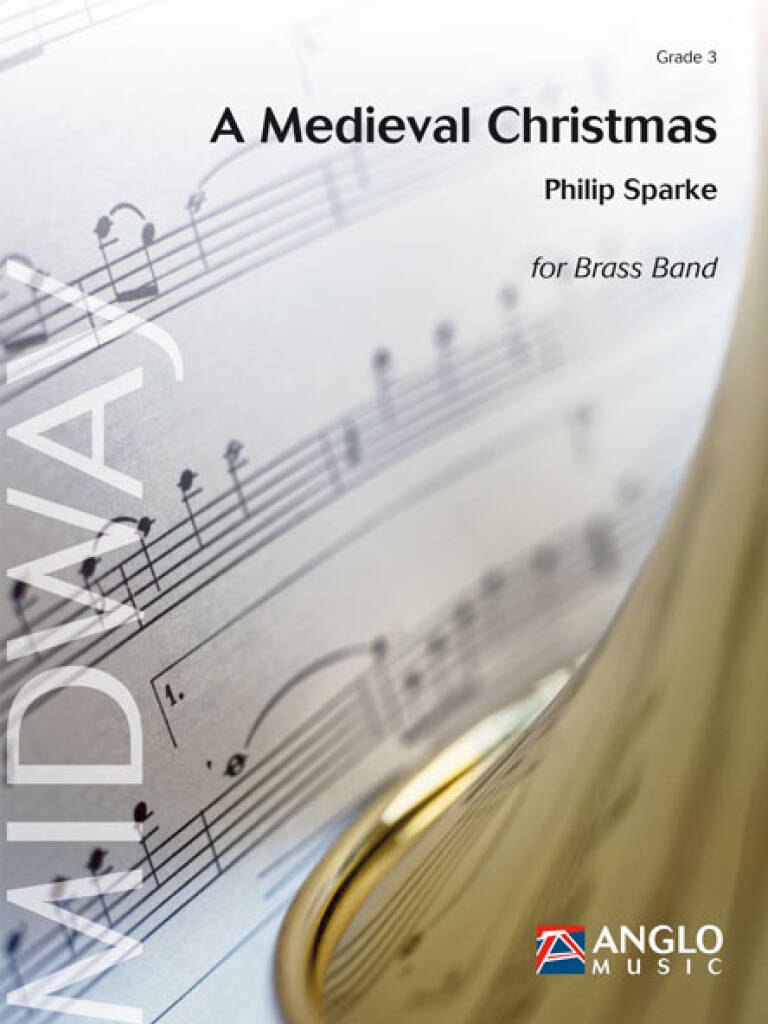
A Medieval Christmas - Philip Sparke
Christmas is full of customs and traditions, both old and new. This is especially evident in Christmas songs, some of which have been part of Christian worship for centuries. A Medieval Christmas combines three ancient melodies that are still popular around the world today. Philip Sparke chose Gaudete, a song of praise from the middle ages, Coventry Carol, an English song from the 14th century, and In dulci jubilo, which can also be traced back to the 14th century, to form this joyous suite.
Estimated dispatch 5-14 working days
-
 £35.00
Carol of the Bells (Brass Band - Score and Parts) - Littlemore, Phillip
This popular Christmas piece was composed by Mykola Leontovych around 1916. It is based on a Ukrainian folk chant known as 'Shchedryk', a New Year's carol. However, it was not until after the composer's death in 1921 that it was first introduced to Western audiences, when the Ukrainian National Choir included it on their tour of Europe and the Americas that same year. The film composer John Williams incorporated it into the score for the 1990 film Home Alone and he is credited for bringing it to a wider audience still, although it had been released on Christmas albums by a number of popular artists before that. This transcription for brass band has been adapted from the arrangement by Robert Prizeman, who created it for Libera, the world famous boys choir that he both founded and directs. Their unique, enchanting and, some say, heavenly sound delights audiences throughout the world through extensive concerts, recording and TV broadcasts. This brass band transcription introduces this skilled choral arrangement to a new genre and a whole new audience as well. Duration: 3.00
Estimated dispatch 7-14 working days
-
 £60.99
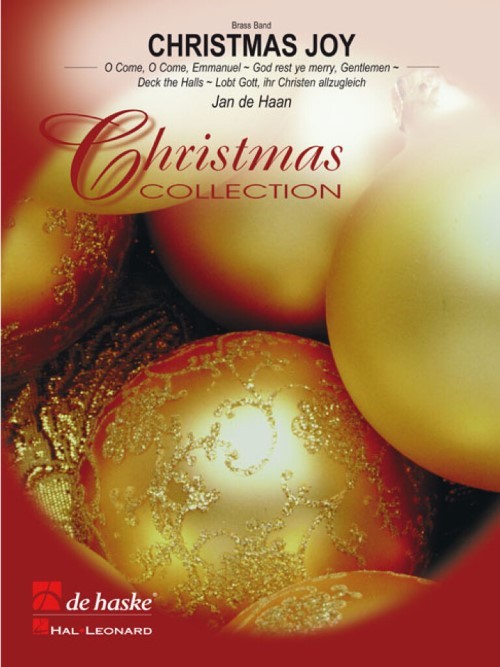
Christmas Joy (Brass Band - Score and Parts) - De Haan, Jan
In this festive medley Jan de Haan brings together a selection of the most famous Christmas songs from around the world. It features: O Come, O Come Emmanuel, God Rest Ye Merry, Gentlemen, Deck the Halls, and Praise God, Ye Christians Everywhere. Jan de Haan has created a work that will bring all the joy and happiness of the season to your Christmas concert.Duration: 4:00
Estimated dispatch 7-14 working days
-
 £66.19
Armistice at Flanders Fields (Brass Band) Dwayne Bloomfield
This poignant and powerful work for brass band by Dwayne Bloomfield describes the day peace was announced to end World War I. The piece was written in 2023 to be played by bands around the world to mark Armistice Day. The composer writes: 'Unless you were there, it's impossible to imagine what it must have been like the day peace was announced ending World War I. The feelings soldiers experienced, who after years of fighting and suffering, to know it was over and they would return home to see family and loved ones again. This piece tries to tell their story. The work begins by approaching the front, distant artillery and battle sounds heard while the carnage and loss of lives was already known to the world. The band builds as we enter the thick of battle, the death and destruction, the conditions faced and the loss of hope of ever surviving. The next section, in 7/8 time, reflects the two sides fighting - both sides attacking and defending with mostly little result, but for the loss of more lives. Two euphoniums then depict the news and hope of peace talks. However, fighting did continue right up to the very end and on the last day there would be another 2,738 casualties. The Canadians were still battling to capture the town of Mons that morning. A song is sung in reflection of the estimated 5.5 million allied soldiers who lost their lives during World War I, then a clock ticks down the final minutes. The last three known casualties are depicted with French soldier Augustin Trebuchon, killed at 10:45am by a single shot as he rushed down the trenches to spread the news of coming peace; Canadian George Lawrence Price killed by a sniper round at 10:58am at the battle of Mons, and lastly a machine gun burst that killed American Henry Gunther, who is believed to have fallen on the 11th hour. Bells then toll ringing around the world announcing the end of the war. After years of war, it must have been jubilation for the families at home knowing their loved ones would be returning to them. The band builds with a hymn for peace as a final tribute to those who fought, before the piece resides with one of the most dreaded sounds at that time, the knock on the door from a telegram delivery boy or better known then as the Angels of Death. It wasn't just the 2,738 families from the casualties of the last day who would receive such a knock, but many more who expected their loved ones to be returning home would instead find out they were instead killed in the last weeks. So close. Driving around the battlefields today one comes across many intersections in the countryside which have cemetery signposts pointing in every direction. While the last post sounds in ceremonies today, this last bugle call instead depicts the horrors, devastation and death the soldiers faced during the war and right up the 11th hour of the 11th day of the 11th month, Armistice at Flanders Fields.' To view a video of Dallas Brass Band performing the work please visit https://www.youtube.com/watch?v=ljfyVz3cMgk Duration: Approx. 15.00 minutes Difficulty Level: 2nd Section + PDF download includes parts and score. Sheet music available from www.brassband.co.uk Instrumentation: Soprano Cornet Eb Solo Cornet Bb Repiano Cornet Bb 2nd Cornet Bb 3rd Cornet Bb Flugel Horn Bb Solo Horn Eb 1st Horn Eb 2nd Horn Eb 1st Baritone Bb 2nd Baritone Bb 1st Trombone Bb 2nd Trombone Bb Bass Trombone Euphonium Bb Bass Eb Bass Bb Percussion 1-3
In Stock: Estimated dispatch 1-3 working days
-
 £49.95
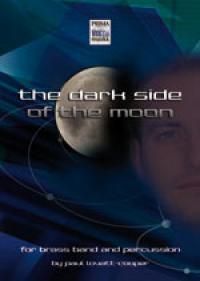
The Dark Side Of The Moon (Score and Parts)
This piece was commissioned by Dr. Nicholas Childs and Black Dyke Band on behalf of Rotary International and received its world premire performance at St. David's Hall, Cardiff on Saturday 27th January 2007. It is dedicated to the composer's father, Harry Cooper.The music was selected by the National Contesting Council as the 3rd section test piece for the 2008 Regional Brass Band Championships of Great Britain. A Note from the Composer...Have you ever thought of a holiday destination, tourist attraction, event, place, site or period in history and thought 'I wonder what it would be like?' - somwhere you have never been and can only let your imagination run wild on. What would the place be like, and all the things surrounding it such as the mood, feelings you get experiencing it, the temperature? Who would be there and what you would see? This piece is my musical imagination of the dark side of the moon. I know from news reports, the internet and other footage that the moon is a very desolate place, very barren and rugged. So from the start the piece gives the listener a musical picture of the rugged landscape with little light and warmth.However, the one place that has had me thinking about is the side of the moon that we don't see in our night skies, the side of the moon with no sun and no light pollution from civilisation. I can only imagine the eeriness one would feel being stood in complete darkness on the moon's surface looking around.As you slowly explore the surroundings and your eyes drift up to the night sky, there is an awesome sight unfolding in front of you - countless stars and galaxies, planets and different solar systems and all right in front of you glistening from the light of the sun beaming from the other side of the moon. The Dark Side of the Moon portrays a musical picture of the whole experience as seen in my imagination taking the listener from the rugged landscape to the awesome beauty that sits endlessly in front of you.Paul Lovatt-Cooper, September 2007
Estimated dispatch 7-14 working days
 View Music
 Listen to MP3