
Results
-
 £35.00
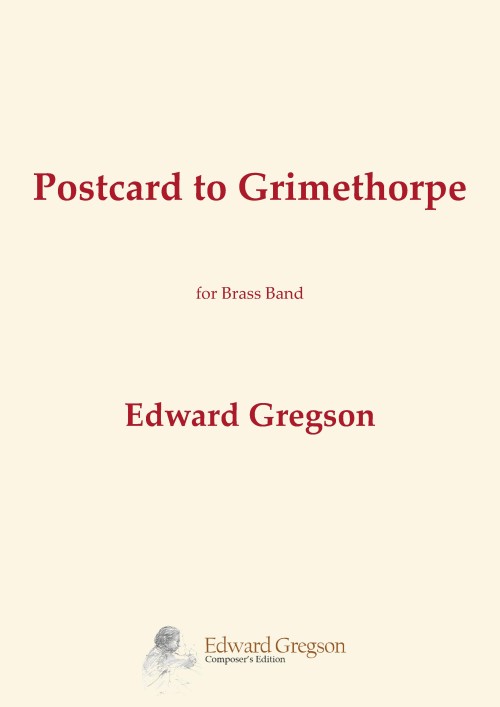
Postcard to Grimethorpe (Brass Band - Score and Parts) - Gregson, Edward
I composed the original version of Postcard to Grimethorpe in 1993 at the request of Elgar Howarth, for a concert at the Queen Elizabeth Hall, London, given by the Grimethorpe Colliery Band. This was at a time when after the Grimethorpe Colliery pit closed the future of the band was in severe jeopardy. The concert was given in aid of the band, both through publicity and funding.Then in late 2022 Jack Stamp, the American composer, conductor and educator, and at that time international composer-in-association with Grimethorpe, contacted me to say that he had discovered my short piece in the band library, and asked if I might extend it for a recording he was sponsoring for the band - the repertoire to consist entirely of music specially composed for Grimethorpe.I agreed and decided to extend the piece by using the miner's hymn Gresford, as a symbolic gesture of protest at the many thousands of miners in the UK who were made redundant from their jobs. After an angular (quasi-atonal) first section, the hymn enters, softly at first, but with each phrase it becomes more powerful and insistent, ending with the final phrase triumphantly accompanied by melodic percussion (replacing the drums and cymbals of the earlier phrases, as if the band were then on the march). However, this short work ends softly and gently, as if anger has been replaced by quiet resolution and determination, looking to the future with confidence.- Edward GregsonDuration: 3.00
Estimated dispatch 7-14 working days
-
£12.00
Postcard to Grimethorpe (Brass Band - Score only) - Gregson, Edward
I composed the original version of Postcard to Grimethorpe in 1993 at the request of Elgar Howarth, for a concert at the Queen Elizabeth Hall, London, given by the Grimethorpe Colliery Band. This was at a time when after the Grimethorpe Colliery pit closed the future of the band was in severe jeopardy. The concert was given in aid of the band, both through publicity and funding.Then in late 2022 Jack Stamp, the American composer, conductor and educator, and at that time international composer-in-association with Grimethorpe, contacted me to say that he had discovered my short piece in the band library, and asked if I might extend it for a recording he was sponsoring for the band - the repertoire to consist entirely of music specially composed for Grimethorpe.I agreed and decided to extend the piece by using the miner's hymn Gresford, as a symbolic gesture of protest at the many thousands of miners in the UK who were made redundant from their jobs. After an angular (quasi-atonal) first section, the hymn enters, softly at first, but with each phrase it becomes more powerful and insistent, ending with the final phrase triumphantly accompanied by melodic percussion (replacing the drums and cymbals of the earlier phrases, as if the band were then on the march). However, this short work ends softly and gently, as if anger has been replaced by quiet resolution and determination, looking to the future with confidence.- Edward GregsonDuration: 3.00
Estimated dispatch 7-14 working days
-
 £39.95
All the Nations (Brass Band - Score and Parts) - Trigg, Roger
Originally written for the Melbourne Staff Band 125th Anniversary, the central theme of the music is from Psalm 86 verse 9. The?tune is derived from 'Lobe den herren' before a setting of the tune 'St Peter' in a more reflective manner is presented. An invitation?to worship as a group of God's people is presented in the contemporary song 'Come, now is the time to worship' before the original?material is presented and the tune 'St Peter' is heard in a full, exciting conclusion.
Estimated dispatch 7-14 working days
-
£19.95
All the Nations (Brass Band - Score only) - Trigg, Roger
Originally written for the Melbourne Staff Band 125th Anniversary, the central theme of the music is from Psalm 86 verse 9. The?tune is derived from 'Lobe den herren' before a setting of the tune 'St Peter' in a more reflective manner is presented. An invitation?to worship as a group of God's people is presented in the contemporary song 'Come, now is the time to worship' before the original?material is presented and the tune 'St Peter' is heard in a full, exciting conclusion.
Estimated dispatch 7-14 working days
-
£44.95
Endeavour (Brass Band - Score and Parts) - Cordner, Martin
Originally written for the USA Eastern Territory 'Future all-stars' programme, this work is abounding in energy and drive. The?contemporary song 'I'll do my best' is complemented by the more traditional 'Mercy still for me'.
Estimated dispatch 7-14 working days
-
£22.50
Endeavour (Brass Band - Score only) - Cordner, Martin
Originally written for the USA Eastern Territory 'Future all-stars' programme, this work is abounding in energy and drive. The?contemporary song 'I'll do my best' is complemented by the more traditional 'Mercy still for me'.
Estimated dispatch 7-14 working days
-
 £107.95
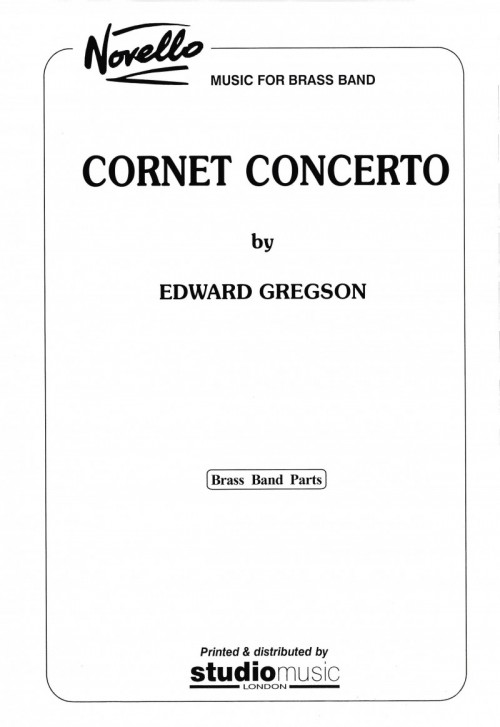
Cornet Concerto (Brass Band - Score and Parts) - Gregson, Edward
The Cornet Concerto was commissioned by Black Dyke Band for their principal cornet, Richard Marshall, and was premiered at the European Brass Band Festival's Gala Concert in Lille, France, on 30 April 2016 by the same performers, conducted by Nicholas Childs.It is challenging work, both musically and technically, and one that exploits the wide range of the instrument's capabilities. Lasting for some 17 minutes, it is in the usual three movements: Sonata, Intermezzo (subtitled 'Of More Distant Memories') and Rondo.The first movement presents four main ideas:Cadenzas (which recur throughout the movement, and indeed appear at the end of the work); a fast and rhythmically energetic motive; Bugle calls (echoing the ancestor of the cornet), and a lyrical and expressive melody, full of yearning. These four ideas are juxtaposed within the broad shape of a Sonata form structure, although here the word 'Sonata' is used in its original meaning of 'sounding together'.The second movement is music in search of a theme, which eventually comes at the end of the movement. In the middle section there are brief quotations, albeit mostly hidden, from three cornet solos written by the Swedish/American composer Erik Leidzen for the Salvation Army in the 1940s and 50s; these are solos I loved as a teenager, and my use of them is by way of tribute, not imitation - a sort of memory bank, just as the main theme of the movement, when it eventually comes, is reminiscent of the tune from my earlier work for brass band, 'Of Distant Memories'.The final Rondo, the shortest of the three movements, is a lively and 'fleet-of foot' Scherzo, its main theme full of cascading arpeggios, but with a contrasting lyrical second theme intertwined in the structure. There is much interplay between soloist and band in the development of the music, but eventually a brief reprise of the opening cadenzas leads to an exciting and climactic coda.Click here for the piano reduction
Estimated dispatch 7-14 working days
-
 £49.95
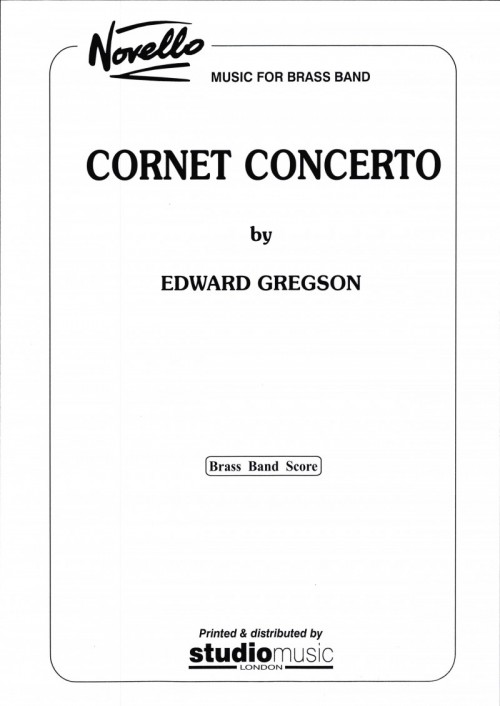
Cornet Concerto (Brass Band - Score only) - Gregson, Edward
The Cornet Concerto was commissioned by Black Dyke Band for their principal cornet, Richard Marshall, and was premiered at the European Brass Band Festival's Gala Concert in Lille, France, on 30 April 2016 by the same performers, conducted by Nicholas Childs.It is challenging work, both musically and technically, and one that exploits the wide range of the instrument's capabilities. Lasting for some 17 minutes, it is in the usual three movements: Sonata, Intermezzo (subtitled 'Of More Distant Memories') and Rondo.The first movement presents four main ideas:Cadenzas (which recur throughout the movement, and indeed appear at the end of the work); a fast and rhythmically energetic motive; Bugle calls (echoing the ancestor of the cornet), and a lyrical and expressive melody, full of yearning. These four ideas are juxtaposed within the broad shape of a Sonata form structure, although here the word 'Sonata' is used in its original meaning of 'sounding together'.The second movement is music in search of a theme, which eventually comes at the end of the movement. In the middle section there are brief quotations, albeit mostly hidden, from three cornet solos written by the Swedish/American composer Erik Leidzen for the Salvation Army in the 1940s and 50s; these are solos I loved as a teenager, and my use of them is by way of tribute, not imitation - a sort of memory bank, just as the main theme of the movement, when it eventually comes, is reminiscent of the tune from my earlier work for brass band, 'Of Distant Memories'.The final Rondo, the shortest of the three movements, is a lively and 'fleet-of foot' Scherzo, its main theme full of cascading arpeggios, but with a contrasting lyrical second theme intertwined in the structure. There is much interplay between soloist and band in the development of the music, but eventually a brief reprise of the opening cadenzas leads to an exciting and climactic coda.Duration: 17.00
Estimated dispatch 7-14 working days
-
 £38.50
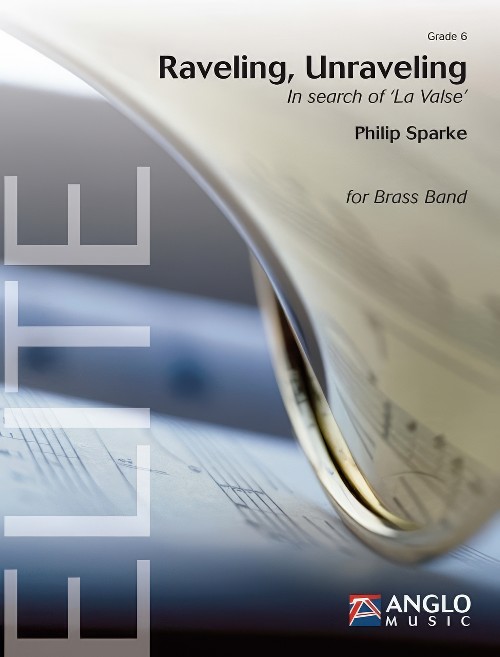
Raveling, Unraveling (Brass Band - Score only) - Sparke, Philip
Raveling, Unraveling - In Search of 'La Valse' was written for the Cory Band as their own-choice test piece for the 2016 European Brass Band Championships in Lille. The piece found its genesis in Sparke's The Unknown Journey (2014) for concert band, and the use of Ravel's La Valse as a structural undercurrent to the original piece is an act of reverence. Sparke's aim was to produce a work that is organic rather than episodic in nature. The composer's view is that little in music does this better than La Valse and for this reason he uses various sections of this masterpiece, both manipulated and quoted verbatim (including much of its stunning closing passages) to provide the overall geography of his new work. As the music progresses, more of the Ravel appears, surfacing completely as the piece reaches its climax - a gesture of homage to the French master.Duration: 16:30
Estimated dispatch 7-14 working days
-
£164.99
Raveling, Unraveling (Brass Band - Score and Parts) - Sparke, Philip
Raveling, Unraveling - In Search of 'La Valse' was written for the Cory Band as their own-choice test piece for the 2016 European Brass Band Championships in Lille. The piece found its genesis in Sparke's The Unknown Journey (2014) for concert band, and the use of Ravel's La Valse as a structural undercurrent to the original piece is an act of reverence. Sparke's aim was to produce a work that is organic rather than episodic in nature. The composer's view is that little in music does this better than La Valse and for this reason he uses various sections of this masterpiece, both manipulated and quoted verbatim (including much of its stunning closing passages) to provide the overall geography of his new work. As the music progresses, more of the Ravel appears, surfacing completely as the piece reaches its climax - a gesture of homage to the French master.Duration: 16:30
Estimated dispatch 7-14 working days
 View Music