
Results
-
£54.99
Studio-Pop - Kees Vlak
Studio-Pop consists of five movements. The first movement, entitled Marching on a String, is an energetic rock march in a modern rhythm. Next, the charming Dreaming of Summer has been composed in three-four time - which is quite unusual in modern pop music. The inspiration for the third movement, Chicken-Charley was a youngman selling chicken legs from a stall. His supple, dancing movements can be recognised in the music. The fourth movement, Candlelight is a modern, attractive ballad. Finally, Discoteca takes us along on a night visit to a Spanish discotheque. The typically Spanish chords and the stirring, high-spirited rhythm provide an exuberant closing to Studio-Pop.
Estimated dispatch 5-14 working days
-
 £60.99
Cityscape - Jan Hadermann
Cityscape was commissioned for the 't Stad Geblazen event, which took place during the weekend of European Heritage Days in 2024.This short concert piece describes the impressions given when approaching and visiting the beautiful Belgian city of Antwerp from the north across the river Scheldt. We first pass the busy bustle of the harbour, home to the impressive Port House. Then the old city comes into view: the graceful cathedral tower, surrounded by smaller church spires and modern buildings, dominates the distinctive skyline. After setting foot ashore, we are struck by the beautiful way the medieval buildings here blend harmoniously with modern architecture. Our walk through the city continues: we visit the serene cathedral and are impressed by the picturesque facades of and around the city hall, as well as the Brabo Fountain on the Grote Markt (Large Market Square). Finally, it is time to enjoy the merriment taking place on the many squares of the lively city centre.
Estimated dispatch 5-14 working days
-
 £174.99
The Turing Test - Simon Dobson
Alan Turing is considered the father of modern computational science and much, if not all, of our modern computer technology and the connectivity that we now take for granted is born of the work of this one great, but troubled man. His famous test was designed to prove whether artificial intelligence (AI) could successfully imitate human thought. The single movement of The Turing Test is essentially non-programmatic, but it does seek to show something of the emotion and colour of Turing's life in its different sections. The composer employs bi-tonality and complex rhythms to show opposing worlds colliding. At the end of each test, we must decide: has true AI beenborn?
Estimated dispatch 5-14 working days
-
 £125.00
New London Pictures - Nigel Hess
New London Pictures represents elements of London in the 21st Century. The Millennium Bridge describes the pedestrian's journey across this wonderful new landmark bridge over the Thames,starting at the imposing Tate Modern, crossing the busy river, and onwards to St. Paul's Cathedral with its bells ringing out over the great city. London Eye is an incredibly large ferris wheel situated onthe South Bank of the River Thames. This movement depicts a 'flight' on this riverside wheel, at the top of which the panoramic view of London is breath-taking and the expanse of the music is a suitable depiction oftheview. As with all modern cities, London is over-crowded with motor vehicles. London is the first major city in Europe to adopt a Congestion Charge, and this piece (with its stop and go traffic lights) is both racyand comical. Here are Londoners attempting to go about their business in the face of overwhelming odds.....Brass Band Grades 4/5: Premier Youth and 2nd Section Duration: 15 minutes
Estimated dispatch 5-14 working days
-
 £68.99
Selections from Wicked - Jay Bocook
Rarely has a musical in modern times taken Broadway by storm the way this huge hit from Stephen Schwartz has done. The story line of the Wicked Witch of the West is intriguing and the music is filled with depth and beauty. This powerful medley includes No One Mourns The Wicked Dancing Through Life No Good Deed For Good Defying Gravity.
Estimated dispatch 5-14 working days
-
 £53.50
Mr Cool's Swing - Etienne Crausaz
This piece is in line with the tradition of works by Louis Prima and performances by Benny Goodman. It attempts to reproduce a similar "feel", adapted from the music of these two artists, for brass band. The result is a swing with a sustained tempo and modern harmonies, as well as solo passages highlighting the cornet, the trombone and the euphonium with effervescent riffs. Mr Cool's Swing will absolutely find success with your audience! This music forms part of the musical tale La Malediction d'Aragne (Aragne's Curse), commissioned by the Lyre de Courtion (conductor Dominique Morel) on the occasion of its 100th anniversary.
Estimated dispatch 5-14 working days
-
 £289.80
Catharsis - Kjetil Djønne
"Catharsis" explores purification through musical art - a process that provides spiritual renewal and release from moral ambiguities. Its etymology traces back to ancient Greece, but understanding and usage in modern language evolved in the late 18th century. The piece poses cathartic questions through diverse musical elements, from cadences to the ensemble, undergoing changes in tempo, style, texture, and meter. The music embarks on a journey from lyrical expressions to structuralism, from vibrant hues to pale tones, from unrest to tranquility, and from jazzy interludes to grand fulfillment.
Estimated dispatch 5-14 working days
-
 £115.60
Norge i rodt, hvitt og blatt - Lars-Erik Larsson - Petter S. Kragstad
Norge i rodt, hvitt og blatt ("Norway in Red, White and Blue") was commissioned by the Oslo Fagott Choir (yes, that is indeed a gay men's choir) for a concert with The Staff Band of the Armed Forces in 2015. I was given artistic licence to write a more modern and somewhat 'eclectic' arrangement for this originally Swedish melody written by Lars-Erik Larsson, which became something of a national liberation anthem when Nazi occupation ended in May 1945 - then with new lyrics by Finn Bo, Bias Bernhoft and Arild Feldborg.After the premiere in Oslo, and a music video with Oslo Fagott Choir and The Staff Band, broadcasted by Norwegian Broadcasting Corporation (NRK) on Constitution Day during coronavirus lockdown in 2020, I was approached by many to write an instrumental version of the arrangement for concert band. This version is now available through Norsk Noteservice. Reid Gilje has made this instrumentation for Brass Band.
Estimated dispatch 5-14 working days
-
 £60.99
Citadel's Destiny - Thierry Deleruyelle
Citadel's Destiny is a march that can be performed either in concert or on parade. It was commissioned by the Musique de l'Infanterie de Lille. A special feature is that it adheres to the conventional codes of military marches, albeit with a modern twist. The title refers to the citadel built by Vauban in Lille, "The Queen of Citadels", with which the band shares a destiny. This march is still performed by the Infantry Band as part of their traditional concert repertoire.
Estimated dispatch 5-14 working days
-
 £104.99
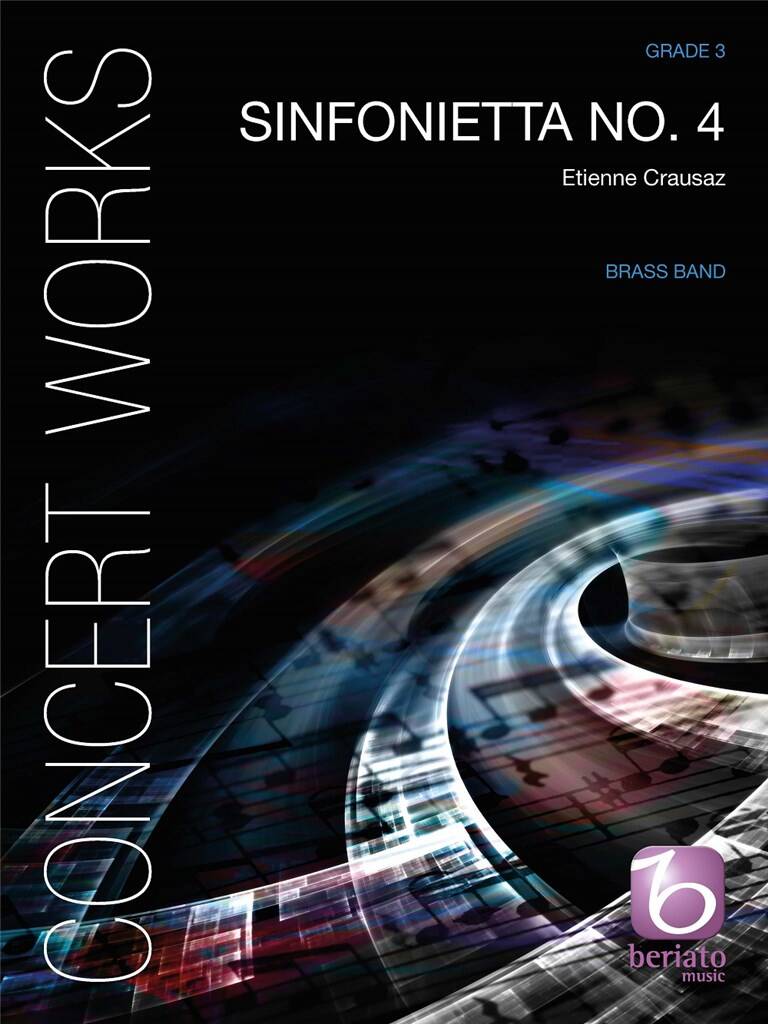
Sinfonietta No. 4 - Etienne Crausaz
This work was composed for the occasion of the 28. Fete Cantonale des Musiques Vaudoises (28th Music Festival of the Canton Vaud), taking place in the Valley of Joux in June 2018. The music begins with a very simple fanfare consisting of five ascending legato notes which constitute the fundamental framework of the piece. This contrasts with the more cantabile sounding theme we hear after. The following Allegro section uses the sequence in a contrapuntal style reminding us of the Renaissance period, but with more modern day harmonies. Two solo cadenzas played by cornet and euphonium initiate the middle section, in which a theme also based on the sequence builds uptowards the climax of the piece. The sequence in the last section is played in time but gives the feeling of a "one to the bar" beat. Shortly before the festive finale, the music heard in the middle part resumes.
Estimated dispatch 5-14 working days
 View Music