
Results
-
£67.20
Love Never Felt So Good - Michael Jackson - Frank Bernaerts
Estimated dispatch 5-14 working days
-
 £61.99
Love Never Felt So Good
Estimated dispatch 10-14 working days
-
 £56.00
I've Never Been In Love Before - Frank Loesser - Christopher Wormald
Estimated dispatch 7-14 working days
-
 £50.90
I'VE NEVER BEEN IN LOVE BEFORE (Flugel, Horn and Baritone feature with Brass Band) - Loesser, Frank - Wormald, Christopher
From the Musical Guys and Dolls. Grade: Easy/Medium.
Estimated dispatch 7-14 working days
-
£50.90
TIL I HEAR YOU SING (Brass Band) - Lloyd Webber & Slater - Wormald, Christopher
Easy - from the musical 'Love Never Dies'
Estimated dispatch 7-14 working days
-
 £61.00
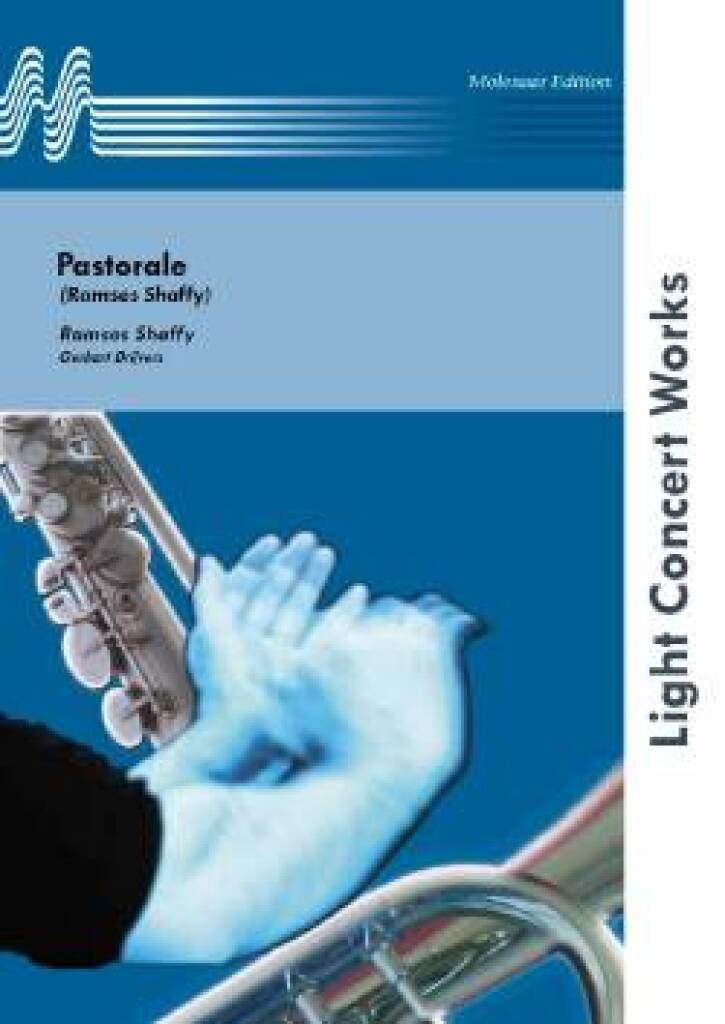
Pastorale - Ramses Shaffy - Gerhart Drijvers
This famous Dutch love romance by Ramses Shaffy expresses both the passion and the melancholy of a love relation that had never been expressed as beautifully before in any Dutch song.
Estimated dispatch 5-14 working days
-
£74.99
Brilliant Beatles - Peter Kleine Schaars
There have been many arrangements of Beatles' songs for various kinds of ensembles, so rather than just producing a further medley of Beatles' hits, Peter Kleine Schaars has added a new twist to them with this excellent new work. All You Need Is Love and With a Little Help from my Friends pass by in a swing march, Michelle sounds like a newly composed ballad and When I'm Sixty Four is played in Dixie swing style. A Hard Day's Night is transformed into a funk theme with a samba interlude, Let It Be into a slowmarch, and Ob-La-Di, Ob-La-Da in a rock beat. Experience The Beatles as you have never heard them before.
Estimated dispatch 5-14 working days
-
 £69.99
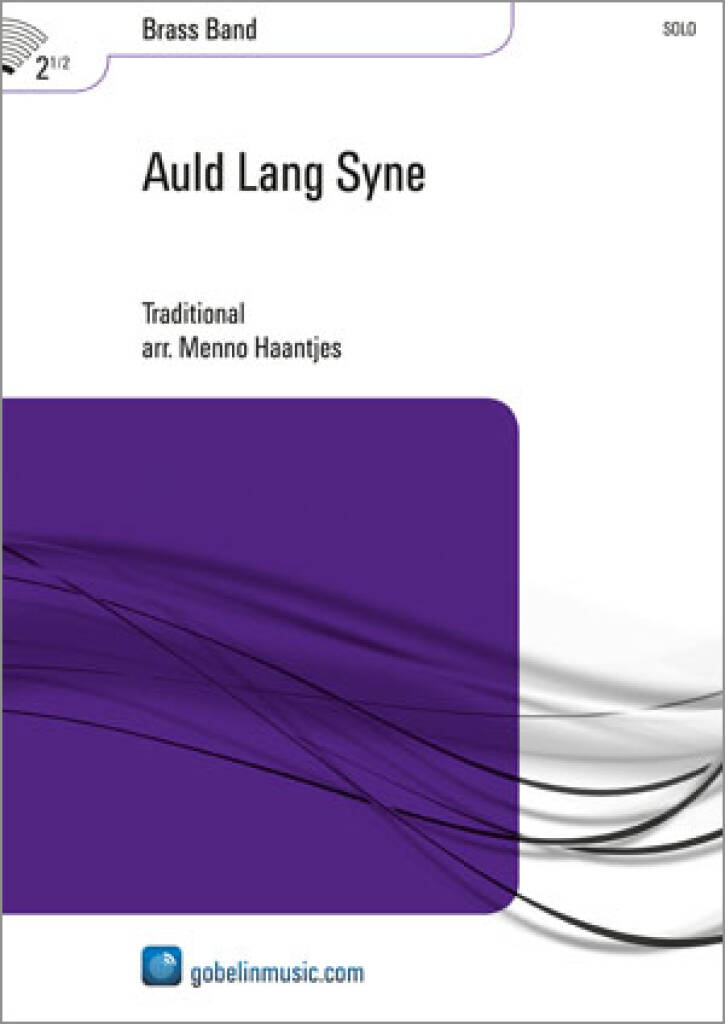
Auld Lang Syne - Menno Haantjes
Whereas 'Auld Lang Syne' may be considered the best-known Scottish song ever, yet at the same time it is an obscure one, for there are but few people who know the complete text by heart. After the familiar 'Should auld acquaintance be forgot .....' many people take their refuge to lyrics like 'rum tee dum ta dee ..... lah, lah, lah ........... for auld lang syne'. Even in Scotland only a handful of persons know the entire text and are able to give a correct rendering of it. The current lyrics have been attributed to the Scottish poet Robert Burns. Burns, however, he did not write the whole poem : after he had heard an old man sing the centuries-old Scotchballad, he wrote it down and added a number of stanzas (1788). Historical research teaches us that the ballad served many purposes, both political and religious. Nowadays, 'Auld Lang Syne' is sung as a Christmas Carol and it is also sung on New Year's Eve at the turning of the year. Apart from that, though, the song is also sung on many other occasions sometimes with different lyrics, which usually have Love, Friendship and/or Parting as their themes, as these go well with the fascinating melody. In this arrangement a low-sounding solo instrument is central. The harmonization in the accompaniment fits in perfectly with the sentiments this song will evoke. Should auld acquaintance be forgot And never brought to mind? Should auld acquintance be forgot. And days of auld lang syne? For auld lang syne, my dear, For auld lang syne, We'll take a cup of kindness yet, For auld lang syne.
Estimated dispatch 5-14 working days
-
 £104.99
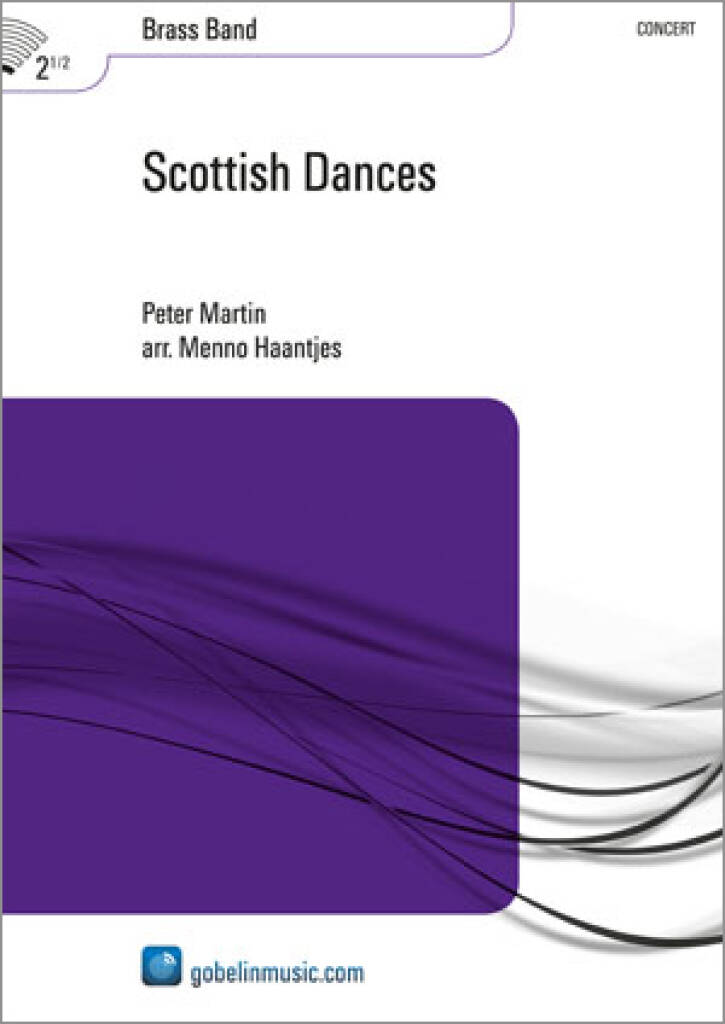
Scottish Dances - Peter Martin - Menno Haantjes
Scottish Dances is based on three Scottish traditionals: Cock of the North, The Bonnie Bank's O'Loch Lomond and Marie's Wedding. I. Cock of the North's name is used for multiple things or events. For example for a locomotive to a famous, it seems, delicious liqueur, and rallies to snowboard competitions. Furthermore is "Cock O' the North " a nickname of a famous Duke. (The 4th Duke of Gordon). In this composition Cock of the North (a Jig) is a traditional Scottish bagpipe tune, regularly played on tattoos by Pipe Bands. Not infrequently the drummers sing the text. Auntie Mary, had a canary, Up the leg of her trousers While she was sleeping Iwas peeping Up the leg of her trousers. II. " The Bonnie Bank's O'Loch Lomond " is about a sad story that took place during an revolt against the British. In 1745 Bonnie Prince Charlie had to retreat. Two of his men were captured. One was convicted and executed, while the other was released. The spirit of the executed soldier would arrive in Scotland via the 'low road' (underworld) before his companion, who had still a long way to go. You'll take the high road And I'll take the low road And I'll be in Scotland afore ye But me and my true love will never meet again On the Bonnie Bonnie Banks of Loch Lomond III. In a Scottish wedding, after the official ceremonies, there is often danced. This is called a ceilidh. For this we use traditional Scottish music such as "Marie's Wedding '. Mid dance we go back to the church, where a lovely song in honor of the couple sounds. Marie's Wedding has been recorded by Van Morrison (among many others). Step we gaely, on we go, heel for heel and toe for toe Arm and arm and on we go, all for Marie's wedding
Estimated dispatch 5-14 working days
-
 £17.50
The Mansions of Glory (Score Only)
"A young, talented and tender-hearted actress was passing along the street of a large city. Seeing a pale, sick girl lying upon a couch just within the half-open door of a beautiful dwelling, she entered, with the thought that by her vivacity and pleasant conversation she might cheer the young invalid. The sick girl was a devoted Christian, and her words, her patience, her submission and heaven-lit countenance so demonstrated the spirit of her religion that the actress was led to give some earnest thought to the claims of Christianity, and was thoroughly converted and became a true follower of Christ. She told her father, the leader of a theatre troupe, of her conversion and of her desire to abandon the stage, stating that she could not live a consistent Christian life and follow the life of an actress. Her father was astonished beyond measure and told his daughter that their living would be lost to them and their business ruined if she persisted in her resolution.Loving her father dearly, she was shaken somewhat in her purpose and partially consented to fill the published engagement to be met in a few days. She was the star of the troupe, and a general favourite. Every preparation was made for the play in which she was to appear. The evening came and the father rejoiced that he had won back his daughter and that their living was not to be lost. The hour arrived; a large audience had assembled. The curtain rose and the young actress stepped forward firmly, amid the applause of the multitude. But an unwonted light beamed from her beautiful face. Amid the breathless silence of the audience, she repeated: 'My Jesus, I love thee, I know thou art mine,For thee all the pleasures of sin I resign;My gracious Redeemer, my Saviour art thou,If ever I loved thee, my Jesus, 'tis now.' This was all. Through Christ she had conquered and, leaving the audience in tears, she retired from the stage, never to appear upon it again. Through her influence her father was converted, and through their united evangelistic labours many were led to God." 1. My Jesus, I love thee, I know thou art mine,For thee all the pleasures of sin I resign;My gracious Redeemer, my Saviour art thou,If ever I loved thee, my Jesus, 'tis now.2. I love thee because thou hast first lovd me,And purchased my pardon on Calvary's tree;I love thee for wearing the thorns on thy brow,If ever I loved thee, my Jesus, 'tis now.3. I will love thee in life, I will love thee in death, And praise thee as long as thou lendest me breath; And say, when the death-dew lies cold on my brow; If ever I loved thee, my Jesus, 'tis now.4. In mansions of Glory and endless delight,I'll ever adore thee and dwell in thy sight; I'll sing with the glittering crown on my brow: If ever I loved thee, my Jesus, 'tis now. William Ralph Featherstone
Estimated dispatch 7-14 working days
 View Music