
Results
-
 £50.90
PENCIL FULL OF LEAD (Brass Band) - Nutini, Paulo - Fernie, Alan
Grade: Easy
Estimated dispatch 7-14 working days
-
 £127.30
Haven't Met You Yet - Michael Bublé - Bjørn Morten Kjærnes
"Haven't Met You Yet" is the first single from Canadian singer Michael Buble's sixth album, Crazy Love, released on August 31, 2009. According to Buble, the single and its official music video are "about everyone's dream of finding a relationship and love." Buble co-wrote "Haven't Met You Yet" with Alan Chang and Amy Foster-Gillies and dedicated it to his then fiancee and now wife, Luisana Lopilato (who appears as his love interest in the music video).2012, Nick Jonas covered the song in the TV series Smash, so this music can also be used in a TV/Movie theme concert.Soloist options:Attached is a vocal lead that can be used with the arrangement. It is then recommended to dampen the melody in the ensemble, especially on the verses. (See list below)There are some performers or groups that can have these bars as solos:9-17 Flugelhorn17-24 Euphonium/Horn37-45 Euphonium45-52 Baritone/Trombone61-69 Horn/ Flugelhorn78-85 Euphonium/Baritone86-95 Flugelhorn107-end Flugelhorn/EuphoniumIf you want to use an instrumental soloist throughout the piece, they can use the vocal lead and transpose it to their instrument. Then the conductor should dampen or remove the above solos in the band.
Estimated dispatch 5-14 working days
-
 £105.20
Infinity Forest - Haakon Esplo
The concert overture "Infinity Forest" draws inspiration from an ancient forest, standing majestically, enveloped in mystery and secrets. Venturing into this forest, one never knows what awaits. It lies dark and quiet, interrupted by clearings where the sunlight breaks through."Infinity Forest" serves as a magnificent opening for any concert and is equally an excellent choice for competition repertoire. The music presents challenges of both technical and musical nature for all instrument groups, offering great opportunities to focus on precision, timbres, and intonation. While the lower parts are designed for easier difficulty, the lead parts present greater challenges.
Estimated dispatch 5-14 working days
-
 £91.99
Fanfares, Songs & Dances - Philip Sparke
Fanfares, Songs & Dances was commissioned by Brass Bands England, the Lithuanian Brass Band Association and the Dutch National Brass Band Championships (NBK), and first performed at the 43rd 'NBK' in October 2024. The work is played in three linked movements: FANFARES opens in robust fashion with a sequence of fanfare-like statements, initially featuring the horns, whose modal theme includes a figure that will reappear throughout the work. Euphoniums and then cornets introduce a second theme, which is followed by a third, again initiated by the horns. Baritones then change the mood with a more-lyrical theme, which builds to a climax, eventually leading back to a recall of the initial fanfare theme. This gradually dissolves to introduce the second movement. SONGS continues to relax the fanfare feel with a long introduction to the movement's main theme, first appearing on solo cornet. A change of key introduces a bridge passage which leads to a sonorous chorale, which builds to a triumphal return of the cornet theme. A peaceful coda leads to the final movement of the work. DANCES is a scherzo-like movement based around a series of rhythmic melodies in triple time, which lead to a majestic return of the 2nd movement's chorale theme under cornet figuration. The opening dance theme returns and heralds a joyous coda.
Estimated dispatch 5-14 working days
-
 £102.99
Sinfonietta No. 1 - Marc Jeanbourquin
Sinfonietta No.1 won first prize in the 2023 Composition Competition organized by the Swiss Brass Band Association. Various melodic themes and rhythmic motifs develop throughout the work. They combine with the numerous dynamic effects to bring a certain unity, from the beginning to the end of this competition piece. The technical and melodic difficulties allow the different soloists to show their virtuosity and musical prowess over five uninterrupted parts. After a first slow and misterioso part, there is a contrast with the following energico sequence based on an ostinato, creatings both a progression and a tension, to drive everything towards the third part mesto (sad), then lento, where some cadenzas and numerous dissonnances can be heard. The energico transition announces the fifth part, a ternary and fast con fuoco. This last part will lead the audience to a final apotheosis.
Estimated dispatch 5-14 working days
-
 £99.99
Compostela - Thierry Deleruyelle
"Four roads lead to Santiago", so begins the Book of the Pilgrim. Written in the 12th century, the Codex Calixtinus opened the way for pilgrimage from most cities in Europe and North Africa to Santiago de Compostela, in Spain. Compostela - The Way of St James describes the pilgrims' journey. After a slow introduction, a brilliant theme announces the start of the journey. The arrival in Spain is indicated by incantatory chants and majestic chords. Finally, the music softens as the pilgrims venerate St James.
Estimated dispatch 5-14 working days
-
 £69.99
The Greatest Show - Philip Sparke
The Greatest Showman is definitely one of the most popular movie musicals of recent years. The film's stunning lead performance by Hugh Jackman and its touching score have made this picture an instant classic. The mind-blowing theme song 'The Greatest Show' is here arranged for brass band by Philip Sparke.
Estimated dispatch 5-14 working days
-
 £228.70
Myte - Myth - Torstein Aagaard-Nilsen
Commissioned by Radoy Brass for their 20 years anniversary.This version was first performed by Manger Skulemusikklag in 2005.The Work is devided into Five Scenes:1. Sverdet (The Sword) 3:452. Advarsel - fra en vis mann (Warning - from a Wise Man) 2:303. Dragen (The Dragon) 3:004. Advarsel II - fra syngende fugler (Warning II - from singing birds) 1:355. Gull - forbannelsen (Gold - The Curse) 2:50Total durata 13:30This work is based on five scenes from the tale about "Sigurd Favnesbane" (Sigurd the dragonslayer). Moods and atmospheres in the piece represent my way of retelling the old myth.1. The SwordThe dwarf blacksmith Regin is hammering and sharpening the edges of the magical sword Gram. After three attempts the sword is finally sharp enough to kill a dragon. 2. Warning - from a Wise manRichard Wagners opera Sigfried is based on the same story. In the opera the hero get warned by a wise man. He tells the secret of how to survive an attack of the dragon by hiding in a hole in the pathway and then kill the dragon with the sword as thedragon passes on its way to the river to drink water.3. DragonThe Dragon (Favne) guards a fantastic treasure, but he is also the brother of the blacksmith Regin. Favne get killed and his blood flows slowly while he laments (trombone/bass trombone).4. Warning II - from singing birdsWhile frying the heart, Sigurd burns his thumb and put it into his mouth to cool it down. Then he swallow a drop of fresh magic dragon blood which transfers the ability to understand the birdlanguage. The birds sing warnings to Sigurd telling himthat Regin will betray him and later kill him. Sigurd then kills Regin instead.5. Gold - the CurseSigurd takes the gold treasure and escapes on the horseback of Grane. But his robbery of the gold lead him into trouble: The gold is banned and a curse will hit everyone whotakes it...Myth is a programmatic work where the story is quite clearly illustrated throughout the piece:In the first movement you can hear the blacksmith working with hammer on ambolt while the heat is intense from the glows. The dwarf has got his own theme i lower brass (bar 4-5). The hero Sigurd has his own identifying chord (2 bars before F). Thechord is also a symbol of the sword.In the second movement the warning from the wise man is expressed in the lyric bass line.The airblow in instruments illustrate the dragon Favne on his way out of his cave, and later the blood flows slowly. The dragon takes his last deep breath after a painful duet in trombones. The birds sing their motifs (lightly, but not cheerfulthough), until Sigurd cuts the head off Regin and it hits the ground.The last movement describes the atmosphere andstate of mind as the curse infects the obsessed thief.
Estimated dispatch 5-14 working days
-
 £105.20
Lei, milde ljos - Charles Henry Purday - Torstein Aagaard-Nilsen
Lead, Kindly Light is composed by the English composer Charles Henry Purday (1799-1885).This arrangement was originally written for Norwegian band Hjorungavag Brass.Purday was appointed conductor of psalmody at Crown Court ScotsChurch in Covent Garden, London, in the 1840's, during the ministry of Dr. John Cumming. Dr. Cumming's church was so popular that it was said traffic could not move in Bow Street and Drury Lane for the throng of carriages making their way toservices. Purday was a fine vocalist and had sung at the coronation of Queen Victoria. He became a music publisher, and was a pioneer in the movement for copyright law reform.
Estimated dispatch 5-14 working days
-
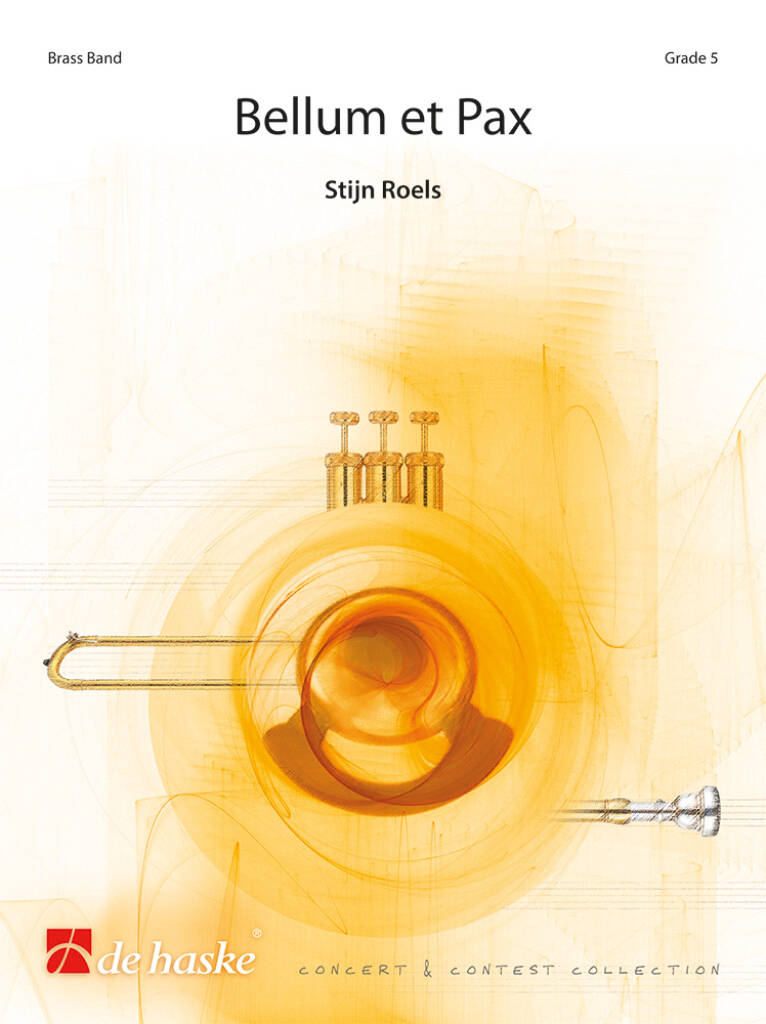 £119.99
Bellum et Pax - Stijn Roels
Bellum et Pax is a composition describing the two ancient concepts of 'war' and 'peace.' While this piece appears to be one single movement, it consists of four sections that flow into one another. Mysterious and threatening tones lead the way into an epic battle between the chaos of war and enlightenment of peace. Peace triumphs, but menacing bass notes at the end symbolize the constant presence and threat of war and violence in the world.
Estimated dispatch 5-14 working days
 View Music