
Results
-
 £29.50
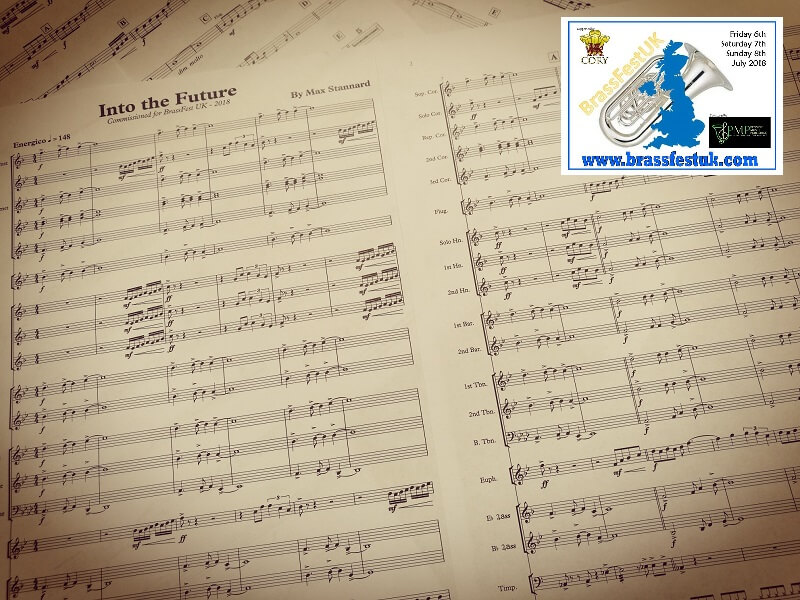
Into The Future - Max Stannard
With the success of the inaugural BrassFest UK events last year and along with it, the commssioned work to celebrate the Brass Band movement, the event this year threw the doors open with a competition to compose the 2018 anthem for bands across the country to enjoy. Judged by Philip Harper, Gavin Somerset and Christopher Bond, this winning work by Max Stannard was written with a view to celebrating the youngsters and future of the Brass Band movement.Click Here for the Youth Band edition
In Stock: Estimated dispatch 1-3 working days
-
£29.50
Into The Future - Youth Band - Max Stannard
With the success of the inaugural BrassFest UK events last year and along with it, the commssioned work to celebrate the Brass Band movement, the event this year threw the doors open with a competition to compose the 2018 anthem for bands across the country to enjoy. Judged by Philip Harper, Gavin Somerset and Christopher Bond, this winning work by Max Stannard was written with a view to celebrating the youngsters and future of the Brass Band movement.Click Here for the Senior Band edition
In Stock: Estimated dispatch 1-3 working days
-
 £44.50
Magnificat - John Rutter - Gavin Somerset
John Rutter's Magnificat (Magnificat anima mea), first performed in 1990, opens with bold fanfares and syncopation which captures the listeners attention from the very first note. The work was originally composed for chamber orchestra and SATB choir. The SATB parts are also included in the score with this publication allowing bands if they wish, to perform with work alongside a full choir. Transcribed directly from the composers original score, Rutter's music is full of strong melodic lines and gorgeous harmonies. Full of hair raising moments, it lends itself perfectly to Brass Bands and this opening movement is a must have for bands wanting to add something new and challenging to their classical repertoire.
In Stock: Estimated dispatch 1-3 working days
-
 £24.50
Morning (From 'Peer Gynt') - Edvard Grieg - Gavin Somerset
With many bands this time of year doing "Proms" concerts, this new release comes at the perfect time. Skillfully arranged to make this playable by most bands, this is one of the most memorable tunes of all time. Used in countless TV adverts and films, this full arrangement of the classical work is sure to make the audience smile. The piece was originally composed as incidental music for a play by Henrik Ibsen in 1876.Over time, it has become a stand alone favorite on the classical music stage. Perfect for any concert.
In Stock: Estimated dispatch 1-3 working days
-
£24.50
Perpetuum - Dave Collins
A new and very exciting concert work for band. It is based upon driving additive patterns similar to those use in action and spy films. This is a brilliant new addition to the concert repertoire and is composed with energy right from the start. Thick block chords underneath the driving rhythms will allow your audience to feel the band's presence. This title was originally commissioned by the VBS Poynton band and works equally well on the bandstand or in the concert hall.
In Stock: Estimated dispatch 1-3 working days
-
 £24.50
Seren Fach - Nigel Lawless
Meaning Little Star, this work is so beautiful and simplistic that is raises smiles from all who hear it. Whilst playing with James Shepherd Versatile Brass, Euphonium & trombone player, Nigel Lawless penned this new work as a gift to Rob & Claire Westacott on the birth of their daughter, Jessica. Now cleverly scored for full band, the work combines the two famous melodies of Twinkle, Twinkle Little Star and Brahms lullaby. Playable by most standards of bands, this slow melodic piece fits easily into any concert programme and provides a chance to showcase lyrical soloistic playing and delicate accompanying skills. The work was recorded on the JSVB final CD release, Legacy.
In Stock: Estimated dispatch 1-3 working days
-
 £29.50
I Believe In Father Christmas - Greg Lake - Gavin Somerset
Released in 1975, this well loved song was written intentionally by as a protest about the commercialisation of Christmas. The release saw it shoot to No.2 in the charts and remains Greg Lake's only hit solo release. The instrumental riff used between verses is the tune from "Troika" by Sergei Prokofiev that has aided its popularity. This piece is familiar to all audiences, perfect to get them in the mood for your Christmas concerts & get them singing along.
In Stock: Estimated dispatch 1-3 working days
-
£29.50
King Of The Road - Rodger Miller - Lee Rogers
If there was one song that would encapsulate the laid back, easy-going nature of the bass trombone player - this is it! Roger Miller's classic 1964 song has now been skilfully arranged by Lee Rogers which can feature either the bass trombone or Eb Bass. The band parts also enjoy the laid back nature of the soloist with the melody featuring throughout different sections. Recorded by Dean Martin, The Proclaimers, Jerry Lee Lewis & countless other, this item is pure entertainment and just begs for the soloist to endure the "hobo" look as the song's lyrics describes. A must for all bands.
In Stock: Estimated dispatch 1-3 working days
-
 £80.00
The Unfortunate Traveller (Brass Band - Score and Parts) - Holst, Imogen - Hindmarsh, Paul
Imogen Holst (1907-1984) submitted The Unfortunate Traveller (1929) as her final work as a student portfolio at the Royal College of Music, where her composition teacher was Gordon Jacob. The title was taken from Thomas Nashe's famous 1594 picaresque novel of the same title. The Suite was first performed on 12 February 1933 at her Majesty's Theatre, Carlisle, by the St. Stephen's Band, with the composer conducting. Te concert was given in memory of Holst's uncle, Dr. H.A. Lediard. Holst had been impressed with the band's performance of his A Moorside Suite at the 1928 National Brass Band Championships (The Crystal Palace, South London) and was keen to work with them. Writing in Imogen Holst, a life in music, Christopher Grogan indicates that it was Gustav Holst's suggestion to include his daughter's work in the programme, quoting Imogen Holst's remarks made in interview to The Daily Mail as follows: "....it is the first time, so far as I know, that a woman has conducted a brass band at a public concert....It has been a delight to rehearse the St. Stephen's Band. It was their performance at the Crystal Palace Festival that inspired me to write this Suite, which I have dedicated to them."Imogen Holst accompanied her father to the Crystal Palace in 1928 to hear the performances of A Moorside Suite, and was so excited by the played and, audibly, by her father's music that she decided to write a brass band piece for her final examination. Te result was The Unfortunate Traveller (1929). However, it was not possible for her to present a brass band work for examination. She arranged it for string orchestra so that it could be played before she left the RCM in July 1930. Following the premiere of the original in 1933, the manuscripts did not resurface until 1969 Imogen found them among her late mother's effects. Although she requested score and parts be destroyed, they ended up in the possession of Manchester composer John Golland, who marked up the score presumably with the intention of creating a new performing edition. The original scoring reveals a lack of experience with what can be a tricky medium.With the agreement of the Holst Foundation, a revised edition, with additional percussion, was prepared in 2011 since when the work has been fortunate to travel round the world as a concert and contest piece. The original includes drums in the March only. The title was taken from Tomas Nashe's famous 1594 picaresque novel of the same title. Several Morris Dance tunes are introduced during the course of the four short movements, including Bonnie Green Garters, Shepherd's Hey, The Rose and The Wind Blaws Cauld. Quirky twists and turns of harmony and spirited rhythms that remind us how much Imogen Holst loved tradition English dance music.In September 2025, I made a performing edition of the composer's arrangement for string orchestra. The manuscript lacks the final movement, which I arranged in a similar style, ie. without extending the upper ranges. Making this edition raised some issues regarding the accuracy of my band version and some of the solutions I used to smooth out the voicing. I have used the composer's second thoughts to refine my performing edition and to correct a textual errors.- Paul HindmarshDuration: 10.00
Estimated dispatch 7-14 working days
-
£40.00
The Unfortunate Traveller (Brass Band - Score only) - Holst, Imogen - Hindmarsh, Paul
Imogen Holst (1907-1984) submitted The Unfortunate Traveller (1929) as her final work as a student portfolio at the Royal College of Music, where her composition teacher was Gordon Jacob. The title was taken from Thomas Nashe's famous 1594 picaresque novel of the same title. The Suite was first performed on 12 February 1933 at her Majesty's Theatre, Carlisle, by the St. Stephen's Band, with the composer conducting. Te concert was given in memory of Holst's uncle, Dr. H.A. Lediard. Holst had been impressed with the band's performance of his A Moorside Suite at the 1928 National Brass Band Championships (The Crystal Palace, South London) and was keen to work with them. Writing in Imogen Holst, a life in music, Christopher Grogan indicates that it was Gustav Holst's suggestion to include his daughter's work in the programme, quoting Imogen Holst's remarks made in interview to The Daily Mail as follows: "....it is the first time, so far as I know, that a woman has conducted a brass band at a public concert....It has been a delight to rehearse the St. Stephen's Band. It was their performance at the Crystal Palace Festival that inspired me to write this Suite, which I have dedicated to them."Imogen Holst accompanied her father to the Crystal Palace in 1928 to hear the performances of A Moorside Suite, and was so excited by the played and, audibly, by her father's music that she decided to write a brass band piece for her final examination. Te result was The Unfortunate Traveller (1929). However, it was not possible for her to present a brass band work for examination. She arranged it for string orchestra so that it could be played before she left the RCM in July 1930. Following the premiere of the original in 1933, the manuscripts did not resurface until 1969 Imogen found them among her late mother's effects. Although she requested score and parts be destroyed, they ended up in the possession of Manchester composer John Golland, who marked up the score presumably with the intention of creating a new performing edition. The original scoring reveals a lack of experience with what can be a tricky medium.With the agreement of the Holst Foundation, a revised edition, with additional percussion, was prepared in 2011 since when the work has been fortunate to travel round the world as a concert and contest piece. The original includes drums in the March only. The title was taken from Tomas Nashe's famous 1594 picaresque novel of the same title. Several Morris Dance tunes are introduced during the course of the four short movements, including Bonnie Green Garters, Shepherd's Hey, The Rose and The Wind Blaws Cauld. Quirky twists and turns of harmony and spirited rhythms that remind us how much Imogen Holst loved tradition English dance music.In September 2025, I made a performing edition of the composer's arrangement for string orchestra. The manuscript lacks the final movement, which I arranged in a similar style, ie. without extending the upper ranges. Making this edition raised some issues regarding the accuracy of my band version and some of the solutions I used to smooth out the voicing. I have used the composer's second thoughts to refine my performing edition and to correct a textual errors.- Paul HindmarshDuration: 10.00
Estimated dispatch 7-14 working days
 View Music