
Results
-
£67.20
Iron Man 3 - Brian Tyler - Frank Bernaerts
Estimated dispatch 5-14 working days
-
 £96.60
Iron Eagle - Basil Poledouris - Michal Worek
Estimated dispatch 5-14 working days
-
 £105.80
The Man In The Iron Mask - Nick Glennie-Smith - Jan Valta
Estimated dispatch 5-14 working days
-
 £105.80
The Iron Giant - Michael Kamen - Jirka Kadlec
Estimated dispatch 5-14 working days
-
 £115.00
Iron Man 3 - Brian Tyler - Bertrand Moren
Estimated dispatch 5-14 working days
-
 £61.99
 -
 £56.00
 -
 £39.95
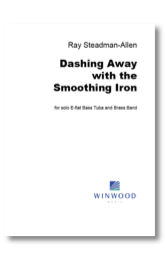
Dashing away with the smoothing iron - Ray Steadman-Allen
The composer writes... A lighthearted arrangement of an old folk song. The style is generally bright with a short, slower change of pace in the middle. En route there are a couple of quotations which got into the music almost unbidden: a fragment of one of Mozart's horn concerti and 'A-hunting we will go'. '... a splendid concert piece for advanced tuba players.' WINDS Autumn 2008 Duration: c.3:00 Also available with piano or concert band.
Estimated dispatch 7-9 working days
-
 £74.99
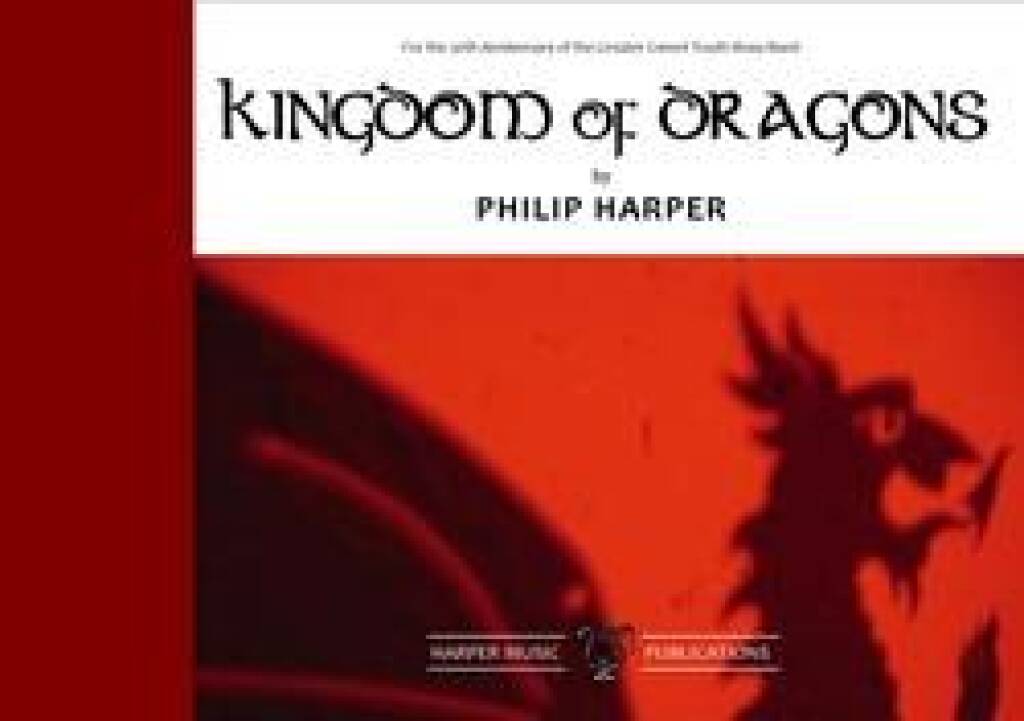
Kingdom of Dragons - Philip Harper
The 'Kingdom of Dragons' is Gwent in South Wales, known in ancient times as the Kingdom of Gwent, and more recently home to the Newport Gwent Dragons Rugby Union team. This piece was commissioned by the Gwent Music Service with additionalfunding from Ty Cerdd - Music Centre Wales to celebrate the 50th anniversary in 2010 of the formation of the Gwent Youth Brass Band. Although the music is continuous, it is divided into four distinct sections, each one representing one of theunitary authorities which make up the County of Gwent. I. Monmouthshire, which has a large number of ancient castlesII. Blaenau Gwent, an historic area of iron and coal miningIII. Torfaen, where Pontypool Park is a notablelandmarkIV. Newport, the largest city in the region. The music begins with a two-bar fanfare, which sets out all the thematic material of the piece. The mood of pageantry that follows describes some of the ancient castles inMonmouthshire, with rolling tenor drums and fanfaring cornets. After a majestic climax the music subsides and quite literally descends into the coal mines of Blaenau Gwent. The percussion provides effects that suggest industrial machineryclanking into life, and the music accelerates to become a perilous white-knuckle ride on the underground railroad. There is a brief respite as a miner's work-song is introduced and, after a protracted build-up, this is restated at fortissimo beforethe music comes crashing to an inglorious close, much like the UK's mining industry itself. The middle sonorities of the band portray the tranquillity of Pontypool Park, a place of great natural beauty. Brief cadenzas for cornet and euphoniumlead to a full band reprise of the pastoral mood. At the end of this section we find ourselves at the top of the park's 'Folly Tower' from which the distant castle turrets of Monmouthshire are visible. Pontypool RFC was one of eleven clubs inthe first Welsh league in 1881 and a brief but bruising musical portrayal of the formidable Pontypool front-row, the 'Viet Gwent' leads into the work's final section. This portrays Newport, a symbol for progress and optimism for the future, idealsshared by the Gwent Youth Band itself. The music is a vigorous fugue which advances through various keys and episodes before the final triumphant augmented entry which brings the work to a magnificent conclusion. NOTES ONPERFORMANCEPercussion requirements: (3 players) Timpani, 2 Tenor Drums, 2 Tom toms, Snare Drum (sticks and brushes required), Bass Drum, Clash Cymbals, Suspended Cymbal, Hi-hat, Sizzle Cymbal, Tambourine, Metal block with metalbeater (eg hammer), Rattle (eg football rattle), Glockenspiel, Xylophone
Estimated dispatch 5-14 working days
-
 £35.00
Ascension - Lucy Pankhurst
A major work written for the RNCM Brass Festival Competition 2005, and inspired by the nature of Ascension - creating a Musical depiction of the spiritual journey towards enlightenment, sanctuary and ultimate inner peace.As aninitial muse for this work, the 'Tibetan Singing Bowl' is utilised with the Brass Band in order to represent this path to Serenity, together withBaoding Balls(Chinese Health Balls) to mark the point of Final Ascension.Programme notes from the composer, Lucy Pankhurst:Ascension is a Musical depiction of the Spiritual Journey towards enlightenment, sanctuary and ultimate inner peace.As my initial muse for this work, the Singing Bowl is utilised with the Brass Band in order to represent this path to Serenity. "Tibetan" Singing Bowls date back to the 8th Century A.D., originating in the pre-Buddhist shamanic Bon Po culture in the Himalayas and are still used in modern Monasteries. The original purpose of them still remains a mystery, with accounts stating that it is forbidden to disclose the true function of the Bowls, as the "secrets of sound" yield so much Power, that they must be kept hidden.Listening to the tones created by the Singing Bowl effectively silences the internal dialogue of the listener, making it an excellent tool for Meditation, Centering and entering trance-like states. In Buddhism, as with many cultures, sound is an important part of Spiritual Practice. There are 9 methods to reach Enlightenment in the Buddhist Doctrine ; the seventh is SOUND.These Bowls are used by Healers in a similar way to help balance the body's residual energies. The Bowls are usually made from seven different sacred metals, intended to correlate directly to the seven sacred "Planets" : GOLD (Sun), SILVER (Moon), MERCURY (Mercury), COPPER (Venus), IRON (Mars), TIN (Jupiter), ANTIMONY (Saturn). Any one Bowl can create up to seven different frequencies (tones) simultaneously. In Healing, the Singing Bowl is played whilst balanced on the palm of the hand, struck three times to stabilise the surrounding energies, before rotating the wooden "beater" around the outer circumference of the Bowl to create the "singing" effect.I have included an optional Vibraphone part (to be played with a Double Bass Bow) with Tubular Bells, to be used only in performances where a Singing Bowl cannot be acquired. However, a traditional Bowl should be used whenever possible, to create this specific and unique sound.Baoding Balls or Chinese Health Balls are also utilised in this work. Their appearance in the Music here, however, is to mark the point of Final Ascension, where the music reaches its ultimate goal. These delicate cloisonne iron Balls are said to stimulate the acupressure points on the hand, thus improving the Chi and Energy Paths (Life Force) throughout the entire body. The delicate "tinkle" produced by these spheres is hypnotic and captivating. For this reason, where no Baoding Balls are obtainable for performance, only delicate metallic percussion should be used in replacement (i.e. Crotales, Antique Cymbals or (liberal) single strikes on a Triangle etc.). Bell Trees, Wind Chimes and Cow Bells should not be used.As in many cultures, the number three is important in Ascension, as it represents not only the purification from the Singing Bowl, but also it is a number of confirmation, reiterated throughout the music in the metallic percussion in addition to the Brass, re-affirming the correct path to Enlightenment.
In Stock: Estimated dispatch 3-5 working days
 View Music