
Results
-
 £49.95
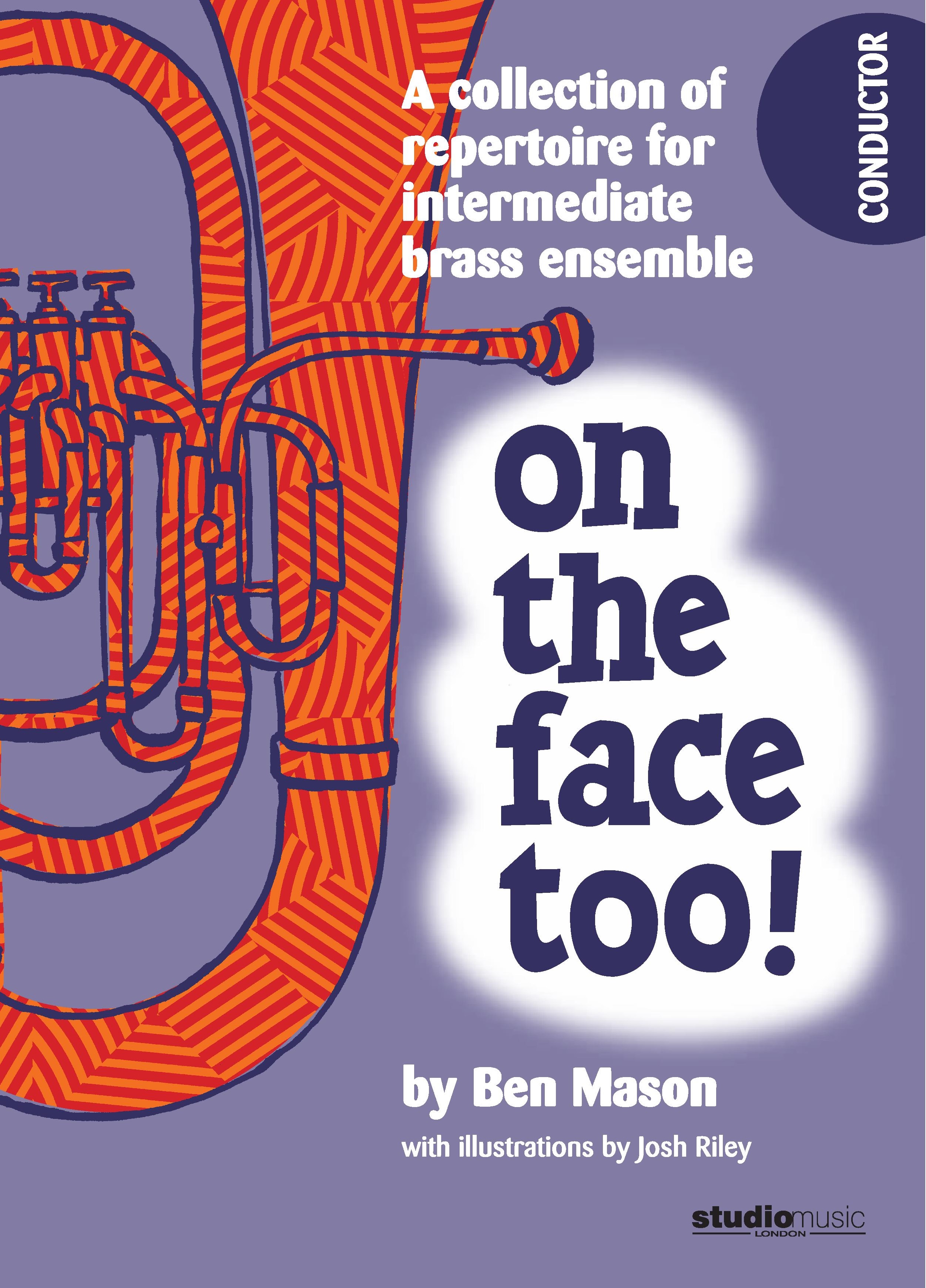
On the Face Too! (Value Set)
Value Set includes: a score and one of each part:Part A: Trumpet 1 in BbPart B: Trumpet 2 in BbPart C: Horn in EbPart C: Horn in FPart C: Trombone/Euphonium TCPart C: Trombone/Euphonium BCPart D: Trombone TCPart D: Trombone BCPart D: Bass in EbPart D: Tuba BDPercussionAdditional score and parts are also available individually.On the Face Too! is to the secondary school brass teacher as On the Face! is to the primary: namely a collection of pieces for intermediate brass ensemble in various jazz and popular styles, aiming to give a ready supply of material for concerts and assemblies, which nevertheless still allows for the developing technique of the young players to whom it is addressed.Generally speaking, the technical difficulty of the material here goes no further than grade 4 or 5 (even the first trumpet part never goes higher than a written G), though some pieces will offer considerable rhythmic challenges.
Estimated dispatch 7-14 working days
-
 £39.95
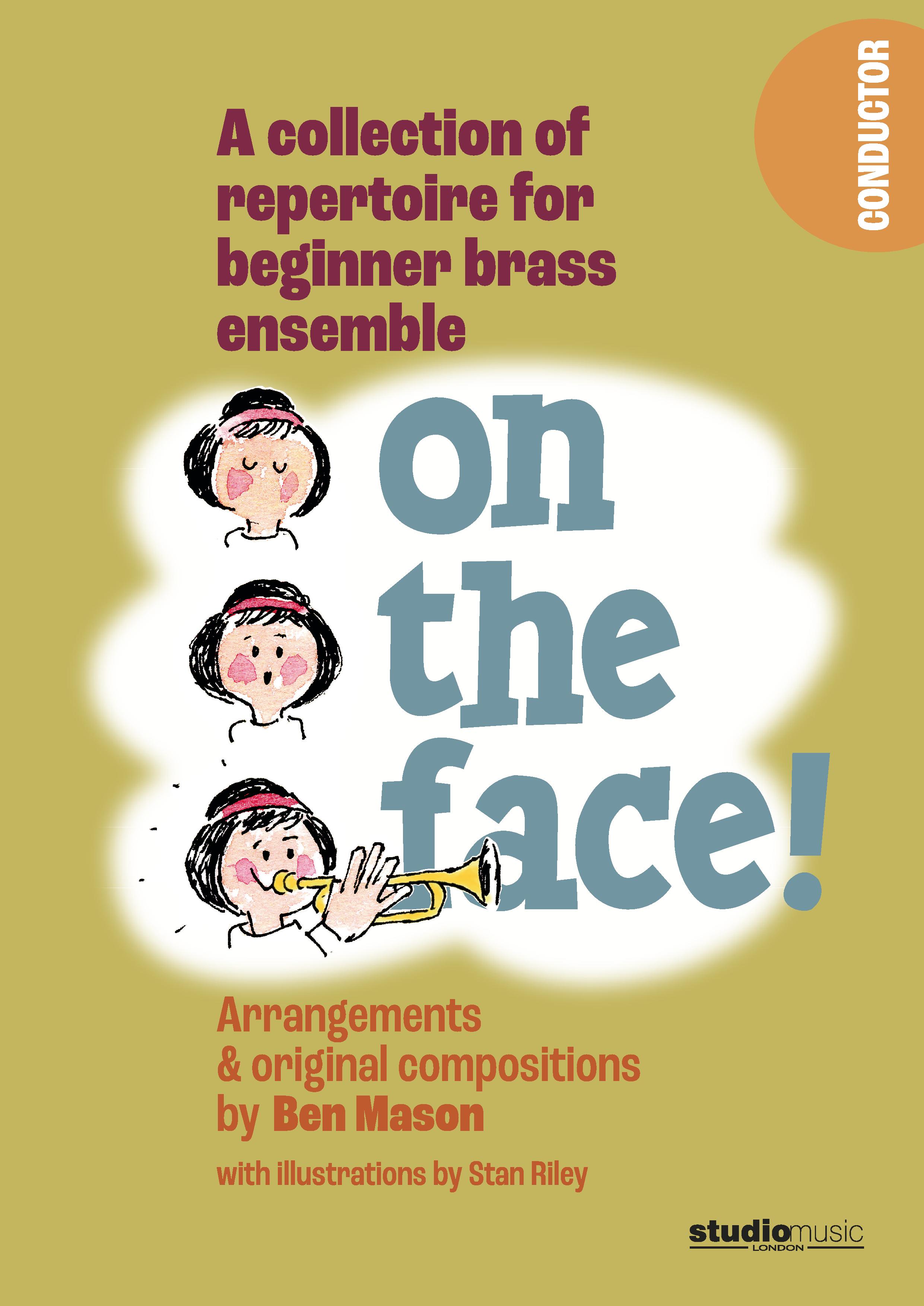
On the Face! (Value Set)
The Value Set contains the score and one of each part:1st B flat Trumpet/Cornet2nd B flat Trumpet/CornetTrombone/Euphonium/Baritone BCTrombone/Euphonium/Baritone TCHorn in E flatHorn in FHigh Trombone/Euphonium/Baritone TC*High Trombone/Euphonium/Baritone BC*E flat Bass/Tuba TCE flat Bass/Tuba TCPercussion and occasional Aux. Percussion(* for use only when there is a Tuba in the ensemble)Additional scores and parts are available individually.On the Face is a complete repertoire (warm-ups and 23 pieces) for beginner brass ensemble. Perfect material for school assemblies and music centres, it includes folk songs, famous classical themes, and exciting new jazz and pop numbers. Each piece is score for a basic trio of two trumpets/cornets and one trombone/euphonium (TC or BC). However, optional independent parts can also be added for horn in E flat or F; high trombone or euphonium (tenor part); tuba; and drum kit. The pieces work equally well either with one player to a part, or in larger group settings. With its appealing variety of musical styles and textures, On the Face is sure to make the young brass player's first experience of group playing both rewarding and fun.
Estimated dispatch 7-14 working days
-
£24.95
On the Face! (Basic Set)
The Basic Set contains:Score1st B flat Trumpet/Cornet2nd B flat Trumpet/CornetTrombone/Euphonium/Baritone BCTrombone/Euphonium/Baritone TCOn the Face is a complete repertoire (warm-ups and 23 pieces) for beginner brass ensemble. Perfect material for school assemblies and music centres, it includes folk songs, famous classical themes, and exciting new jazz and pop numbers. Each piece is score for a basic trio of two trumpets/cornets and one trombone/euphonium (TC or BC). However, optional independent parts can also be added for horn in E flat or F; high trombone or euphonium (tenor part); tuba; and drum kit. The pieces work equally well either with one player to a part, or in larger group settings. With its appealing variety of musical styles and textures, On the Face is sure to make the young brass player's first experience of group playing both rewarding and fun.
Estimated dispatch 7-14 working days
-
 £19.95
The Falcon in the Snow for Brass Band - Paul Saggers
The Falcon in the Snow is a musical depiction of British explorer Robert Falcon Scott's expedition to reach the South Pole, the work is divided into five sections, using quotes from Falcon Scott's own journal:Saturday November 26, 1910 - "We advertised our start at 3.P.M., and at three minutes to that hour the Terra Nova pushed off from the jetty".Robert Falcon Scott led the British Antarctic Expedition from 1910 to 1913, aiming to be the first to reach the South Pole. Leaving from Cardiff, Wales, in June 1910, the expedition arrived at the Ross Ice Shelf in January 1911. Scott's team established base camp at Cape Evans on Ross Island and began preparations for the push to the Pole.Thursday February 2, 1911 - "The Blizzard, Nature's protest-the crevasse, Nature's pitfall".The expedition faced numerous challenges, including harsh weather, difficult terrain, and the logistics of transporting supplies and equipment over long distances. Scott divided his men into different teams for the Pole attempt, with one led by himself and the other by Ernest Shackleton, who was eventually sent home due to illness.Tuesday January 16, 1912 - "The Norwegians have forestalled us and are first at the pole. It is a terrible disappointment, and I am very sorry for my loyal companions".Scott's team set out for the South Pole, enduring extreme conditions and struggling with low food supplies. They reached the Pole on January 17, 1912, only to discover that the Norwegian explorer Roald Amundsen had beaten them to it by 34 days.Thursday January 18, 1912 - "We have turned our back now on the goal of our ambition and must face our 800 miles of solid dragging".Disheartened, the team began the long and arduous journey back to base camp. Tragically, Scott and his companions-Edward Wilson, Henry Bowers, Lawrence Oates, and Edgar Evans-perished during their return journey. They were slowed by extreme weather and suffering from exhaustion and malnutrition.Thursday March 29, 1912 - "For God's sake look after our people".Their final camp, found in November 1912, became their tomb. Scott's journal, recovered with his body, provides a poignant record of their struggles.Despite the tragic outcome, Scott's expedition contributed significantly to the understanding of the Antarctic region. The scientific research and specimens collected during the journey provided valuable insights into the continent's natural history and biology. Additionally, the expedition stimulated public interest in polar exploration and science, leaving a legacy in the chronicles of exploration.
-
£34.95
COVENANTERS, The (Brass Band Set) - Kenneth Downie
In 1638, many members of the Presbyterian Church of Scotland signed a document called the National Covenant. By doing so, they were declaring that they acknowledged only Jesus Christ as the spiritual head of their church, and not any king or queen. This had become necessary because the Stuart kings believed in the Divine Right of Monarchs and saw themselves as head of the church. In the previous year, Charles I had forcibly introduced the Book of Common Prayer, invoking the wrath of the common people who faced the threat of torture, transportation or execution if they did not use the new liturgy and worship at their local church. The net result of this was that many met illegally in the countryside or in barns and large houses. These meetings became known as 'conventides' and many took place in the south-west of the country. Anyone caught attending was at risk of execution by the muskets of the dragoons who were employed in the area for that specific purpose. This music was written to honour the bravery and loyalty of these Christians to their faith, in the face of extreme danger, in the hope that it will inspire us also to be faithful. There are overtones of military threat, secrecy and solidarity. An old pentatonic tune is used, which the composer heard as a boy being sung to the words The Lord's My Shepherd.
Estimated dispatch 7-14 working days
-
£69.95
TRANSFORMATION (Brass Band Set) - Kenneth Downie
I believe in transformation, God can change the hearts of men, And refine the evil nature, till it glows with grace again'. So wrote John Gowans in the second verse of his great hymn, 'I believe that God the Father, can be seen in God the Son', written specifically to affirm Salvationists' beliefs. It is sung to the tune Bethany and in seeking to explore this great subject at the heart of the Christian gospel in musical terms, the composer has used this fine tune as the basis. Although it never appears in its entirety, it is seldom out of the picture and much of the work is derived from it. The other main source of material is the lovely, simple chorus, 'Some day I shall be like him, changed to heavenly beauty, when his face I see'. This chorus is especially prominent in the middle section but there are important references to it throughout. There are also brief references to Charles Wesley's hymn, 'Love Divine' and, in particular, the telling lines, 'Changed from glory into glory, till in Heaven we take our place'. The work suggests that, at times, the process of being transformed is a struggle, portrayed with many passages of fraught and demanding music. Considerable reserves of stamina and technique are required while, in contrast, the chorus, 'Some day I shall be like him' provides the warm, gentle centre of the work. The premiere of the work was given by The International Staff Band of The Salvation Army in Cadogan Hall on Friday 3rd June 2011, as part of the band's 120th anniversary celebrations.
Estimated dispatch 7-14 working days
-
£44.95
JOY THROUGH THE AGES (Brass Band Set) - Howard Evans
This work was written for the 125th anniversary of Boscombe Band, celebrated in November 2011, and is the title track of the band' album released in the same year. The music is celebratory in nature and is dedicated to all those who have served in the band during its 125 year history. The theme of the work is a song by Charles Hutchison Gabriel which was the favourite of the band's librarian, Gerald Whittingham, who was 'promoted to Glory' after a long battle with a brain tumour. The title comes from the last verse, 'When with the ransomed in Glory, his face I at last shall see, 'twill be my joy through the ages, to sing of his love for me'.
Estimated dispatch 7-14 working days
-
 £33.43
Fanfare for the Future (Brass Band) Robbert Vos
Fanfare for the Future is a stirring and optimistic piece of music that celebrates the possibilities of the future. The piece is scored for brass band and percussion, and it features two contrasting themes: an exciting fanfare and a hymn-like melody. Written during Covid, the fanfare represents the challenges and obstacles that we face in the world, while the hymn represents our hopes and dreams for the future. The two themes come together in a grand finale, which represents our determination to overcome the challenges of the present and build a better future for ourselves and for generations to come.To view a follow-the-score video of the work please visit www.youtube.com/watch?v=tBbFpNFd3I4PDF download includes score and full set of parts.Sheet music available from:UK - www.brassband.co.ukUSA - www.solidbrassmusic.comDifficulty Level: 2nd Section +This title is also available for brass choir with percussion here.Instrumentation:Soprano Cornet EbSolo Cornet BbRepiano Cornet Bb2nd Cornet Bb3rd Cornet BbFlugel Horn BbSolo Horn Eb1st Horn Eb2nd Horn Eb1st Baritone Bb2nd Baritone Bb1st Trombone Bb2nd Trombone BbBass TromboneEuphonium BbBass EbBass BbPercussion 1-3
In Stock: Estimated dispatch 1-3 working days
-
 £54.99
Circus Delight - Dagmar Kildevann
'Circus Delight' is a five-part suite which is set, how could it be otherwise, in a big circus tent. The suite starts with a part called 'Entrance'. The orchestra, positioned above the entrance of the ring asks for the attention of the audience and then the ring announcer enters. The show can begin! The elephants play a central role in the first act. These colossal grey animals are rather slow and perform their tricks in a moderate tempo. ('Elephant Blues') How different are 'The Acrobats'. At high speed they run, jump and fly through the ring, until ....... It gets very exciting. Fortunately, all's well that ends well and they take their leave of the audienceat a trot. Everyone knows, and yet it is mostly not spoken about, that when a clown has taken off his red nose and rubbed off his make-up, his face off-stage is not always a happy one. ('Tears of the Clown') The piece ends on a cheerful note with 'The Parade', in which all the artists make their entrance in the ring once again to gratefully acknowledge the audience's overwhelming applause.
Estimated dispatch 5-14 working days
-
 £33.43
An Irish Blessing (Brass Band) Craig Stevens
VIEW SCORE PDFWritten during the Covid lockdown in 2020, An Irish Blessing is a beautiful original tune from the pen of Craig Stevens set to the following words:May the road rise to meet you.May the wind be at your back.May the sun shine warm upon your face.Though the rain falls on your fieldsAnd the flowers grow no more,May the Lord keep you safe in His handsUntil we meet again.Traditional Irish Blessing (paraphrased)The composer writes: 'The hope, that despite the uncertainty of the times, that we would meet again.'To view a follow-the-score video featuring Ratby Cooperative Band please visit www.youtube.com/watch?v=9B6F7STXH9ISheet music available from:UK - www.brassband.co.ukUSA - www.solidbrassmusic.comDifficulty Level: Fourth Section +Instrumentation:Soprano Cornet EbSolo Cornet BbRepiano Cornet Bb2nd Cornet Bb3rd Cornet BbFlugel Horn BbSolo Horn Eb1st Horn Eb2nd Horn Eb1st Baritone Bb2nd Baritone Bb1st Trombone Bb2nd Trombone BbBass TromboneEuphonium BbBass EbBass BbTimpaniPercussion 1-2
In Stock: Estimated dispatch 1-3 working days
 Watch video
 View Music